Tokyo Science and Technology Museum with Kids: The Walk Is the Cost.
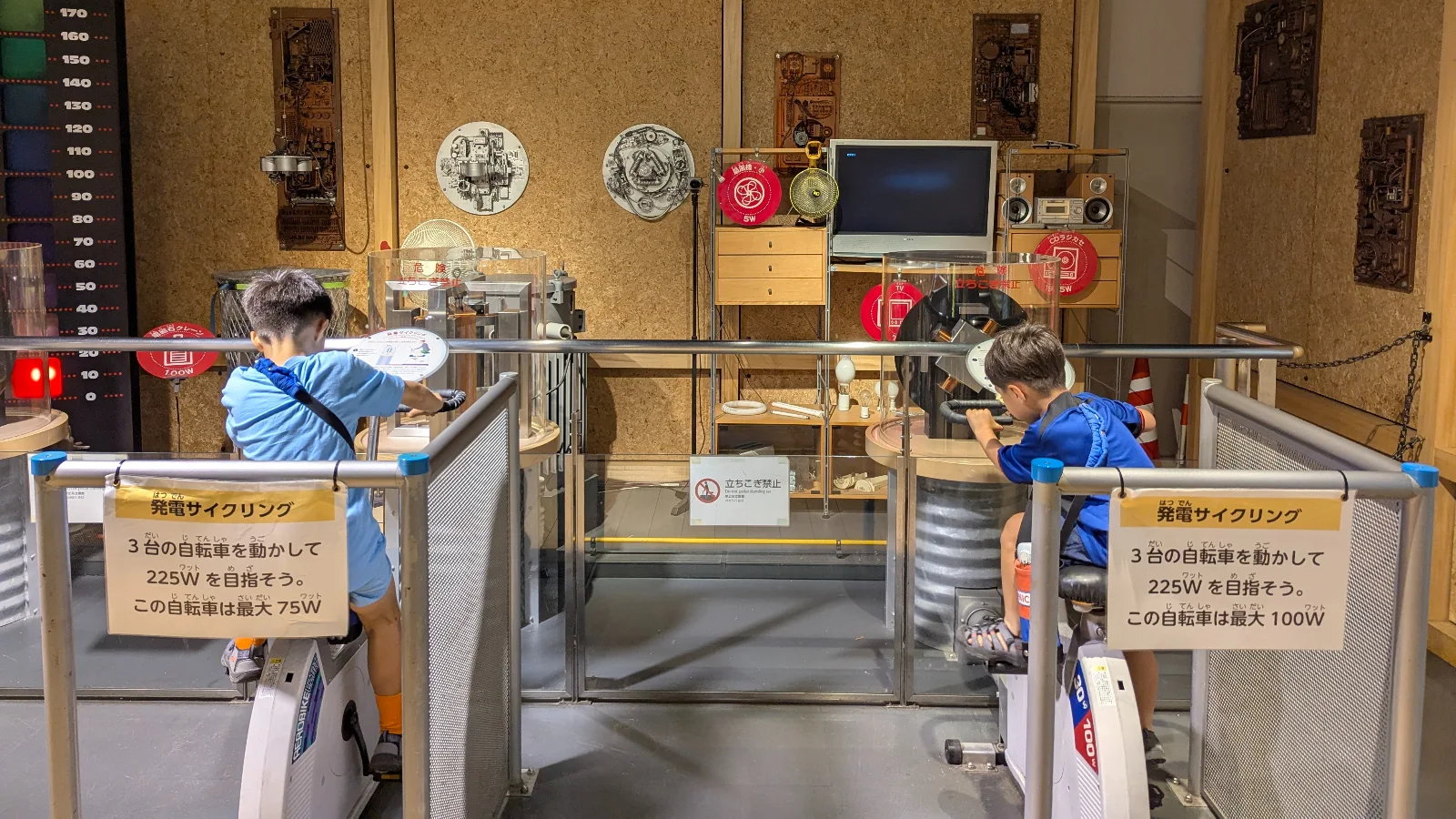
The Tokyo Science and Technology Museum is a good day for a child who likes to test things, in a 1964 building that is hard on a tired walker.
Children from age 4; junior high and high school ¥600. No booking needed; discounted advance tickets are sold.
Closed on listed Wednesdays (not every one) and December 28 to January 3.
Same-day re-entry on the dated ticket allows lunch outside and a return.
Elementary age and under come with a guardian; some rooms set their own height or age limits.
Up by escalator, folded; down by stairs except on large-elevator days. Loaners at the third-floor office.
Some links on this page are affiliate links. LuNi may earn a commission at no extra cost to you.
Is the Tokyo Science and Technology Museum worth it with kids?
The short version, before the costs, the timings and the case for each child.
Yes, for school-age children who like to find out how things work, and it is good value for a family. The building decides the rest. It goes up by escalator and, on days without the large elevator, comes down by stairs, which is hard on a tired walker at the end of the day and easy on a child who still has legs, so come with older children rather than toddlers. Its room-by-room list of sudden sounds and dark areas is a gift to a family with a sensitive child: use it to plan a route, leave the stroller at the counter, and take the same-day re-entry for lunch outside. Planned like that, the walk down is the only real cost.
Planning Your Visit to the Tokyo Science and Technology Museum with Kids.
Three decisions shape a visit, and the first is the date: the museum’s closing days follow a dated list rather than a weekly pattern, so check yours before you go. The second is the stroller: it is held at the first-floor counter, and the way down is stairs on most days, so a carrier, or a stroller lent at the third-floor office, suits a small child far better than your own. The third is the route. The room list shows which rooms have sudden sounds and which have dark areas, so a family can plan around them in advance and choose which, if any, to try. Read the list with the child the night before, so each loud room is a choice they made rather than a surprise.
Every LuNi attraction guide starts with a visit, with our own children
LuNi rates and writes about attractions only after visiting them with children. Luca and Nico were at the Tokyo Science and Technology Museum, and what they did there is recorded further down this page, including how each child actually met it.
Children arrive with different tolerances: for noise, for lines, for standing still, for being on their feet all day. A guide written for the average of them helps almost nobody. So every place on this site is read four ways, and each verdict says which children it already suits and what makes it work for the rest. Whoever you are bringing, the answer here is built for your family rather than for a general reader.
Restricted-movement depletion eases with experiments and exhibits to try, though running is banned, so let the child lead from room to room.
Sensory-input depletion depends on the route, and the museum lists every loud or dark room, so plan a path around them and rest.
Unfamiliarity eases with a published list of what each room holds, sound and dark included, so walk the route together before the day.
Walking and standing cost more here, up by escalator and down by stairs, so leave the stroller and use re-entry for a rest.
Hotels we would book for this visit.
The museum ends on the stairs for most visitors, so the trip back to the room should be the easy part. Three Tokyo family hotels in the museum’s own part of the city, the pick first.
| Property | The LuNi Reason |
|---|---|
| LUNI Pick Four Seasons Hotel Tokyo at Otemachi | Four Seasons Hotel Tokyo at Otemachi is for a family that wants the museum as a morning and the rest of the day free. The way down is stairs on most days, and a child who has done them needs a short trip back, so this base makes the stairs the last effort of the visit. |
| Hotel Niwa Tokyo | Hotel Niwa Tokyo is for a family that splits the museum into two shorter visits. Re-entry works on the same day only, so two mornings mean two tickets, but for a child who manages a few floors at a time, a base in the same ward makes the second morning an easy start. |
| Hotel Metropolitan Edmont | Hotel Metropolitan Edmont is for a child whose legs give out before the day does. The day it serves goes like this: a morning of floors, lunch in Kitanomaru Park on the re-entry ticket, and a short trip back for a child who has walked the stairs down. |
Four Seasons Hotel Tokyo at Otemachi
Nearby attractions, matched to your child.
Three pairings for what this museum leaves over: a wide garden for a child whose ears have had enough, a quieter, reading museum, and a look-only gallery of lit tanks for a child who has touched enough.
| Pairing | Why This Solves the After-Visit | For Your |
|---|---|---|
| LUNI Pick Shinjuku Gyoen National Garden Shinjuku; closed on Mondays | After rooms of sudden sound, Shinjuku Gyoen National Garden gives a Sensor wide lawns where sensory input finally drops away. Its rules keep music players and whistles out, so the quiet a child needed in the loud rooms is the garden’s whole offer. | Sensor |
| National Museum of Nature and Science Ueno Park; free through high school | For an Anchor who read every panel here, the National Museum of Nature and Science is a museum that explains itself, with a free guide on your own phone. Unfamiliarity eases when a place says what it holds, before the child has to ask. | Anchor |
| Art Aquarium Museum GINZA Ginza Station, Exit A7; entrance on 9F | For a Sprinter after a building of stairs, Art Aquarium Museum GINZA is a short indoor visit, taken down one escalator with staff from the ninth-floor entrance. Strollers stay on the ninth floor, so bring a carrier; a Dynamo’s restricted movement meets a strict look-only rule there, so keep that child’s visit brief. | Sprinter |
Shinjuku Gyoen National Garden
Shinjuku; closed on Mondays For YourSensor
National Museum of Nature and Science
Ueno Park; free through high school For YourAnchor
Art Aquarium Museum GINZA
Ginza Station, Exit A7; entrance on 9F For YourSprinter
How two children actually met this attraction.
Two children came to the same museum and tested it in different ways. One read first and touched second, checking whether each explanation held, and stayed at single displays long after the family had moved on. The other touched first and read never, moving fast from exhibit to exhibit and returning to his favorite corner again and again to see whether it would behave differently. Both of them found what they came for, which is the real strength of a museum like this. It rewards the patient tester and the restless one, if the day is shaped for both of them. The limit, for both, was the building: by the last floor the fast one was tired, and the slow one still had rooms left.
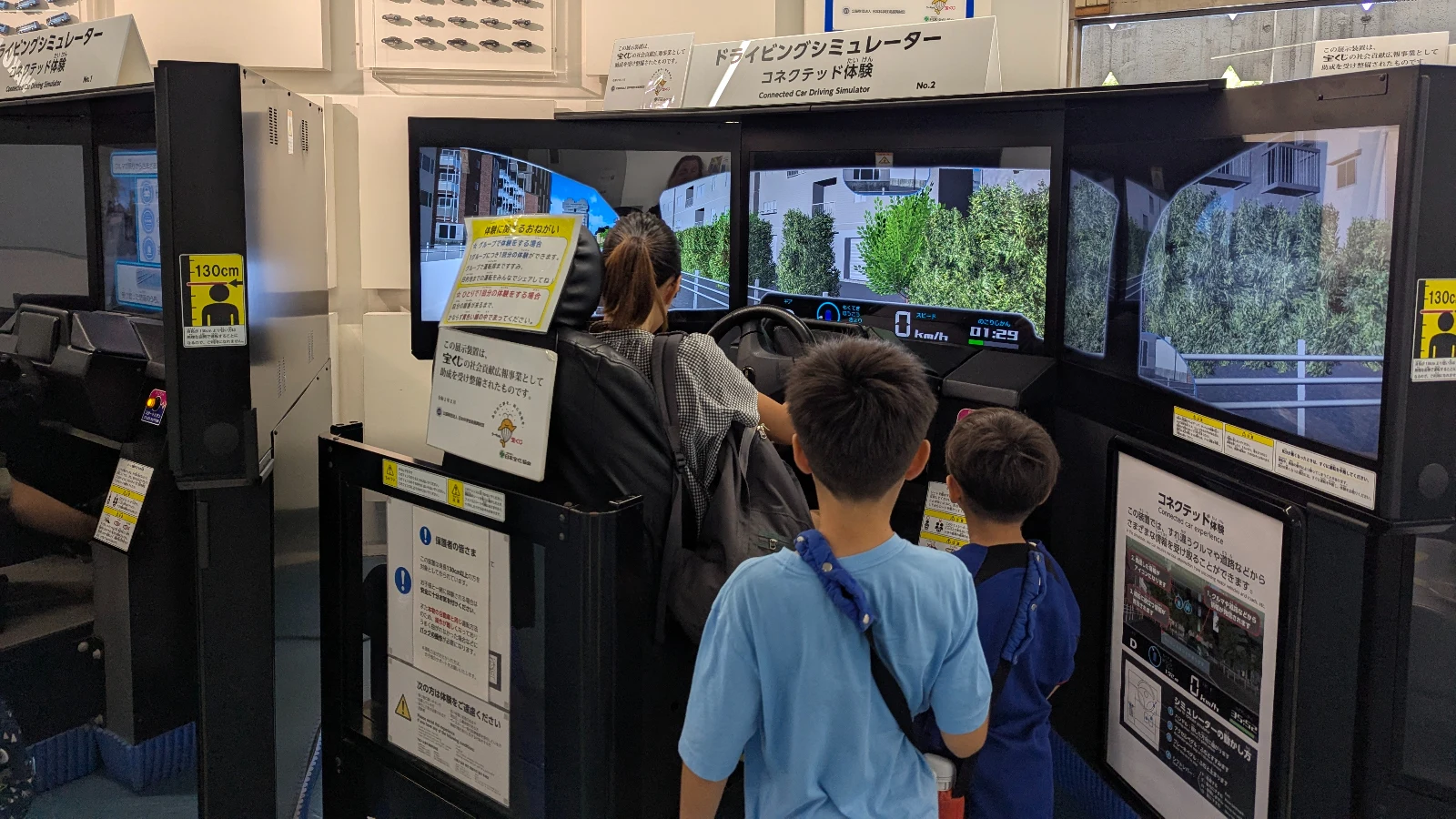
Luca worked the mechanical exhibits slowly and in order, reading the panel before touching anything and then testing whether the explanation held. He wanted to know why the gear turned the way it did, not simply that it turned. The driving simulator held him because it was a system with rules he could work out, and he ran it repeatedly to see what changed. He had to be pulled away from the energy exhibits at the end.
This is the Anchor pattern. A child whose Reserve depletes through unfamiliarity and unconfirmed structure wants to confirm how a thing works before trusting it, and a museum of testable explanations suits him perfectly. For a similar child, choose fewer rooms and give him time in each rather than covering every floor. Plan the route with the museum’s room list beforehand, so the loud and dark rooms are known quantities rather than surprises that interrupt his concentration.
Nico covered the floors fast and wide, pressing, pulling, and pedaling whatever was in reach and rarely staying at one exhibit long enough to reach its conclusion. He returned to the robot zone three separate times, to find out whether the robots would do something different. The simulators held him longest because they answered back physically. By the last floor his pace had dropped noticeably.
This is the Dynamo pattern. A child whose Reserve depletes through restricted movement meets a museum through his hands and his feet, and he is happiest wherever an exhibit answers back to him. For a similar child, remember that running is not allowed, so let him lead from room to room at a walk, put the floors he most wants first, and use same-day re-entry for a break in Kitanomaru Park before his pace drops.
A museum built for testing things teaches the most important scientific habit of all: checking whether something really works. Children press, pull and repeat until they understand what happens and why, and the child who returns to the same exhibit five times is not wasting time but doing exactly what scientists do. Parents often want to move on. Letting a child stay with one experiment until it makes sense gives a sense of mastery that a quick tour never can, and a first taste of how good it feels to find something out.
The LUNI Rating for the Tokyo Science and Technology Museum.
All four children are served here, and two of them depend entirely on planning. The Dynamo and the Anchor do well because the museum is built for testing things, and it lists what each room holds. The Sensor does well because that same list lets a family avoid the loud and dark rooms, and the Sprinter because re-entry, rest areas and a lent stroller make the building manageable. Without a plan, the loud rooms and the stairs would cost both of them far more than the museum gives back. A child who needs play more than experiments has the Tokyo Toy Museum instead.
Let the child lead, at a walk. The Dynamo depletes through restricted movement, and a museum built for testing how things work gives a moving child plenty to do: rooms of experiments across four floors, and the floors themselves to climb between. A child who needs to move can set the order of the rooms and the pace between them. The museum does ask visitors not to run, which a family should say to the child before the first floor.
The strength here is re-entry. The ticket is dated, and same-day re-entry works on it, so a child who needs to move more than a museum allows can go out into Kitanomaru Park and come back. Let the child choose the order of the floors, walk between them rather than rushing, and take the park break before energy drops rather than after. A mover who gets that break will manage a second half.
What this means for your Dynamo: a museum of experiments gives restricted movement an outlet, at a walk. A younger Dynamo needs the park break early; an older one can lead the order of the floors and choose what to test.Use the museum’s list to plan a quiet route. The Sensor depletes through sensory input, and this museum is not quiet: it lists ten rooms with sudden or loud sounds and seven with dark areas, the Shinra Dome among them, and names exhibits with flashing or strong light. What earns this verdict is that the list exists, room by room, so a family can see in advance exactly where the load will be.
So build the route from the list. Skip the rooms that would overwhelm your child, or visit one at a time with a break between. Use the rest areas on the second and fourth floors as quiet places to eat. And keep same-day re-entry in reserve for a walk in the park if the day becomes too much. A Sensor with a planned route can enjoy a museum that would otherwise be hard.
What this means for your Sensor: input is concentrated in listed rooms, which a family can plan around. A younger Sensor needs the loud and dark rooms skipped; an older one can choose which to try, one at a time.Walk the route together before the day. The Anchor depletes through unfamiliarity and unconfirmed structure, and this museum is unusually open about what each room holds. The museum sets out, room by room, where the sudden sounds, the dark areas and the flashing lights are. The hours are fixed, 9:30 to 16:50 with entry by 16:00, and the closing Wednesdays come as a dated list.
So give this child the building before they arrive. Tell them it goes up by escalator and down by stairs, that strollers stay at the counter, and which rooms will be loud or dark. Choose the floors together. An Anchor who knows the Shinra Dome will be dark and that one room has a sudden sound will enjoy both; an Anchor who meets them unwarned may not.
What this means for your Anchor: unfamiliarity eases once the building and its loud rooms are described in advance. A younger Anchor needs the route told at home; an older one can read the room list and lead the way.Leave the stroller, and plan the stairs down. The Sprinter depletes through sustained travel-style walking and standing; this museum earns its place through the help it offers against its own building. Strollers are lent at the third-floor office and can wait in stroller parks on each floor, the rest areas on the second and fourth floors give a place to sit, and same-day re-entry allows a rest outside. Built in 1964, the building itself is not fully barrier-free: up by escalator, down by stairs, with a staff-driven service elevator booked by phone.
So plan around the stairs rather than against them. Keep the visit to fewer floors, save the way down for when the child still has energy, and let the escalator carry a tired child down once it switches direction late in the afternoon. Better still, come on a weekend, when staff operate a large service elevator on listed dates, often from the second floor. For this child, the building is the whole plan.
What this means for your Sprinter: walking and standing cost more here, up by escalator and down by stairs. A younger Sprinter needs a lent stroller and a rest area; an older one needs fewer floors and the stairs down planned.The questions parents actually ask.
The museum goes up by escalator and comes down by stairs, which decides where the stroller goes, when to come, and how long a child can last. On listed weekends, holidays and school breaks, staff operate a large elevator. The museum lists every loud and dark room. It closes on some Wednesdays, listed by date. Packed food is eaten in two rest areas. And same-day re-entry works on the dated ticket, which makes a lunch in the park easy. A child who wants the same science on a bigger scale has Miraikan, with its Dome shows. Here, plan the way down first.
Is the Tokyo Science and Technology Museum worth visiting with kids?
Yes, for school-age children who like to test how things work, but plan for the building. It is an older museum where you go up by escalator and come down by stairs, and the museum lists ten rooms with sudden or loud sounds. Exhibits are not built to preschool size, so it suits children of about 6 and up best.
How much does the Tokyo Science and Technology Museum cost?
Adults pay 950 yen, visitors 65 and over 850 yen, junior high and high school students 600 yen, and children from age 4, 500 yen. The ticket is dated, and same-day re-entry works on it, so a family can step out into Kitanomaru Park for a break and come back in the same day.
Can you use a stroller at the Tokyo Science and Technology Museum?
Not really. The 1964 building is not fully barrier-free. Strollers wait at the first-floor ticket counter. On weekends, holidays and long school breaks, staff operate a large service elevator, often from the second floor; on other days a stroller taken upstairs is folded on the escalator with the child out, and the way down is stairs only. Strollers are lent at the third-floor office.
Is there an elevator at the Tokyo Science and Technology Museum?
Yes. On weekends, holidays and long school breaks, staff operate a large service elevator on the dates the museum lists, often from the second floor. On other days, visitors who cannot manage the escalator and stairs book the staff-driven elevator by phone in advance. The escalator goes up until 16:30 and then switches to going down. The basement cafe is reached by stairs.
Is the Tokyo Science and Technology Museum loud?
In places. The museum lists ten rooms with sudden or loud sounds and seven with dark areas, the Shinra Dome on the fourth floor among them, and names exhibits with flashing or strong light. The list goes room by room, which means a family with a sound-sensitive child can plan a route that avoids them.
When is the Tokyo Science and Technology Museum closed?
It closes on some Wednesdays, set out as a dated list, not every Wednesday, and from December 28 to January 3. In the rest of 2026, the listed Wednesdays fall on September 30 and October 7, 14, 21 and 28, then November 4 and 11, and December 23. Hours are 9:30 to 16:50, with entry by 16:00.
Where can you eat at the Tokyo Science and Technology Museum?
Packed food may be eaten only in the rest areas on the second and fourth floors, where school groups have priority, and never in the exhibit rooms or while walking. The Cruise cafe is in the basement, reached by stairs. Plan lunch around the rest areas, or step out on the same-day ticket and eat in the park.
How do you get to the Tokyo Science and Technology Museum?
It stands in Kitanomaru Park. The museum gives distances rather than times: about 550 meters from Exit 1b of Takebashi Station on the Tozai Line, and about 800 meters from Exit 2 of Kudanshita. The Shimizu-mon route from Kudanshita Exit 4 is about 700 meters with long stairs. There is no ATM in the park.
Where the Tokyo Science and Technology Museum fits your Japan trip.
Official site and opening information: Tokyo Science and Technology Museum