Toyota Commemorative Museum with Kids: Machines That Still Move.
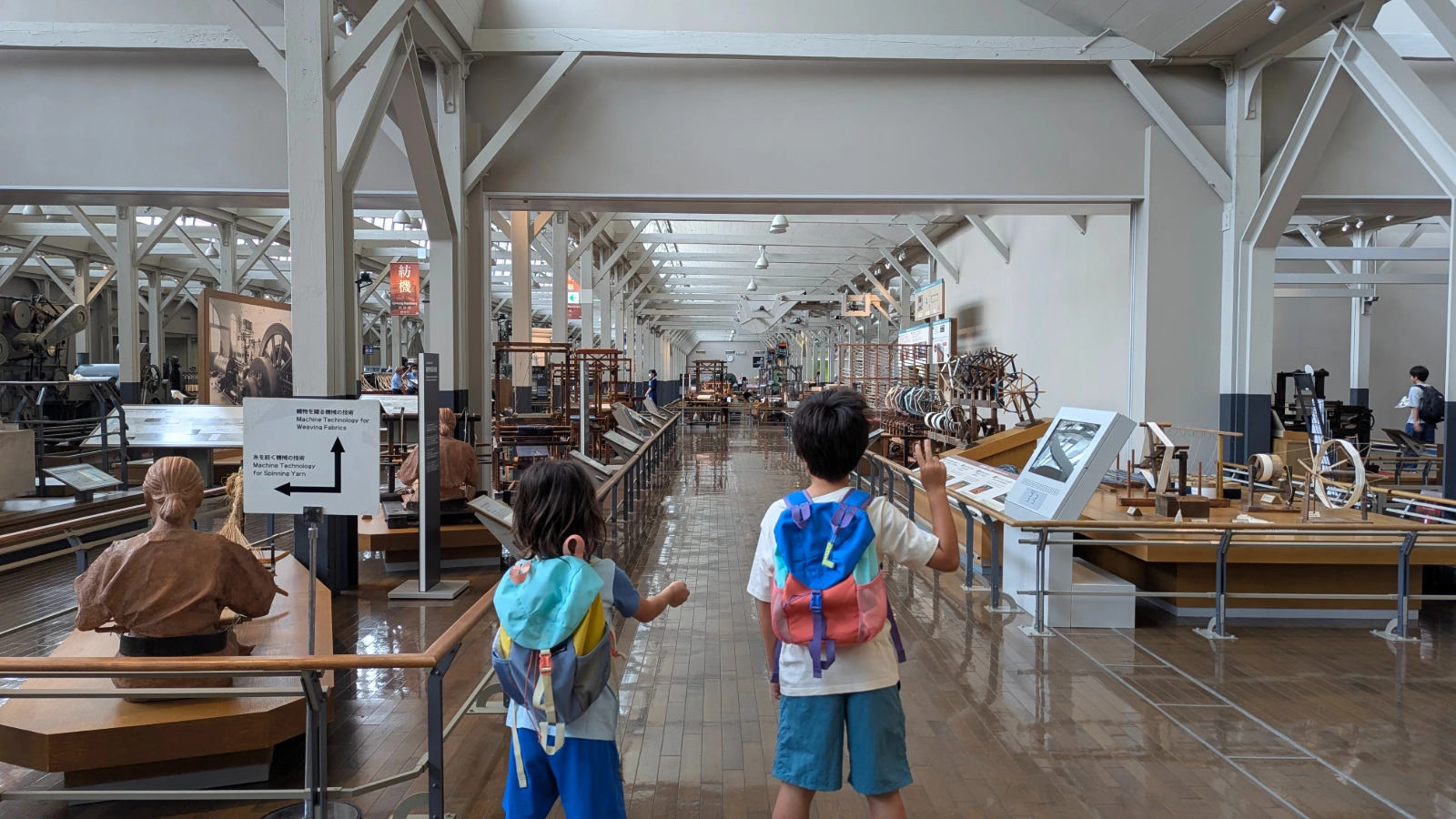
Looms that run, a steam engine, forging every ten minutes and a robot that plays the violin, with a hands-on lab for children that fills up from numbered tickets each day.
Junior high and high school ¥500; preschoolers free. Elementary children free in Nagoya city school vacations.
Admission until 16:30. Closed Mondays (the next day after a holiday) and over the New Year.
Two pavilions, textile machinery and automobiles, and Technoland.
Three Technoland rides need 120 cm; preschoolers go with a guardian.
Limited number; not on escalators, and the building has elevators and ramps.
Some links on this page are affiliate links. LuNi may earn a commission at no extra cost to you.
Is the Toyota Commemorative Museum worth it with kids?
The short version, before the costs, the timings and the case for each child.
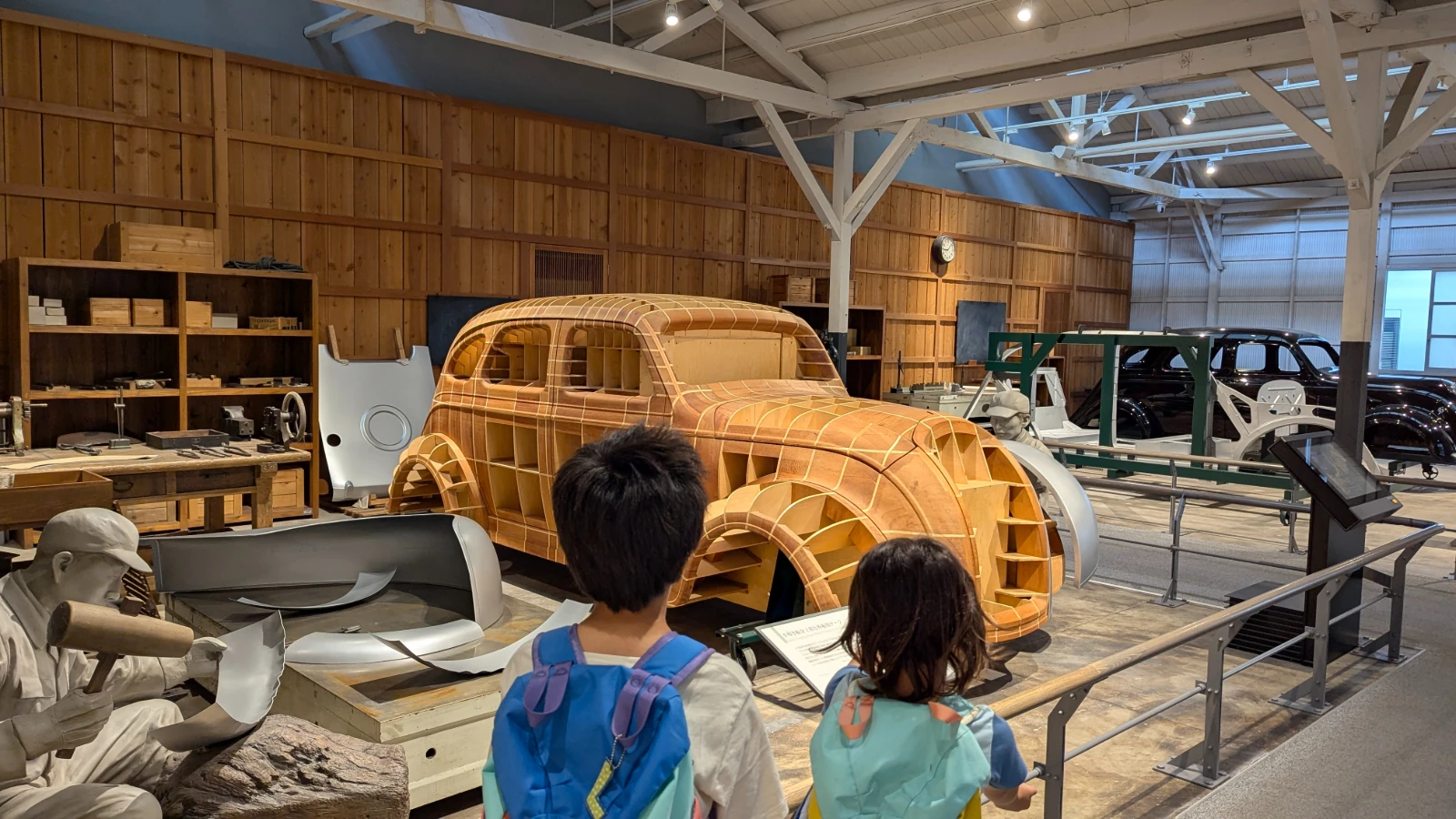
Yes, and it is built to answer a child’s question of how things are made. The Toyota Commemorative Museum of Industry and Technology tells its story through machines that are demonstrated rather than merely displayed: looms that weave, a steam engine, forging and casting, a violin-playing robot, with buttons that set exhibits moving. Two pavilions, one of textile machinery and one of automobiles, hold the whole collection, and Technoland adds a hands-on area for children. The one thing to plan is time. The demonstrations run on a schedule, and Technoland admits by numbered ticket on the day, so a family that arrives with the times in hand, and collects its Technoland ticket first, sees the museum at its best. Allow for the weekends, when the Techno live show adds one more fixed point to the day, and for the restaurant at lunch.
Planning Your Visit to the Toyota Commemorative Museum with Kids.
Three decisions shape the day, and the first is arrival: Technoland admits by numbered ticket, handed out at the museum and first come, so collect one early and build the rest of the visit around its session. The second decision is the demonstrations, which run at set times through the day, so choose two or three a child will care about, the loom, the steam engine or the robot, and plan the walking route between them. The third is getting there, and the Me~guru sightseeing bus from Nagoya Station stops inside the museum grounds, which suits a family with small children and a stroller better than any train. Lunch then settles itself at the restaurant, with its children’s menu and children’s chairs, and it makes a natural break between the two pavilions for tired legs. For the Meitetsu option, Japan’s trains with small children covers the ticket gates.
Every LuNi attraction guide starts with a visit, with our own children
LuNi rates and writes about attractions only after visiting them with children. Luca and Nico were at the Toyota Commemorative Museum, and what they did there is recorded further down this page, including how each child actually met it.
Children arrive with different tolerances: for noise, for lines, for standing still, for being on their feet all day. A guide written for the average of them helps almost nobody. So every place on this site is read four ways, and each verdict says which children it already suits and what makes it work for the rest. Whoever you are bringing, the answer here is built for your family rather than for a general reader.
Restricted-movement depletion eases with buttons that set machines moving and a hands-on lab for children, so collect the Technoland ticket first thing.
Sensory-input depletion depends on the running machines, which work on a posted schedule, so let the child choose which demonstrations to watch.
Unfamiliarity and unconfirmed structure ease with set demonstration times and a children’s menu, so give the child the day’s written schedule early.
Sustained walking and standing span two full pavilions and Technoland, so borrow a stroller at reception and pick the demonstrations that matter.
Hotels we would book for this visit.
Three hotels for the museum day: one above JR Nagoya Station, where the sightseeing bus leaves for a stop inside the museum grounds, one on the Aonami Line, which runs into that same station, and Hilton Nagoya, with a pool for the evening.
| Property | The LuNi Reason |
|---|---|
| LUNI Pick Nagoya Marriott Associa Hotel Above JR Nagoya Station | Above Nagoya Station, where the Me~guru sightseeing bus leaves from the bus terminal and stops inside the museum grounds, so a family can be at the museum door early for a numbered Technoland ticket. Its Family Triple sleeps three and its larger Family Fourth up to five, which suits two children sharing a long day of machines and looms. |
| Nagoya Prince Hotel Sky Tower Sasashima Live Station, Aonami Line, 2 min | For a family that wants height and space, the Nagoya Prince Hotel Sky Tower puts every room on the 32nd floor or above, and its corner rooms take four guests. Sasashima Live, its station, is two minutes away, a ride on the Aonami Line from Nagoya Station and the museum’s Me~guru stand. |
| Hilton Nagoya | Hilton Nagoya’s heated indoor pool is free to guests and open into the evening, a change of pace after a museum of looms and engines; a child under 140 centimeters swims with an adult in the water. Its Family Deluxe room takes four in two wide beds, the children sharing with their parents. |
Nearby attractions, matched to your child.
Three ways to go on from here: the castle on the same sightseeing bus route, for the child who wants the afternoon settled, the sister museum of cars on a joint ticket, or a day on foot at Ghibli Park.
| Pairing | Why This Solves the After-Visit | For Your |
|---|---|---|
| LUNI Pick Nagoya Castle Me~guru bus, or Nagoyajo Station, exit 7, 5 minutes on foot | On the same Me~guru route, Nagoya Castle is a short, settled visit of about an hour to an hour and a half: open grounds, one palace, and a canteen for noodles. Unfamiliarity and unconfirmed structure ease where the afternoon has a known length and a known lunch. Keep it for after the demonstrations. | Anchor |
| Toyota Automobile Museum Nagakute, by Linimo to Geidai-dori Station | A joint ticket covers this museum and the Toyota Automobile Museum, where about 150 cars stand still behind their fences across some 140 years. Sensory-input depletion eases where the cars stand still, and the pace and the distance stay with the child. The joint ticket is sold for cash only at this museum. | Sensor |
| Ghibli Park Linimo, Ai-Chikyuhaku Kinen Koen Station | For a day in Nagakute, Ghibli Park is right by its Linimo station, and its Grand Warehouse holds the Catbus Room and Children’s Town, kept for children of elementary age and under. After a morning among the demonstrations, restricted movement gets a day on foot. Book it first. | Dynamo |
Nagoya Castle
Me~guru bus, or Nagoyajo Station, exit 7, 5 minutes on foot For YourAnchor
Toyota Automobile Museum
Nagakute, by Linimo to Geidai-dori Station For YourSensor
Ghibli Park
Linimo, Ai-Chikyuhaku Kinen Koen Station For YourDynamo
How two children actually met this attraction.
Two children arrived at the same museum not knowing that Toyota had made anything to do with clothes, and that surprise is the best way into this museum, which gives a whole pavilion to textile machinery as well as to the cars. A child who has met the looms first looks at the car pavilion with new eyes, and asks better questions of it. One liked testing the machines himself. The other wanted more control than a museum can give, and wished he could choose the color of the car he made. For a family, the lesson is to lead with the looms and the surprise, then give the child the exhibits that move when he acts, and to be honest in advance about the choices the museum does not offer, so a wish the activity may not allow does not spoil the rest.
Luca had not known that Toyota made anything to do with clothes, and this museum gives a whole pavilion to textile machinery, with the looms shown running. What he liked was being able to test the machines himself. Exhibits across the museum move at the press of a button, so a surprise about what Toyota once made comes with a machine a child can work to see it for himself.
This is the Anchor pattern. Unfamiliarity and unconfirmed structure are what drain his reserve, so a surprising fact unsettles him until he can test it, and a machine that runs the same way each time he presses the button is the proof he wants. Families with a similar child should tell him before the visit that a whole pavilion is given to textile machinery, then let him work the button-operated exhibits there until the surprise has an explanation he trusts and can repeat to the family.
Nico had not known that Toyota made anything to do with clothes either, so the surprise of the textile pavilion was his as much as Luca’s. His disappointment came at the activity where he made a car: he could not choose its color, and he was sad about it. Making a car here means working within the options the activity sets, which is worth telling a child before it starts.
This is the Dynamo pattern, a reserve that restricted movement drains, and what he wanted here was more say over what he made, not less. A museum of demonstrations gives him plenty to watch and some things to press, but the choices are the museum’s. Families with a similar child should put Technoland in the plan early, where he acts rather than watches, and warn him beforehand, plainly, what he will and will not be able to choose, so the limits arrive as known rules, not as surprises.
Watching a loom weave or a steam engine turn shows a child that the things around them were made by machines, and that people made the machines. Seeing the moving parts, rather than only a finished product, makes invention visible: this pushes that, which turns the next. Children who grasp how one part drives another carry that understanding into everything they build and take apart. A museum where industry still moves teaches that ingenuity is patient, practical work, and that it often starts with one simple question about how.
The LUNI Rating for the Toyota Commemorative Museum.
One fact sits under all four verdicts, and each lever below follows from it: this is a museum of working machines, demonstrated on a posted schedule, with a hands-on area for children, set places to eat and a restaurant with a children’s menu. The child who needs to move gets buttons and Technoland; the child sensitive to input gets loud moments he can see coming; the child who needs structure gets a schedule to follow. The Sprinter carries the heaviest load, for two pavilions and a visit of open length. Among Japan’s museums for children few show a child so plainly how machines work.
Collect the Technoland ticket first. The Dynamo depletes through restricted movement, and a museum of historic machines sounds like a long stand. This one is different because its exhibits move: operators demonstrate them, buttons set them running, and videos explain what the child is seeing. Technoland goes further, a hands-on area for children run in timed sessions, where three attractions for taller children need 120 cm. The house rules forbid touching or climbing the exhibits themselves, so the energy belongs at the buttons and in Technoland, and a Dynamo who has been told so in advance rarely tests the rule.
Make Technoland the fixed point of the day. Collect the numbered ticket on arrival, note the session time, and fit the pavilions around it, with the most active demonstrations, forging every ten minutes and the steam engine, as the moments between. Measure the child before the trip if the 120 cm attractions matter. A Dynamo who knows his session is coming can take a slower pavilion in stride, and a younger one can be promised Technoland as the reward for the looms.
What this means for your Dynamo: the Toyota Commemorative Museum gives restricted movement buttons and a hands-on lab. A younger Dynamo needs Technoland early; an older one can add the demonstrations he chooses.Let the child choose the demonstrations. The Sensor depletes through sensory input, and the question here is the machines themselves: looms and engines are demonstrated running, and their noise level is the open question. That is why this verdict is a judgment on the format rather than on a reading. What makes it hold is that the loud moments are scheduled, from the circular loom to the steam engine and the forging, so a family knows when they come and can choose to be elsewhere. Between them, the halls are exhibits a child approaches at his own pace.
The schedule does the work. Look at the demonstration times together, pick the ones the child wants, and watch those from the back of the group first, closer only if the child chooses. Spend the time between in the quieter halls. The Techno live show runs on weekends and holidays only, which gives a Sensor a reason to prefer a weekday. If a demonstration proves too much, walk on; the next exhibit is a button the child controls, at a volume and a pace he sets. A younger Sensor may do best seeing one demonstration, not five.
What this means for your Sensor: at the Toyota Commemorative Museum sensory input arrives on a posted schedule. A younger Sensor needs the loud demonstrations chosen for him; an older one can pick his own.Give the child the schedule. The Anchor depletes through unfamiliarity and unconfirmed structure, and a day built on a schedule of demonstrations is exactly the structure this child wants. Restaurant Brick Age has a children’s menu and children’s chairs, the cafe has a halal chicken curry, and guided tours in English run at a set time in each pavilion each afternoon, free with admission. The rules are plain: no touching the exhibits, eating only in set places, and no balls or toys brought in.
Write the day down for the child. List the demonstrations he will see and their times, add the Technoland session once the ticket is in hand, and say where lunch will be. For an older Anchor, the English guided tour of one pavilion is 45 fixed minutes with a guide to follow, and it answers the questions this child brings. The textile pavilion is best explained before the visit, so it confirms a story rather than springs one.
What this means for your Anchor: the Toyota Commemorative Museum gives unfamiliarity a demonstration schedule and set meals. A younger Anchor needs the day written down; an older one can follow the English tour.Choose the pavilions that matter. The Sprinter depletes through sustained travel-style walking and standing, and this verdict turns on the length of the visit, two to three hours: each pavilion’s guided tour alone runs 45 minutes. Two pavilions and Technoland add up to a long walk, with standing at each demonstration on top. What helps is the building, with ramps inside and out, elevators and handrails, strollers lent at reception, and a bus stop inside the grounds, which keeps the walking within a family’s reach.
Choose rather than cover. Borrow a stroller at reception for a younger child, since the number is limited, and use the elevators, since strollers cannot ride the escalators. Pick one pavilion as the core and the Technoland session as the goal, and sit for lunch at Brick Age between them. A family that sees the looms, the steam engine and Technoland has had the best of the museum, and the car pavilion can wait for an older child or a second visit on the joint ticket.
What this means for your Sprinter: two pavilions and Technoland at the Toyota Commemorative Museum add up on foot. A younger Sprinter needs the stroller from reception; an older one needs one pavilion, not two.The questions parents actually ask.
The Toyota Commemorative Museum runs on a schedule, and planning it means reading that schedule: when the machines are demonstrated, when Technoland’s sessions begin and how the numbered tickets are handed out. Around that, the facts are simple, with fixed hours, a Monday closing, a bus that stops in the grounds, no charge for preschoolers and free entry for elementary children in the city’s school vacations. For a family watching the budget, Japan on a family budget gathers more savings like it. Arrive early for the Technoland ticket, choose two or three demonstrations, and the rest of the day follows without much effort from anyone.
Is the Toyota Commemorative Museum worth visiting with kids?
Yes, especially for a child who wants to know how things work. The museum demonstrates its machines rather than simply showing them, with looms that run, a steam engine, forging and casting, and a violin-playing robot, all at set times through the day. Technoland adds a hands-on area for children, entered by a numbered ticket collected at the museum on the day of the visit.
How much does the Toyota Commemorative Museum cost?
Adults pay 1,000 yen, university students 600, junior high and high school students 500, elementary school children 300 and those 65 and over 200, and preschoolers enter free. Elementary children also go free during Nagoya city’s spring, summer and winter school vacations. A joint ticket with the Toyota Automobile Museum costs 1,800 yen for an adult, paid in cash only at this museum.
How does Technoland work?
Technoland runs in timed sessions, and each person may enter once a day. Besides the admission ticket, a family needs a same-day numbered ticket, handed out at the museum, first come; it cannot be booked by web or phone. Preschool children must be with a guardian, and three attractions, Techno Circuit, Mission de Mission and the frost-tree bicycle, need a height of 120 cm.
When are the machine demonstrations?
Through the day. The circular loom runs at 9:55, 11:25, 13:25 and 14:55 for about five minutes, and the steam engine at 11:00, 14:30 and 15:30. Forging runs every ten minutes from 9:40 to 16:30, and the violin-playing robot plays five times a day. The Techno live show runs on weekends and public holidays only.
When is the Toyota Commemorative Museum open?
From 9:30 to 17:00, with admission until 16:30. Mondays are its closing day, shifting to Tuesday after a Monday holiday, and it also closes for the New Year break. It also closes when a storm warning is issued for eastern or western Owari, and after a strong earthquake in Nagoya, so check the museum’s notices on a stormy day before setting out.
How do you get to the Toyota Commemorative Museum?
The simplest route is the Me~guru sightseeing bus from stand 11 at the Nagoya Station bus terminal; its stop is right inside the museum grounds. Otherwise take the Meitetsu Nagoya Main Line to Sako Station and walk about three minutes. A taxi from Nagoya Station takes about five minutes by road instead, and drivers will find free parking for 220 cars on site.
Is the museum stroller friendly?
Yes. Strollers are lent at reception, in limited number, and the building has ramps inside and out, elevators and handrails on the stairs. Strollers and wheelchairs may not ride the escalators, so use the elevators between the floors. The nursing room has hot water and a baby bed, and some baby beds and chairs are in the restrooms, some in the men’s.
Can you eat at the Toyota Commemorative Museum?
Yes. Restaurant Brick Age serves lunch from 11:00, with a children’s menu and children’s chairs, and a museum cafe offers a halal chicken curry. Eating is allowed only in the designated places, though capped drinks are fine anywhere in the halls, so plan the snacks around the restaurant. Balls, rackets and toys may not be brought in, so leave them at the hotel.
Where the Toyota Commemorative Museum fits your Japan trip.
Official site and opening information: Toyota Commemorative Museum of Industry and Technology