Japan is the easiest place
to travel with kids.
Most parents file Japan under someday, the advanced trip you take once the kids are older and calmer. That instinct is almost universal, and it is wrong.
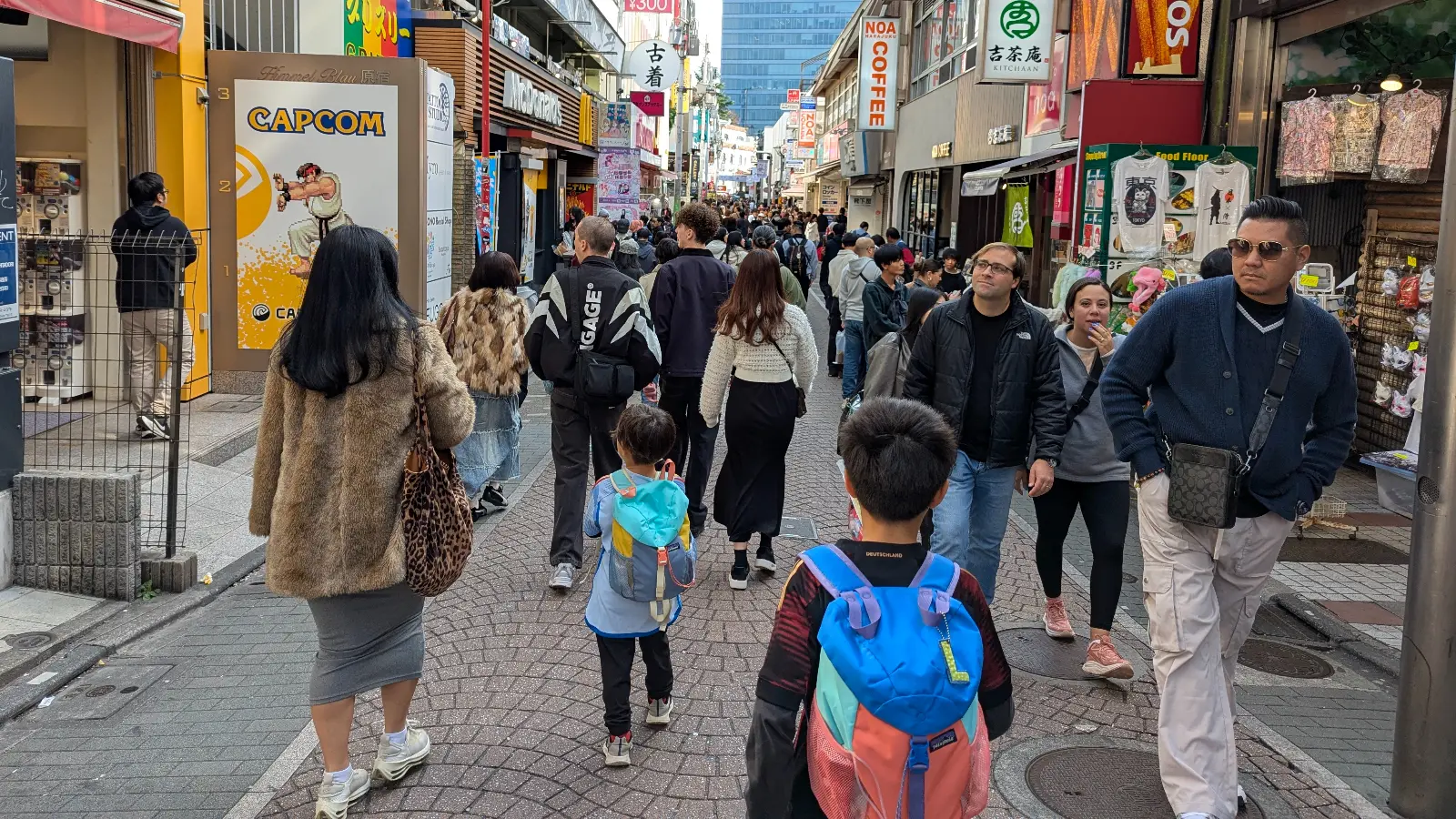
Ranked among the world’s safest for visitors; the monitoring instinct relaxes day one.
Safety, transit, culture, and daily design all pull the same direction.
Stroller access standard, reduced child fares, English on color-coded lines.
7-Eleven, Lawson, and FamilyMart carry kid-friendly food nationwide.
Some links on this page are affiliate links. LuNi may earn a commission at no extra cost to you.
You have the days. Now the nights.
Where to stay in Japan →The story parents tell themselves.
Japan sounds like the advanced version of family travel. The trip you take once the kids are older, calmer, more able to cope. That instinct is nearly universal, and it does not survive contact with the country.
Ask a parent why they have not taken their children to Japan, and a familiar picture appears. A country on the far side of the world, written in a script they cannot read, organized around crowds and customs they do not know, and asking for a level of composure their kids have not yet grown into. The belief is that Japan is hard. That it belongs to a later chapter, after the toddler years pass and the family has logged easier trips closer to home. Parents file it under someday.
This guide argues the reverse. Japan is not the destination you graduate to. For most families it is the easiest major international trip available, and the reasons are structural rather than sentimental. Safety, transport, culture, and the small mechanics of an ordinary day all pull in the same direction instead of trading against one another. The LUNI Framework is the instrument that settles a question like this one, because it never asks whether a place is charming. It asks whether a country’s systems reduce the load a family carries or add to it. Japan reduces it. What follows takes the belief apart one objection at a time, then names the single variable that actually decides how your trip goes.
That a foreign city is a risk.
The first thing parents picture is a lost child in an unreadable megacity. It is the objection that carries the most emotional weight, and it collapses fastest on the ground.
Japan ranks consistently among the safest countries in the world for visitors, and families do not experience that as a statistic. They feel it at street level, usually inside the first day. Children can walk a few steps ahead without it requiring active surveillance. Returning families report the same small thing consistently enough that it has become a cliche: a bag left on a cafe chair is still there when you turn back. Train platforms, temple grounds, and dense shopping streets in Asakusa and Shibuya run on a shared code of calm that holds even at their most crowded.
What changes for parents is not the itinerary. It is the cognitive load they carry through every hour of it. In most major cities, a family moves as a single cluster because the cost of separation is real. In Japan that cost drops close to zero. At Shinjuku Station during evening rush hour, one parent can take the slower route with a younger child while the other catches the express with an older one, and the two groups reconvene at the exit without the low tension that same split would produce almost anywhere else.
That released attention is not a luxury. It is capacity returned to the day. And the Sensor depletes through sensory input, which this country concentrates in a short list of nameable places: a rush-hour carriage at Shinjuku, the crowd density on a shrine approach at midday. The order that holds between them is not a comfort. It is a planning variable, and the move it licenses is specific: put the high-input stop first thing in the morning and hold a quieter one immediately after it, rather than stacking two.
That the trains are too much.
The second objection is logistical: a transit map in a language you cannot read, a stroller wedged in a turnstile, a missed connection with two tired kids in tow. The reality inverts almost every part of that picture.
Japan’s rail and bus networks are the single largest advantage a family has here, and not because they are fast. They are decisive because they are reliable, and reliability removes the most exhausting element of traveling with children: uncertainty. The system was built to be read without literacy. Lines are color-coded and numbered, major stations carry clear English signage, and stroller access is standard rather than a scavenger hunt. Children ride at reduced fares on local and regional transport, and the Japan Rail Pass makes Shinkansen travel between cities predictable enough that a multi-city itinerary stops feeling ambitious and starts feeling routine.
The Shinkansen earns a specific mention for what it does to pacing. The Sprinter depletes through sustained travel-style walking and standing, which a Japan day supplies in volume, so the bullet train is not only transport. It is recovery: a sealed, climate-controlled hour in a reserved seat, in which a child sits, decompresses, and arrives at the next city with capacity intact rather than already spent. Book the intercity leg into the afternoon of a heavy walking day rather than the morning, and the ride pays back the steps that came before it. The walking demands of a Japan day are real, commonly 15,000 to 20,000 steps, and the network does not erase them. It structures them. Families who plan around station proximity and hand the heavy bags to Japan’s Takuhaibin luggage delivery, roughly 2,200 to 3,200 yen per suitcase from hotel to hotel, remove the worst logistical friction before the trip even begins.
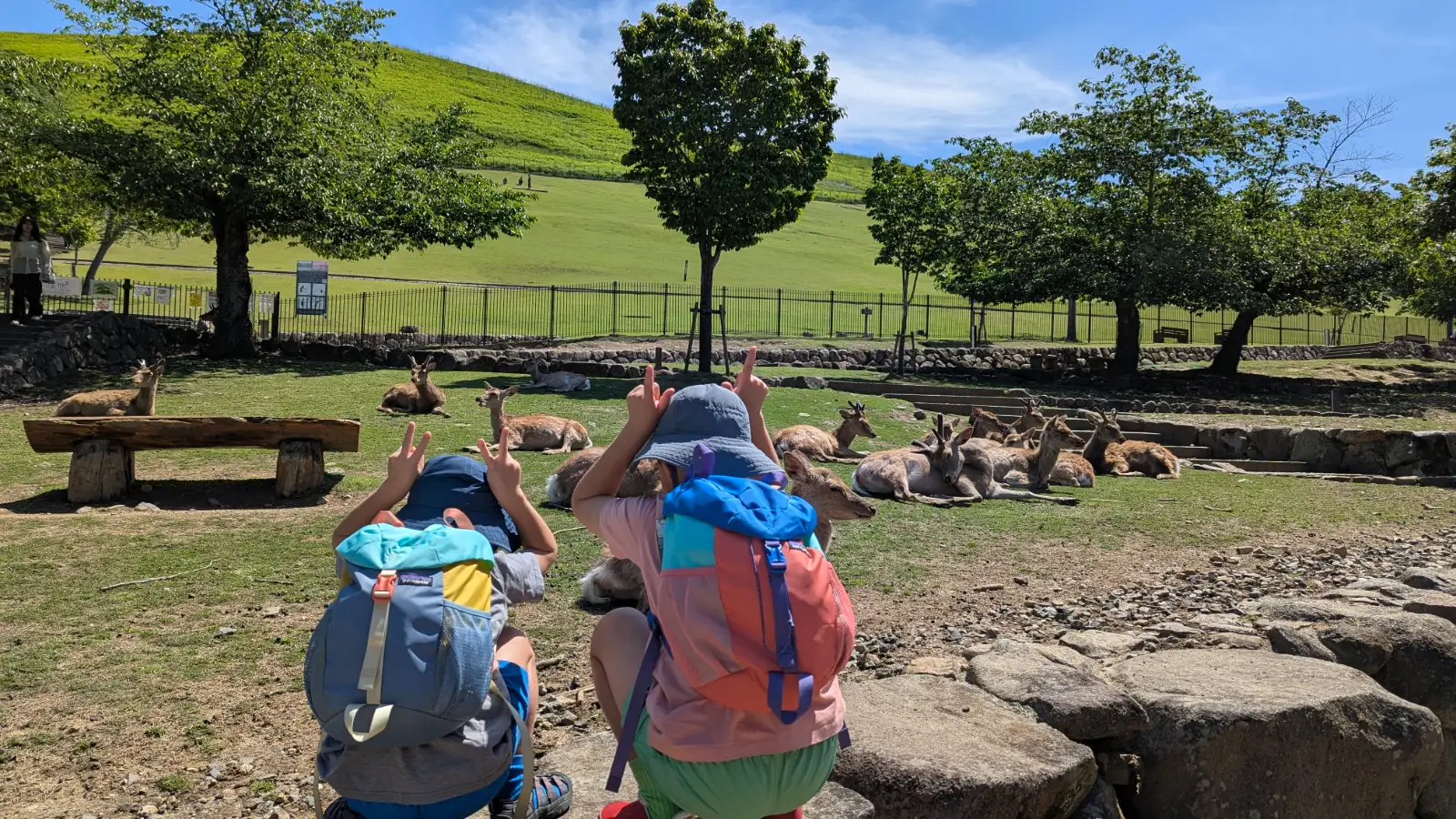
That kids will be bored, or in the way.
The third objection is quieter and more honest: a suspicion that temples and shrines are adult pleasures, and that children will either be bored by them or treated as an intrusion on them.
This is where the belief is most precisely wrong. Japan’s welcome for children is real, but the useful part is not its warmth. It is its form. The welcome is operational. Restaurants produce high chairs and child-sized portions without being asked. Shrine and temple staff extend patience to children attempting rituals they do not fully understand. Free or reduced entry for young children is common across the museum, shrine, and park network, from Meiji Jingu to the National Museum of Nature and Science in Tokyo.
More important than the price is that the sites themselves are participatory. At Fushimi Inari in Kyoto, walking the torii gates is something a child does rather than watches. At Senso-ji in Asakusa, drawing a fortune slip and clapping at the main hall is not a performance staged for tourists. It is the actual practice, and children are invited straight into it. That is the shift parents struggle to describe to friends who have not seen it. In Japan a child is not an inconvenience to be managed around the real trip. The child is inside the frame of it. A younger child can ring a bell and bow at a gate; an older one can read the story behind the ritual and carry it home. The engagement scales with age rather than excluding either end of it.
Interactive rituals do more than keep a child occupied. Clapping at a shrine, drawing a fortune slip, bowing at a gate, each one shifts the child from observer to participant, and that shift is where genuine cultural memory begins. A child who has bowed at a gate remembers the place differently than one who walked past it. A trip that reaches a child as explanation is something done to them. One that reaches them as action is something they did, and that is the version still standing a year after the temples have blurred.
That the daily logistics will wear you down.
The final objection is the accumulation of small ones: the fear that feeding, resting, and managing children in an unfamiliar country will grind a family down by day three.
It is a fair worry, and it is the one Japan answers most quietly. The things parents actually cite when they come home are rarely the Shinkansen or the shrines. They are the details nobody warned them about. Convenience stores, specifically 7-Eleven, Lawson, and FamilyMart, are the most underrated resource in the country for families. They carry rice balls, fruit jellies, sandwiches, hot food, and snacks a child will genuinely eat, at low cost and consistent quality wherever you are. Between two big stops, or in the transit window between Kyoto and Osaka, a convenience store stop is a micro-reset: food, a pause, and a small decision a child gets to make alone.
Parks work the same way. Yoyogi Park in Tokyo and Ohori Park in Fukuoka are not attractions. They are recovery zones set into the city, and two profiles bank on them for opposite reasons. The Dynamo depletes through restricted movement, and an unfenced open field within twenty minutes of an indoor stop is where that energy discharges instead of compounding, so route one park into every day rather than hoping a gap appears. The Anchor depletes through unfamiliarity and unconfirmed structure, and the same bench is the cheapest place in Japan to confirm it, so name the afternoon’s next two stops out loud there before anyone moves. Even the vending machines carry weight, handing a child a concrete, independent choice in an environment where adults make nearly every other decision.
None of this requires advance planning, which is the point. The single variable worth planning around is the calendar. Spring and autumn keep the walking sustainable; summer travel is possible but asks for real heat management and an awareness of the Obon peak in mid-August, when domestic travel and prices both spike.
What the myth hides underneath.
Take the four objections together and the belief does not survive them. But the myth was never entirely empty. It hides a real question beneath its false one.
Safety removes vigilance fatigue. Transport removes uncertainty. Culture removes the sense that children are an imposition. Everyday convenience removes the friction that piles up across a multi-day trip. Each would matter on its own. Their convergence is what changes the baseline of what travel with kids feels like, and it is why the honest answer to whether Japan is hard with children is no.
The real question sits underneath. Japan’s ease is structural, not absolute, and structural ease is not the same as a guarantee. Families already budget two currencies, money and time. The framework names a third: reserve, a child’s finite daily capacity to absorb what a trip asks of them. Japan lowers the demand on that reserve more than almost any comparable destination, but it does not remove your specific child from the equation. A Sensor child overwhelmed by Shinjuku at rush hour is still a Sensor child in the safest country on earth. An Anchor child still depletes through unfamiliarity and unconfirmed structure, so the konbini breakfast and the next day’s shape, confirmed the night before, stay yours to book rather than Japan’s.
So the difficulty parents feared was never really Japan. The variable that decides the trip is the fit between the country’s structural ease and one particular child’s reserve. Knowing your child’s travel profile before you sequence a single day is what converts Japan’s convergence into a trip your family can actually sustain. That is the planning move the myth talks people out of making, by convincing them the hard part is the destination when the hard part is the calibration.
The questions families ask most.
Is Japan safe for families traveling with children?
Japan is one of the safest destinations in the world for families. Crime rates are among the lowest of any developed country, public spaces hold a consistent order even at their most crowded, and children are treated with respect from dense urban stations to rural shrines. Most parents report that their monitoring instinct relaxes inside the first day, which is a marked change from travel in most other countries and the fastest way the country disproves its own reputation for difficulty.
Why is Japan the easiest place to travel with kids?
No single feature makes Japan easy. The convergence of several does. Safety is structural, transport is reliable, children are culturally welcomed rather than tolerated, and everyday conveniences like convenience stores, clean restrooms, and accessible parks remove the friction that accumulates on other trips. Because these systems pull in the same direction instead of trading against one another, the baseline load a family carries is lower here than in most destinations marketed as easier.
How does Japan’s transport system help families with kids?
Japan’s trains and buses are clean, punctual, and clearly signed in English, with color-coded and numbered lines a child can follow without reading Japanese. Stroller access is standard in major stations, children ride at reduced fares on local transport, and the Japan Rail Pass makes Shinkansen travel between cities predictable and affordable. For a Sprinter child, who depletes through sustained travel-style walking and standing, a Shinkansen leg booked into the afternoon of a heavy walking day doubles as recovery, which makes getting around one of the least stressful parts of the trip.
Do children get free or discounted entry at attractions in Japan?
Yes. Free or reduced admission for children is common across Japan’s museum, shrine, and park network. The National Museum of Nature and Science in Tokyo offers discounted family rates, and many shrines, including Senso-ji and Meiji Jingu, charge no admission at all. Most city transport systems also apply child discounts on IC cards and regional passes. These savings accumulate meaningfully across a multi-day itinerary, which lowers the cost of cultural exploration at exactly the age it pays off most.
When is the best time to visit Japan with kids?
Spring, from March through May, and autumn, from October through November, are the strongest seasons for family travel in Japan. Temperatures are mild, crowds stay manageable outside the peak cherry blossom and foliage weekends, and the walking demands of a Japan itinerary are far more sustainable without summer heat. Summer travel is possible but calls for deliberate heat management and awareness of the Obon holiday in mid-August, when domestic travel peaks and accommodation prices rise sharply in popular cities.