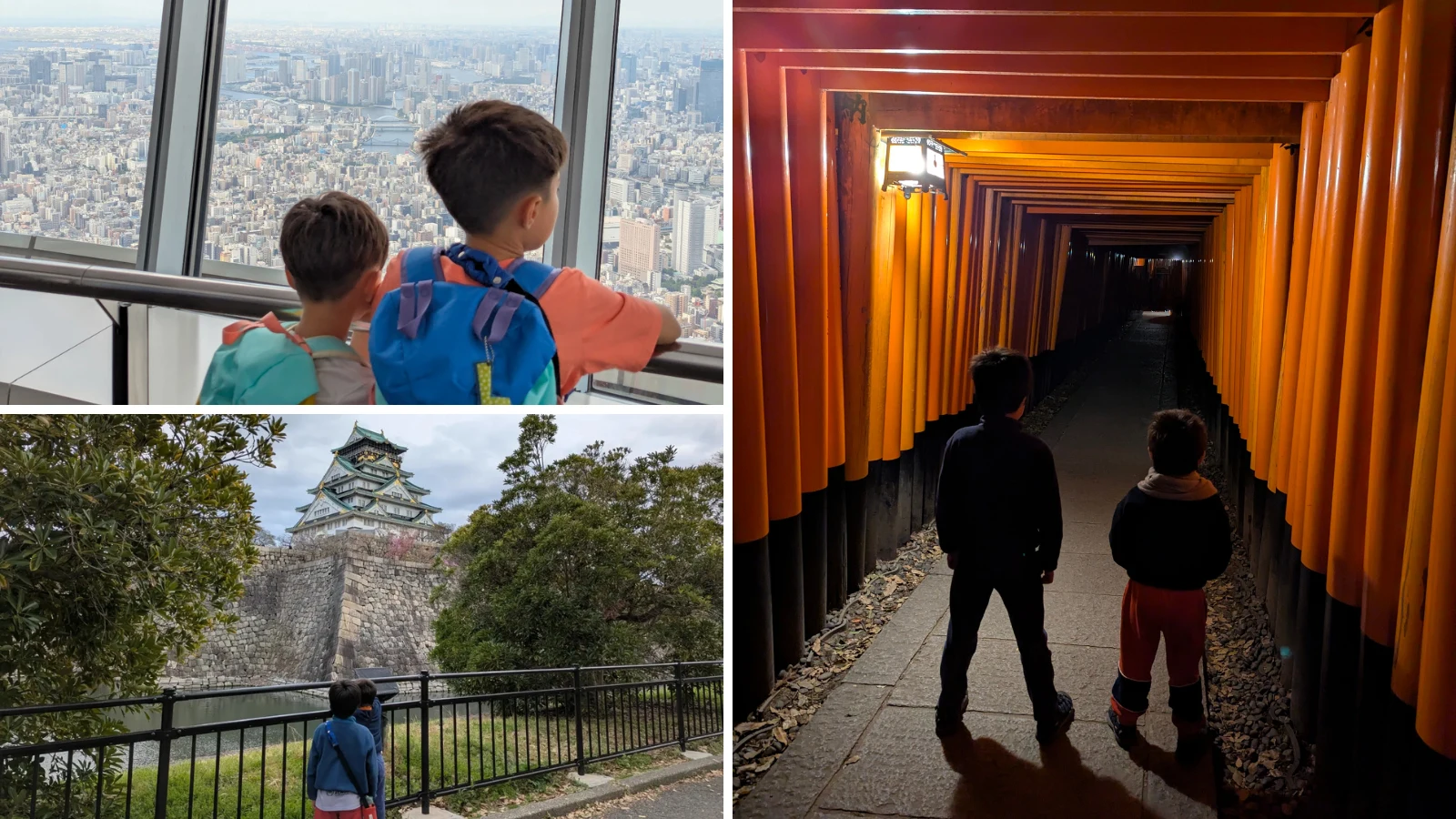
Japan has a reputation it has not fully earned. Parents researching their first international trip with children often imagine it as complicated, expensive, and culturally opaque. The families who actually go discover something different: a country that is, by almost every practical measure, the most structurally forgiving destination on earth for traveling with kids. The benefits of traveling to Japan with kids are not incidental, they are built into the infrastructure, the culture, and the daily rhythm of a society that genuinely accommodates families.
The question most parents bring to this research is not just “is Japan family friendly?” It is more specific than that: will Japan be manageable for my particular child, with my particular family, at this stage of travel? That is the right question, and this guide answers it with the specificity it deserves. For a complete orientation to planning your trip, the Japan Family-Friendly Travel Hub is the best place to start.
1. Safety: The Benefit That Changes How You Travel
Japan consistently ranks among the top ten safest countries in the world, and the practical effect of that safety on a family trip is more significant than most parents anticipate. Violent crime is exceptionally rare. Lost property is routinely returned. Streets are safe to walk at night, and local children, including elementary school students, navigate train networks independently, without adult supervision.
Which costs your child more,
a museum or a playground?
You have the days. Now the nights.
Where to stay in Japan →For parents, this changes the texture of the entire trip. The low-level vigilance that consumes energy in many destinations, tracking bags, monitoring distance, scanning unfamiliar crowds, largely disappears. That recovered attention is what allows parents to actually be present for the experience rather than managing it from a defensive posture.
2. Cleanliness: A Genuine Operational Advantage
Cleanliness in Japan is not a tourism talking point. It is an operational advantage for families. Public restrooms are available throughout train stations, shopping centers, convenience stores, and major attractions, and they are maintained to a standard that removes hygiene as a daily planning concern. Most feature heated seats, washlet functions, and, in family-oriented facilities, baby chairs, changing tables, and nursing rooms.
For parents traveling with young children, this infrastructure removes one of the most energy-draining variables of international travel: constant assessment of whether a restroom will be acceptable before committing to an attraction. In Japan, the answer is almost always yes.
3. Getting Around: A Transport System Built for Families
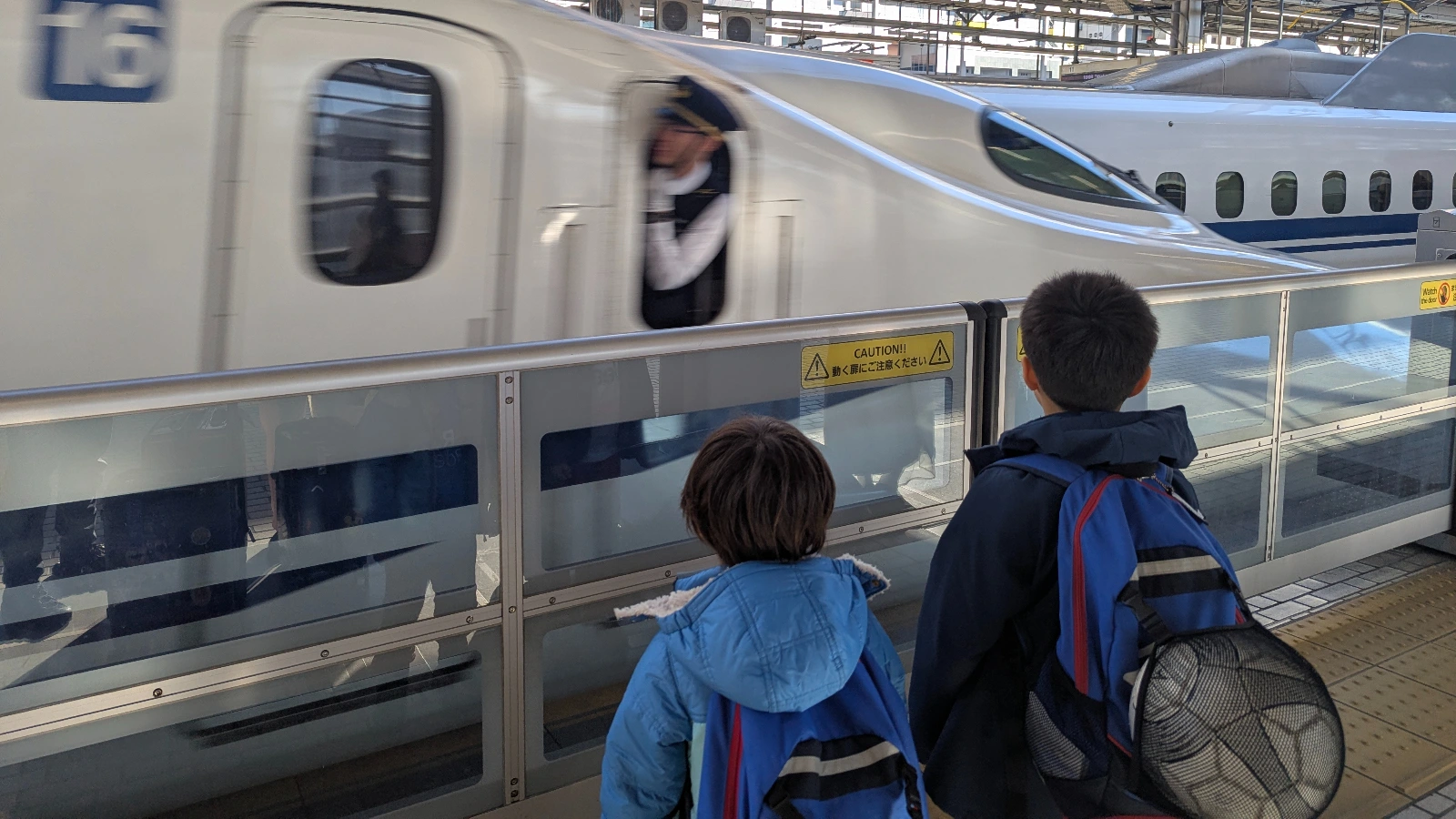
Japan’s public transport system is fast, punctual, and genuinely accessible, and the Shinkansen bullet train is one of the most reliably enjoyable experiences a family can have in the country. Seats are spacious, snack carts pass through carriages, and the trains run on schedules accurate to the minute. For children, the novelty is immediate and sustains itself across multiple journeys.
City metro systems, particularly in Tokyo, Kyoto, and Osaka, carry a reputation for complexity that rarely survives contact with the actual experience. Most major stations have elevators, clear English signage, and staff equipped to assist families.
Takuhaibin: The Single Most Underused Advantage in Japan Family Travel
The most significant logistical benefit available to families in Japan is Takuhaibin, Japan’s luggage delivery service, and the majority of first-time visitors do not use it. The service allows families to send luggage directly between hotels for a nominal fee, typically ¥1,500 to ¥2,500 per bag, eliminating the need to carry suitcases through train stations, up staircases, and through crowded urban streets. For families managing strollers, car seats, or children who are too tired to walk at the end of a long day, this service changes the physical experience of moving between cities entirely.
RELATED GUIDE
LuNi Intel: The drop-off cutoff for Takuhaibin is typically the night before your departure, not the morning of. Submit your bags at the hotel front desk the evening before your travel day. Same-day submission usually guarantees delivery to your next hotel the following evening, not same-day, which affects how you pack your carry-on for travel days.
4. Culture: Immersive by Design, Not by Accident
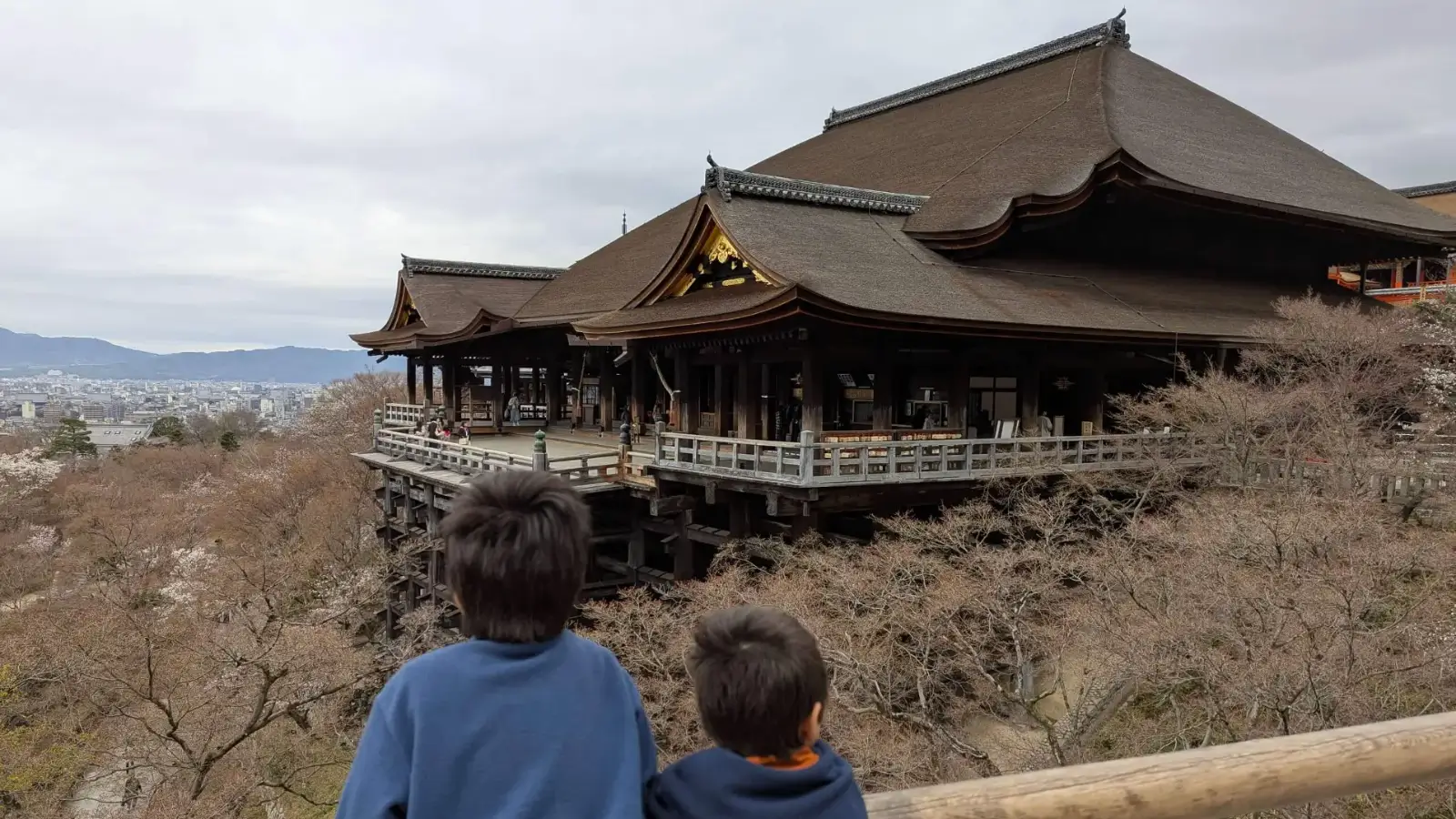
Japan’s cultural sites are participatory in ways that most parents do not expect. At Shinto shrines like Meiji Jingu in Tokyo, children can clap, bow, and write wishes on ema plaques. At Buddhist temples like Senso-ji in Asakusa, the incense ritual, where visitors wave smoke toward themselves for health, is immediately comprehensible to children and physically engaging. At Fushimi Inari Taisha in Kyoto, hiking through thousands of vermilion torii gates requires no historical knowledge to feel profound.
The pedagogical value of this is worth stating precisely: Japan does not require children to understand its culture to engage with it. The engagement comes first. The understanding builds around it. That sequencing, experience before explanation, is why cultural visits in Japan work for children who would find similar sites elsewhere passive and alienating.
Parent Insight: The small rituals of Japan, removing shoes at a ryokan entrance, bowing at a shrine, choosing a fortune slip, give children a genuine role to play in a culture rather than an observer’s seat. When a child has a job to do within an experience, they stop watching and start participating. That shift from spectator to participant is what converts a cultural visit into something they actually remember.
5. Food: Japan Solves the Picky Eater Problem Structurally
Japanese food culture accommodates hesitant eaters more effectively than parents tend to expect, not through compromise, but through genuine variety. Karaage (fried chicken), udon noodles, onigiri rice balls, gyoza, and plain white rice are foods that most children accept immediately. Conveyor-belt sushi restaurants (kaitenzushi) remove the social pressure of ordering and allow children to select exactly what they want at their own pace.
For families with reliably difficult eaters, Japan’s convenience store network, operating through chains like 7-Eleven, Lawson, and FamilyMart, functions as a permanent safety net. Egg sandwiches, steamed buns, fried chicken, fruit, and hot foods are available around the clock. Most restaurants also offer okosama lunch sets, dedicated children’s menus with mild curry, rice, hamburger steaks, and french fries, which serve as a reliable fallback at sit-down meals.
The Anchor child, whose limited food repertoire is frequently the primary planning challenge in international travel, is better accommodated in Japan than in almost any other international destination.
6. Seasons: Every Time of Year Has a Specific Case for It
Japan does not have a single best time to visit with children. It has four distinct seasonal arguments, each of which makes a genuine case depending on the family’s priorities.
Spring (late March to early May) is the most visually iconic period: cherry blossoms create picnic culture (hanami) in public parks throughout the country, with families gathering under flowering trees in a ritual that requires no planning beyond showing up. The temperature is mild and the atmosphere celebratory.
Summer (June to August) is the most logistically demanding season but also the most festive. Fireworks festivals (hanabi taikai) occur throughout July and August, culminating in events like the Sumida River Fireworks Festival in Tokyo. Summer is also the most important season to plan around, not through: Obon, observed August 10 to 18, is a nationwide ancestral memorial period during which domestic travel reaches its annual peak. Hotels sell out months in advance, Shinkansen seats require reservation well ahead of schedule, and popular attractions are at their most crowded. Families should either plan explicitly for Obon, leaning into the festival atmosphere, or structure arrival and departure to avoid the August 13 to 16 core window entirely. Treating Obon as an invisible date on the calendar is the planning error most responsible for summer trip failures.
Autumn (September to November) offers the most comfortable travel conditions of the year. Temperatures are moderate, humidity drops sharply, and the country’s mountainous terrain transforms with autumn foliage. Destinations like Nikko in Tochigi Prefecture reach peak color in mid-to-late October, providing hiking routes that are accessible to school-age children and visually spectacular.
Winter (December to February) divides cleanly by geography. Northern Japan, particularly Hokkaido, offers world-class snow experiences including Sapporo’s Snow Festival in February. Southern destinations remain mild. Winter is the low-season period for most tourist infrastructure, which translates to shorter queues, better hotel availability, and lower prices.
RELATED GUIDE
7. The Old-Meets-New Balance: A Problem Japan Solves Automatically
The most common family travel tension, between children who want stimulation and parents who want cultural depth, does not require active management in Japan because the country resolves it by design. A single day in Kyoto can begin at Kiyomizu-dera temple, move through Nishiki Market, and end with children watching the illuminated facades of Gion. A single day in Tokyo can include both the hands-on digital art experiences of teamLab Planets in Toyosu and afternoon exploration in the grounds of a 400-year-old castle.
The practical consequence is that teenagers, who frequently disengage from conventional cultural tourism, remain engaged because Japan’s contemporary culture, anime districts in Akihabara, streetwear in Harajuku, arcade culture in Shibuya, carries genuine weight alongside its historical sites. No family member is required to sacrifice their version of the trip.
8. Attractions: Japan Was Designed Around Children
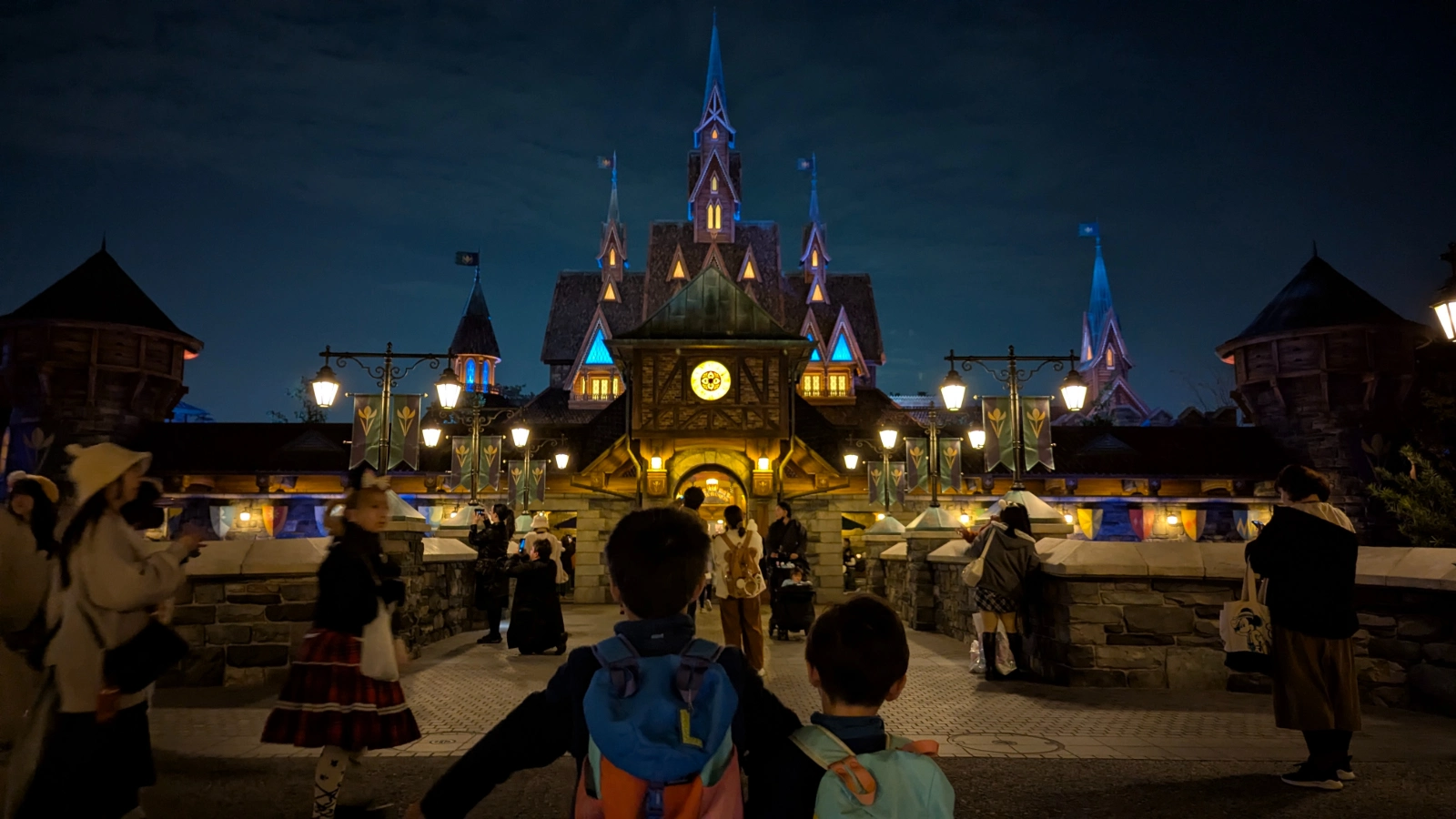
The attraction infrastructure in Japan extends well beyond its internationally recognized theme parks, though Tokyo Disneyland, DisneySea, and Universal Studios Japan in Osaka are each world-class family destinations. What distinguishes Japan is the density of purpose-built, highly interactive facilities at every tier of the attraction landscape.
Science and technology museums, including the Miraikan National Museum of Emerging Science and Innovation in Odaiba and Kids Plaza Osaka, are designed explicitly for child engagement, with hands-on exhibits, robot demonstrations, and interactive programming that functions as genuine education without signaling itself as such. The Saitama Railway Museum is among the most purely enjoyable destinations in the country for children under eight. Ueno Zoo in Tokyo is the oldest zoo in Japan and remains one of the most accessible major animal experiences in the region.
The editorial hierarchy matters here: teamLab’s two permanent Tokyo experiences, Planets in Toyosu and the relocated Borderless in Azabudai Hills, serve different family profiles and reward different visits. Families uncertain which to choose should consult the teamLab Planets vs. Borderless guide for families before booking, as the ticketing structure, physical format, and age suitability of each experience differ in ways that matter for children.
9. Respect Culture: The Benefit That Parents Don’t Anticipate
Japan’s social culture, built on mutual respect, orderly behavior, and public consideration, creates a travel environment that is substantively different from most international destinations and whose benefits for traveling families extend beyond surface-level comfort.
Children are genuinely welcomed in Japan, not merely tolerated. Restaurant staff may bring small gifts or origami to young guests. Train staff are patient with families navigating systems for the first time. The cultural assumption that people will behave with consideration toward others means that families moving through Japan with children rarely encounter the friction that characterizes family travel in many European city centers.
The secondary benefit is educational, and it is specific: children who travel Japan learn that public behavior has rules, that those rules are followed by everyone, and that social order is maintained by collective agreement rather than enforcement. That understanding is transferable.
10. Japan Scales: The Destination Grows With Your Child
Japan is one of a small number of international destinations that justifies repeated visits at different life stages, not because the attractions change, but because the child does. The experience available to a four-year-old in Odaiba’s waterfront parks is categorically different from the experience available to a twelve-year-old navigating Akihabara or a sixteen-year-old spending an afternoon in Harajuku’s independent fashion district.
This scalability has planning implications. Families with toddlers should structure around aquariums, open parks, and destinations with low-stimulus environments and strong stroller infrastructure. Families with school-age children (ages 6 to 12) are in the optimal window for Japan’s castle, temple, and science museum circuit. Families with teenagers can introduce increasing levels of independent navigation, purchasing train tickets, ordering food, or spending an afternoon in a district of their choosing, in a context where the risk of doing so is genuinely low.
The Sprinter family with a child whose physical stamina is the primary planning constraint should understand that Japan’s density works in their favor: major attractions in Tokyo, Kyoto, and Osaka are concentrated in ways that minimize walking distance between high-value stops. A well-structured day in Asakusa, for example, covers Senso-ji, Nakamise shopping street, and Sumida Park within a radius that most Sprinter children can manage comfortably in a single morning session.
The Japan Briefing: Essential Intel
A: Yes, Japan is consistently rated among the best family destinations in the world. It combines exceptional safety standards, accessible public transport, and world-class attractions spanning science museums, theme parks, and cultural sites, all within a country where children are genuinely welcomed and cleanliness is treated as infrastructure rather than an amenity.
A: Yes, Japan ranks among the top ten safest countries globally by every major measure. Violent crime is extremely rare, lost property is routinely returned, and local children navigate train systems independently from elementary school age, which provides an accurate indicator of the baseline safety environment international families can expect.
A: Japan is effectively designed for every developmental stage, but the experience differs significantly by age. Children aged 6 to 12 are in the most universally rewarding window: old enough to engage with cultural sites, physically capable of the walking demands, and still receptive to the novelty Japan provides at every turn. Toddlers are well served by Japan’s facility infrastructure; teenagers by the country’s contemporary cultural depth.
A: Yes. Japan’s convenience store network alone, through chains like 7-Eleven, Lawson, and FamilyMart, provides 24-hour access to egg sandwiches, fried chicken, fruit, and familiar carbohydrates. Most sit-down restaurants offer okosama lunch sets with mild curry, rice, and Western-adjacent items designed for children. Karaage, udon, gyoza, and plain rice are broadly accepted even by children with narrow food repertoires.
A: No. Most families traveling Japan’s major cities, Tokyo, Kyoto, Osaka, Hiroshima, and Fukuoka, have no need for a rental car. Train and metro systems cover virtually every family-relevant destination. Car rental is worthwhile only for families specifically targeting rural Hokkaido, parts of Okinawa, or areas not served by the Shinkansen network.
A: Japan’s cost structure favors families who plan strategically. Daily transportation with a rail pass, convenience store meals, and entry to temples, shrines, and many museums is genuinely budget-accessible. The highest costs are airfare and accommodation near peak events, particularly Obon (August 10 to 18) and Golden Week (late April to early May), where hotel prices rise significantly and availability tightens. Families who avoid those windows or book accommodation well in advance will find Japan considerably more affordable than its reputation suggests.
A: Locals are understanding of tourists, including families with young children, in spaces governed by Japan’s social norms of quiet. The practical guidance is straightforward: avoid phone calls on trains, manage volume on public transport, and if a young child becomes distressed on a train carriage, stepping briefly to the door area is the considerate move. No Japanese cultural expectation requires children to behave as adults. The gap between expectation and enforcement is wider than most first-time visitors anticipate.
A: Yes, but a compact, foldable travel stroller is strongly preferable. Major train stations have elevators, but they are not always positioned conveniently relative to platforms, and finding them during busy periods adds time. A lightweight umbrella stroller handles restaurant aisles, crowded train carriages, and smaller hotel rooms more comfortably than full-size travel systems. Families traveling with Sprinter children who use a stroller as a mobility aid rather than a transport vehicle should prioritize finding elevators at major interchanges before they are needed.
What Comes Next
The decision to travel Japan with kids is the straightforward part. The planning decisions that follow, which cities, in what order, for how long, and calibrated to which child’s specific needs, are where preparation pays off. The Japan Family-Friendly Travel Hub is the right place to begin building that plan.