Sapporo Ainu Culture Promotion Center with Kids: Hands Before Eyes.
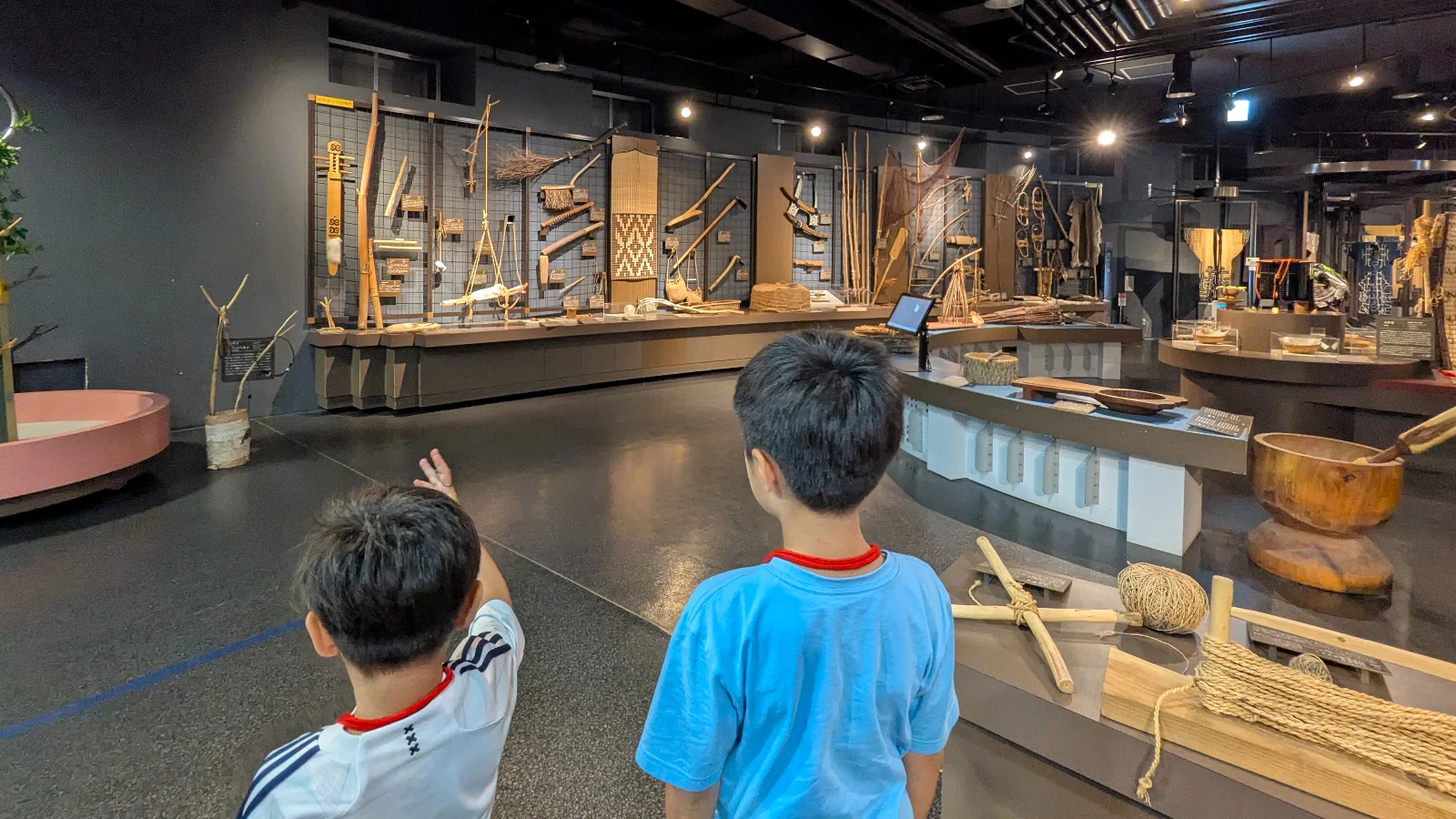
A museum where children may pick up nearly everything is rare anywhere, and this one sits an hour’s bus ride out of Sapporo, which costs some children more than others.
¥150 high school and university; junior high and under free; the crafts are free. No booking needed.
Last entry 16:45; closed Mondays, national holidays, the last Tuesday of each month and December 29 to January 3.
Built around a 30-minute craft; one free session per person per day.
Elementary children join the craft with a parent; four crafts to choose from.
An elevator, slopes and multipurpose restrooms.
Some links on this page are affiliate links. LuNi may earn a commission at no extra cost to you.
Is the Sapporo Ainu Culture Promotion Center worth it with kids?
The short version, before the costs, the timings and the case for each child.
Yes, and for a child who learns with their hands it may be the best-value morning in Sapporo. Nearly everything in the exhibition room can be picked up, around three hundred objects, and every child can make something at a free craft session. It is cheap, too: children through junior high pay nothing. The costs are elsewhere. The center is about an hour’s bus ride from Sapporo Station, the craft is one short session per person, and the large traditional house in the outdoor village has been closed to visitors since late 2025. Go on a clear morning with a craft chosen in advance, take the craft ticket first, and treat the exhibition room and the village as the rest of a half-day.
Planning Your Visit to Sapporo Ainu Culture Promotion Center with Kids.
This is a half-day that is mostly won before arrival. First, the day: the center keeps an unusual set of closing days, weekdays and holidays among them, and a month-end one too, so check the calendar rather than assuming a weekday is safe. Second, the journey. By bus it is about an hour each way, or a subway ride and a shorter bus, and by car it is about forty minutes with free parking, which is the easy choice if you have one. Third, the craft. There is no booking; each person takes a ticket for a time slot from a machine on the day, so the very first job on arrival is taking the ticket. Fit the rest of the week around it with our Sapporo guide.
Every LuNi attraction guide starts with a visit, with our own children
LuNi rates and writes about attractions only after visiting them with children. Luca and Nico were at Sapporo Ainu Culture Promotion Center, and what they did there is recorded further down this page, including how each child actually met it.
Children arrive with different tolerances: for noise, for lines, for standing still, for being on their feet all day. A guide written for the average of them helps almost nobody. So every place on this site is read four ways, and each verdict says which children it already suits and what makes it work for the rest. Whoever you are bringing, the answer here is built for your family rather than for a general reader.
Restricted-movement depletion builds on an hour’s bus ride each way and a thirty-minute craft, so drive if you can and start outdoors.
Sensory-input depletion stays low with objects to handle and a craft of six people at most, so make the craft the center of the visit.
Unfamiliarity and unconfirmed structure ease when the craft has a ticketed start and a thirty-minute length, so choose the craft together beforehand.
Sustained walking and standing stay low on a compact site six minutes from the bus stop, so let the craft session be the midpoint.
Hotels we would book for this visit.
Three city bases, because the center is a half-day trip rather than somewhere to stay near. Each suits a family that will take the bus from Sapporo Station or drive out and be back by mid-afternoon.
| Property | The LuNi Reason |
|---|---|
| LUNI Pick JR Tower Hotel Nikko Sapporo | The rapid buses to the center leave from Sapporo Station, which makes a city base the natural starting point. It is the natural base for a family whose whole week is city-based, with the long ride to the center as the day’s one big journey. |
| Keio Plaza Hotel Sapporo | Keio Plaza Hotel Sapporo is a large central hotel. The center is a long bus day out of the city, about an hour each way, and after it a family wants a room that asks nothing more of anyone for the rest of the evening. |
| Hotel Sosei Sapporo MGallery Collection In Sapporo | The third option, with a kid-friendly listing. For this trip it plays the same role as the other two, a city base with the bus to the center starting at Sapporo Station, so choose between them on the room and the price rather than the location. |
Hotel Sosei Sapporo MGallery Collection
Nearby attractions, matched to your child.
Three pairings for what a morning of objects and crafts leaves behind: a child who wants more calm on the same side of the city, a child who wants more history with a plan, and a child who needs to run.
| Pairing | Why This Solves the After-Visit | For Your |
|---|---|---|
| LUNI Pick Hill of the Buddha Both by bus from Makomanai Station | The Hill of the Buddha shares the Makomanai side of the trip and keeps its calm: a walk through a tunnel to a great Buddha, in grounds where visitors keep quiet. Sensory-input depletion stays low when both halves of the day are gentle. | Sensor |
| Historical Village of Hokkaido A separate day, from Shin-Sapporo by bus | The Historical Village of Hokkaido sorts its fifty-two buildings into four named groups, structure that eases unfamiliarity. A Sprinter pays for it, though, because walking and standing add up across the large site, so choose one group and use the tram where it runs. | Anchor |
| Odori Park Sapporo About 60 minutes by bus, back to Sapporo Station | An hour on the bus and a thirty-minute craft leave a moving child with energy to spend. Odori Park in the city center has the room for it, with play equipment in its middle blocks in season, and restricted-movement depletion finally gets an outlet. | Dynamo |
Hill of the Buddha
Both by bus from Makomanai Station For YourSensor
Historical Village of Hokkaido
A separate day, from Shin-Sapporo by bus For YourAnchor
Odori Park Sapporo
About 60 minutes by bus, back to Sapporo Station For YourDynamo
How two children actually met this attraction.
Two children arrived at the same center and needed different things from it before it could work. One held back at first, reading and working out how the rooms connected, until a craft gave him a method to follow and the strangeness fell away. The other never held back at all: he went from object to object, handling everything, asking how each thing was made, until the questions ran out on their own. Both of them left with something new, in their hands or in their heads, from the morning. Between them they show what the center offers a child, a task for one and a room full of things to touch for the other, and why the order of the morning is worth deciding ahead.
Luca was hesitant walking in, staying close to his parents while he read the first panels and worked out how the rooms connected. He settled the moment the craft workshop gave him a task with a clear method. He followed each step carefully, checked his work against the example more than once, and did not want to leave it unfinished. Once the making absorbed him, he started narrating what the pattern was supposed to mean.
This is the Anchor pattern. A child whose Reserve depletes through unfamiliarity and unconfirmed structure turns a strange place into a known one through a bounded task with a clear method. Families with a similar child should make the craft the first stop, choose which one at home, and say before it starts that the session has a fixed length, so the ending is expected rather than a surprise in the middle of the work.
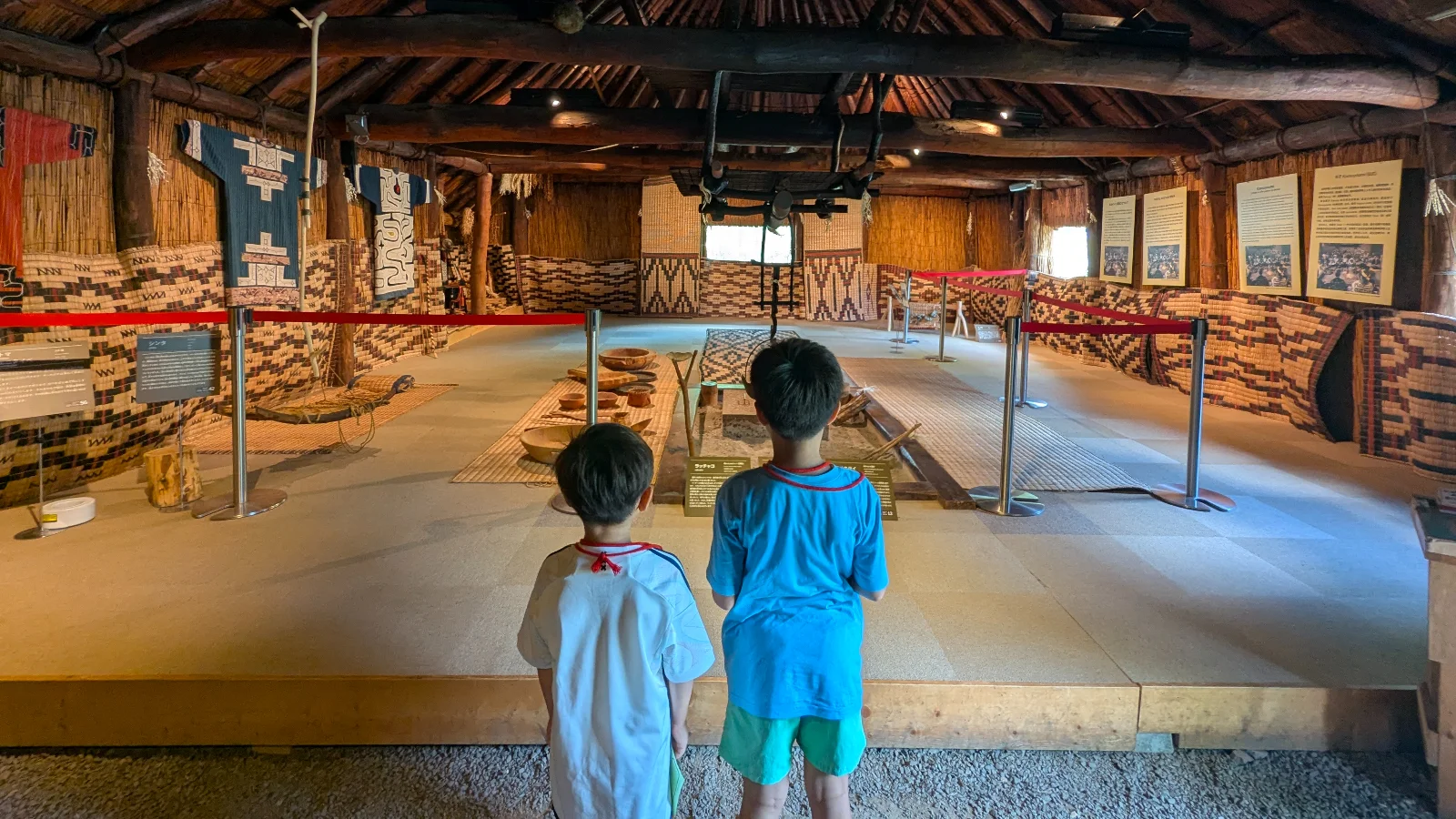
Nico did not stop moving. He went from the tools to the clothing to the reconstructed house and back, wanting to know how each thing had been made from animals and plants, and asking faster than anyone could answer. He pressed close to the touchable replicas, handled every one twice, and treated the outdoor village as a circuit to walk rather than a display to view. His questions came hardest early on and thinned as the morning wore on.
This is the Dynamo pattern. A child whose Reserve depletes through restricted movement turns curiosity into motion, moving object to object because holding still is the real cost. Families with a similar child should start outdoors and in the exhibition room while the energy peaks, where every object can be handled, and put the seated craft later, after the circuit, so the stillness arrives when the child is ready for it, not at the start.
A museum where children may pick up and handle nearly everything opens a door to another culture through touch. Holding objects made and used by the Ainu people helps a child understand that a culture lives in everyday things and skills, not only in stories. Making a craft of their own deepens that respect. A child who has handled the things of another people’s daily life comes away with curiosity rather than distance, which is one of the most valuable things travel can give a young mind.
The LUNI Rating for Sapporo Ainu Culture Promotion Center.
One fact sits under all four verdicts: this is a small, hands-on center a long way from the city. Inside, the exhibits are there to be handled, the craft is short and the groups are small, and the whole site is compact. That suits a child who needs calm, a child who needs structure and a child who tires on foot. The cost falls on the child who needs to move, because the journey is an hour of sitting each way and the best activity is a craft session. For a second free indoor morning on the same subway line, the Sapporo City Sewage Science Museum is easier to reach.
Cut the ride, and start outdoors. The Dynamo depletes through restricted movement, and the cost here is mostly the journey. By bus, the center is about an hour from Sapporo Station each way, or a subway ride and a forty-minute bus, and that is a long time to sit before and after a visit. Inside, the most memorable activity is a thirty-minute craft. Between them, the day asks a moving child to be still for longer than the museum itself lasts.
Shorten whatever can be shortened. Drive if you can: it is about forty minutes, with free parking. On arrival, take the craft tickets for a later slot, then go outdoors first, to the village houses, the storehouse and the pond, and let the child cover the ground before sitting down. The large house, the Poro Chise, is closed to visitors, so do not promise it. Plan something open for the afternoon, back in the city.
What this means for your Dynamo: restricted movement comes from the journey and the craft. A younger Dynamo needs the car and the outdoors first; an older one can manage the bus if the craft comes after the outdoor circuit.Make the craft the center of the visit. The Sensor depletes through sensory input, and this is a gentle place for it. The exhibition room holds about three hundred objects that can be picked up and turned over, so the child meets the collection through the hands at their own pace. The craft session takes six people at most, runs thirty minutes, and offers four kinds of making: embroidery, wood carving, a strap or a can badge.
The craft works as a fixed, short anchor rather than somewhere to settle for the afternoon. It is one session per person per day, and it may not be finished in the time, so tell the child the length before starting. Take a slot in the late morning, after the exhibition room, and use the outdoor village afterward for fresh air. On event Sundays, dance, games and food tastings run at the center, so a Sensor does better on another day.
What this means for your Sensor: sensory input stays low with small groups and objects in hand. A younger Sensor needs the craft length named first; an older one can choose the craft and plan the morning around it.Choose the craft together, before the bus. The Anchor depletes through unfamiliarity and unconfirmed structure, and a cultural center far from the city could be a lot of unknowns. What carries it is how much structure the visit has. The craft has a ticketed start time and a thirty-minute length, the four choices are known, and the guide to the exhibition room is an app, in English as well as Japanese, that a child can follow object by object.
Make the plan concrete. Choose the craft at home, show the child the route, the bus and the six-minute walk from the stop, and name the order: ticket, exhibition room, craft, village. Download the guide app before leaving, because the center’s free Wi-Fi is the backup, not the plan. A child who knows the Poro Chise is closed will not be disappointed by it.
What this means for your Anchor: unfamiliarity fades with a ticketed craft and a known order. A younger Anchor needs the sequence named at home; an older one can follow the guide app through the exhibition room alone.Let the craft be the halfway rest. The Sprinter depletes through sustained travel-style walking and standing, and this visit asks for little of either. The site is compact, about 12,800 square meters, with one two-story building and the outdoor areas beside it, and the walk from the Koganeyu bus stop is about six minutes. The journey itself is long, but it is spent sitting on a bus rather than walking.
Get the morning’s sequence right. Put the thirty-minute craft between the exhibition room and the outdoor village, so the one long stop falls in the middle of the visit rather than at the end. By car the walk shrinks further, because parking is free and on site. The one thing to budget is the return: the bus runs back to Sapporo on its own schedule, so check it before the child is too tired to wait.
What this means for your Sprinter: walking and standing stay low on a compact site. A younger Sprinter needs the craft as the midpoint rest; an older one can add the full outdoor village without paying for it later.The questions parents actually ask.
The Ainu Culture Promotion Center turns on access and the craft: how to get there, what the sessions involve, what it costs, and whether the traditional house is open. Put briefly, for a family planning the day: an hour’s bus ride, a free thirty-minute craft, very little money, and not at present. Back in the city, a short sight at a subway exit makes a good end to the day, and the Sapporo TV Tower stands right at one, at Odori Station. The center rewards the family that decides the craft, the day and the route at home, before the long ride.
Is the Sapporo Ainu Culture Promotion Center worth visiting with kids?
Yes, for a child who learns with their hands. The exhibition room holds about 300 Ainu objects that visitors may pick up and touch, and a free craft session lets each child make something. It is a long bus ride from central Sapporo, about an hour, so plan it as a half-day of its own.
How much does it cost?
Entry to the building and the craft sessions are free. The exhibition room costs 350 yen for adults and 150 yen for high school and university students, and children through junior high enter free, so two adults and two younger children pay 700 yen. The ticket machine does not take 5,000 or 10,000-yen notes.
How do the Ainu craft sessions work?
They are free and run 10:00 to 12:00 and 13:00 to 16:00 on every open day. Each person chooses one of embroidery, wood carving, strap-making or can-badge-making, for one 30-minute session per day, with up to six people at once. Take a time-slot ticket from the machine on the day; there is no booking.
When is the Sapporo Ainu Culture Promotion Center open?
The exhibition room and outdoor area open 9:00 to 17:00, with last entry to the exhibition room at 16:45. The center closes on Mondays, national holidays, the last Tuesday of each month, and December 29 to January 3. The building itself opens longer hours, 8:45 to 22:00.
How do you get there from Sapporo Station?
Take the Jotetsu Bus rapid 8J or 7H toward Jozankei Onsen or Hoheikyo Onsen, about 60 minutes, to the Koganeyu stop, then walk about 6 minutes. Or ride the subway Namboku Line to Makomanai and take Jotetsu Bus 12J or 12H, about 40 minutes. By car it is about 40 minutes, and parking is free.
Can you go inside the large Ainu house?
Not at present. The large house in the outdoor village, the Poro Chise, has been closed to entry since November 14, 2025, after a survey found rot in its pillars, and no reopening date has been set. The rest of the outdoor area, with its other houses, storehouse, plants and pond, is open 9:00 to 17:00.
Is there English at the Sapporo Ainu Culture Promotion Center?
The exhibition room’s guide runs on the Pocket Gakugeiin app, in Japanese, English, Chinese and Korean, and the center has free Wi-Fi to use it. Download the app before the long bus ride, and set up a phone for an older child to follow the guide on their own.
Is it the same place as Sapporo Pirka Kotan?
Yes. Sapporo Pirka Kotan is the center’s name, and the City of Sapporo runs it. It opened in 2003 on a site of about 12,800 square meters, with a two-story building for the exhibition room and crafts, and the outdoor village and nature areas around it.
Where the Sapporo Ainu Culture Promotion Center fits your Japan trip.
Official site and opening information: Sapporo Ainu Culture Promotion Center (Sapporo Pirka Kotan)