Hamamatsu With Kids:
which stop is for which child.
Hamamatsu looks like one city and plays like two. By the station, a science museum and a museum of musical instruments sit within ten minutes’ walk of the train; out at Lake Hamana, an amusement park, a ropeway and a zoo share one bus route, the zoo about 40 minutes from the station. Which half a family picks shapes the day more than any single stop in it.
A science museum on foot from JR Hamamatsu, with a corner for small children.
Visits by reservation only, so the day is fixed before it starts.
One way through, about 25 minutes, with no turning back.
A cabin crossing of the lake, boarded beside Hamanako Pal Pal.
Which stop is for which child.
Eleven stops between the station and Lake Hamana, grouped by the child each one gives the most to.
These eleven are not ordered best to worst. They are grouped by which child each one is for, across the four profiles of The LUNI Framework. Family travel runs on three currencies, not two: money and time, plus the child’s reserve, their finite capacity to absorb what travel asks of them. Hamamatsu’s stops fall into two halves, a station quarter covered in minutes on foot and a lakeside reached by a bus of about 40, so the half a family picks decides which child the day leans toward, and a sibling with other needs waits for the other half. The Dynamo runs short when they cannot move, the Sensor on noise and crowding, the Anchor when nothing is predictable, and the Sprinter on walking and standing. Find your child below, and start there.
Mirai-ra, the science museum by the station.
Mirai-ra is not the single best stop in Hamamatsu for every child; it is the one that costs each of them least. It stands about 7 minutes’ walk east of JR Hamamatsu, lends strollers, keeps nursing rooms on two floors with water for formula on the second, and holds a planetarium and a Kids Science Land for the smallest children, so a family with a toddler and a ten-year-old can split up under one roof and meet again. The one rule to plan for is that children in second grade and under come with a guardian, and a preschooler with as many adults as could lead them out by the hand in an emergency.
Find the row for your child, then read the entry below it.
| The Stop | What It Settles | Best For |
|---|---|---|
| Hamanako Pal PalKanzanji, by bus from JR Hamamatsu | A whole day of rides and walking between them by the lake. | Dynamo |
| Hamamatsu ZooAbout 40 min by bus from JR Hamamatsu | A hillside zoo walked up and down, with lunch from home allowed. | Dynamo |
| Hamanako Garden ParkMurakushi, on Lake Hamana | Wide paths, a water-play plaza and no ticket at the gate. | Dynamo |
| Hamamatsu Museum of Musical Instruments10 min on foot from JR Hamamatsu | Sound a child can put on and take off, and a room to play in. | Sensor |
| JASDF Hamamatsu Air ParkAbout 30 min by taxi from JR Hamamatsu | Real aircraft, a flight suit to try on, and a loud film to opt into. | Sensor |
| Nakatajima Sand DunesAbout 20 min by bus from Hamamatsu | Four kilometers of open sand on the coast, with room to spread out. | Sensor |
| Hamamatsu CastleAbout 10 min by bus from JR Hamamatsu | A small keep whose rules a child can be told on the way. | Anchor |
| Ryugashido CaveAbout 1 hr by bus from Hamamatsu | One route through the cave, about 25 minutes, the same for everyone. | Anchor |
| Suzuki Plaza MuseumJR Takatsuka Station, about 10 min on foot | A visit booked ahead, so its date and hour are fixed. | Anchor |
| Kanzanji RopewayBoards beside Hamanako Pal Pal | A ride over the lake, wheelchairs included. | Sprinter |
Hamanako Pal Pal
Dynamo
Hamamatsu Zoo
Dynamo
Hamanako Garden Park
Dynamo
Hamamatsu Museum of Musical Instruments
Sensor
JASDF Hamamatsu Air Park
Sensor
Nakatajima Sand Dunes
Sensor
Hamamatsu Castle
Anchor
Ryugashido Cave
Anchor
Suzuki Plaza Museum
Anchor
Kanzanji Ropeway
Sprinter
For the Dynamo
Stops with ground to cover and rides to climb onto.
What in Hamamatsu suits a child who drains fastest when held still? The lakeside, where the day is spent moving.
An amusement park by the lake, with rides that take the very young. Hamanako Pal Pal is an amusement park at Kanzanji on Lake Hamana, reached by the bus bound for Kanzanji Onsen from stand 1 at the north exit of JR Hamamatsu. For a child who empties out when held still, a day of rides and the walking between them is the discharge a museum quarter cannot give, and families may bring their own food, eaten anywhere but the restaurants. A two-year-old is not left out, since a set of rides, the Ferris wheel and the merry-go-round among them, takes children that age with a guardian, while an older child has the run of the whole park.
Who it costs.The Sprinter, since walking and standing fill every gap between the rides, and the strollers for rent at the Center House are B-type, sized for toddlers rather than a tired eight-year-old.
How to make it work.Stage shows run on the Pal Stage, open to the sky with stepped seating, and move into the Center House in rain, so check the weather before promising a show. If the family plans the ropeway too, buy the park’s ride pass, which covers the ropeway there and back.
If this isn’t your child: a full day of rides with the lake beside it, and little for a child who came to Hamamatsu for the museums.A zoo laid over the lakeside’s own slopes. Hamamatsu Zoo was built on the natural lie of the land by Lake Hamana, and its paths rise and fall with it. For a child who empties out when held still, that is a zoo whose route keeps them climbing and descending between the animals rather than waiting at one enclosure, and a family may eat its own lunch at the benches and rest spots through the grounds. It is two minutes’ walk from the Zoo stop, on the Kanzanji Onsen bus that also serves Pal Pal. A four-year-old takes the slopes as the game; a ten-year-old can choose the order of the animals.
Who it costs.The Sprinter, and heavily, because the walking here is uphill and down: the route rises and falls throughout, no strollers are lent, and outdoor wagons and wagon-style strollers are not allowed in.
How to make it work.Bring the family’s own folding stroller for a small child, since none can be borrowed, and walk the route downhill wherever the paths allow. The nursing rooms have no hot water, so carry it for formula.
If this isn’t your child: a zoo with a real climb in it, worth the bus for a child who loves animals and hard going for one who tires on hills.A lakeside park with a water-play plaza and nothing to pay at the gate. Hamanako Garden Park charges nothing at the gate or in its parking lot, and its children’s plaza and water-play plaza give a child somewhere to spend what the flower beds do not. For a child who empties out when held still, it is room to move with a destination at the end: the Flower Museum, about 1.3 kilometers from the parking by either main path, some 20 minutes each way. Strollers and wheelchairs are lent free at the information desks, first come, with no booking. A child under six stays with an adult throughout; a twelve-year-old can walk ahead to the Flower Museum.
Who it costs.The Sprinter, for whom the distance on foot is the cost. The walk to the Flower Museum and back is about 2.6 kilometers before anything else is seen, and a tour group’s usual stay runs about an hour and a half.
How to make it work.Take a stroller from the information desk on arrival, before the walk, since they go first come. Bring lunch or eat at the restaurant or the coffee shop, and carry the family’s trash home, because the park has no trash cans.
If this isn’t your child: an open park for a restless child with no ticket to buy, and a long walk to the flowers for one who came to sit.For the Sensor
Stops where the loud part is optional or the space is wide.
Where does a child who runs short on noise and crowds manage Hamamatsu? Where sound comes through headphones, or on open sand.
A museum of sound, heard through headphones the child controls. The Hamamatsu Museum of Musical Instruments is 10 minutes on foot from the north exit of JR Hamamatsu, and its galleries carry listening points where each instrument is heard through headphones or earphones, so the sound reaches the child when the child chooses. For a child who runs short on sensory input, a museum of music in which the sound is put on and taken off is a loud subject delivered quietly. Gallery 4 holds a hands-on room where instruments and sound-makers can be played freely, and short daily talks bring out instruments such as the Indonesian gamelan. A five-year-old plays whatever the hands-on room holds; a fourteen-year-old can work through the listening points gallery by gallery.
Who it costs.The Dynamo, whose need to move gets one room here. Outside the hands-on room, the visit is galleries walked slowly.
How to make it work.Go to the hands-on room first for a child who needs to act, then take the galleries; for a child who finds sound hard, start at the listening points, where the volume stays in the child’s hands.
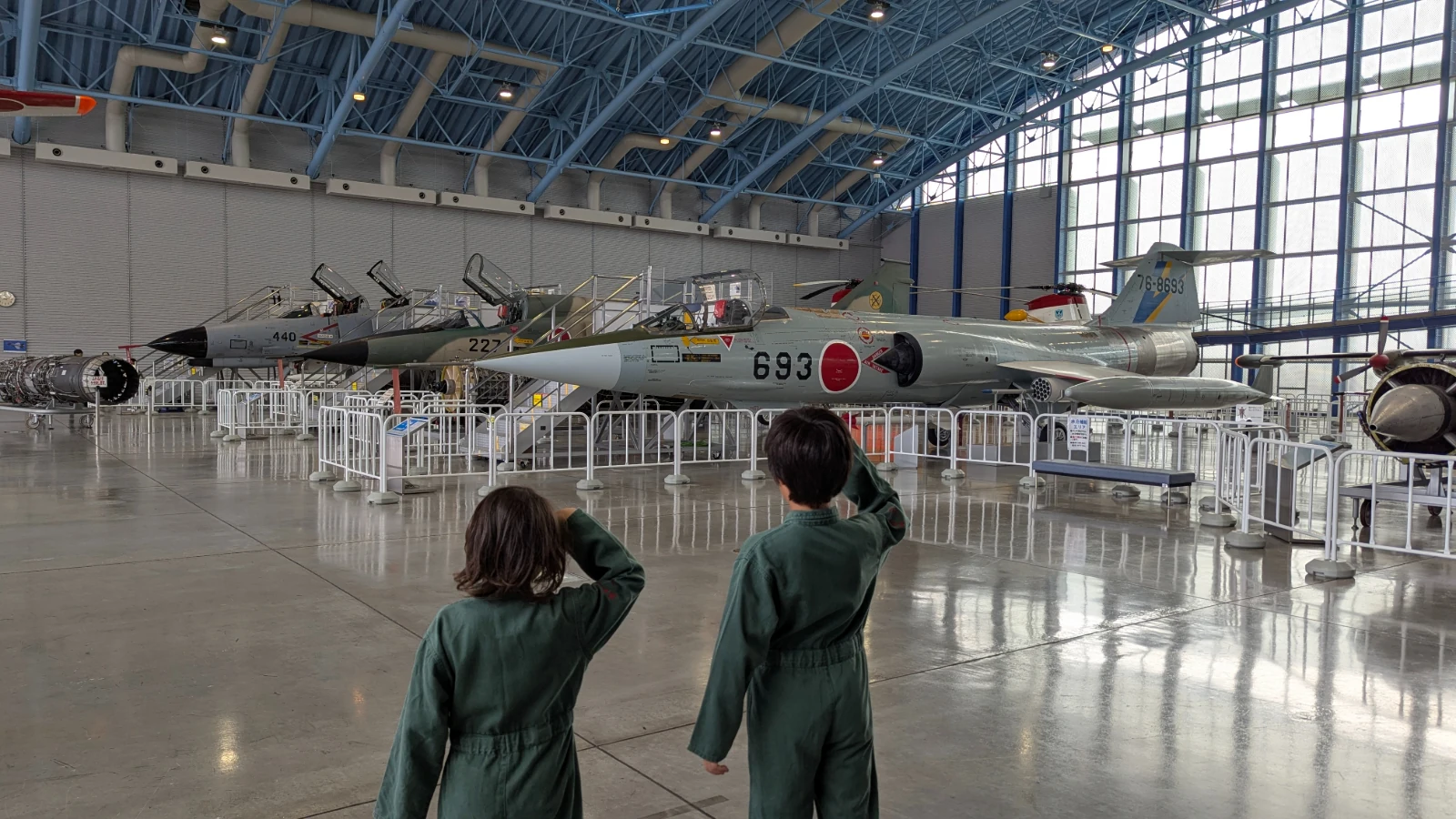
If this isn’t your child: a museum about sound where the listening is chosen, and a slow one for a child who wants to be doing rather than hearing.Aircraft on the ground, and the loud part chosen at the desk. The Air Park stands beside Hamamatsu’s airfield and asks for no ticket, and its loudest feature, a dome theater, is chosen rather than met: numbered tickets are handed out at the desk before each show, nobody enters late, and small children may leave mid-show. For a child who runs short on sensory input, a museum where the intense film is a decision with a door out is one a family can plan around, and the footage is strong enough that viewers who dislike loud sound, heights or motion are warned before it. In the display hangar, children from 100 to 160 centimeters tall can try on a pilot’s flight suit and helmet, about 15 minutes each, and, when the hangar is not crowded, sit in an aircraft wearing them. A five-year-old tries the smallest suit; a thirteen-year-old can sit in the aircraft dressed for it, crowds allowing.
Who it costs.The Dynamo, for whom a hangar means standing still to look. The hangar is not played in, and the one active part, the flight suit, lasts a quarter of an hour.
How to make it work.Collect dome tickets early if the family wants the film, and seat a child who may need to leave by the aisle. The cafe on the museum’s third floor looks over the airfield for the break.
If this isn’t your child: an aircraft museum with a choice about the noise, and a lot of standing for a child who does not care for planes.Four kilometers of dune on the open coast. The Nakatajima Sand Dunes run about 4 kilometers east to west and 0.6 north to south along the Enshu-nada coast, and a bus from stand 6 at the Hamamatsu bus terminal stops beside them. For a child who runs short on noise and crowding, open sand on that scale is space the family can always walk into, away from anyone else there. From May to August loggerhead turtles come ashore on this coast to nest, and from mid-August into early October a local nonprofit runs hatchling sessions from a protected enclosure on the dunes, each starting with a talk at its nature center. A six-year-old digs and runs close to the family; a teenager can walk far along the dunes and come back.
Who it costs.The Sprinter, because sand turns walking into work, and every step out is a step that has to be walked back.
How to make it work.For a child who runs out on walking and standing, set the turnaround point before the first step onto the sand, the same plan that serves a family at Tottori Sand Dunes. Ask the nonprofit for release dates before promising a child a turtle.
If this isn’t your child: open space on the coast for a child who needs it, and a long walk in sand for one who does not.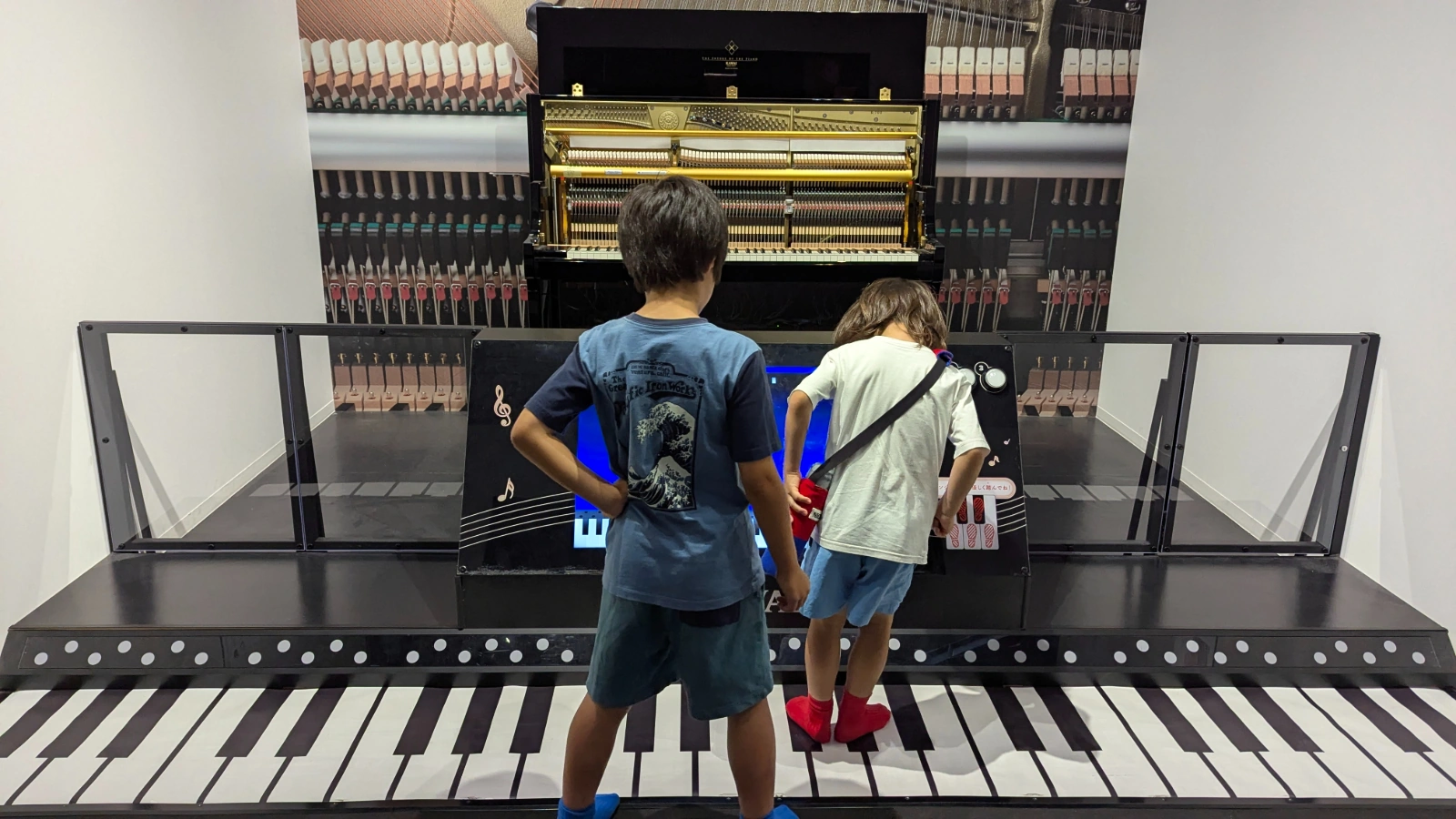
For the Anchor
Stops with a fixed route, a fixed booking or fixed rules.
Which stops give a child who needs the day confirmed a shape to hold? Those booked ahead, walked one way or run by written rules.
A small castle with its rules written down. Hamamatsu Castle’s keep is a 1958 reconstruction at the castle Tokugawa Ieyasu held for 17 years from 1570, and it comes with rules a family can read out on the bus: no eating inside, no drinks without a lid, no running and no loud voices, and photographs allowed. For a child who runs short when nothing is predictable, a castle whose size and rules are known before arrival is one that can be promised. Children in third grade and under come with a guardian, and a preschooler with as many adults as could lead them out by the hand in an emergency. A six-year-old climbs to the top holding a hand; a twelve-year-old can lead the family up.
Who it costs.The Sprinter, and heavily, on steps rather than distance. The approach has changes in level, and steps stand in front of the keep’s entrance, with a ramp only as far as the foot of its base.
How to make it work.Hold on to hats, phones and toys on the observation deck: it is windy, with no safety net, and anything dropped over the edge is gone. Tell a young child the rules on the bus, so the first minute inside is not spent learning them.
If this isn’t your child: a short castle visit with its rules settled in advance, and a climb of steps for a child who tires on stairs.A cave walked one way, in about 25 minutes. Ryugashido Cave runs about 1,000 meters, 400 of them open to visitors, and the route through it is one way with no turning back, about 25 minutes from entrance to exit. For a child who runs short when things are unconfirmed, a single route of known length, with an underground waterfall dropping 30 meters partway along it, is a visit that can be told step by step before the family goes in. Inside, the air averages 18 degrees Celsius, about 64 degrees Fahrenheit, through the year. The bus bound for Okuyama takes about an hour from the Hamamatsu bus terminal, then 7 minutes on foot. A five-year-old is told the waterfall is coming and waits for it; a teenager can count the steps down to it.
Who it costs.The Sensor, for whom an enclosed space with no way back is the hardest input. Once inside, the way out is forward, underground, with no doubling back for a child who wants to leave.
How to make it work.Tell a child who finds enclosed places hard exactly how long the route is before going in, and let them hold the countdown. At the Golden Waterfall about 50 steps lead down and strollers are carried, so a child who can manage the steps walks down them.
If this isn’t your child: a short, fixed underground walk with a waterfall at its center, and no quick exit for a child who wants one.A company museum visited only by booking. The Suzuki Plaza Museum is visited by reservation only, made online or by phone, charges nothing, and its visit runs about an hour and a half on average. For a child who runs short when nothing is confirmed, a museum whose date and hour are settled before the family leaves home is the easiest kind to prepare, and the building has an elevator, ramps, and rest areas with tables and chairs on the first and third floors. A seven-year-old is told the time and the order of the floors; a fifteen-year-old can make the booking.
Who it costs.The Dynamo, held to a walking pace indoors. An hour and a half of exhibits, with no eating inside, is a long time to walk slowly.
How to make it work.Book as soon as the day is chosen, and use the rest areas on the first and third floors as the planned breaks, since food waits until then. Tell a child with a camera that the films are not for filming.
If this isn’t your child: a booked, fixed visit for a child who needs one, and a long indoor stretch for a child who came to move.For the Sprinter
A stop where a cabin does the carrying.
Where does a child who runs out on walking and standing see the lake without walking to it? From a ropeway cabin.
A ropeway that crosses the water while the child rides. The Kanzanji Ropeway crosses the water of Lake Hamana to Okusayama, and it is boarded at its Kanzanji station beside Hamanako Pal Pal, since there is no parking at the top. For a child who runs out on walking and standing, a ride over the lake is the view without the walk, and wheelchairs roll on as they are. A younger child watches the water from the cabin; an older one can time the crossing both ways.
Who it costs.The Dynamo, kept in a cabin for the crossing. The ride is spent looking out, with nothing else to do.
How to make it work.Plan it with Pal Pal: the park’s ride pass covers the ropeway there and back, and the family starts and ends at the park.
If this isn’t your child: the lake from above for a child who cannot walk far, and a short crossing for one who would rather be on the rides.Open with the child who runs short first.
The city splits cleanly. The station quarter holds Mirai-ra, 7 minutes on foot, the instrument museum, 10, and the castle, 10 by bus; the lake holds Pal Pal, the ropeway and the zoo on one bus route. The Air Park, the dunes and the cave each sit at the end of a road of their own.
What costs nothing at the gate.
Three stops here ask for no ticket at all: the Air Park, Hamanako Garden Park and the Suzuki Plaza Museum, which asks only for the booking. The dunes are open coast.
Three bases for two halves of the city.
Pick the base on the half of Hamamatsu where most of the days will be spent.
| Property | The LuNi Reason |
|---|---|
| LUNI Pick Okura Act City Hotel Hamamatsu JR Hamamatsu, 3 min under cover | Three roofed minutes from JR Hamamatsu, so the station and the shinkansen are close in any weather. Children of elementary-school age and under share a bed free. |
| Hotel Wellseason Hamanako Kanzanji, by bus from JR Hamamatsu | At Kanzanji, it gives guests Pal Pal entry tickets at check-in, good through the stay, so getting in is settled before the day begins; the ride pass comes with some plans only. Welcome Baby rooms carry a crib and a baby bath. |
| Hamamatsu Marriott Hotel Shin-Hamamatsu Station, 16 min on foot | It has family rooms with four beds, so parents and two children each get a bed in one room. The Japanese Family room has four twin beds in 64 square meters, and children under 12 stay free. JR Hamamatsu is 19 minutes on foot. It is the former Grand Hotel Hamamatsu, reopened under the Marriott name in May 2026. |
Okura Act City Hotel Hamamatsu
The questions parents actually ask.
What are the best things to do in Hamamatsu with kids?
Mirai-ra first, 7 minutes’ walk from JR Hamamatsu, because its planetarium, exhibits and corner for small children suit almost any child. After that it depends on the child: Pal Pal, the zoo and Hamanako Garden Park for a child who needs to move, the instrument museum, the Air Park and the Nakatajima dunes for one who needs quiet or space, the castle, Ryugashido Cave and the Suzuki Plaza Museum for one who needs the day confirmed, and the Kanzanji Ropeway for one who cannot walk far.
Is Hamamatsu good for toddlers?
Yes. At Pal Pal a set of rides takes children two and under with a guardian, and the baby corners have hot water for formula. Mirai-ra lends strollers and has a Kids Science Land for small children, and Hamanako Garden Park lends strollers free, while the zoo lends none. For the rest of a trip at that age, see Japan with toddlers.
Can you visit Hamamatsu as a day trip from Tokyo with kids?
Yes, for the station quarter. The Hikari takes 74 to 84 minutes from Tokyo, and Mirai-ra and the instrument museum are each about ten minutes’ walk from JR Hamamatsu. The lakeside stops are a bus ride further out and fill a day of their own, so they suit a night in the city better than a day trip.
Do you need to book anything in Hamamatsu?
The Suzuki Plaza Museum, which takes visitors by reservation only, online or by phone. The Air Park’s dome theater gives out numbered tickets at the desk before each show, with no booking, so arrive early on a busy day for the film.
Is Hamamatsu good for teenagers?
Yes. At the Air Park a teenager up to 160 centimeters tall can wear a pilot’s flight suit and, on a quiet day, sit in an aircraft, Ryugashido Cave is a one-way underground route with a 30-meter waterfall, and the castle is the one Tokugawa Ieyasu held for 17 years. The guide to Japan with teens covers the wider trip.