Fuji Nagoya Science Museum with Kids: A Tornado Lab and Tesla Coils.
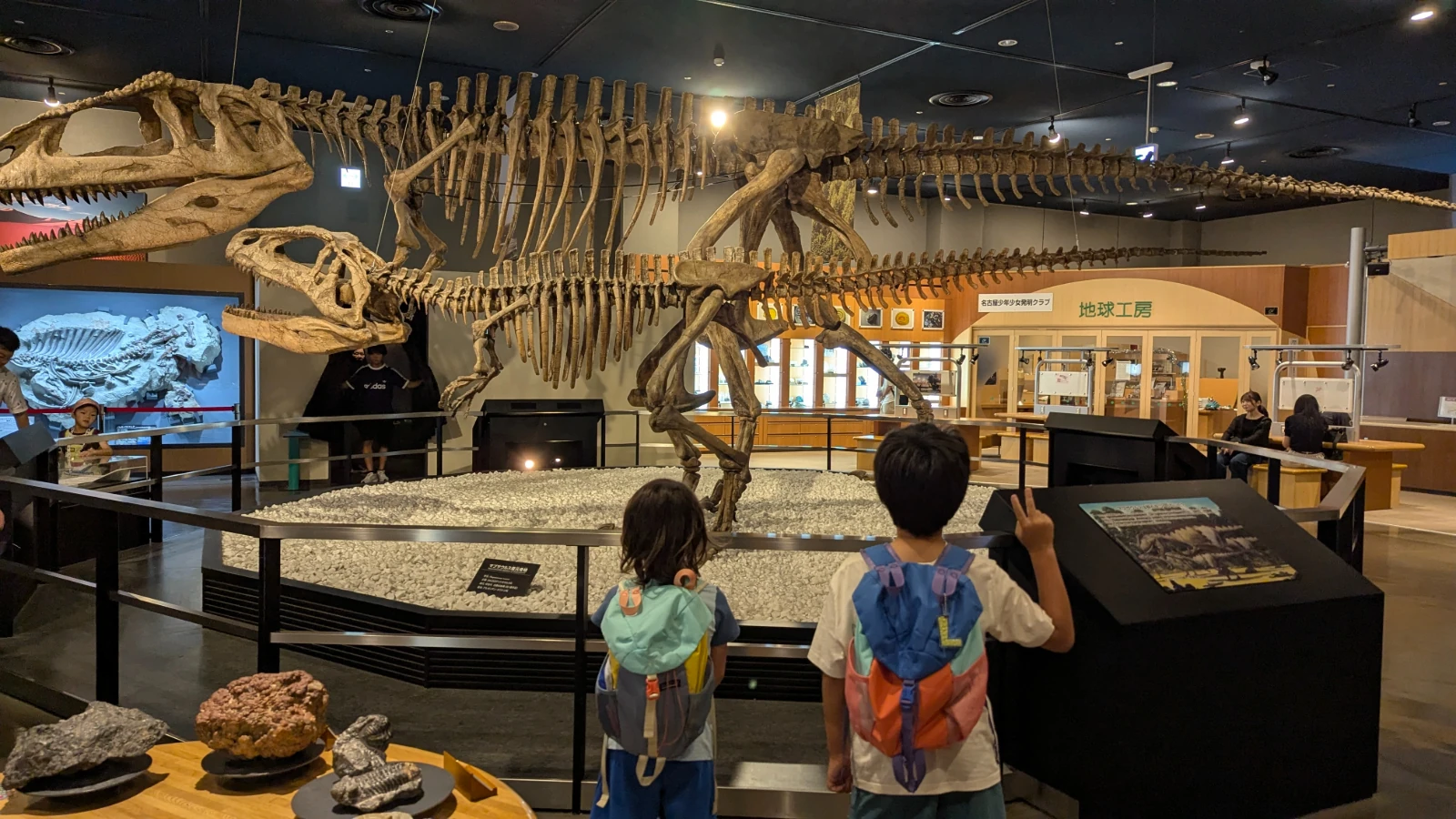
A nine-meter indoor tornado, two Tesla coils throwing four-meter sparks and a room kept at minus 30 degrees Celsius, free for every child through junior high school, in every season.
Adults ¥1,000 with the planetarium / ¥500 exhibits only / students ¥600 / ¥300.
Entry until 16:30. Closed Mondays / the third Friday / December 29 to January 3 / other days on the museum calendar.
Depending on the labs chosen / whether the planetarium is added.
Some exhibits may be refused by age / health.
No loans and no storage / the building is barrier-free, with ramps.
Some links on this page are affiliate links. LuNi may earn a commission at no extra cost to you.
Is the Fuji Nagoya Science Museum worth it with kids?
The short version, before the costs, the timings and the case for each child.
Yes: a first-rate rainy-day choice in Nagoya for a family with school-age children. The museum builds its day around four large exhibits, three of them labs: a plaza of water experiments, a nine-meter air tornado, two Tesla coils throwing sparks four meters long, and a room at minus 30 degrees Celsius with an aurora film. Children through junior high school enter free. Two things need planning. The popular labs have limited places, so the morning matters. And the planetarium is a much harder fit for a younger child, with a strict silence rule and live commentary in Japanese only. Choose the labs first, add the dome only for a child who can sit quietly through it, and the day works for the whole family.
Planning Your Visit to the Fuji Nagoya Science Museum with Kids.
Three decisions shape the visit, and the first is the start time: the Deep Freezing Lab takes small groups by numbered ticket, handed out from opening, and the Discharge Lab fills from a line at its door, so the family that arrives early chooses its labs. The second is whether to add the planetarium, which suits an older child better, because of its silence rule and its Japanese commentary. The third is lunch, with three rest areas on different floors where a packed lunch is welcome, and a cafe just outside. The journey is short, one subway stop from Nagoya Station and a few minutes on foot through the park; with no parking of its own, the subway is simplest, and Japan’s trains with small children covers the subway.
Every LuNi attraction guide starts with a visit, with our own children
LuNi rates and writes about attractions only after visiting them with children. Luca and Nico were at the Fuji Nagoya Science Museum, and what they did there is recorded further down this page, including how each child actually met it.
Children arrive with different tolerances: for noise, for lines, for standing still, for being on their feet all day. A guide written for the average of them helps almost nobody. So every place on this site is read four ways, and each verdict says which children it already suits and what makes it work for the rest. Whoever you are bringing, the answer here is built for your family rather than for a general reader.
Restricted-movement depletion eases in labs a child can work with, a water plaza and a tornado to step toward, so start with those hands-on floors.
Sensory-input depletion stays manageable when the loudest lab is a show a child chooses to join, so describe the sparks and the noise before the door.
Unfamiliarity and unconfirmed structure ease with ticketed labs, rest areas for packed lunches and a cafe outside, so fix the lab plan at breakfast.
Sustained walking and standing add up across buildings over two to three hours, so bring a stroller from home and use the rest areas.
Hotels we would book for this visit.
Three hotels for a family keeping the museum as its rainy-day plan: one in the museum’s own district, one above Nagoya Station, a subway stop away, and one on the Aonami Line.
| Property | The LuNi Reason |
|---|---|
| LUNI Pick Hilton Nagoya About 10 min on foot | Hilton Nagoya stands in the very same district as the museum in Shirakawa Park, so a wet morning starts without a long ride across the city. Settle the lab choice the evening before, and ask for a room that fits the whole family when booking. |
| Nagoya Marriott Associa Hotel Above JR Nagoya Station | Above Nagoya Station, where the Higashiyama Line runs one stop to Fushimi, the museum’s station, so the family can be at the door for the numbered tickets without an early scramble. The Family Fourth room sleeps up to five, a help when two children share the evening. |
| Nagoya Prince Hotel Sky Tower Sasashima Live Station, Aonami Line, 2 min | Two minutes from Sasashima Live, the Nagoya Prince Hotel Sky Tower sits on the Aonami Line into Nagoya Station, one subway stop from the museum’s station at Fushimi. Corner rooms sleep four, on floors from the 32nd up, with room for a family after the labs. |
Nearby attractions, matched to your child.
Three afternoons after the labs, by subway: samurai armor to try on, the castle’s grounds and palace laid out ahead, or orcas and dolphins on a posted schedule at the port.
| Pairing | Why This Solves the After-Visit | For Your |
|---|---|---|
| LUNI Pick Nagoya Touken World Fushimi Station, exit 5, 12 minutes on foot | Twelve minutes from the same Fushimi Station, Nagoya Touken World has a photo spot where a child wears a samurai helmet and surcoat, and a video theater played by moving the body. Restricted movement gets armor to try and a screen that answers motion. | Dynamo |
| Nagoya Castle Nagoyajo Station, exit 7, 5 minutes on foot | By subway to Nagoyajo Station, Nagoya Castle has a canteen in its grounds and a picnic plaza, around a palace to visit. Unfamiliarity and unconfirmed structure ease where lunch is certain and the one closed door, the keep, is known ahead. | Anchor |
| Port of Nagoya Public Aquarium Nagoyako Station, exit 3, 5 minutes on foot | By subway to Nagoyako Station, the Port of Nagoya Public Aquarium holds its dolphin performance and feedings at set times and posts a crowd forecast for the year. Sensory-input depletion eases when every big moment is announced and a quieter date can be chosen. | Sensor |
Nagoya Touken World
Fushimi Station, exit 5, 12 minutes on foot For YourDynamo
Nagoya Castle
Nagoyajo Station, exit 7, 5 minutes on foot For YourAnchor
Port of Nagoya Public Aquarium
Nagoyako Station, exit 3, 5 minutes on foot For YourSensor
How two children actually met this attraction.
Two children went through this museum, and both were held by what it does best: it lets a child make something happen and hear or see the result at once. Both clapped and screamed into the museum’s long echo exhibits, and both were taken with the great tornado of air, one admiring it, the other wondering what it would do to a hand. For a family, the lesson is to lead with the exhibits that respond, the water plaza, the tornado and the exhibit floors, and to treat the planetarium as an extra for an older child who can sit quietly, rather than the heart of the visit. A child who has clapped, screamed and watched a tornado form has had the museum’s real reward.
Luca liked an exhibit that answered him: a long pole he could clap and scream into, which sent his own sound back as an echo. He also named the fog tornado, the column of mist the Tornado Lab spins up to about nine meters, and thought it was cool. Both put the science within reach: his own sound, and a tornado in front of him.
This is the Anchor pattern: unfamiliarity and unconfirmed structure deplete his reserve, and a world that answers him every time he acts on it is structure he can trust. An exhibit that returns his own sound and a tornado that forms on schedule are such answers. Families with a similar child should find the exhibits that respond to him, let him repeat them, and plan the tornado show as a fixed point in the day.
Nico was drawn to the exhibits that let him move, and loved clapping and screaming into the long echo chambers. He wanted to go into the cold room, the Deep Freezing Lab at minus 30 degrees Celsius, and was disappointed to find he would have to wait, then soon forgot it once he found exhibits he could work himself. At the tornado, he wondered what would happen if he jumped into it or put his hand in.
This is the Dynamo pattern, seen from both sides: restricted movement drains his reserve, so a wait for a room let him down, while exhibits he could set going with his own voice and body soon made him forget it. Families with a similar child should promise the Deep Freezing Lab only once its numbered ticket is in hand, start on the floors where he can act at once, and let his questions about the tornado make the show something to test by watching.
A column of air that rises into a tornado, or a room of deep cold, turns science from a school subject into something a child feels. Children remember what they sense far longer than what they read, and a lab where they can test an idea and watch the result gives curiosity somewhere to go. That moment of seeing a question answered is often where a love of science begins. A child who has felt a force at work starts asking how everything else works too.
The LUNI Rating for the Fuji Nagoya Science Museum.
One fact sits under all four verdicts, and each of the four levers below follows directly from it: this is a science museum of four large exhibits, most of them things a child acts on, with places to sit and eat throughout and free entry for children. The child who needs to move gets water and a tornado; the child sensitive to input can skip the loud lab; the child who needs structure gets ticketed labs and packed-lunch rooms. The Sprinter needs the most care, for the time on foot. Among Japan’s museums for children it gives a great deal for very little.
Start where the child can act. The Dynamo depletes through restricted movement, and a science museum suits this child when its best exhibits are things to do rather than read. This one is built that way. The Water Plaza is a room of water experiments, the Tornado Lab raises a column of air nine meters high on a schedule, and the exhibit floors around them answer a child’s actions. The one limit is a house rule against running inside, so the energy goes into doing rather than racing, which is the right trade in a building of this kind.
Order the day around the labs a child can act on: the Water Plaza and the exhibit floors while he is fresh, the Tornado Lab at its show, and the Deep Freezing Lab in the middle. Keep the planetarium out of a younger Dynamo’s day.
What this means for your Dynamo: the Fuji Nagoya Science Museum answers restricted movement with labs to act on. A younger Dynamo needs the Water Plaza and the tornado; an older one can add the Deep Freezing Lab and the rest.Describe the sparks first. The Sensor depletes through sensory input, and the loudest thing in this museum is known in advance: the Electric Discharge Lab, where two Tesla coils throw sparks four meters long with a violent discharge sound. It runs as a show for 50 people who line up at its door, so it is a choice, never a surprise in a corridor. The planetarium’s silence rule keeps the dome quiet for the child who wants a calm hour, and the rest of the museum is exhibits a child can approach at his own pace.
Make the loud lab a decision: describe the sparks and the sound before the door, and let the child join the line or skip it. Spend the calmer hours on the water and the hands-on floors. For an older Sensor who likes the dark, the planetarium can be the calm center of the visit.
What this means for your Sensor: at the Fuji Nagoya Science Museum sensory input peaks in one lab a child chooses. A younger Sensor needs the sparks described first; an older one can decide on the day.Hand over the lab plan. The Anchor depletes through unfamiliarity and unconfirmed structure, and a science museum run on tickets and set rooms suits this child well. The labs run by fixed rules, numbered tickets for the Deep Freezing Lab and a line for the Discharge Lab, and three rest areas with 350 seats let a family eat a packed lunch it brought, while a 60-seat cafe restaurant sits just outside with re-entry allowed. Printed guides in English and six other languages make the floors readable before the child reaches them.
The evening before, choose the labs together, name the one the family will line up for first, and say where lunch will be, rest area or cafe. Tell him the two firm rules, no running and, in the planetarium, no sound at all. For an older Anchor, the printed guide in English is a map he can hold for himself.
What this means for your Anchor: the Fuji Nagoya Science Museum gives unfamiliarity ticketed labs and set places to eat. A younger Anchor needs the lab order at breakfast; an older one can hold the printed guide.Bring the stroller from home. The Sprinter depletes through sustained travel-style walking and standing, and a visit here runs two to three hours, spread across buildings and floors, with lines at the labs besides. The building is barrier-free, with ramps wherever there are steps, and the rest areas on three floors give 350 seats between them. What it does not do is lend strollers or store them, so a family with a younger child brings its own and keeps it for the day.
Settle the rests and the wheels before arriving. Bring a light folding stroller for a younger child, choose two or three labs rather than the whole museum, and stop in a rest area between them. For an older child who can sit quietly, the planetarium is itself a long seated rest. A visit that ends after the labs that matter most has done its job.
What this means for your Sprinter: two to three hours at the Fuji Nagoya Science Museum adds up on foot. A younger Sprinter needs his own folding stroller; an older one needs the rest areas as planned stops.The questions parents actually ask.
The Fuji Nagoya Science Museum is free for children and simple to reach, so the planning is all about places: the labs with limited room and the planetarium with its strict rules. Arrive at opening for a numbered Deep Freezing Lab ticket, decide about the dome by the child’s age and patience, and check the closing calendar, since the third Friday catches visitors out. For a family stretching its yen, Japan on a family budget gathers more days like it. With those settled, the museum is one of the easiest days in the city, in any weather and for almost any family budget at all.
Is the Fuji Nagoya Science Museum worth visiting with kids?
Yes, and for a family with school-age children it is a very good-value day in the city, since children through junior high school enter free. Four large exhibits anchor the visit: a water plaza, a nine-meter air tornado, two Tesla coils that throw four-meter sparks, and a room held at minus 30 degrees Celsius. Plan on two to three hours there, longer with every lab.
How much does the Fuji Nagoya Science Museum cost?
Children through junior high are free. Adults pay 1,000 yen with the planetarium or 500 yen for the exhibits only, and high school and university students 600 or 300. Two adults with children through junior high pay 2,000 yen with the planetarium or 1,000 without it. Online tickets take credit cards only, and the counter on the day takes cash, cards, e-money and QR codes.
Is the planetarium suitable for young children?
It depends on the child. Children 4 and under watch on a guardian’s lap, one child per adult, and a family with more small children than adults is refused. Anyone who makes a sound is taken out of the dome for a moment, late entry is not allowed, and the live commentary is in Japanese only. The show itself runs about 50 minutes.
How do you get into the Deep Freezing Lab and the Discharge Lab?
Both have limited places. The Deep Freezing Lab takes 15 people at a time by numbered ticket, handed out at opening and at 13:00 on weekdays, and at opening, 12:30 and 14:30 on weekends and holidays. The Discharge Lab takes 50, first come, from a line at its door. Collect the Deep Freezing ticket as soon as the museum opens.
When is the Fuji Nagoya Science Museum closed?
On Mondays, or the next weekday when Monday is a holiday; on the third Friday, or the fourth when the third is a holiday; from December 29 to January 3; and all day if a storm warning is in force for Nagoya at 7:30. Other closing days are on the museum calendar. Hours are 9:30 to 17:00, last entry 16:30.
Can you bring a stroller to the Fuji Nagoya Science Museum?
Yes, but the museum neither lends strollers nor looks after them, so a family that brings one keeps it for the whole visit. The building is designed to be barrier-free, with ramps wherever there are steps. For a younger child who tires in the galleries, a light folding stroller brought from home is the practical answer, kept close at hand for the whole visit.
Can you eat at the science museum?
Yes. Three rest areas with 350 seats in all, spread on the first, third and seventh floors of the buildings, allow food brought from outside, so a packed lunch is easy; take any trash home. The 60-seat cafe restaurant is reached by going outside from the first-floor entrance hall, and re-entry to the museum is allowed on showing the ticket at the door.
How do you get to the museum, and does it go by another name?
Take the Higashiyama Line one stop from Nagoya Station to Fushimi Station, and walk about five minutes south from exit 4 or 5; the museum stands inside Shirakawa Park. Its name was formerly the Nagoya City Science Museum. Printed guides in English and six other languages can be picked up inside or downloaded ahead of the visit from home, free.
Where the Fuji Nagoya Science Museum fits your Japan trip.
Official site and opening information: Fuji Nagoya Science Museum