Ashio Copper Mine Museum with Kids: The Mine Train, Rated.
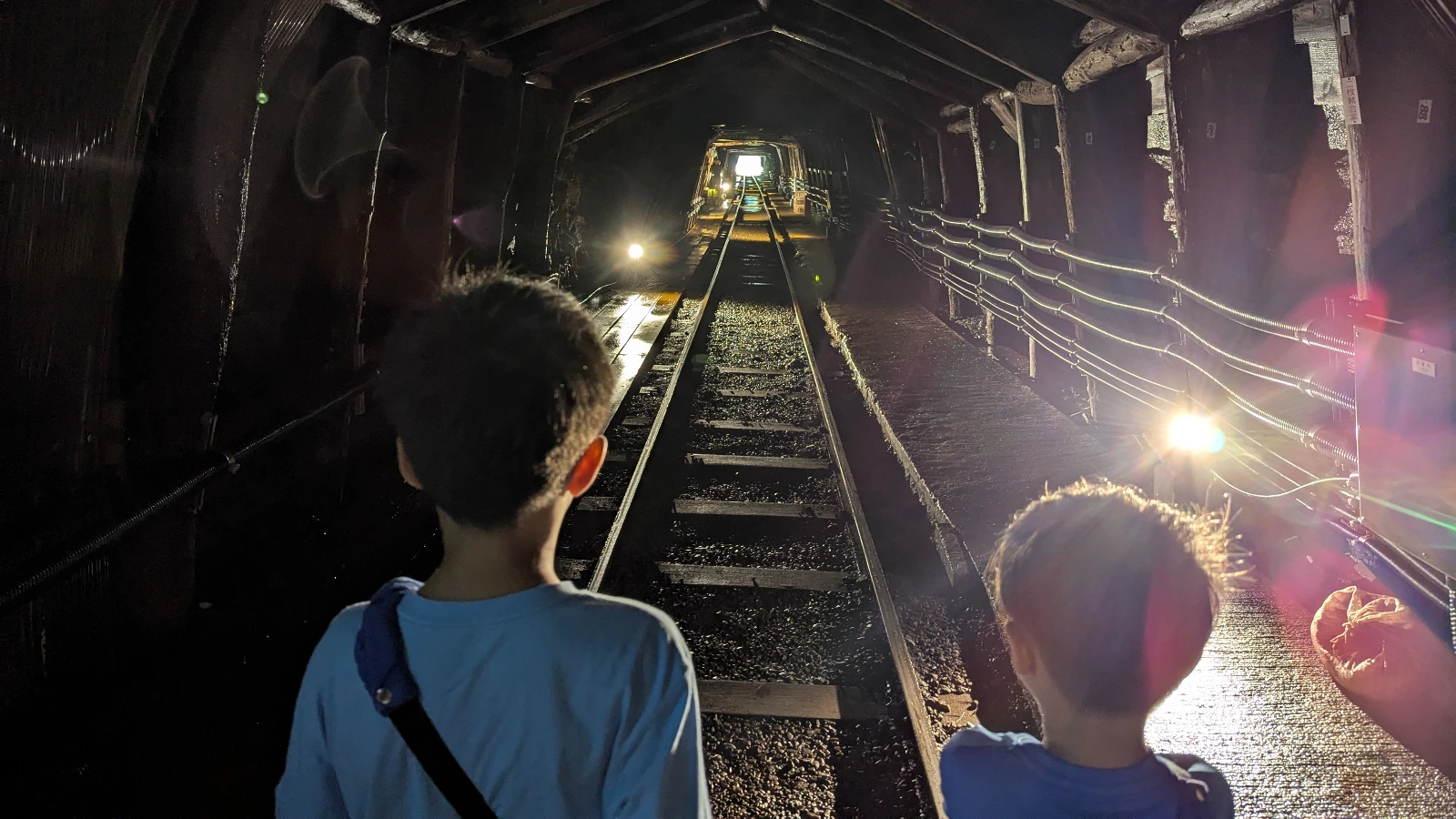
The trolley ride into the mountain is the part a child who needs to move sits through and a tired child enjoys, and for both of them it only runs one way.
Preschoolers enter free; groups of 15 or more book through the city’s form.
Open all year; closures are announced on the city’s website.
The trolley runs in only; riders alight 150 m inside and walk about 300 m.
The walk out climbs a stair and runs a 100 m downhill slope; carry the smallest children there.
From September 2, 2026, during demolition, tickets sell at Fureai-kan; visitors who cannot use stairs can ask for the normal route.
Some links on this page are affiliate links. LuNi may earn a commission at no extra cost to you.
Is Ashio Copper Mine Museum worth it with kids?
The short version, before the costs, the timings and the case for each child.
Yes, and it is one of the few underground visits that suits almost every child, provided the parent knows its shape first. The museum is an old copper mine in the Ashio district of Nikko, once the largest in Japan, and the visit runs one way: a short trolley ride into the tunnel, a walk past dioramas of the miners’ work, and out on foot, up a stair and down a slope to the exit. A child who likes to know what is coming gets a route with a clean beginning and end. A child who needs to move gets the walk, but only after the ride, and the ride is the part to plan around. Two things change the day: telling the children the trolley does not come back for them, and asking at the booth about the stairs if anyone cannot manage them.
Planning Your Visit to Ashio Copper Mine Museum with Kids.
Three things are worth settling before the day, and none of them is the mine itself. The first is the journey. Ashio is not on the Tobu line that links the shrine, the lake and the falls, or most of Nikko’s family stops, so it needs a plan of its own: the city bus from the Nikko stations stops a couple of minutes from the entrance, the Watarase Keikoku Railway stops a short walk away at Tsudo, and a family with a car gets free parking. The second is the entrance. Demolition work has moved the ticket booth and put in a temporary route with stairs, with no end date, so anyone who cannot manage stairs should ask for the normal gate. The third is the clock. The last trolley and last entry are the same moment, so an afternoon visit needs a firm start.
Every LuNi attraction guide starts with a visit, with our own children
LuNi rates and writes about attractions only after visiting them with children. Luca and Nico were at Ashio Copper Mine Museum, and what they did there is recorded further down this page, including how each child actually met it.
Children arrive with different tolerances: for noise, for lines, for standing still, for being on their feet all day. A guide written for the average of them helps almost nobody. So every place on this site is read four ways, and each verdict says which children it already suits and what makes it work for the rest. Whoever you are bringing, the answer here is built for your family rather than for a general reader.
Restricted-movement depletion builds in the wait and ride that open the visit, so arrive with the movement spent and hand the walk out to the child.
Sensory-input depletion stays bounded on a short, one-way route underground that ends outdoors, so show the map first and let the child set the pace.
Unfamiliarity and unconfirmed structure ease on a one-way route, in by trolley and out on foot, so say it before boarding: the trolley does not return.
Sustained walking and standing stay modest because the whole route is a few hundred meters, so settle the stairs at the booth and walk it unhurried.
Hotels we would book for this visit.
Three bases on Lake Chuzenji, set out in the order the road down toward Kiyotaki IC reaches them, because with a car the mine is an easy morning from the lake rather than a day of its own.
| Property | The LuNi Reason |
|---|---|
| LUNI Pick The Ritz-Carlton, Nikko On the lake, about 20 minutes from Kiyotaki IC, as the mine is | The nearest of the three to the mine by road: the hotel and the mine each sit about 20 minutes from Kiyotaki IC. For a child who needs to move, that makes Ashio a morning rather than an expedition, with the open lakeshore to come back to once the tunnel has held them still for a while. |
| Hotel Shikisai Up a steep, unlit walk from its bus stop | Good for a family driving to the mine anyway, because arriving on foot means a steep, unlit climb from the bus stop. A child who needs the evening settled before bed should see the room in daylight, so that the only new thing the next day brings is the tunnel. |
| Chuzenji Kanaya Hotel On the lakeshore, the farthest of the three from Ashio | The farthest of the three from the mine, so choose it when Ashio is one morning of a longer lake stay rather than the reason for it. For a child who spent an hour underground, the lakeshore outside the door is the open air and the quiet to come back to. |
Nearby attractions, matched to your child.
Three pairings for what a one-way tunnel leaves over: movement held to a route, a child who wants the next day ordered too, and legs that did the last part of the visit on foot. All three are a drive from the mine.
| Pairing | Why This Solves the After-Visit | For Your |
|---|---|---|
| LUNI Pick Lake Chuzenji By car, via Kiyotaki IC, about 20 minutes each side of it | After a route that runs one way through a tunnel, Lake Chuzenji is the opposite: a long shore a moving child can cover without anyone setting the direction. Restricted-movement depletion discharges on room rather than on a route, and the lake has room to spare. | Dynamo |
| Tobu World Square The Kinugawa side of Nikko | The mine is a single route somebody else laid out, and Tobu World Square offers the same comfort above ground, with free guided tours that leave at published times. For a child whose unfamiliarity cost is paid in not knowing what comes next, a start time and a guide are the whole plan. | Anchor |
| Kegon Waterfall Lake Chuzenji side, via Kiyotaki IC | The mine ends on foot, up a stair and down a slope; Kegon Waterfall reverses the bargain, with a short walk from the bus stop and an elevator for the whole descent. A Sprinter’s walking and standing reserve is spent at the mine and spared at the falls. | Sprinter |
Lake Chuzenji
By car, via Kiyotaki IC, about 20 minutes each side of it For YourDynamo
Tobu World Square
The Kinugawa side of Nikko For YourAnchor
Kegon Waterfall
Lake Chuzenji side, via Kiyotaki IC For YourSprinter
How two children actually met this attraction.
Two children went into the same mountain and came out with two different memories of it. One was stopped by a question, how anyone had cut a passage this long through solid rock, and would not go further until he had an answer he could live with. The other had a verdict before he was off the trolley and a better one by the end: the ride was the dull part and the mine was the good part. Neither of them cared much about copper, or about how long the mine had been worked. Between them they showed the visit from both ends, the ride that holds a child still and the walk that lets him go, and the question a thinking child has to settle before he will move on.
Luca got stuck on the how of it. Standing in the tunnel, he kept coming back to how people had cut a passage this long and this deep into solid rock, and he wanted an answer before he would go further in. The mine train and the glowing minerals were secondary; the engineering held him. Once he had turned the scale and the effort over in his head, he settled, and enjoyed the rest of the walk.
This is the Anchor pattern. A child whose Reserve depletes through unfamiliarity steadies by making sense of a strange place, and Luca did it by resolving how the tunnel came to exist before he would relax into it. Families with a similar child should feed that instinct on purpose: explain how the mine was dug and what the miners did, so the strange underground becomes an explained place. An Anchor who understands where they are stops spending Reserve on vigilance and starts spending attention.
Nico’s verdict was blunt and physical: the train was too slow, but the mine was fun. The ride in was the part he liked least, and he fidgeted through the slow crawl into the mountain. What turned it around was getting off the train and moving through the tunnels on his own feet, where he could cover ground and chase the next thing to look at. The mine won him over the moment it stopped asking him to sit.
This is the Dynamo pattern. A child whose Reserve depletes through restricted movement reads a ride as the hard part and a walkable space as the reward, which is exactly how Nico met the mine. Families with a similar child should treat the trolley as the price and the tunnel walk as the payoff: keep the ride short in the telling, then let the child move through the passages at their own pace, because the walk gives back what the ride took.
A copper mine entered by trolley lets a child feel, in the dark and the cool of the tunnel, how hard and how important underground work once was. Seeing where rock became metal, and metal became coins, connects a far-off industry to things a child can hold. Places like this answer a question children rarely ask aloud: where do things come from? A visit that links the ground beneath their feet to the objects in their pockets gives a child a new respect for the work behind ordinary things.
The LUNI Rating for Ashio Copper Mine Museum.
One fact drives all four verdicts: the mine runs one way. A trolley carries the family a short way into the tunnel and does not bring them back, and from there the visit is a walk of a few hundred meters past the displays, then a stair up and a long slope down to the exit. The ride is the only part where a child is carried, it comes first, and the rest is on foot. That shape is easy on a child who needs to know what happens next, easy enough on tired legs because the distances are short, and hardest on a child who needs to move.
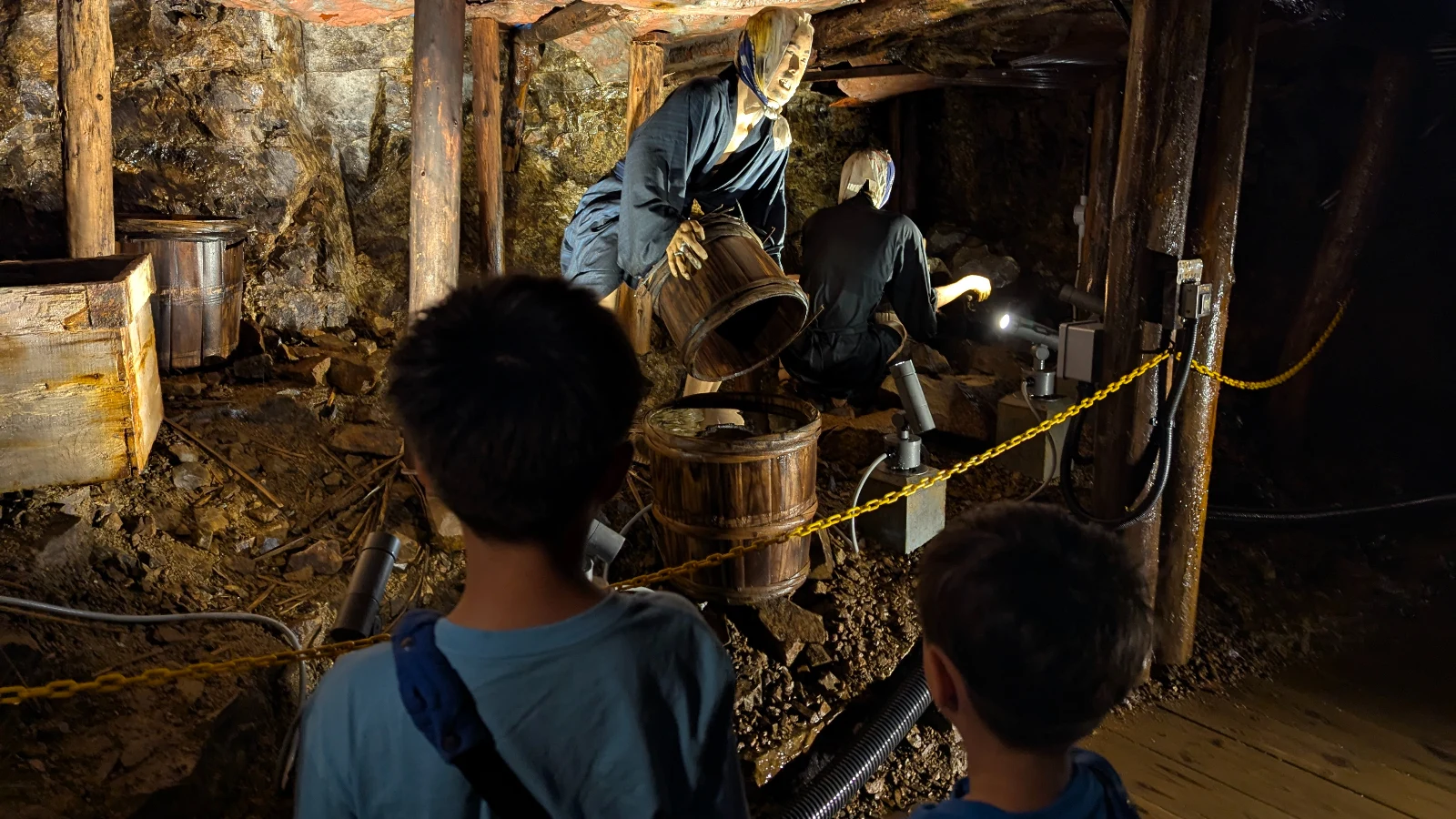
The ride is the price. The walk is the point. The Dynamo depletes through restricted movement, and Ashio puts the restriction first. The visit opens with a wait for the trolley and then a ride into the tunnel in which a child can do nothing except be carried, and for a child who runs down whenever the body is held in place, it is the worst possible opening. It gives them nowhere to put the energy they arrived with. What follows is better. The walk out is real movement on the child’s own feet, past displays that include a rock-drill experience corner, then a stair up and a long slope down into the open.
Order first, and then ownership. Arrive with the movement already spent, from the walk in from the bus stop or a run around the parking lot, so the ride lands on a child who has just moved rather than one who has sat in a car. Then hand the walk out to the child: they lead, they choose which displays to stop at, and the stair and the slope to the exit are theirs to take at their own speed.
What this means for your Dynamo: restricted movement is concentrated at the start, in the wait and the ride. A younger Dynamo needs the ride named as short and the walk promised; an older one can lead the family out.Short, one way, and it ends in the open. The Sensor depletes through sensory input, and what protects this child at Ashio is not any quality of the tunnel but its length. The whole underground part of the visit is a short trolley ride and a walk of a few hundred meters, on one route, with no direction to choose and a clear way out at the end, up a stair and down a slope into the open air. The displays are dioramas and models, taken in at walking pace. A child who finds it too much always has the exit ahead of them.
A preview does most of the work. The mine’s maps come in English among six languages, so walk the child through the route before the day: the ride in, the walk, the stair and the slope. A Sensor who knows the underground part is short, and knows exactly where it ends, meets the tunnel as a contained adventure rather than an open-ended one. Then keep the visit to the route itself, and let the child decide whether to stop at each display.
What this means for your Sensor: sensory input stays bounded because the underground part is short and ends in the open. A younger Sensor needs the map shown first; an older one can set the pace past the displays.Tell them now: the trolley does not come back. The Anchor depletes through unfamiliarity and unconfirmed structure, and the single most useful thing a parent can know here is that the route runs one way. The trolley carries the family in and leaves them there. The way out is on foot, through the displays, up a stair and down a long slope to the exit and the parking lot. It is a simple shape, and a good one for this child, as long as it is the shape they were told about. A child expecting a ride back will meet the walk out as a broken promise, and that is the one mistake to avoid.
Say it plainly, and say what is temporary too. Name the order before the ticket booth: ride in, get off, walk through, climb the stair, walk down to the exit. Then name the rest: demolition work has moved the ticket booth and the entrance route, with no end date announced, so the arrival will not match any older photograph the child may have seen. The mine’s English map is the best rehearsal.
What this means for your Anchor: unfamiliarity is answered by a one-way route stated in advance. A younger Anchor needs the order said at the booth; an older one can follow it on the English map and call out each stage.A few hundred meters, and then you are out. The Sprinter depletes through sustained travel-style walking and standing, and Ashio is kinder to this child than a mine sounds. The trolley carries the family into the tunnel, and the walk out is a few hundred meters, then a stair and a slope to the exit. That is real walking, and the trolley does not cover it, but it is a short route with a fixed end, the parking lot is at the exit, and the bus stop is a couple of minutes from the entrance, so there is no long approach to pay for first. The verdict rests on the distance being small, not on the ride.
The stairs are the one thing to manage. The temporary route in use during the demolition work includes stairs, and a visitor who finds stairs difficult may ask to use the normal gate instead. Ask at the booth, before the day’s legs are spent on steps nobody needed to climb. Then take the walk out slowly and let the child set the pace between displays, and save the rest of the day’s walking for somewhere else.
What this means for your Sprinter: walking and standing stay modest because the route is short. A younger Sprinter needs the stair question settled at the booth; an older one walks it easily and still has legs left for the drive.The questions parents actually ask.
Two facts shape a visit to Ashio. The first is the train, and it changes the visit: it runs one way, in only, and the family walks out, on a short route with a stair and a long slope at the end. The second is the entrance, which is temporarily different while old buildings are demolished, with a moved ticket booth and a route that includes stairs. A child uneasy underground should hear beforehand that the trolley goes in and the walk comes out. Know both before the day, and the mine becomes a simple, well-shaped visit with a clear start and finish, which is what most children need underground.
Is Ashio Copper Mine Museum worth visiting with kids?
Yes, for most children, as long as they know its shape before they board. A trolley carries the family about 150 meters into the tunnel, one way only, and the visit continues on foot for about 300 meters past dioramas, then up a stair and down a slope to the exit. A child who needs to move should be told the walk is coming.
Does the Ashio mine train come back out?
No. The trolley runs one way, inbound only. Riders get off about 150 meters inside the tunnel and walk about 300 meters, and the route out includes an ascending stair and a downhill slope of about 100 meters to the exit and the parking lot. Tell children this before boarding, so the walk out is expected rather than a surprise.
How much does Ashio Copper Mine Museum cost?
Adults and high school students pay 830 yen, elementary and junior high students 410 yen, and preschoolers enter free, so two adults and two school-age children pay 2,480 yen. Holders of a disability handbook enter free. Payment is by cash, PayPay or d Barai, and parking is free, with space for 100 cars.
What are the Ashio Copper Mine Museum opening hours?
9:00 to 17:00, open all year, with any closures announced on the city’s site. Last entry is 16:15, the same time as the last trolley, and trolleys leave about every ten minutes from 9:00 except when busy. From September 2, 2026, a temporary ticket booth and entrance route are in use while an old rest house is demolished.
How do you get to Ashio Copper Mine Museum from Nikko?
The Nikko City bus bound for Ashio leaves JR and Tobu Nikko and takes about 53 minutes to the Dozan Kanko-mae stop, two minutes on foot from the entrance. By rail, the Watarase Keikoku Railway stops at Tsudo, about five minutes on foot. By car, it is about 20 minutes from Kiyotaki IC on ordinary roads, with free parking.
Is Ashio Copper Mine Museum stroller or wheelchair accessible?
Plan for stairs. The temporary route in use during the demolition work includes stairs, and the normal route out has an ascending stair and a long downhill slope. Visitors who find stairs difficult, wheelchair users included, may ask to use the normal gate instead, so ask at the booth before starting. Pets are not admitted.
Can you visit Ashio and Toshogu in one day?
It is possible, but it makes a long day. The Ashio city bus and the bus to Nikko Toshogu Shrine both leave from the Nikko stations, and the mine is about 53 minutes out. Toshogu’s stairways spend a Sprinter’s walking and standing reserve, so do the shrine first, fix its turnaround at the Sleeping Cat, and keep the mine for the afternoon.
How does Ashio compare with the Oya History Museum for kids?
Both go underground, in different ways. Ashio is a short route through mine tunnels: a trolley in, then about 300 meters on foot past dioramas. The Oya History Museum is a stone quarry entered by stairs, and it asks more of a Sensor, whose sensory input builds there, so plan it as the shorter visit of the two.
Where Ashio Copper Mine Museum fits your Japan trip.
Official site and opening information: Ashio Copper Mine Sightseeing, Nikko City