Nikko Toshogu Shrine with Kids: The steps begin before the Yomeimon.
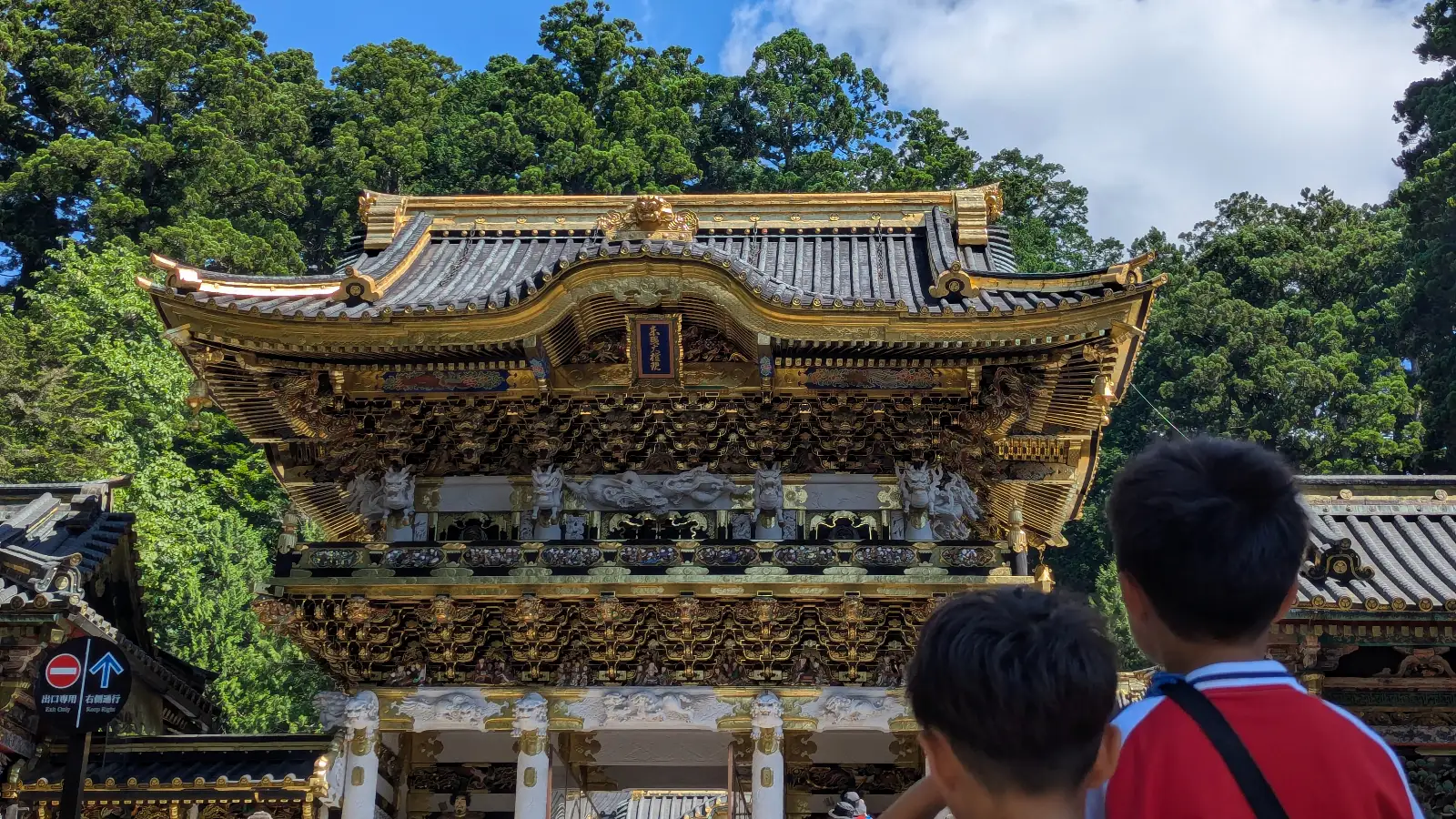
The same stepped precinct that hands a child who needs to move a route with somewhere to climb is the one that quietly spends a child whose legs tire first.
High school pays adult; the set ticket with the Treasure Museum is ¥2,400 and ¥870. Tickets can be bought online ahead; booking is not required.
9:00 to 16:00 from November; reception ends 30 minutes before closing. Open every day, though festivals or repairs can close parts of the route.
Longer with the climb to the Okumiya, which begins at the Sleeping Cat.
Steps begin in front of the Yomeimon, so an under-five is carried from there.
A wheelchair entrance with a slope; wheels reach the steps before the Yomeimon, then stairs follow.
Some links on this page are affiliate links. LuNi may earn a commission at no extra cost to you.
Is Nikko Toshogu Shrine worth it with kids?
The short version, before the costs, the timings and the case for each child.
Yes, for most children, with one decision made at breakfast. Toshogu is a shrine complex on the hillside above Nikko, and one ticket covers everything from the first gate up to the Okumiya, the burial precinct above, with the famous Sleeping Cat carving on the way. Allow a morning. A child who needs to move gets a precinct built into the mountain, and a route that rises is a route with a job in it. A child whose legs tire first pays for that same ground earlier than parents expect, because the step-free path ends in front of the Yomeimon, not at the far end. The two decisions that change the day are where the visit turns around, and how much close, richly colored detail one child can hold.
Planning Your Visit to Nikko Toshogu Shrine with Kids.
Three decisions are made before the bus, and each costs more if it is left to the gate. The first is the base. A hotel by the Shinkyo bus stop puts the shrine within walking distance, while a family sleeping up at Lake Chuzenji rides the same Tobu line down to Nishisando Iriguchi, the stop nearest the shrine. The second is the turnaround. The ticket runs past the Sleeping Cat and on to the Okumiya, and the Okumiya route begins at the cat, so settle whether the visit ends there before anyone sees it. The third is the audio guide, rented straight ahead after the Omotemon, in English and in a separate Japanese edition written for children. Decide at breakfast which child carries it, because it changes how that child moves through the buildings: from one to the next, on somebody else’s cue.
Every LuNi attraction guide starts with a visit, with our own children
LuNi rates and writes about attractions only after visiting them with children. Luca and Nico were at Nikko Toshogu Shrine, and what they did there is recorded further down this page, including how each child actually met it.
Children arrive with different tolerances: for noise, for lines, for standing still, for being on their feet all day. A guide written for the average of them helps almost nobody. So every place on this site is read four ways, and each verdict says which children it already suits and what makes it work for the rest. Whoever you are bringing, the answer here is built for your family rather than for a general reader.
Restricted-movement depletion stays low on a precinct whose approaches and stairways follow the mountain, so give the climb targets: the Sleeping Cat, then the Okumiya.
Sensory-input depletion builds on close, richly colored detail, building after building, so choose three buildings at the gate and let the rest be walked past.
Unfamiliarity and unconfirmed structure ease when the buildings are named in advance, so read aloud the shrine’s list of what the ticket covers before the gate.
Sustained walking and standing begin before the Yomeimon, where the step-free route ends, so fix the Sleeping Cat as the turnaround before leaving the hotel.
- Cost
- ¥1,600 adult / ¥550 elementary and junior highHigh school pays adult; the set ticket with the Treasure Museum is ¥2,400 and ¥870. Tickets can be bought online ahead; booking is not required.
- Booking
- Online ahead, or on arrival
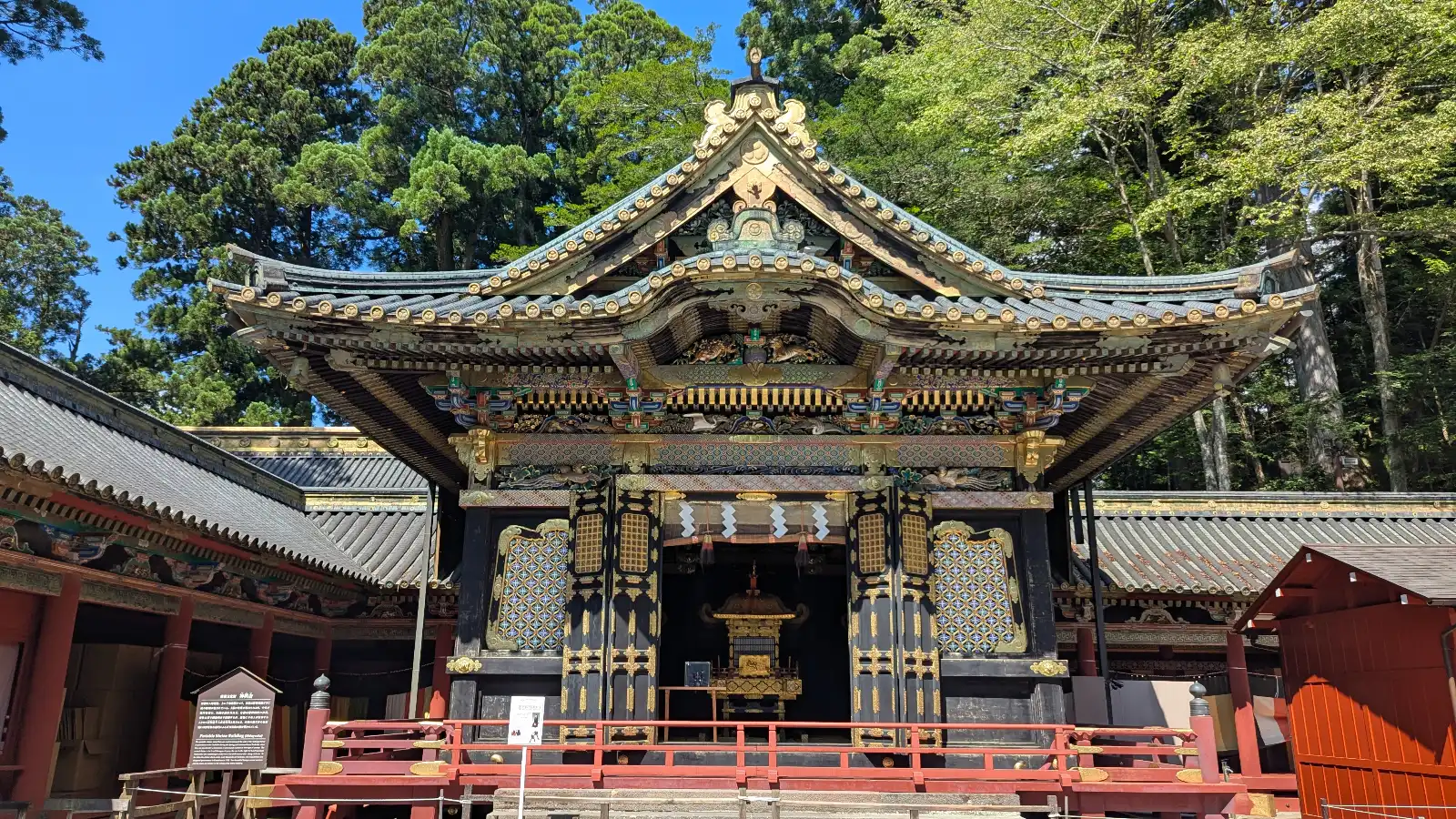
Hotels we would book for this visit.
Three bases, chosen by which end of the day each one shortens: the shrine end of town, the lake at the top of the same bus line, and Kinugawa Onsen for a family whose next morning is Tobu World Square rather than more shrine.
| Property | The LuNi Reason |
|---|---|
| LUNI Pick Nikko Kanaya Hotel Near the Shinkyo bus stop, at the shrine end of town | The only one of the three at the shrine end of town, and its free shuttle from Tobu Nikko Station takes a transfer out of the arrival day. For a child who spends Reserve on the unconfirmed: the walk from the Shinkyo stop to the gate is the same route both mornings, short enough to rehearse the evening before. |
| The Ritz-Carlton, Nikko On Lake Chuzenji, with its own bus stop | A family doing the shrine in the morning and Kegon after it sleeps at the top of the same Tobu line, so the day’s second stop is nearer to bed than the first. That suits a child whose legs the stairways spent: between the shrine and the room there is a bus seat and an elevator, not another walk. |
| Hoshino Resorts KAI Kinugawa Kinugawa Onsen, a walk from the station | For a family whose next morning is on the Kinugawa side rather than back at the shrine. Tobu World Square is a short bus ride from Kinugawa Onsen Station, and every exhibit area there is outdoors, so a child whose Reserve went on dense, close detail wakes near a lighter day instead of another climb. |
Nearby attractions, matched to your child.
Three pairings, each chosen for the cost the shrine leaves behind: legs spent on stairways, movement held on a ticketed route, and eyes filled with close detail. All three start from a bus stop or shuttle beside the shrine.
| Pairing | Why This Solves the After-Visit | For Your |
|---|---|---|
| LUNI Pick Kegon Waterfall About 45 minutes by Tobu bus and on foot | After a morning on the shrine’s stairways, the legs are the currency left, and Kegon Waterfall asks for almost none of it, because an elevator does the descent to the lower deck. Sustained walking and standing is the Sprinter’s cost, and here a machine pays most of it before the legs are asked for anything. | Sprinter |
| Edo Wonderland Free shuttle from the Toshogu Omotesando, not Wednesdays | The shrine holds a moving child to a ticketed route of buildings. Edo Wonderland is a village of paved lanes with physical experience areas, and its free shuttle leaves from the shrine’s Omotesando, so restricted-movement depletion gets its discharge the same afternoon without a second fare. | Dynamo |
| Yudaki Cascades Up the same Tobu line, then a short walk | The shrine’s load is close detail on lacquered, richly colored buildings. Yudaki Cascades trades it for one view in the open air, from a deck directly in front of the plunge pool, step-free from the parking lot. Sensory-input depletion eases where there is one thing to look at, not a whole precinct. | Sensor |
Kegon Waterfall
About 45 minutes by Tobu bus and on foot For YourSprinter
Edo Wonderland
Free shuttle from the Toshogu Omotesando, not Wednesdays For YourDynamo
Yudaki Cascades
Up the same Tobu line, then a short walk For YourSensor
How two children actually met this attraction.
Two children walked the same precinct on the same visit, and neither of them met it as a shogun’s shrine. What reached them was ownership. One found a single object rich enough to study, and decided he wanted to own it outright. The other decided the whole place already belonged to him, on the strength of its name, and spent the visit inspecting his property at speed. Neither asked what the buildings were for, and neither needed to. The precinct was generous to both of them in the one way that matters to a child: it offered each a reason to be there that had nothing to do with the reason the adults had come. The cost of each reason surfaced in a different place, one standing still at a gate and the other moving along the paths.
Luca stopped in front of the gilded gate and stayed there. The scale registered first, “super big,” and then the gold took over completely: he traced the covered surfaces with his eyes, quietly cataloguing how much of it there was. He paid almost no attention to the crowds or the history. When he finally spoke, it was to announce, in full seriousness, that he wanted to buy the whole shrine so he could keep that much gold.
This is the Sensor pattern, narrowed to one object. A child whose Reserve depletes through sensory input copes with a dense place by fixing on one rich feature and letting everything else fall away, which is what the gate gave Luca. Families with a similar child should build the visit around that move: find the object early, give it time while the child can still stand still in front of it, and treat the rest of the route as optional rather than owed.
Nico decided within a minute that the shrine was named after him. Nikko was close enough to Nico, and that settled it: the place was his, the gate was his, and he spent the visit motoring between carvings, narrating his ownership to anyone in range. He took the lower paths at a near-run, stopping only to appoint another carving part of “his” shrine before charging on. The mausoleum’s history did not reach him at all.
This is the Dynamo pattern, with the child supplying the reason to move. A child whose Reserve depletes through restricted movement holds together while the movement has a point, and Nico gave the lower paths one before anyone offered him one. Families with a similar child can lean on exactly this: a claim over the grounds, or a hunt for the next carving, turns the walk between buildings into play with a direction, and keeps a Dynamo moving rather than stalling at whatever an adult wants admired.
A precinct of carved gates and painted buildings becomes a treasure hunt for a child who is given something to find. Searching for a famous carving of a sleeping cat or climbing toward an inner sanctuary turns centuries of craftsmanship into a quest a child can follow. Carvings this detailed reward the patient eye, and a child who discovers one small figure feels a thrill of ownership. A visit shaped around discovery teaches that great art is full of secrets waiting for someone curious enough to look.
The LUNI Rating for Nikko Toshogu Shrine.
One fact drives all four verdicts: the precinct is built into the mountain, and its approaches and stairways follow the natural terrain. The step-free route from the Omotemon ends at the steps in front of the Yomeimon, and the route to the Okumiya, the burial precinct above, begins at the Sleeping Cat. So the ground rises in two stages, and a family chooses how many of them to take. That geometry is generous to a child who needs to move and exacting for a child whose legs tire first, while the buildings themselves, lacquered and richly colored, load a third child through the eyes long before the stairs do.
Give the climb a destination. The Dynamo depletes through restricted movement, and Toshogu restricts less than a shrine visit sounds as if it will. The precinct is built into the mountain, with approaches and stairways that follow the terrain, so the route from the Omotemon is a sequence of rises rather than a corridor to shuffle along. The first steps come in front of the Yomeimon, and past the Sleeping Cat the route to the Okumiya begins. For a child whose Reserve drains when the body is held still, a route that goes up is a route with a job in it, and the single ticket covers all of it.
Name targets rather than rationing distance. The Sleeping Cat, a carving in the East Corridor, is the first target and the Okumiya above it is the second. A child hunting a named thing moves through the buildings between them instead of waiting at each one. Leave the audio guide with a sibling: a Dynamo spends more Reserve standing through a commentary at every building than walking between them.
What this means for your Dynamo: restricted movement barely engages on a route that rises. A younger Dynamo needs the Sleeping Cat named as the finish line of a race; an older one takes the Okumiya route as the morning’s real climb and sets the family’s pace.Ration the detail, not the distance. The Sensor depletes through sensory input, and at Toshogu the input is visual and close. The buildings on the route are lacquered and richly colored, and a family walks past one after another, each asking the eye to take in as much as the last did. That is exactly the trap: the cost builds rather than arrives, so it is easy to miss until a child who was pointing at everything has quietly stopped answering. This is a place that rewards a child who takes three things slowly over one who tries to take in all of it.
Choose fewer buildings, on purpose, before the gate. Pick three with the child at the Omotemon, use the audio guide as a way of taking them one at a time, and walk past the rest. Parts of the precinct can close for ceremonies, events or repair work, so hold a fourth building in reserve.
What this means for your Sensor: sensory input is the currency Toshogu spends fastest. A younger Sensor takes three buildings and the Sleeping Cat; an older one can carry the audio guide further, provided the stops are chosen rather than accumulated.Read the list aloud before the gate. The Anchor depletes through unfamiliarity and unconfirmed structure, and Toshogu is kinder to this child than its size suggests, because it tells you in advance what you are going to see. The shrine lists the buildings its ticket covers, from the first gate to the Okumiya, and the audio guide, rented just inside, walks the same ground building by building, in English or in a Japanese edition written for children. For a child who needs the shape of a place confirmed before spending anything in it, a list they can hold is worth more than any reassurance a parent could offer, and each building reached is one crossed off.
The one unknown worth naming is the ground. The route is step-free from the Omotemon only as far as the steps in front of the Yomeimon, and beyond them the approaches and stairways follow the mountain. Say both before the gate, then add the one uncertainty breakfast cannot settle: parts can close for ceremonies, events or repair work, so a call to the shrine the day before, or a spare building on the list, covers it.
What this means for your Anchor: unfamiliarity is paid down by a list the child can hold. A younger Anchor needs the steps named before they appear; an older one can carry that list and tick the buildings off in the order the family reaches them.Decide where you stop before the bus. The Sprinter depletes through sustained travel-style walking and standing, and Toshogu charges for both from the first gate. The step-free route runs from the Omotemon only to the steps in front of the Yomeimon, so what families call the lower complex already asks for steps. Past the East Corridor the route to the Okumiya begins at the Sleeping Cat, and the approaches and stairways follow the terrain up to the burial precinct. Add the walk in from the bus stop, which is shortest from the Omotesando stop on the World Heritage loop bus, and a child whose legs are the scarce currency has spent most of it before the famous carving.
Agree on the turnaround away from the stairs. The Sleeping Cat is a real destination on the ticket, not a consolation, and it is also where the Okumiya route starts, which is exactly why a worn-out child cannot negotiate there fairly. Set it at breakfast, and say it again at the Omotemon. The shrine’s own parking lot is the other way to shorten the walk in, and on a day with a tired child it is worth the fee.
What this means for your Sprinter: the stairs start earlier than the gate suggests. A younger Sprinter stops at the Sleeping Cat, or before the Yomeimon steps; an older one may take the Okumiya route if that was decided before the gate, never at the cat.The questions parents actually ask.
The clock and the ground decide a day at Toshogu with children. The clock is simple once it is read properly: the gate opens at nine all year, closes an hour earlier in winter than in summer, and stops selling tickets half an hour before it shuts, which catches out families who plan to the closing time. The ground is the harder of the two, because the steps begin in front of the famous gate rather than somewhere beyond it. Hold both in mind and the visit takes care of itself: arrive at the opening, and decide the turnaround before anyone has seen the stairs.
Is Nikko Toshogu Shrine worth visiting with kids?
Yes, with the turnaround decided in advance. One ticket covers the whole route from the Omotemon gate to the Okumiya, the burial precinct above. A child who needs to move gets a precinct that climbs with the mountain; a child whose legs tire first should stop at the Sleeping Cat, where the Okumiya route begins, agreed on at breakfast rather than at the cat.
What are Nikko Toshogu Shrine’s opening hours?
From April 1 to October 31 the shrine is open 9:00 to 17:00, and from November 1 to March 31 it is open 9:00 to 16:00. Tickets stop 30 minutes before the gate closes, so arrive by 16:30 from April to October and by 15:30 from November to March. Parts can close for ceremonies or repairs.
How much does Nikko Toshogu Shrine cost for a family?
Adults and high school students pay 1,600 yen, and elementary and junior high students pay 550 yen, so two adults and two school-age children pay 4,300 yen. A set ticket adds the Treasure Museum. The audio guide is 500 yen a day, and the shrine’s parking lot charges 600 yen for a car, worth it when the walk in is the problem.
Is the climb at Nikko Toshogu too much for young children?
It can be, and the steps start before the famous gate. The step-free route ends in front of the Yomeimon, and the route to the Okumiya begins at the Sleeping Cat, on approaches and stairways that follow the mountain. For a young or tired child, make the Sleeping Cat the agreed end of the visit, and agree on it before you arrive.
Is Nikko Toshogu Shrine stroller-friendly?
Only for the first stretch. There is a wheelchair entrance with a slope, and the step-free route runs from the Omotemon to the steps in front of the Yomeimon, where it ends. Beyond that point the route has steps, so plan to carry a small child from the Yomeimon onward and treat the stroller as transport to the gate rather than through it.
How do you get to Nikko Toshogu Shrine from Tokyo?
From Asakusa, the Tobu limited express Kegon reaches Tobu Nikko in under two hours, and from Shinjuku the JR limited express Nikko takes about two. JR travelers can also change at Utsunomiya, where buses leave for the Oya area and Oya Temple, onto the JR Nikko Line. From Tobu Nikko, the bus to Nishisando Iriguchi, the stop nearest the shrine, takes a few minutes.
Can you see Nikko Toshogu and Kegon Waterfall in one day?
Yes. The Tobu bus from Nishisando Iriguchi, the stop nearest the shrine, reaches Chuzenji Onsen in about 39 minutes, and Kegon is a short walk from there. Take the shrine at the opening and the falls after lunch: an elevator does the descent at Kegon, so the second stop asks little of legs the first one has already spent.
Is there an English audio guide at Nikko Toshogu?
Yes. The audio guide comes in English and Chinese as well as Japanese, and the Japanese version has a separate edition written for children. It is rented straight ahead after the Omotemon for 500 yen a day, individuals need no reservation, and rentals stop an hour before the gate closes, so pick it up on the way in.
Where Nikko Toshogu Shrine fits your Japan trip.
Official site and opening information: Nikko Toshogu