Harajuku With Kids:which stop is for which child.
- Worth Visiting?
- Yes, if your child is ready for a crowd
- Takeshita Street
- Crepes, cotton candy, character shops
- Go Early
- Arrive before the street fills
- The Calm Escape
- Cat Street, off the main lane
- Character Shops
- Kiddy Land and the character flagships
The colorful food and fun of a famous shopping street, and how a family handles the crowd that comes with it.
Some links on this page are affiliate links. LuNi may earn a commission at no extra cost to you.
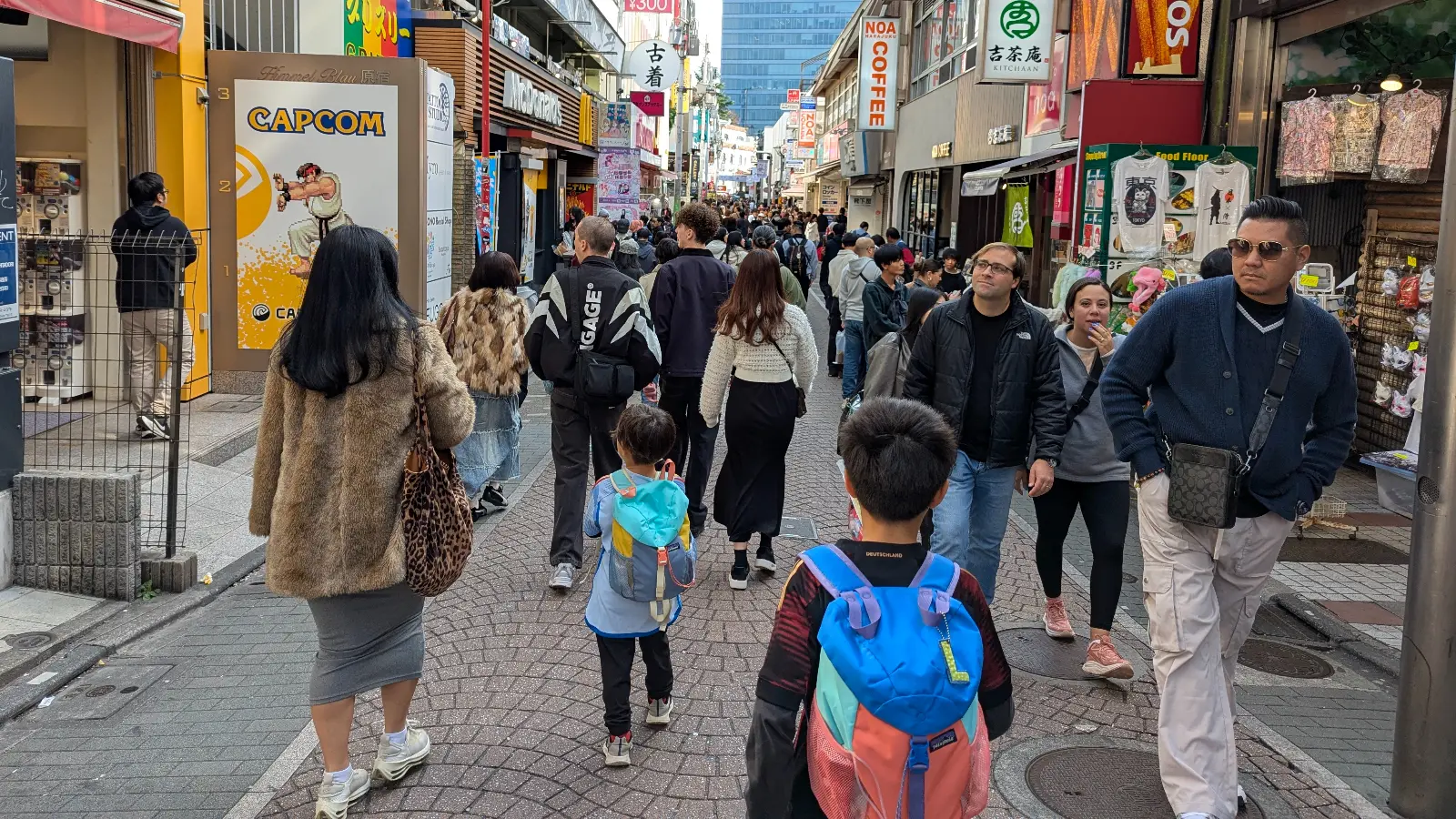
Harajuku is worth visiting with kids if your child is ready for a crowd, because the street is the draw rather than any one sight. Takeshita Street means crepes, cotton candy and character shops, densest in the middle of the afternoon, so arrive before eleven in the morning and plan two to three hours. An active child can walk Takeshita and the open run of Omotesando. A child who tires on noise needs Cat Street, where the recovery is the escape from the lane. Kiddy Land and the character flagships give a child who wants the order settled a clear target.
Which stop is for which child.
These stops are not ordered best to worst. They are grouped by which child each one is for. The reason is simple: Harajuku is one of Tokyo’s most stimulating streets, and the stop that thrills one of your children is the stop that overwhelms another. So instead of a single list, you get four short ones, organized by how each child runs out of steam. The Dynamo runs short when they cannot move. The Sensor runs short on noise and crowds. The Anchor runs short when nothing is predictable. The Sprinter runs short on walking and standing. Find your child below, and start there.
For the Dynamo
Stops that relieve restricted-movement depletion.
For a child who depletes through restricted movement, the strongest stops are walking Takeshita Street and the open run of Omotesando.
Moving with the wave of people down Takeshita Street is sanctioned motion, the rare moment a high-energy child’s pace is the correct pace. The crowd carries them forward, and for the Dynamo that forward push discharges energy rather than draining it. A younger Dynamo holds a hand and rides the surge from the station end to the bottom of the slope; an older one can lead the family through and pick the crepe stand at the far end as the target.
Who it costs.The Sensor and the Anchor, both at high risk. The lane is narrow, loud, and shoulder-to-shoulder at busy hours, with no contained interior to retreat into mid-street.
How to make it work.Walk it once, end to end, before 11 a.m., never against the mid-afternoon or Sunday crush when the lane stops moving.
If this isn’t your child: a ten-minute candy-colored spectacle, best taken at a walk and not a standstill.One block from Takeshita’s squeeze, Omotesando opens into a wide, tree-lined boulevard with room to walk at full stride. For a movement-driven child it is where the held-in energy of the narrow lane finally releases without a crowd to fight. A younger Dynamo gets unbroken pavement to move along; an older one can take the longer slope down toward the Cat Street turn at their own pace.
Who it costs.The Sprinter. The boulevard’s length is real walking distance for a low-stamina child, with limited seating along the way.
How to make it work.Use Omotesando as the release valve straight after Takeshita, so the Dynamo discharges before the family slows for food or shops.
If this isn’t your child: a handsome avenue and a calm counterpoint to the lane, pleasant for any family.For the Sensor
Stops that let a sensory-loaded child recover.
For a child who depletes through sensory input, the strongest stop is Cat Street, because in Harajuku the recovery is the escape from the lane, not a stop on it.
Cat Street is the calm spine running parallel to the noise: a low, walkable lane of quieter boutiques and cafes between Harajuku and Shibuya, with none of Takeshita’s density. For a child whose sensory threshold has been spent by the main street, it is where the input drops and the visit can continue instead of ending. A younger Sensor recovers over a drink away from the crowd; an older one browses the calmer shops at a pace they set. Honesty matters here: Harajuku’s signature attraction is also its hardest test for this child, so the Sensor’s best stop is the route out of the crowd, not deeper into it.
Who it costs.The Dynamo, mildly. The calm that restores the Sensor offers a high-energy child little to discharge against, so it should follow a movement stop rather than precede one.
How to make it work.Treat Cat Street as the planned reset between Takeshita and anything else, so the Sensor refills before the next demand rather than after a cascade.
If this isn’t your child: a stylish, unhurried stroll and the most pleasant walking route between the two districts.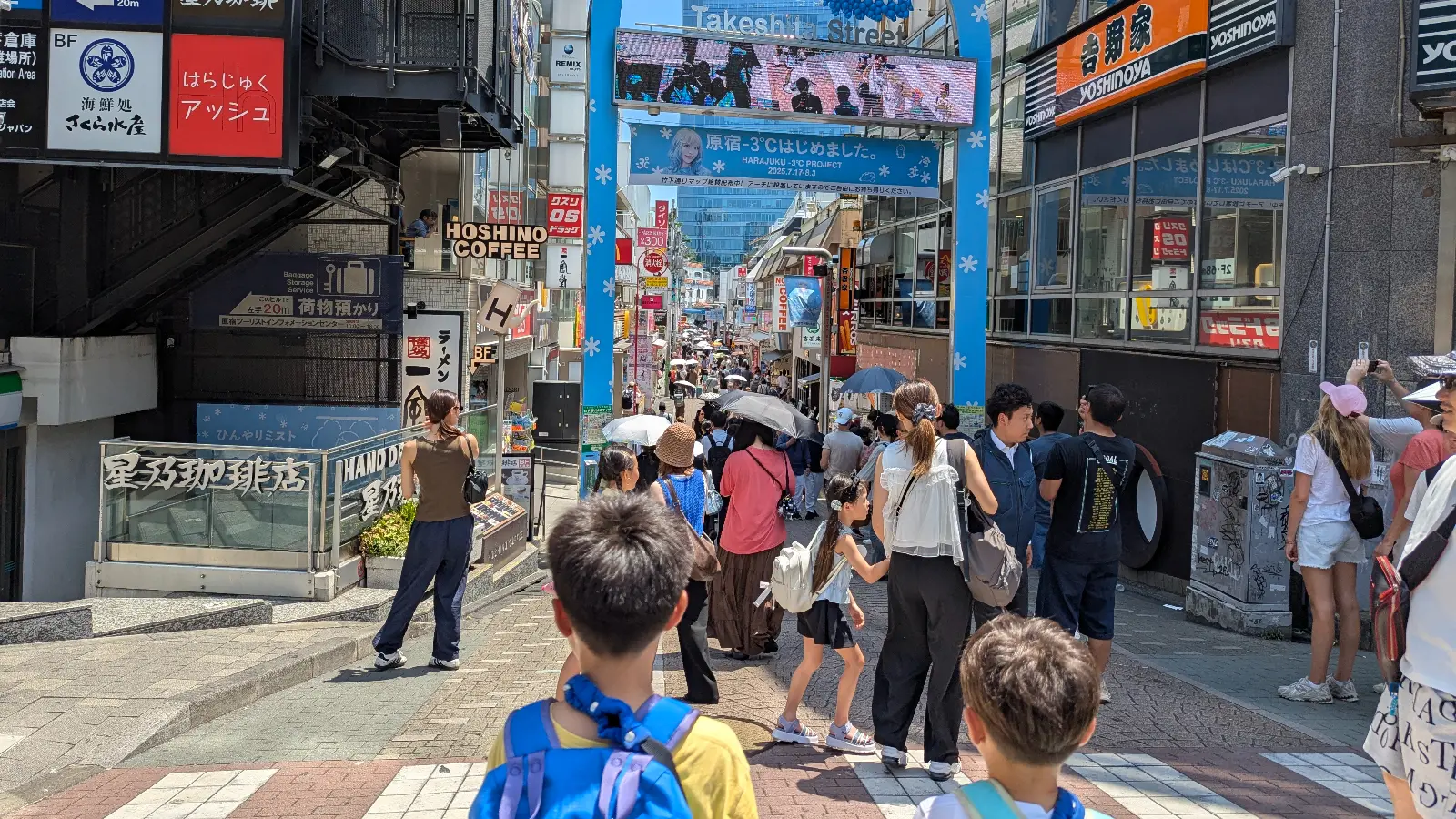
For the Anchor
Stops with confirmed, familiar structure.
For a child who depletes through unfamiliarity and unconfirmed structure, the strongest stops are Kiddy Land and the character flagships.
A multi-floor toy store organized by character and brand is one of the most predictable things in Harajuku: a fixed building, floors a child can expect to find the same on the way down as on the way up, and shelves of figures they already know. That recognized structure is exactly what an Anchor relies on to feel oriented. A younger Anchor heads straight for the floor of a character they know on sight; an older one navigates the building by a logic they can hold in their head.
Who it costs.The Sensor, at high risk at peak. The floors run bright, dense, and merchandise-saturated, and at busy times the aisles are crowded enough that leaving is itself hard.
How to make it work.Go at opening on a weekday, before the floors fill, so the Anchor gets the familiarity without the Sensor paying the peak-density cost.
If this isn’t your child: a fun, browsable toy stop, though not a reason to build the visit around it.The flagship character stores carry brands that are internationally familiar in a way little else on the street is: a child who knows Hello Kitty or Pokemon arrives already oriented, which is precisely the reference point an Anchor needs in an unfamiliar place. The brand itself is the structure, and the format is contained. A younger Anchor recognizes the characters at the door; an older one moves through a store they have effectively visited before through the brand.
Who it costs.The Sensor, at high risk at peak, when the stores run loud, saturated, and tightly packed.
How to make it work.Pair the flagships with Kiddy Land in one early, opening-hour block so the Anchor banks all the familiarity at once, before the crowd builds.
If this isn’t your child: a bright, brand-driven browse and an easy souvenir stop for any family.For the Sprinter
Short, low-stamina stops with little walking.
For a child who depletes through sustained walking and standing, the strongest stop is a single crepe stand on Takeshita Street.
Harajuku’s crepe stands are the rare stop that turns the street’s signature into a rest: a fixed counter, a short queue, and a folded crepe eaten on a nearby step or ledge. For a low-stamina child it is a real Harajuku experience that costs almost no walking, the anchor point a Sprinter’s visit is built around rather than walked between. A younger Sprinter picks a flavor and sits; an older one treats one stand as the destination and the rest of the street as optional.
Who it costs.No profile, directly. The cost is budget and the wait in line at the busiest stands, not a child’s Reserve, which is what makes it the safe stop to plan around.
How to make it work.Choose one stand near the station end, eat sitting down, and let the food be the visit rather than a stop between longer walks.
If this isn’t your child: still the single most Harajuku thing you can do in five minutes, worth one stop on any route.Open with the child who runs short first.
The order of a Harajuku visit is set by Reserve, not by the map. Each route opens with the stop that protects the named child, then chains to the nearest compatible one.
Settle the timing first. Harajuku has no booking-gated stop, so the day’s shape is set entirely by when you arrive. Reach Takeshita Street before 11 a.m. and the whole route stays calmer; arrive at mid-afternoon and the same lane becomes the day’s hardest stretch. Everything else is walk-up, arranged around that one window.
When to go, and what costs nothing.
Weekday mornings are the widest window: lively enough to feel like Harajuku, calm enough to protect a sensory-sensitive child. Mid-afternoons and Sundays are the most exciting and the most overwhelming, with Takeshita Street at its densest. Much of Harajuku costs nothing if you want it to: window-shopping Takeshita, walking Omotesando, and strolling Cat Street are all free. They are not equal on Reserve, though. Takeshita is the free stop that taxes a sensory child hardest, while Omotesando and Cat Street are the free stretches that protect one, so the cheap route and the calm route only overlap once you leave the main lane.
Three bases that fit a family’s Reserve.
Harajuku itself has very few hotels, so the strongest family bases sit just over its borders on the Cat Street and Shibuya side. A shortlist chosen for location logic, not price tier. The full set is in the complete Shibuya hotel guide.
| Property | The LuNi Reason | Budget |
|---|---|---|
| LUNI Pick Trunk Hotel Tokyo Cat Street On the calmer Cat Street side | A boutique base on Cat Street, the quieter spine that runs straight off Harajuku toward Shibuya. The lower-stimulation location protects a Sensor’s Reserve after a Takeshita morning, while keeping the crepe stands and character shops within a short flat walk. | ¥¥¥ |
| Hyatt House Tokyo Shibuya Walk to the station | Extended-stay suites with kitchenettes that hold an Anchor’s routine across a multi-night trip, and room to spread out at the end of a high-stimulation day. | ¥¥ |
| Tokyu Stay Shibuya Flexible family rooms | Spacious rooms with kitchenettes and in-room laundry, a flexible base for a family that wants to reset between busy Harajuku and Shibuya days without re-packing. | ¥¥ |
Budget: ¥¥¥
Budget: ¥¥
Budget: ¥¥
For every family-friendly option in the district, see the full Shibuya family hotel guide.