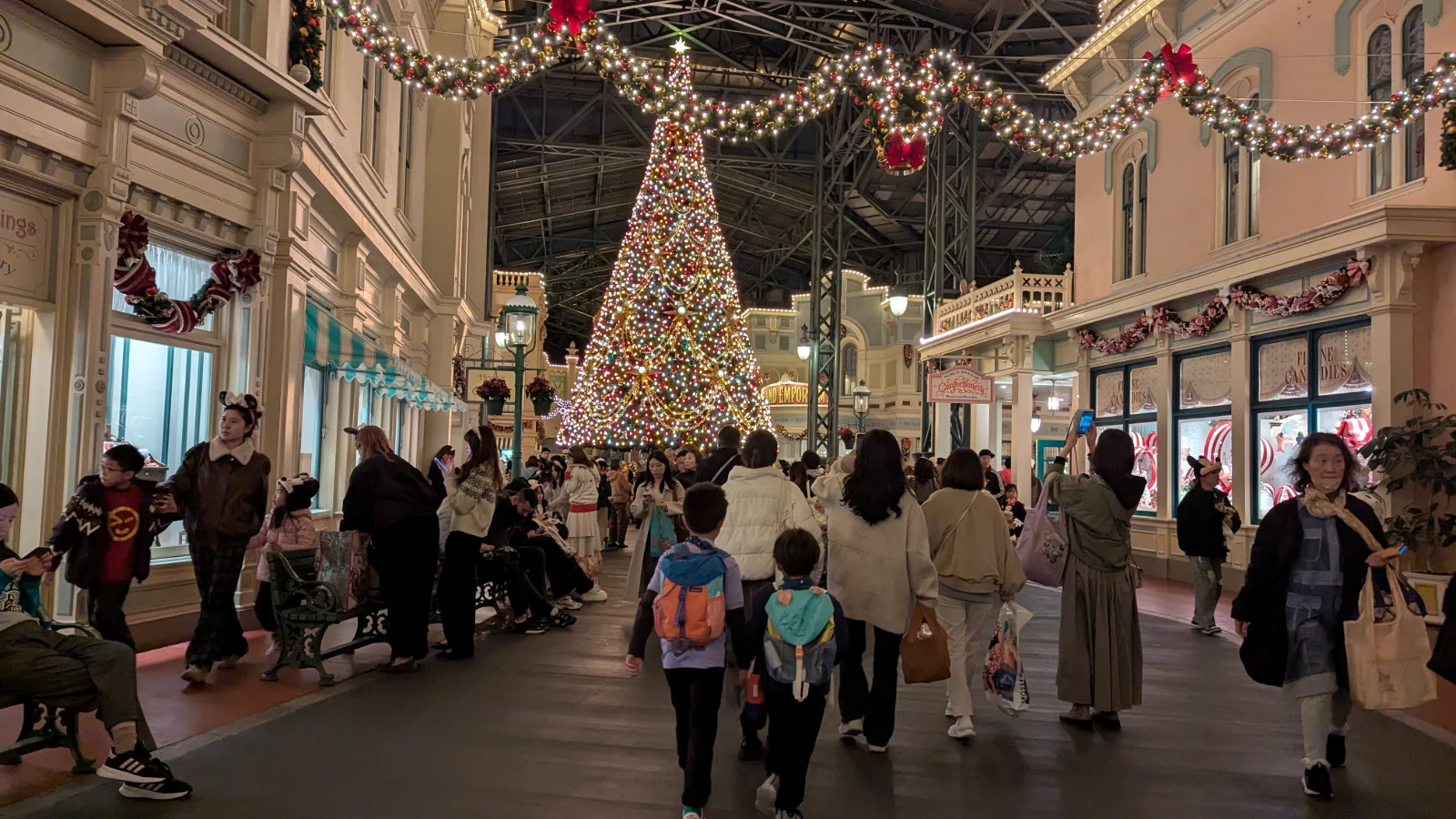
The hesitation around Tokyo Disneyland is not about the park’s quality, it is about the queue architecture. Popular rides and character greetings routinely require 60-plus minute waits in confined, structured lines with no physical outlet, a commitment that creates genuine doubt for parents who know their child’s limits. The competing pull is equally specific: no other Disney property in the world combines this brand’s recognizable characters and stories with Japanese operational precision at this level.
Whether that combination belongs on your itinerary depends entirely on your child’s travel profile, a distinction the Family Fit™ framework makes possible to assess before you book. For the broader planning picture of your time in the city, our Tokyo family-friendly travel hub covers how this park fits within a full family itinerary.
Is Tokyo Disneyland Worth Visiting with Kids? (Quick Answer)
Tokyo Disneyland is worth visiting for families whose children are sustained by familiar stories and predictable environments, and not worth visiting for families whose children cannot tolerate extended physical stillness in a confined queue. Anchors and Sprinters find a natural fit here, while Dynamos face conditions where the queue commitment without a mitigation strategy nearly guarantees behavioral breakdown, and Sensors require a deliberate decompression plan to sustain the day. The profile analysis below will tell you precisely where your child lands and what that means for your booking decision.
Pros of Visiting Tokyo Disneyland with Kids
- The park’s internationally recognized character roster and classic story formats give Anchors an immediate reference point that functions as a stabilizing anchor in an otherwise foreign country. A child who needs routine to feel safe will recognize every character, every ride theme, and every parade beat from home, which removes the ambient anxiety that unfamiliar Japanese attractions can produce.
- Gentle, story-driven dark rides including Pooh’s Hunny Hunt carry minimal height restrictions, which means siblings at different developmental stages can board together without requiring the family to split across queue lines for every attraction.
- The park is built on flat, fully accessible terrain with built-in seating across multiple indoor theater shows. For Sprinters, this layout makes it structurally possible to alternate between walking segments and seated rest without engineering workarounds mid-day.
- Tokyo Disneyland’s crowd management reflects the operational standards of Japanese hospitality at scale. Queue lines are organized, signage is clear, and the physical environment is immaculately maintained, reducing the background friction of navigating a high-density venue with children in tow.
- The concentration of indoor, climate-controlled attractions and covered queue segments gives families a meaningful buffer against weather. Summer heat and winter wind remain factors in the outdoor plazas and parade routes, but the indoor attraction roster is substantial enough to anchor a full day regardless of conditions.
Cons of Visiting Tokyo Disneyland with Kids (Important for Parents)
- The park’s most popular attractions and character greeting experiences require structured queues that regularly exceed 60 minutes, with no physical outlet available during the wait. For Dynamos, this is the park’s defining friction point: the required stillness in a confined queue line, sustained across multiple rides throughout the day, creates conditions for behavioral breakdown without a deliberate mitigation strategy in place before arrival.
- The park-wide sensory environment is persistently high-input. Parade announcements, looping attraction music, and the constant density of a full-capacity crowd layer on top of each other with no quiet zone readily accessible from the main pathways. Sensors require a pre-planned exit route to lower-stimulus areas, including the Tom Sawyer Island raft crossing, to maintain equilibrium across a full day.
- Extensive outdoor queue areas and open plaza sections provide limited weather protection. Summer heat builds quickly in exposed queue lines, and the physical exhaustion this produces arrives before the afternoon parade for families who have not built shade and hydration stops into their pacing strategy.
- Stroller management across the park requires consistent folding and parking outside ride entrances. This is not unique to Tokyo Disneyland among major theme parks, but the frequency of the requirement across a full day of attractions is high enough that families without a clear plan for who manages gear transitions will find it a meaningful source of friction.
Why “Worth It” Depends on Your Child
Tokyo Disneyland’s profile split is driven by one structural reality: the park’s primary experience delivery mechanism is the queue. Every major character interaction and headliner attraction is gated behind a period of confined, structured waiting that the park has no alternative format for. How a child responds to that structure determines almost everything about whether the day succeeds.
The Dynamo – High Risk. The park’s headliner experiences are inaccessible without sustained physical stillness in a confined space. Queue lines for popular rides exceed 60 minutes and offer no movement alternative, no lateral exit, and no physical outlet during the wait period. Families who visit without Premier Access passes or a deliberate rotation strategy between low-wait attractions and open exploration areas should expect that the queue commitment, repeated across a full day, will produce behavioral distress before the afternoon is over.
The Sensor – Caution. The park’s ambient sensory load is high and persistent rather than acute and escapable. The combination of parade audio, looping attraction music, crowd density, and sudden announcement broadcasts creates an environment where the stimulus never fully drops between experiences. Parents should identify the Tom Sawyer Island raft area as a planned decompression stop before the day begins, and build structured breaks into the schedule at regular intervals rather than waiting for signs of overload to appear.
The Anchor – Go. The park’s core structure is a globally familiar brand delivered in a predictable format. The characters, the ride themes, the parade sequence, and the park layout can all be previewed at home before departure, which means the child arrives with a cognitive map of what to expect rather than a blank slate. That predictability, in a foreign country where most environmental cues are unfamiliar, functions as a genuine stabilizer for the routine-reliant child.
The Sprinter – Go. The park’s physical layout removes the terrain friction that exhausts low-stamina children at other major attractions. Flat ground throughout, no significant inclines between lands, and a substantial roster of indoor seated theater shows give families the tools to structure the day as an alternation between movement and rest rather than a sustained physical push.
Identifying your child’s profile before booking is the most reliable planning decision you can make for a day at this park. Take the free Family Fit™ Quiz
Who Will Enjoy Tokyo Disneyland with Kids (By Age Group)
Toddlers (under 3)
Toddlers have not yet developed the cognitive patience for confined waiting, and the park’s primary value delivery mechanism is the queue-gated ride or character greeting. The visual stimulation of classic characters is developmentally engaging at this age, but the dense crowd density at ground level and the repeated cycle of queue, ride, queue overwhelms emotional regulation faster than the attractions can deliver payoff. Tokyo Disneyland is conditionally worth it for toddlers only when the visit is restructured entirely around walk-through character areas and park atmosphere rather than headliner attractions.
The LUNI Framework
Most families skip this.
It's why Day 3 falls apart.
The LUNI Profile Quiz identifies the specific planning adjustments your child needs. Three minutes now saves the whole trip.
Preschoolers (3-5)
Preschoolers are at the developmental stage where imaginative buy-in to character storytelling is at its highest, and Tokyo Disneyland’s classic dark ride format is calibrated precisely for this capacity. A five-year-old who can hold a story in their head across a queue wait and then experience the ride as the payoff of that narrative investment gets more from this park than almost any other age band. The gentle pacing of the core preschool-targeted attractions makes this the age range where the park delivers most reliably on its promise.
School-Age Kids (6-10)
Children in this bracket have developed the physical stamina to sustain a full park day and the emotional regulation to manage moderate queue times without behavioral collapse. The parade complexity, the thematic layering of the lands, and the range of ride intensity across the attraction roster all become legible to a school-age child in a way they are not to younger visitors. Tokyo Disneyland is genuinely worth it for this age range without significant caveats for most child types within it.
Older Kids and Teens (11+)
Teens who approach Tokyo Disneyland looking for high-speed thrills or the autonomy of an attraction roster that challenges them will find the park underwhelming. The ride portfolio skews toward gentle and story-driven rather than intense, and the park’s primary differentiation, Japanese operational precision applied to familiar Disney style, is an abstraction that does not translate into adolescent engagement on its own. Tokyo Disneyland is not worth it for most teens unless they carry a genuine existing affinity for the Disney brand or are visiting as part of a broader theme park itinerary that includes Tokyo DisneySea.
Best Alternatives to Tokyo Disneyland for Families with Kids
Tokyo DisneySea. For families whose older child found Tokyo Disneyland’s ride roster too gentle, the neighboring park offers a higher concentration of intensity and a more complex, mature theming structure. The attraction portfolio at DisneySea is built around adventure and discovery rather than classic character familiarity, which satisfies children who have aged out of what the main park delivers. Tokyo DisneySea guide
teamLab Planets Tokyo. For families whose child found the persistent ambient noise and crowd density of a major theme park incompatible with a functional day, teamLab Planets offers immersive, high-stimulus visual experiences in a format that allows genuine engagement. The linear, one-directional route and contained room structure mean the sensory input is intense but bounded, with a clear exit from each installation rather than an inescapable park-wide ambient load. teamLab Planets guide
Ueno Zoo. For families whose child found the theme park’s all-day queue commitment an incompatible format, Ueno Zoo provides a flexible, exit-at-any-point structure with no ride queues and no mandatory pacing. The compact layout means a family can calibrate the visit in real time to the child’s stamina rather than working against a sunk-cost queue investment. Ueno Zoo guide
For a complete view of how to structure your Tokyo days around your child’s profile, our Tokyo family-friendly travel hub maps the full range of options.
Final Recommendation: Is Tokyo Disneyland Worth It with Kids?
Tokyo Disneyland earns its place on a family itinerary when the child visiting it is sustained by familiarity rather than challenged by novelty, and when the queue architecture is treated as a planning variable rather than an unavoidable given. Anchors and Sprinters will find the park delivers on its reputation, while Dynamos require a Premier Access strategy to make the day viable, and Sensors need a structured decompression schedule built around the Tom Sawyer Island area before arrival. For families in the conditional range, the visit succeeds when the queue mitigation strategy is budgeted and booked before the trip, not improvised at the gate. Arriving at the security entrance one full hour before official park opening provides a meaningful head start on headliner attractions before peak crowd density establishes itself for the day.
The Tokyo Disneyland Briefing: Essential Intel
Parents deciding whether Tokyo Disneyland belongs on their Japan family itinerary ask these questions most consistently, from whether the queue structure is manageable for an active child to whether the park’s classic Disney format still delivers for a teenager who has outgrown it.
A: No, not without a deliberate mitigation strategy in place before arrival. The park’s headliner experiences are gated behind 60-plus minute structured queues in confined lines with no physical outlet, which means the Dynamo’s primary behavioral challenge is the wait, not the ride. Premier Access passes or a rotation strategy built around low-wait attractions and open exploration areas are the conditions that make the visit viable for this child type, not optional enhancements.
A: Conditionally, with pre-planned decompression built into the schedule from the start. The park’s ambient sensory environment is persistent rather than acute: parade audio, looping attraction music, and crowd noise layer continuously without a natural quiet break in the main thoroughfares. The Tom Sawyer Island raft area is the most accessible lower-stimulus zone within the park, and building structured breaks there at regular intervals is a more reliable management strategy than reacting once overload has already set in.
A: Conditionally, only when the visit is restructured entirely around park atmosphere and character walk-through areas rather than headliner ride queues. The classic character visuals are engaging at this developmental stage, but the repeated cycle of crowd density and confined waiting exceeds a toddler’s emotional regulation capacity faster than the attraction payoffs arrive. Families who arrive expecting a standard theme park day with a child under three should adjust that expectation before the gates open.
A: No, and this is the clearest mismatch in the park’s visitor profile. Tokyo Disneyland is an American intellectual property executed with Japanese operational precision, which means the cultural experience on offer is the quality of that execution rather than any reflection of Japanese heritage or tradition. Families whose primary itinerary goal is cultural immersion will find that time directed elsewhere in Tokyo delivers against that goal at a level this park cannot.
A: Yes, and this is the profile for whom the park is most reliably worth it. Anchors benefit from the globally recognized Disney brand in a specific way that most attractions cannot replicate: the characters, stories, and ride themes can all be previewed at home before departure, which means the child arrives with a cognitive map of the environment rather than encountering it as unknown territory. In a country where most environmental cues are unfamiliar, that pre-loaded familiarity functions as a genuine stabilizer across the full day.
A: Not for most, unless the teen carries a genuine existing affinity for the Disney brand. The ride portfolio skews toward gentle and story-driven, and the park’s primary differentiation, the precision with which a familiar experience is delivered, does not translate into the kind of engagement most adolescents are seeking from a theme park day. Teens who need intensity or autonomy will find Tokyo DisneySea a substantially better use of the same day.
