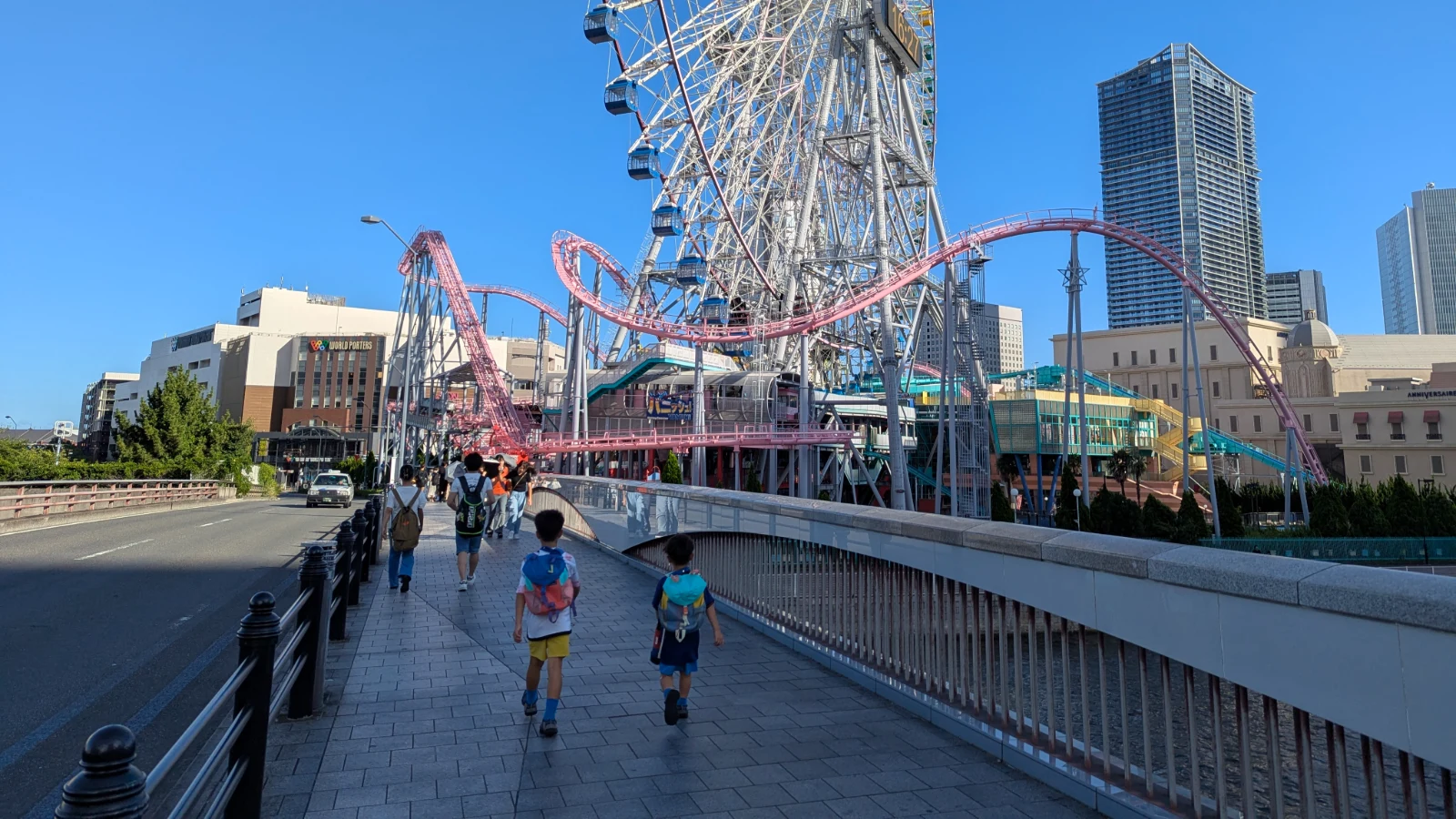
Yokohama’s defining challenge for families has nothing to do with what the city offers and everything to do with what it demands: a spatial commitment that Tokyo, for all its intensity, never requires. The wide open Minato Mirai waterfront and its hands-on interactive facilities provide a compelling counterweight to central Tokyo’s density, but neither asset delivers its value to a family that arrives without a deliberate approach to the city’s scale.
Whether this port city earns its itinerary days depends entirely on the travel profile of the child making the trip, not on the destination’s general reputation. For the broader planning picture, the Japan family travel hub covers the routing strategies that determine how Yokohama fits within a multi-city Japan itinerary.
Is Yokohama Worth Visiting with Kids? (Quick Answer)
Yokohama is conditionally worth visiting for families whose children thrive in open, expansive environments and can sustain the physical output a port city’s layout requires. The city’s broad coastal promenades and large-scale interactive facilities actively reward Dynamos and school-age children with high physical resilience, while the distance between primary transit points and the main waterfront zone places Sprinters under immediate stamina pressure that cannot be solved mid-day. The breakdown below maps Yokohama’s baseline environment against each child travel profile so parents can make a routing decision before committing itinerary days.
Pros of Visiting Yokohama with Kids
- Minato Mirai’s broad, vehicle-separated pedestrian promenades give Dynamos an environment where movement is unrestricted and socially acceptable. In central Tokyo, a high-energy child requires constant physical management in tight corridors and crowded transit nodes. Yokohama’s waterfront removes that constraint, allowing the day to function as forward motion rather than containment.
- Large-scale participatory facilities like the Cup Noodles Museum Yokohama replace passive observation with hands-on creation, sustaining the attention of school-age children across a longer visit window. This is a meaningful structural difference from Tokyo’s museum landscape, where many exhibits reward visual engagement rather than physical participation.
- The oceanfront geography naturally dilutes crowd density, reducing the sensory accumulation that builds during a typical Tokyo sightseeing day. For Sensors, this means Yokohama can function as a genuine reset within a multi-day Japan itinerary rather than another high-input day in a different location.
- Enclosed shopping centers directly integrated with the outdoor waterfront zones provide immediate weather contingencies without requiring an itinerary pivot. Families retain operational flexibility during unexpected rain or peak summer heat without abandoning the day’s structure entirely.
- The visual distinctiveness of Yokohama’s skyline and port infrastructure offers a qualitatively different urban experience from Tokyo’s neon-dense corridors. For older children and teens, this aesthetic contrast is a legitimate itinerary asset.
Cons of Visiting Yokohama with Kids (Important for Parents)
- The physical distance between primary train stations, the main waterfront attractions, and the historic districts creates a high baseline step count before families reach any primary destination. This opening demand is the variable that makes or breaks the day for Sprinters, draining stamina reserves before the visit properly begins.
- The exposed harbor geography removes the climate-controlled buffer that families rely on in Tokyo’s underground concourses and interconnected mall networks. Coastal winds in winter and concentrated humidity in peak summer reduce the operational flexibility that most Tokyo-trained families expect.
- Yokohama Chinatown’s narrow, heavily trafficked pedestrian streets produce sudden crowd surges and overlapping sensory inputs with minimal exit routes. For Sensors, this district is not a manageable challenge but an avoidable itinerary risk that erases the sensory relief the waterfront provided.
- The absence of densely clustered, multi-attraction entertainment blocks means each distinct activity requires a meaningful transit or walking transition. Families who rely on rapid sequential stimulation to keep children engaged will find Yokohama’s pacing structure frustrating before the afternoon begins.
- A full day in Yokohama competes directly with itinerary days that could be spent in Tokyo’s most concentrated, highest-impact neighborhoods. For families operating on a tight Japan timeline, that trade-off requires deliberate justification based on the child’s specific profile rather than general curiosity about the port city.
How Yokohama Works for Your Child’s Profile
Yokohama’s baseline environment naturally supports certain travel styles while placing immediate structural pressure on others. The Family Fit™ framework allows parents to map these macro dynamics against their specific child before the trip, rather than discovering them on the ground.
The Dynamo
Yokohama’s wide coastal promenades and large-scale plazas provide an environment where a high-energy child’s natural movement is neither disruptive nor constrained. The long, low-stimulation transit transitions between the primary waterfront zone and the inland historic districts create extended windows of forced inactivity that this profile handles poorly. Structure the day entirely around one geographic zone so this child can burn energy forward without the stop-start friction of cross-district movement.
The Sensor
The expansive layout and oceanfront geography reduce the noise saturation and visual compression that characterize a typical Tokyo sightseeing day. Yokohama Chinatown introduces a concentrated, unpredictable sensory environment with few natural pauses or clear exit routes, and it shares none of the waterfront’s relief qualities. Build the full day within the Minato Mirai district and exclude Chinatown from the itinerary entirely to preserve the sensory baseline the waterfront creates.
The Anchor
The city’s internationally legible modern architecture and clear visual sightlines between landmarks provide a reference framework that reduces the ambient ambiguity this profile finds destabilizing. The exposed harbor’s weather variability can disrupt a planned outdoor schedule faster than almost any other Japan city environment. Before the day begins, identify two specific enclosed fallback locations so this child always has a confirmed next step if the outdoor plan is altered.
The Sprinter
Yokohama’s flat terrain is a genuine physical advantage, but the distance between the main station exits and the waterfront’s primary attractions requires sustained walking before the day’s first activity. That opening output depletes the stamina reserve that later activities depend on. Restrict the itinerary to a single localized area and commit to using taxis for any movement between districts so this child arrives at each destination with the energy the visit actually requires.
If you have not yet identified which profile fits your child, the Family Fit™ Quiz takes less than two minutes and produces a planning profile that changes how every destination decision in your Japan itinerary reads.
Who Will Enjoy Yokohama with Kids (By Age Group)
Toddlers (under 3)
A toddler’s requirement for physical containment and frequent unscheduled rest conflicts directly with the volume of open-distance walking Yokohama’s layout demands between transit exits and primary destinations. This city is conditionally worth visiting for this age group only if the family restricts its footprint to a single waterfront mall or adjacent park and relies on a stroller for the full duration.
Preschoolers (3 to 5)
A preschooler’s appetite for visual novelty is genuinely served by the giant Ferris wheel at Cosmo World and the waterfront’s maritime scale, but the capacity for sustained walking between attractions has not yet developed at this age. Yokohama is worth the routing effort for preschoolers only when the family commits to a stroller for the full day and accepts that the geographic ambitions must be tightly edited.
School-Age Kids (6 to 10)
At this developmental stage, children have built the physical resilience and sustained engagement capacity that Yokohama’s participatory museums and open spaces reward most directly. This is the age group for which the port city is unambiguously worth the itinerary days, and the one that will absorb both the walking distances and the hands-on exhibits without the visit feeling like an endurance exercise.
Older Kids and Teens (11+)
A teenager’s need for aesthetic space and a degree of autonomous exploration is well served by Yokohama’s distinct architectural zones and spread-out layout, which provides natural separation from the family unit without creating actual safety concerns. Yokohama is strongly worth routing for this age group, particularly for families who have already covered Tokyo’s primary tourist neighborhoods and need a destination that registers as a qualitatively different experience.
Family Fit™ Travel Method
Planning around Japan.
Or planning around your child?
Every child travels differently. The Family Fit™ Quiz identifies your child's specific profile in under two minutes, and tells you exactly how to structure your itinerary around it.
Best Alternatives to Yokohama for Families with Kids
- Odaiba — Best for Sprinters and Anchors. Odaiba delivers a comparable waterfront atmosphere and large-scale entertainment while concentrating everything within climate-controlled indoor complexes that require a fraction of the walking Yokohama demands.
- Ueno — Best for Dynamos. Ueno compresses museums, a zoo, and substantial green space into a single walkable park footprint, delivering the engagement density Yokohama’s spread-out layout cannot match within a manageable daily step count.
- Kamakura — Best for Sensors and families seeking a low-stimulation coastal day. Kamakura provides a distinct coastal alternative to Tokyo with traditional temple paths and a quieter cultural rhythm that bypasses the commercial density and crowd concentration of Yokohama’s primary tourist zones.
Families who determine that Yokohama’s scale and pacing align with their travel style should build their operational strategy through the complete Yokohama family travel hub.
Final Recommendation: Is Yokohama Worth Visiting with Kids?
Yokohama earns its itinerary days for families whose children are capable of sustained physical output and who find genuine value in open, low-density environments rather than compact sequential sightseeing. The city is a strong routing choice for Dynamos and for school-age or teenage children; it is a structural mismatch for Sprinters and for toddlers whose daily energy budget is spent before the waterfront’s primary attractions come into view. The visit succeeds when families commit their entire day to a single localized zone and accept that Yokohama is not a city to conquer but a city to inhabit slowly. For families on a tight Japan timeline, the most honest routing question is whether this child’s profile specifically rewards what Yokohama offers, because the alternative is a day in Tokyo’s denser, higher-yield neighborhoods that requires no trade-off at all.
The Yokohama Briefing: Essential Intel
Families weighing a Yokohama trip consistently return to the same routing and suitability questions, from whether the port city justifies the transit time from central Tokyo to how its sprawling layout functions for children with different physical needs.
A: Yokohama is worth visiting for families whose children thrive in open, coastal environments with large-scale participatory attractions. The city is a strong choice for energetic school-age children and teenagers and a structural challenge for children with limited physical stamina. It earns its days when the itinerary is edited to a single zone rather than attempting to cover the full port.
A: The city’s infrastructure is highly accommodating, with wide stroller-accessible promenades, large indoor facilities, and a flat, walkable waterfront core. The challenge is not the amenities but the spatial scale, which requires a higher baseline step count than most Japan destinations to access the primary attractions from the train exits.
A: Yokohama is a conditional fit for toddlers at best. The distance between transit infrastructure and the waterfront’s primary destinations is incompatible with a toddler’s need for frequent containment and unscheduled rest. It is only worth routing for this age group if the family brings a stroller and sharply limits its geographic scope to a single mall or adjacent park.
A: The primary Minato Mirai waterfront zone is one of the lower-sensory environments available within day-trip range of Tokyo, with wide sightlines, reduced crowd density, and the natural acoustic buffer of the ocean. Yokohama Chinatown is the categorical exception: its narrow corridors, concentrated crowds, and layered sensory inputs make it an inappropriate routing choice for children who manage sensory load carefully.
A: A day trip makes itinerary sense for families who have secured their core Tokyo plan and need a pacing break from the capital’s density. It is not the right call for families on a strict timeline, because the transit distance and the internal walking demands consume a disproportionate share of the available day.
A: Yokohama is a strong destination for teenagers. The combination of distinct architectural zones, independent shopping areas, and a visually striking waterfront gives older adolescents a qualitatively different environment from central Tokyo, and the spread-out layout provides the spatial autonomy that makes a family day feel less managed for this age group.
