Best Tokyo Neighborhoodsfor Families, ranked.
- Most Family-Oriented
- Ueno: park-centered, forgiving for first-timers
- Quieter Mornings
- Asakusa’s side streets, off the temple approach
- Trains Out of the City
- Tokyo Station: Shinkansen and day trips
- Senso-ji on Foot
- Asakusa, a district learned in one walk
- For a Teenager
- Shinjuku: food, shops and trains
How each area of Tokyo works for a family day to day: the quiet streets, the amenities a child needs, and how far each base sits from the rest of the city.
Some links on this page are affiliate links. LuNi may earn a commission at no extra cost to you.
Ueno is the most family-oriented part of Tokyo to stay in, because its park gives a child who needs to move room to run at both ends of every day, with no train in between. Asakusa puts Senso-ji on foot in a compact district a family learns in one walk; Tokyo Station puts the Shinkansen and the day trips at the door; Shinjuku suits a teenager, with food, shops, trains and Shinjuku Gyoen at hand. In Tokyo the base is a starting point more than a hotel: what each morning reaches on foot, and what it reaches only by train.
Where a Tokyo family starts the day.
One axis sets the order, best to worst: what each base saves of a child’s Reserve, night after night, in a city where the family’s days lie a long way from each other. Family travel runs on three currencies, not two: money and time, plus the child’s Reserve, their finite capacity to absorb what travel asks of them. In Tokyo it goes on the rides between neighborhoods and on the stations at either end of them. The LUNI Framework names the children those journeys cost most: the Sprinter, worn down by walking and standing, and the Sensor, by the sensory input of the city’s busiest stations.
Which Tokyo neighborhood is best for a family? Ueno, because its park gives the Dynamo, the child who needs to move, room to run at both ends of every day, with no train in between.
| Neighborhood | Best For | Main Station and Lines |
|---|---|---|
| Ueno Rank 01 | First-time families and toddlers. Park-centered, so decompression never needs a train. | Ueno Station: JR Yamanote, Tokyo Metro Ginza and Hibiya, Keisei Ueno (Skyliner). |
| Asakusa Rank 02 | Culture-focused families with school-age kids. Small enough to learn in one walk, which settles the Anchor. | Asakusa Station: Tokyo Metro Ginza line, with the Toei Asakusa line and Tobu Railway. |
| Tokyo Station Area Rank 03 | Day trips and multi-city travel. Predictable, orderly, and rail-connected, which is the confirmed structure the Anchor needs. | Tokyo Station: JR East and JR Central lines, and the Tokyo Metro Marunouchi line. |
| Shinjuku Rank 04 | Families with teens. Food, shops and trains for a teenager, but the world’s busiest station pushes the Sensor’s threshold fast. | Shinjuku Station: JR East, Keio, Odakyu, Toei subway and the Tokyo Metro Marunouchi line. |
| Odaiba Rank 05 | Attraction-focused short stays. Wide promenades, but the daily ride to central Tokyo taxes the Sprinter. | Yurikamome line to Daiba and Odaiba-kaihinkoen, with Tokyo Teleport on the Rinkai line. |
| Shibuya Rank 06 | Teens on short stays. A station on several levels, a climb the Sprinter pays for every day. | Shibuya Station: JR East, Tokyu, Keio Inokashira and the Ginza, Hanzomon and Fukutoshin lines. |
Ueno
Ueno Station: JR Yamanote, Tokyo Metro Ginza and Hibiya, Keisei Ueno (Skyliner).
Asakusa
Asakusa Station: Tokyo Metro Ginza line, with the Toei Asakusa line and Tobu Railway.
Tokyo Station Area
Tokyo Station: JR East and JR Central lines, and the Tokyo Metro Marunouchi line.
Shinjuku
Shinjuku Station: JR East, Keio, Odakyu, Toei subway and the Tokyo Metro Marunouchi line.
Odaiba
Yurikamome line to Daiba and Odaiba-kaihinkoen, with Tokyo Teleport on the Rinkai line.
Shibuya
Shibuya Station: JR East, Tokyu, Keio Inokashira and the Ginza, Hanzomon and Fukutoshin lines.
Best to worst, and why.
What each base puts outside the hotel door, ordered by what that costs a child morning and evening.
Ueno ranks first because a park is part of the base. The park and JR Ueno sit in the same neighborhood, and the station carries the JR lines and the Shinkansen without the scale of Tokyo’s busiest hubs. The park is what the Dynamo, the child worn down by being held still, gets from sleeping here: somewhere to run before the day’s first ride and again after its last sight. A four-year-old can nap in a stroller under the trees, and a teenager can be given the paths and a time to meet.
Who it costs. The Sprinter, at Ueno Zoo, the park’s main family stop. Its paths are paved but have several steep slopes, and the roughly 300 meters between the East and West gardens can be a crossing on foot for a child whose day ends when the walking and standing add up.
What this means for your family: split the zoo into two short visits, one garden each, something a family sleeping beside the park can do easily.Asakusa ranks second because Senso-ji is the neighborhood’s center rather than a ride away. A compact district around one temple and its approach is learned quickly, and that suits the Anchor, the child unsettled by the unfamiliar: after one walk the way to the temple is a known route, and the rest of Tokyo starts from Asakusa Station on the Ginza or Toei Asakusa lines. The temple grounds make a gentle first taste of Japan for a younger child, and the riverside is close enough for a teenager to explore alone.
Who it costs. The Dynamo, on Nakamise, the approach to Senso-ji: about 250 meters lined with shops on both sides, and a street made for browsing is a long, slow stretch for a child who has to move.
What this means for your family: use the side streets to reach the temple, keeping Nakamise for a single walk.The Tokyo Station area ranks third: the base for a trip that leaves the city often, and a lesser one for a trip that stays. The Shinkansen and the JR lines to the day trips leave from its own platforms, so every travel morning begins with the same walk to the same station. The Anchor, the child who needs each step confirmed before it comes, is the one served: the route is learned on the first day and then repeated rather than decoded. A younger child settles once the walk is known, and an older one can lead the family to the right gate.
Who it costs. The Sprinter, inside the station itself. Of the six bases only Shinjuku has a busier JR station, and every change of line in a station that busy is walking and standing a child does before the day trip has begun.
What this means for your family: send the big bags ahead by takuhaibin on the days the trip changes cities, so the station is crossed with day bags only.Shinjuku ranks fourth because it suits older children and costs younger ones. A teenager gets food, shops and trains in every direction, and the independence that comes with them. Whatever the age, the Dynamo, who frays when kept in place, is served as well: Shinjuku Gyoen sits at hand with room to move. For a younger child the garden is reason enough to visit, and a quieter base the better place to sleep.
Who it costs. The Sensor, at the station. Shinjuku is the busiest railway station in the world, and a family based here meets that crowd and its noise on most outings, which takes a toll on a child who has only so much room for sensory input.
What this means for your family: base here only once the youngest child is old enough to take the crowd as part of the trip.Odaiba ranks fifth because it is a destination more than a base: its indoor attractions are the reason to come, and reaching anything else takes a train. Those attractions make it a good choice for a day of heat or rain, and between them the bayside promenades are wide and open, which suits the Dynamo, for whom room to move is the whole point. The open space is a younger child’s and the interactive museums a teenager’s, and neither needs a night here to have them.
Who it costs. The Sprinter, on the way in and out. Every day starts and ends with the Yurikamome or the Rinkai Line to central Tokyo, and the stations and walks at either end of the ride cost a child who runs low on walking and standing.
What this means for your family: leave Odaiba while there is still some walking left in the day, since the ride back and the station at the far end come after it.Shibuya ranks last: a district to visit rather than to sleep in. Its gift is to a teenager on a short stay built around shopping, who may enjoy the buzz. The Sprinter, for whom walking and standing are the limit, does better meeting its station on one afternoon than twice every day, and a younger child is better taken back to sleep somewhere else.
Who it costs. The Sprinter, at the station. Its lines sit at different heights in a bowl-shaped valley, the JR and Ginza lines high and the Fukutoshin, Toyoko, Hanzomon and Den-en-toshi lines underground, in a district still being rebuilt to make it easier to cross on foot. A change of line, or the walk out, is as much up and down as along, and walking and standing are what this child has least of.
What this means for your family: look up the exit for the afternoon’s first stop before arriving, so the walk out of the station is the short one.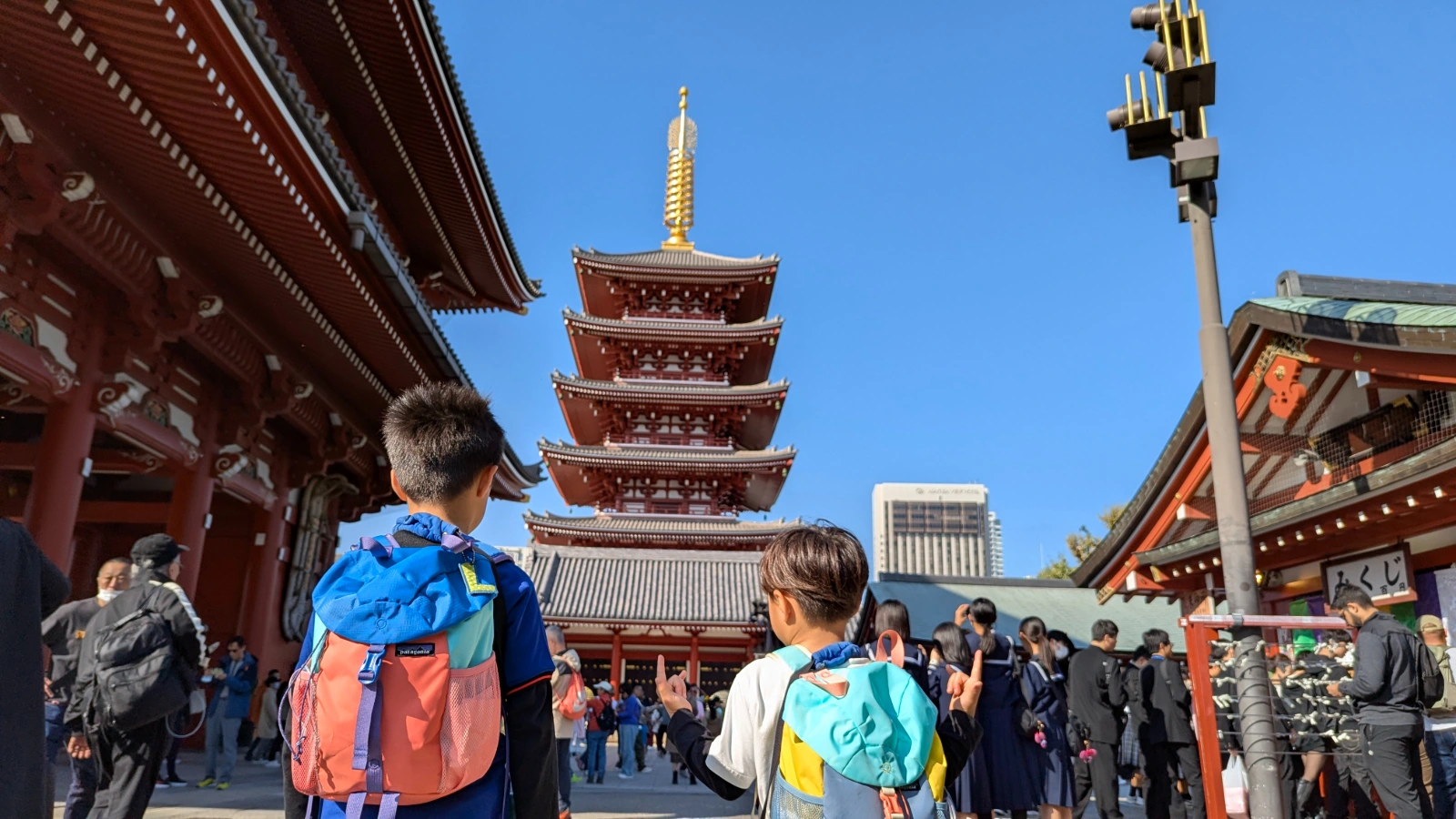
Start with your situation.
Each Tokyo base starts the morning somewhere different: a park, a temple or a Shinkansen platform. A first trip with younger children wants the park; a trip built on day trips wants the platform.
| If Your Family Is | Why It Fits | Start Here |
|---|---|---|
| First-timers | The Shinkansen at JR Ueno, a station far less busy than the biggest hubs. | Ueno |
| Younger children | Park access means no train ride to reach green space. | Ueno |
| Older children or teens | Independence for a teenager, with food, shops and trains on every side. | Shinjuku |
| Day-trippers or multi-city | The day trips and the Shinkansen leave from a station the family walks to. | Tokyo Station |
| Temples and old streets | The temple and its approach become a known route after one walk. | Asakusa |
First-timers
Start here: Ueno
Younger children
Start here: Ueno
Older children or teens
Start here: Shinjuku
Day-trippers or multi-city
Start here: Tokyo Station
Temples and old streets
Start here: Asakusa
Tokyo asks a child to keep pace with a city that rarely slows down for anyone. Coming back each evening to streets they already recognize, the same station exit and the same path home, gives them one part of the day that asks nothing new of them.
The method, and your questions.
The order weighs what each base puts within a child’s walk against what every outing from it costs: the park, the temple or the garden by the hotel, the rides and stations that start each day, and the cost named under each entry. A district that thrills for an afternoon is the wrong place to bring a tired child home to every night.
The questions parents actually ask.
What is the calmest Tokyo neighborhood for families with kids?
Ueno. Its park, reached without a train, gives children somewhere to decompress after busy sightseeing days, and that park is why it ranks first overall.
What is the best Tokyo neighborhood for first-time visitors with kids?
Ueno is the most forgiving first base. Ueno Park sits in the neighborhood, and its JR station is far less busy than Shinjuku, Tokyo or Shibuya, so the first days start at a station a child can learn.
Which Tokyo neighborhood is best for toddlers and young children?
Ueno, for the same park access, with green space reached without a train. Asakusa also works well if you focus on quieter mornings and side streets away from the main temple approach.
Shinjuku or Shibuya for families?
Both suit teens over younger children. Of the two, Shinjuku is the steadier base, with Shinjuku Gyoen at hand when a child needs room to run; Shibuya works better as an afternoon visit than a home.
Where should families stay for easy day trips and train travel?
The Tokyo Station area. A day trip or a change of city starts with the walk to its platforms, where the bullet trains and the JR lines out of the city leave, not with a ride across Tokyo.
Is it better to stay in one Tokyo neighborhood or move locations?
One base usually serves a Tokyo trip, since the city’s trains reach the other neighborhoods from any of the six. Choose it by the trip’s shape: Ueno for younger children on a first trip, the Tokyo Station area when the trip leaves the city often, Asakusa when Senso-ji and the old streets are the point.
What should families prioritize when choosing a Tokyo neighborhood with kids?
A park or a temple close to the hotel, and a station that is easy on a child at both ends of the day. With younger children, distance from the biggest stations matters most: Shinjuku is the world’s busiest railway station, and Shibuya’s lines sit on several levels in a valley.