Legoland Discovery Center Tokyo with Kids: the indoor day, rated.
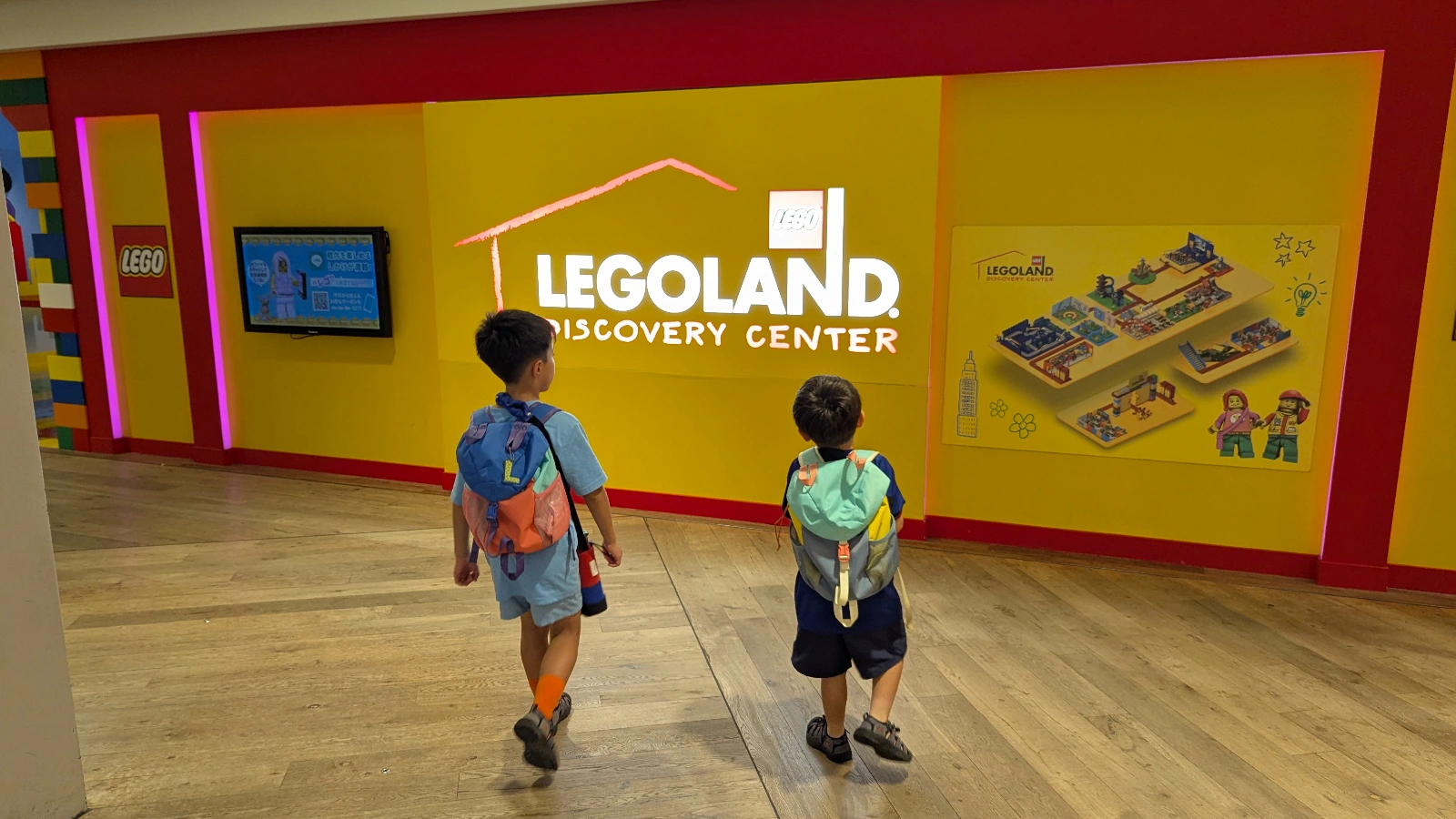
Legoland Discovery Center Tokyo looks like a place for anyone who loves Lego, but it is built for children of about 3 to 10, and adults cannot enter without one.
One price from age 3. Tickets are online only and dated, with no counter sales on the day.
Weekends and holidays close at 19:00; open all year except one Decks Tokyo Beach closing day, usually around January.
At busy times a wristband marks a visit of about 2 to 3 hours.
Under 16 needs a companion of 16 or over, and adults cannot enter without a child.
None to borrow inside; Decks Seaside Mall’s third-floor information desk lends them free. Flat paths, some ramps.
Some links on this page are affiliate links. LuNi may earn a commission at no extra cost to you.
Is Legoland Discovery Center Tokyo worth it with kids?
The short version, before the costs, the timings and the case for each child.
Yes, for children of about 3 to 10, and especially on a wet day, on one condition: go when the floor is calm. Children who love to build can spend a happy half day here, and the building zones suit a child who needs to use their hands, with a handful of rides and a 4D cinema between them. The condition matters because the center fills, and a full floor is hard work for a child who dislikes crowds. The later hours are the calm time, so book one of them. It costs most for the child who wilts in a crowd, and the evening slot is how that child still gets the bricks. An older child who has outgrown Lego is better sent elsewhere.
Planning Your Visit to Legoland Discovery Center Tokyo with Kids.
Three decisions shape the visit, and all of them are made before you reach Odaiba. The first is the ticket. There are no counter sales on the day, so buy online ahead, which is also cheaper when it is done by the day before; the date can be changed later, but tickets are not refunded. The second is the time. The evening is the relatively calm time on the floor, so book a later slot for a child who dislikes crowds. The third is the day around it: there is no re-entry and no outside food, so eat first and plan the next stop, somewhere a child can sit or run depending on how the visit went, which the rest of Odaiba can supply that afternoon.
Every LuNi attraction guide starts with a visit, with our own children
LuNi rates and writes about attractions only after visiting them with children. Luca and Nico were at Legoland Discovery Center Tokyo, and what they did there is recorded further down this page, including how each child actually met it.
Children arrive with different tolerances: for noise, for lines, for standing still, for being on their feet all day. A guide written for the average of them helps almost nobody. So every place on this site is read four ways, and each verdict says which children it already suits and what makes it work for the rest. Whoever you are bringing, the answer here is built for your family rather than for a general reader.
Restricted-movement depletion finds an outlet in building zones and rides, though the rides line up when busy, so let the child build between them.
Sensory-input depletion rises on a crowded floor, and the evening is the calm time there, so book a later slot for this child.
Unfamiliarity eases with a dated ticket and published ride rules, so read the rules at home and the cinema and workshop times on arrival.
Walking and standing stay modest over a visit of two or three hours, with strollers allowed and lent free, so bring or borrow one.
- Cost
- ¥2,350 to ¥3,300 by dateOne price from age 3. Tickets are online only and dated, with no counter sales on the day.
- Booking
- Online only, datedNo counter sales on the day; the date can be changed, but tickets are not refunded.
Hotels we would book for this visit.
Choose the room for the late slot. The calm hours at the center are the evening ones, so a room among Odaiba’s family hotels lets the visit end the day rather than start a journey. Three rooms on the bay.
| Property | The LuNi Reason |
|---|---|
| LUNI Pick Grand Nikko Tokyo Daiba | The Grand Nikko, on Odaiba itself, is for a family that takes the late slot the calm hours favor. Staying on the island lets the day run backward from the center: the bay in the morning, a meal, then Lego at the end, with the child’s bedtime the only journey left once the building is done. |
| Hilton Tokyo Odaiba | Hilton Tokyo Odaiba is for a family making Odaiba two days rather than one. A child who builds in the evening and wants the faster rides at Joypolis the next morning can do both from one room, and the stay turns a pair of half days into an easy rhythm instead of two crossings of the city. |
| Hotel Trusty Tokyo Bayside | Hotel Trusty Tokyo Bayside is for a family that builds its bay days around evenings. The calm hours at the center come late, and a child who has built until the last slot needs the end of the night to be a short trip and a familiar room, with the next morning left unhurried. |
Nearby attractions, matched to your child.
Three pairings for what a Lego morning leaves over: rides with more speed for an older child, a slow, seated aquarium for a child who has had enough of a busy floor, and a barefoot museum of water and light.
| Pairing | Why This Solves the After-Visit | For Your |
|---|---|---|
| LUNI Pick Tokyo Joypolis Decks Tokyo Beach, Odaiba; the same complex | In the same Decks Tokyo Beach complex, Tokyo Joypolis gives an older Dynamo faster rides and games, paid one by one or on a Passport, with free re-entry on the day. Restricted movement is spent in speed, where Lego spent it in building. | Dynamo |
| Sumida Aquarium Tokyo Skytree Town; Solamachi 5F and 6F | For a Sensor worn down by a busy building floor, Sumida Aquarium offers seated calm: chairs set before the big Ogasawara tank and sofas in the Penguin Cafe. Sensory input falls away in a slower room, and outside food may be eaten seated. | Sensor |
| teamLab Planets TOKYO Shin-Toyosu Station, North Exit, 1 min | After an afternoon of building, teamLab Planets TOKYO hands a Dynamo the opposite kind of play: a barefoot route through knee-deep water and soft floors, taken at the child’s own speed. Restricted movement is spent on the walk itself; a Sensor’s sensory input climbs in its strong light, so skip rooms on the bypass. | Dynamo |
Tokyo Joypolis
Decks Tokyo Beach, Odaiba; the same complex For YourDynamo
Sumida Aquarium
Tokyo Skytree Town; Solamachi 5F and 6F For YourSensor
teamLab Planets TOKYO
Shin-Toyosu Station, North Exit, 1 min For YourDynamo
How two children actually met this attraction.
Two children came into the same center, and one stopped while the other would not. One needed to understand the place before he could enjoy it, and once he found a corner that behaved the same way twice, he stayed there happily. The other needed to move, and he built his whole visit around motion, from the ramp to the ride and back. Both did well, and both show what the center offers. It has a corner for the child who wants a system to learn and plenty for the child who wants to keep going. What it does not give either of them is space when the floor fills, so choose the calmer time and let each child find their own rhythm on it.
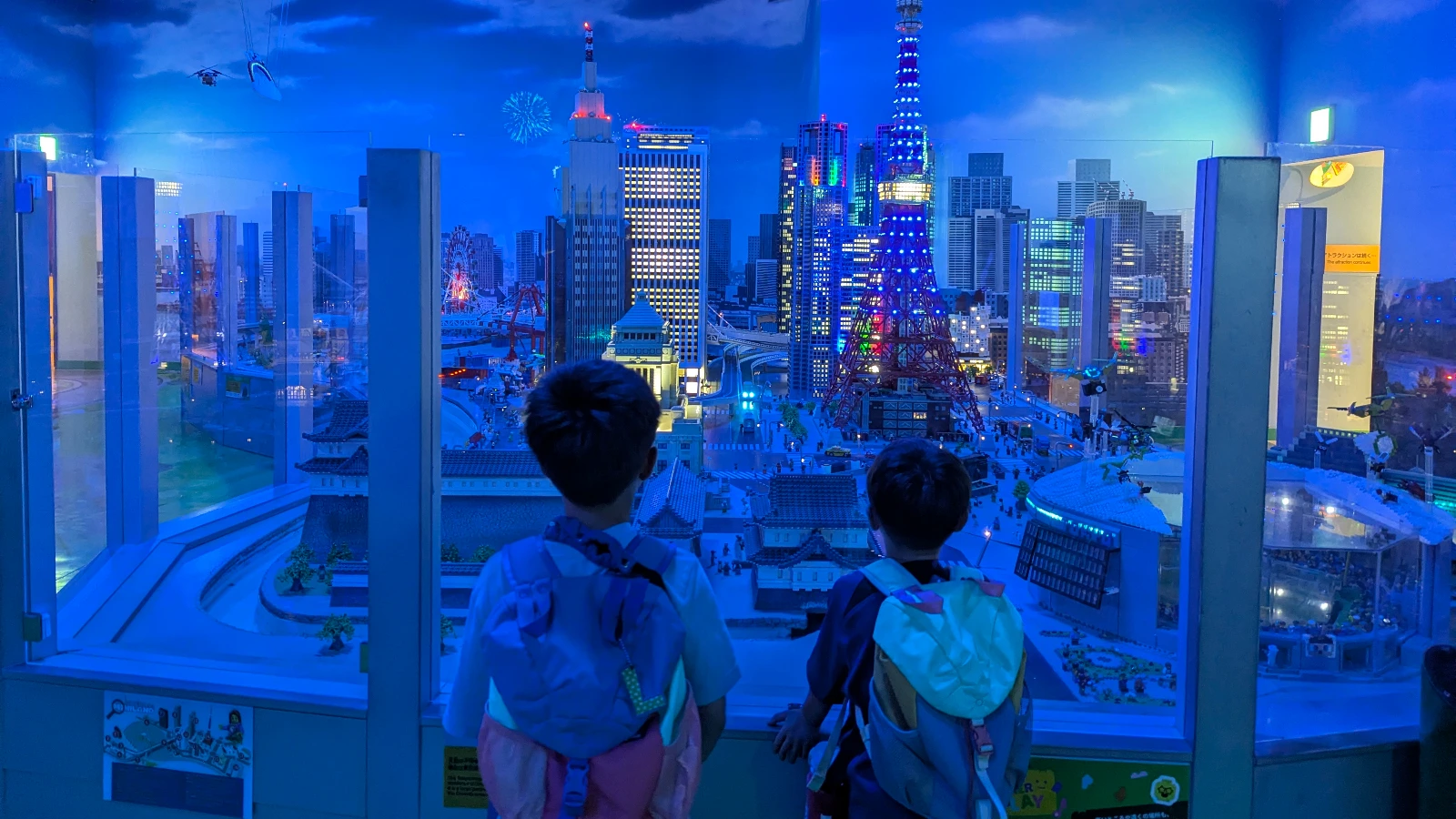
Luca hung back at the entrance, taking the floor in before he committed to any of it. Once he reached Miniland he stopped moving entirely: he read how the little city was wired, asked whether the trains ran on a set loop and how long the lighting took to cycle from day to night, then waited to watch it happen a second time. After that he lost track of time inside it.
This is the Anchor pattern. A child whose Reserve depletes through unfamiliarity and unconfirmed structure hangs back until they know how a space works, and settles once it proves it will repeat. For a similar child, let them find one predictable corner early and return to it, rather than pushing them through the parts that keep changing. A place they have already worked out is where they relax, and a child who has relaxed will then explore on their own.
Nico could not stay at one station. He built a car, sent it down the race ramp, and was moving again before it reached the bottom, cutting to the ride, then the open floor, then back to the ramp, narrating the whole circuit out loud. When a short line formed he did not wait in it; he peeled off to find something he could do right now.
This is the Dynamo pattern. A child whose Reserve depletes through restricted movement will not stand in a line and spends energy wherever the space allows, so a crowded floor, not the activities, is the real risk. For a similar child, choose the time when the floor is calmer, which is later in the day, and let him keep moving between the building zones rather than waiting at the rides. A child who can keep going stays steady.
A room full of bricks gives a child something rare in a travel day: a problem with no right answer. Building rewards patience over speed and lets a child fail, rebuild and try again with nobody keeping score, which is exactly the rhythm a trip of timed tickets and transfers tends to squeeze out. That the later hours are the calm ones only underlines it: the best of this place is the unhurried version. Children remember what they made long after they forget what they were shown.
The LUNI Rating for Legoland Discovery Center Tokyo.
The verdicts split on one thing: how busy the floor is. For a child who needs to move, building zones and rides are a good outlet, which is why the Dynamo does well there. The Anchor does well too, on a dated ticket and a schedule for the cinema and workshops, and the Sprinter on strollers and a visit of two or three hours. Only the Sensor needs a real plan, because a crowded floor is hard for that child, and the answer is the evening. A child who wants a longer, structured day of making things has KidZania Tokyo instead.
Let the child build between the rides. The Dynamo depletes through restricted movement, and Legoland gives a moving child plenty to do: building zones, a racing build-and-test area, a few rides and a play zone. For a child who needs to use hands and body, that is a good morning. The catch is the rides. Kingdom Quest and the 4D cinema line up when the center is busy, and a child who needs to move does not wait well in a line.
So do not plan the visit around the rides. Let the child build, test and move between the zones, and join a ride line only when it is short. Check the ride rules first, since Kingdom Quest needs a companion for a child under 130 cm and Merlin’s Apprentice turns away children under 90 cm. A Dynamo who spends the morning building and racing leaves the center steadier than one who spends it in line.
What this means for your Dynamo: building zones and rides give restricted movement a good outlet, if the lines are avoided. A younger Dynamo needs the building zones and short rides; an older one can race cars and choose the rides.Book the evening, and eat first. The Sensor depletes through sensory input, and a full floor of building zones, rides and children is a lot to take in. The center restricts entry when it is crowded, and at busy times it uses wristbands and asks visitors to keep to about two to three hours. There is no re-entry, so a child who needs a break cannot step outside for one and come back.
What keeps it manageable is the evening: the later hours are the relatively calm time on the floor. Book a later slot, eat before you go since outside food is not allowed, and plan a shorter visit. Find one zone the child likes early, and let them return to it. A Sensor who has an evening hour on a calmer floor will get more from the center than one who spends a busy morning there.
What this means for your Sensor: input depends on how full the floor is, and the later hours are calmer. A younger Sensor needs a late slot and a shorter visit; an older one can choose a quiet zone and say when to leave.Book the date, and read the rules together. The Anchor depletes through unfamiliarity and unconfirmed structure, and Legoland can be planned in unusual detail. The ticket is dated and bought online ahead, the date can be changed if the plans do, and a late arrival on the day is still admitted, with current-slot holders first. The 4D cinema and the workshops run to a schedule, and the ride rules are set out in advance, heights and companions included.
Plan the visit together with the child. Read the ride rules together at home, then check the cinema and workshop times as soon as you are inside, since the workshop has limited places, and decide which to do first. Tell them, too, that the baby room is up on the seventh floor, so the layout holds no surprise. A child who knows the schedule will spend the visit following it, and an Anchor with a plan is a relaxed Anchor.
What this means for your Anchor: unfamiliarity eases with a dated ticket and a set schedule for the cinema and workshops. A younger Anchor needs the plan made together; an older one can hold the schedule and lead the way.Bring or borrow a stroller, and keep it to three hours. The Sprinter depletes through sustained travel-style walking and standing, and Legoland asks for relatively little of either. Most visits last two to three hours, and at busy times the center itself sets that as the length of a visit. Strollers are allowed inside, and free strollers are lent at the information desk on the third floor of Decks Seaside Mall, so a small child does not have to walk the whole visit.
The standing that remains is in the lines for the rides, and that is the part to manage. Skip a long line rather than stand in it, and build rest into the building zones, where a child can stop and build for a while. There is a baby room on the seventh floor for a family with an infant. For this child, the center is one of the easier half days in Odaiba, and a good choice for the morning after a long walking day.
What this means for your Sprinter: walking and standing stay modest over a visit of two or three hours. A younger Sprinter needs a stroller, brought or borrowed free; an older one can manage the visit if the long lines are skipped.The questions parents actually ask.
Every ticket is online and dated, and adults cannot come in without a child, so the rules are settled before anyone leaves for Odaiba. Several run against what families expect of a Lego center: strollers are allowed and lent free, and the evening, not the morning, is the calm time on the floor. Those two facts decide more of a visit than rides do, because they set when to go and whether the stroller comes. Adults on their own are turned away, so a parent cannot preview the floor for a child who likes to know it first. The center itself rewards the family that arrives late, fed and booked.
Is Legoland Discovery Center Tokyo worth visiting with kids?
For children of about 3 to 10, the center’s own target range, yes. It is an indoor center of building zones, a few rides, a 4D cinema and Miniland, a miniature cityscape whose streets light up as its day turns to night. Older children may have outgrown it. Adults cannot enter without a child, so this is a family visit or nothing.
How much are Legoland Discovery Center Tokyo tickets?
Prices vary by date, from 2,350 to 3,300 yen, and one price applies from age 3, so children under 3 enter free. Buying online by the day before saves up to about 20 percent, or up to 550 yen. There are no counter sales on the day, and tickets are not refunded, though the date can be changed.
Can adults visit Legoland Discovery Center Tokyo without children?
No. Adults alone are refused, and children cannot enter alone either: every child of 15 and under needs a companion aged 16 or over. For a family, that simply means booking a ticket for everyone who goes in, adults included, since one price applies to everyone from age 3.
Can you bring a stroller to Legoland Discovery Center Tokyo?
Yes. Strollers may be brought in, and free strollers are lent at the information desk on the third floor of Decks Seaside Mall. There is a baby room inside the center on the seventh floor, beside the restrooms, so a family with an infant has what it needs without leaving, which matters because there is no re-entry.
How long do you need at Legoland Discovery Center Tokyo?
Most visits last two to three hours. At busy times the center uses wristbands and asks visitors to enjoy about two to three hours, announcing when the time is up. That makes the visit a good half day rather than a full one, with room for a meal or a second stop in Odaiba afterward.
When is the best time to visit Legoland Tokyo with kids?
The evening is the relatively calm time to play, so a later slot is the one to book for a child who finds crowds hard. Weekdays close at 18:00 and weekends and holidays at 19:00, and entry may be restricted when the center is crowded, which a booked slot helps with.
Can you leave Legoland Tokyo and come back in?
No. As a rule there is no re-entry, so leaving ends the visit. Outside food and drink are not allowed, except a water flask for children and meals for allergies, so plan snacks and a meal around the visit rather than in the middle of it. Settle bathroom trips before a long line, too.
Are there height or age rules for Legoland Tokyo rides?
Yes. On Kingdom Quest, children under 130 cm need a companion of junior-high age or over. Merlin’s Apprentice refuses children under 90 cm, and from 90 to 119 cm they ride with an adult of 18 or over. In the 4D cinema, children of 6 and under need a companion of junior-high age or over.
Where Legoland Discovery Center Tokyo fits your Japan trip.
Official site and opening information: Legoland Discovery Center Tokyo