Sumida Aquarium with Kids: Tokyo Skytree Town Guide.
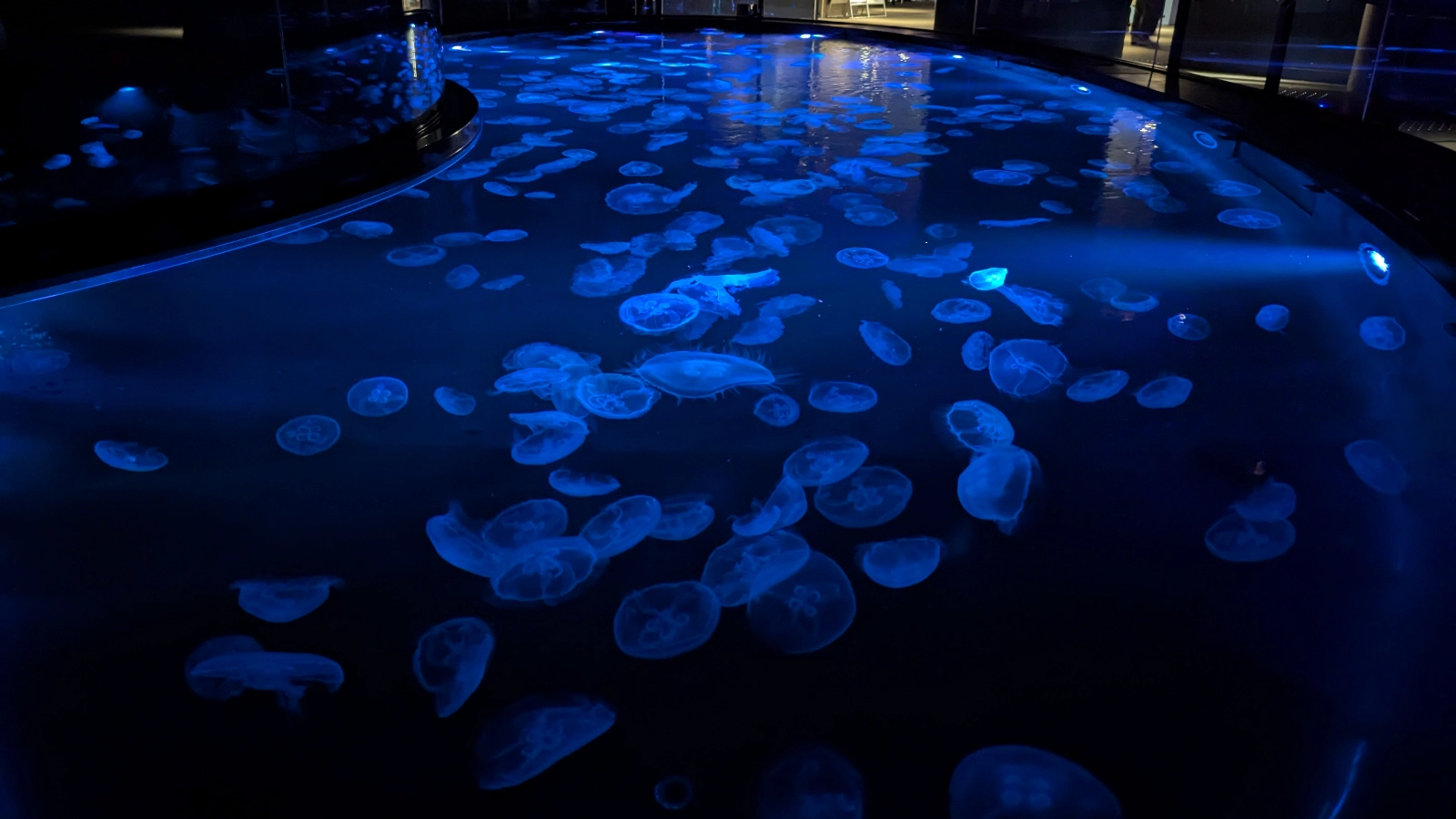
Sumida Aquarium is a short, contained visit with real seats, which suits most children well, but it opens with a flight of stairs and lends no strollers.
High school ¥2,000; elementary and junior high ¥1,400; under 3 free. Web tickets are recommended, from 30 days ahead.
Weekends and holidays 9:00 to 21:00. Open all year, with occasional closures for facility checks.
At an easy pace; a hand stamp lets you leave and come back the same day.
A short indoor visit, with seats in front of the big tank.
Push it in on the slopes and elevators, or leave it by the fifth-floor entrance; none are lent.
Some links on this page are affiliate links. LuNi may earn a commission at no extra cost to you.
Is Sumida Aquarium worth it with kids?
The short version, before the costs, the timings and the case for each child.
Yes, for almost every child, and it is the aquarium to choose when the day has other plans in it. The whole visit takes an hour and a half to two hours over two floors of Solamachi in Tokyo Skytree Town, and it is built with places to stop: chairs in front of the big Ogasawara tank on the sixth floor, sofas near the Penguin Cafe on the fifth. A hand stamp lets a family leave and come back the same day. The two things to know are practical ones. The route begins by climbing stairs to the sixth floor, and there is no stroller to borrow at the aquarium, so a family with a small child brings a carrier. Everything else about Sumida is the easy part.
Planning Your Visit to Sumida Aquarium with Kids.
Three small decisions make this visit. The first is what carries a small child, because there is no stroller rental, but a stroller can be pushed the whole way, since slopes and elevators join the floors, or left at the stroller park outside the entrance: bring a carrier if you have no stroller. The second is where you will sit, and the answer is already built in: the chairs at the Ogasawara tank on the sixth floor and the sofas by the Penguin Cafe on the fifth. The third is how the visit fits the day, since web tickets carry a date or time only in peak periods and re-entry on the same day is allowed, so it can sit either side of a morning in Asakusa. None of the three takes more than a minute to settle, and all of them are easier at home than at the door.
Every LuNi attraction guide starts with a visit, with our own children
LuNi rates and writes about attractions only after visiting them with children. Luca and Nico were at Sumida Aquarium, and what they did there is recorded further down this page, including how each child actually met it.
Children arrive with different tolerances: for noise, for lines, for standing still, for being on their feet all day. A guide written for the average of them helps almost nobody. So every place on this site is read four ways, and each verdict says which children it already suits and what makes it work for the rest. Whoever you are bringing, the answer here is built for your family rather than for a general reader.
Restricted-movement depletion stays low on a short route over two floors, and a hand stamp lets a restless child step out and come back.
Sensory input stays contained in a short indoor visit with chairs at the Ogasawara tank, so plan one sit-down there halfway through the route.
Unfamiliarity and unconfirmed structure ease on a route with one clear shape, up to the sixth floor first and then down, so describe it beforehand.
Walking and standing begin with stairs, and the aquarium lends no strollers, so bring a carrier and plan the sofas by the Penguin Cafe.
- Cost
- ¥2,700 adult / ¥900 age 3 and upHigh school ¥2,000; elementary and junior high ¥1,400; under 3 free. Web tickets are recommended, from 30 days ahead.
- Booking
- Web tickets, 30 days aheadA set date or time only in peak periods; day tickets are sold at machines inside.
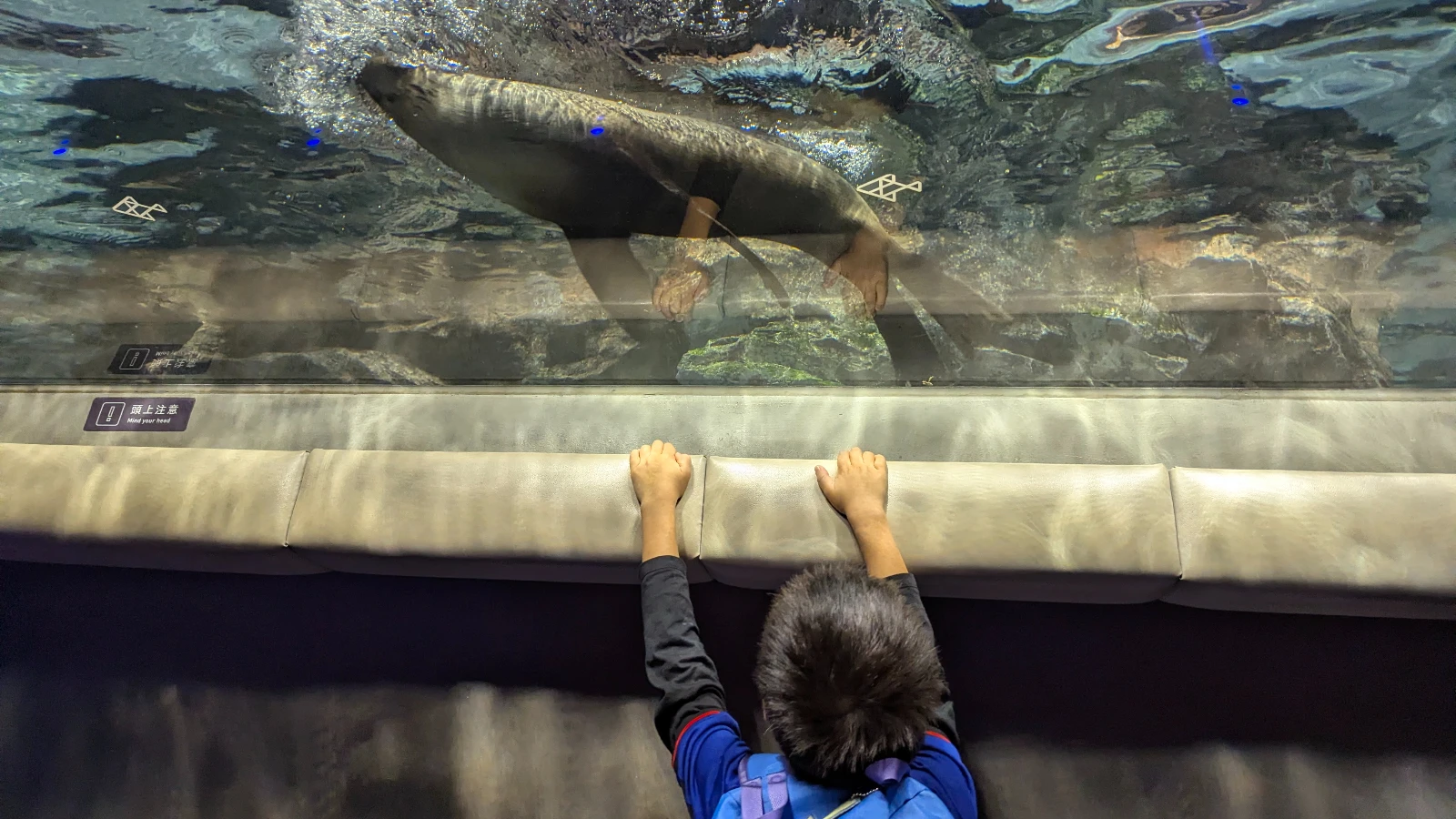
Hotels we would book for this visit.
A short aquarium visit leaves most of the day to fill, so the room matters for everything around it. Three Tokyo family hotels on the city’s east side, the pick first.
| Property | The LuNi Reason |
|---|---|
| LUNI Pick The Gate Hotel Ryogoku by Hulic | The Gate Hotel Ryogoku is for a family giving Tokyo Skytree Town the whole day. A short aquarium visit leaves plenty of day around it, and a room in the same ward means the Skytree slot, the tanks and the evening can run in any order, with no cross-city ride between them. |
| Tobu Hotel Levant Tokyo | Tobu Hotel Levant Tokyo is for a family whose Skytree Town day ends late. The aquarium stays open into the evening, and a tired child who has climbed the opening stairs and sat out the last tank needs the trip back short and predictable, which a room in the same ward keeps simple. |
| The Gate Hotel Kaminarimon by Hulic | The Gate Hotel Kaminarimon by Hulic is for a family giving Asakusa a morning of its own. The aquarium suits an afternoon, since it stays open into the evening, and a child who has seen the tanks can wake the next day with Senso-ji to walk rather than a transfer to make. |
The Gate Hotel Ryogoku by Hulic
The Gate Hotel Kaminarimon by Hulic
Nearby attractions, matched to your child.
Three pairings for what an aquarium visit leaves unmet: a child who wants the day laid out by a ticket, a child who has looked at glass long enough, and a reader ready for a bigger museum.
| Pairing | Why This Solves the After-Visit | For Your |
|---|---|---|
| LUNI Pick Tokyo Skytree Tokyo Skytree Town; timed Deck tickets | At Tokyo Skytree, in the same Tokyo Skytree Town, the ticket fixes the time, which settles a child who needs to know the plan. Unfamiliarity eases there, though a Sensor’s sensory input is the thing to plan for up there, so book the slot and name each elevator change first. | Anchor |
| Senso-ji Temple Asakusa; free, open-air precinct | After the tanks, Senso-ji Temple in Asakusa gives a child who needs to move a free, open-air precinct that the temple keeps flat and is making step-free. An aquarium asks a Dynamo for looking, so open ground is the right answer to it. | Dynamo |
| National Museum of Nature and Science Ueno Park; JR Ueno Park Exit, 5 min | For a Sensor who enjoyed the quiet tanks, the National Museum of Nature and Science keeps a basement lounge for eating and resting, and lets a family step out into Ueno Park and back in on the same day. Sensory input stays manageable when the rest is planned before it is needed. | Sensor |
Tokyo Skytree
Tokyo Skytree Town; timed Deck tickets For YourAnchor
Senso-ji Temple
Asakusa; free, open-air precinct For YourDynamo
National Museum of Nature and Science
Ueno Park; JR Ueno Park Exit, 5 min For YourSensor
How two children actually met this attraction.
Two children went up the same stairs and came back down with nothing in common. One treated the building as a puzzle and found his favorite exhibit where nobody expected it; the other never stopped at a tank at all, because he had turned the whole visit into a story he was running through. That is the honest picture of Sumida with children: the route is short and the building is contained, so what fills the hour is whatever the child brings in. A parent does not need to guide either kind of child here. Give the one who studies a little time where he stops, give the one who narrates somewhere to go next, and let the chairs at the big tank catch whichever of them runs down first.
Luca’s first reaction was that the place was smaller than he expected, and he seemed reassured by it: the whole aquarium being indoors and contained was a point he kept returning to. The exhibit that held him longest was not a tank at all. It was a flap-style departure-board sign that clicks over like an old station sign. He wanted to know how it was made, and whether a machine or a robot drove it.
This is the Anchor pattern. A child whose Reserve depletes through unfamiliarity and unconfirmed structure relaxes once a place proves it has edges, and Luca found his in a building he could hold in his head. For families with a similar child, describe the shape before the door: up the stairs to the sixth floor, down to the fifth, then out. Then let him stop wherever his questions take him, even if that is somewhere other than a tank.
Nico did not so much look at the tanks as move through them. He decided early that he was a deep-sea diver exploring alien territory, and the aquarium became the set for that mission: he tracked from tank to tank narrating the expedition, giving each jellyfish a sillier name than the last. He never settled in front of one exhibit for long, because the point was the next leg of the dive.
This is the Dynamo pattern. A child whose Reserve depletes through restricted movement keeps moving even where the building asks for looking, and Nico did it by turning a walk past glass into a journey with a next stop. For families with a similar child, feed the story rather than fighting it: a short route suits him, and the hand stamp means a break outside is always there if the dive runs out of road before the exit does.
An aquarium with seats invites the kind of attention children rarely get to practice: watching something slowly. Jellyfish drifting, penguins sorting themselves out, a big tank moving at its own speed all reward a child who sits long enough to notice patterns. In a trip full of doing, a quiet stretch of observation is its own achievement, and it builds the patience that lets curiosity deepen. Children who learn to wait for something interesting to happen find that the world tends to reward the ones who keep watching.
The LUNI Rating for Sumida Aquarium.
All four children do well here, and it all rests on one thing: a short visit, an hour and a half to two hours, built with places to sit. That is why a child who needs to move, a child who feels every noise and a child who needs structure all come out ahead here, and why the stairs at the start are a planning note rather than a warning. Same-day re-entry keeps a way out open for any of them, and nothing here asks more than ninety minutes can hold. Put the seats into the plan, and the visit stays gentle for every child.
Let the route be short, and keep the stamp in reserve. The Dynamo depletes through restricted movement, and an aquarium is a place built for looking. Sumida asks for an hour and a half to two hours over two floors, starting with a climb to the sixth floor and working down past the two-story penguin tank on the fifth. For a child who needs to move, the stairs at the start are almost a gift, and a route this short ends before the looking has worn thin.
The real lever is the hand stamp. Ask for it at the information desk and a restless child can leave, burn off energy in Solamachi or outside, and come back to finish, all on the same ticket. Let a Dynamo set the pace through the sixth floor, and save the slower tanks for the second pass if one is needed. If the stamp is never used, so much the better; knowing it exists is what lets a parent relax.
What this means for your Dynamo: restricted movement never builds far on a route this short. A younger Dynamo does best with the stamp used early; an older one can take the climb at a run of energy and finish unhurried.Plan the sit-down before the tanks do it for you. The Sensor depletes through sensory input, and the kindest thing about Sumida is its scale. The visit is indoors and short, and it gives a child who feels everything places to stop and sit: chairs in front of the Ogasawara tank on the sixth floor, sofas near the Penguin Cafe on the fifth. English signage helps a child who wants to read ahead rather than ask. Nothing about the visit runs long enough for a small load to become a large one.
Use the seats on purpose. Choose the chairs at the big tank as the halfway stop before arriving, and tell the child it is there, so a quiet minute is part of the plan rather than a rescue. If the building still feels like too much, the hand stamp means a family can step out for a meal in Solamachi and come back without a second ticket.
What this means for your Sensor: input stays manageable when the rest stops are chosen in advance. A younger Sensor needs the Ogasawara chairs named before the door; an older one can pick their own sofa and set the length of the break.Describe the shape before the door. The Anchor depletes through unfamiliarity and unconfirmed structure, and Sumida gives a family a building that is easy to describe in one sentence. Enter on the fifth floor, climb the stairs to the sixth, see the tanks there, then come back down to the fifth, where the penguins and the cafe are. It is on two floors of Solamachi in Tokyo Skytree Town, not up in the tower, which is worth saying so the child is not expecting an elevator ride.
Give that outline before the trip and again at the entrance. A child who knows the stairs come first will not be thrown by them, and one who knows the visit is an hour and a half to two hours can hold the whole of it. Web tickets carry a set time only in peak periods, so on most days the only fixed point is the family’s own plan. For a child who wants to check as they go, the English signs confirm each step.
What this means for your Anchor: unfamiliarity eases once the two floors are described in order. A younger Anchor needs the stairs named at the door; an older one can carry the floor plan and lead the family through it.Bring a carrier, and spend the sofas. The Sprinter depletes through sustained travel-style walking and standing, and Sumida is kind to that child in length and less kind at the start. The route opens with stairs up to the sixth floor, there is no stroller rental, and the stroller park is outside the fifth-floor entrance. For a child who tires on foot, that first climb is the one real cost of the visit, unless the family rides the elevators between floors instead.
After it, the building helps. The whole visit runs an hour and a half to two hours, the chairs at the Ogasawara tank and the sofas near the Penguin Cafe give two planned rests, and outside food may be eaten sitting down. Wheelchairs are lent in limited numbers for a family who needs one. Carry a small child up the stairs or take the elevator, then let the seats do their work, and if a longer meal is needed, same-day re-entry lets the family eat in Solamachi and return.
What this means for your Sprinter: walking and standing stay low once the stairs are behind you. A younger Sprinter needs a carrier or the elevator for the climb; an older one can walk it all if the sofas are promised as the second stop.The questions parents actually ask.
Sumida sits on two floors of the Solamachi complex in Tokyo Skytree Town, not in the tower itself, and the route starts by climbing stairs; most of the surprises follow from that. Check current prices, since older figures online are low. It stays open into the evening, which helps after a long day, and food brought in is welcome if it is eaten seated. A child who would rather build than look has Legoland Discovery Center Tokyo for a wet day instead. The aquarium itself rewards a short, unhurried visit with the seats used, and a child who knows about the stairs before the door.
Is Sumida Aquarium worth visiting with kids?
Yes, and it is one of the easiest aquarium visits in Tokyo to fit around a day. It takes an hour and a half to two hours, runs over two floors, and has seats at the big Ogasawara tank and sofas by the Penguin Cafe. The one surprise is the start: the route begins by climbing stairs to the sixth floor.
How much are Sumida Aquarium tickets?
Adults pay 2,700 yen, high school students 2,000 yen, elementary and junior high students 1,400 yen, and children aged 3 and over 900 yen. Children under 3 enter free. Students show a student ID, and a disability card holder and one companion pay half. Annual passes are sold at each level for families who will come back.
Is Sumida Aquarium inside Tokyo Skytree?
No. It is on the fifth and sixth floors of Tokyo Skytree Town Solamachi, the complex that shares Tokyo Skytree Town with the tower, with its entrance on the fifth floor. Tokyo Skytree Station is right beside it, and Oshiage Station is about five minutes away by a direct connection, so the aquarium and the tower share an easy day.
Can you bring a stroller to Sumida Aquarium?
The aquarium lends no strollers (Tokyo Skytree Town has a loan service), and there is a stroller park outside the fifth-floor entrance, but a stroller can also come inside, since every floor is linked by slopes and elevators. A family traveling without one should plan on a carrier for a small child. Wheelchairs are lent in limited numbers; mobility scooters are refused, and kick scooters and large bags may be turned away.
Can you leave Sumida Aquarium and come back?
Yes, on the same day. Ask at the information desk to have your hand stamped, then show the stamp to the entrance staff when you return. It is worth knowing before you arrive, because it lets a family step out for a meal or a change of scene in Solamachi and still finish the visit afterward.
Can you eat at Sumida Aquarium?
Yes. Outside food is allowed, as long as it is eaten sitting down rather than while walking, so a packed snack for a small child is no problem here. The seats at the Ogasawara tank and the sofas near the Penguin Cafe are the natural places to stop, and a hand stamp covers a longer meal outside.
How long does Sumida Aquarium take with kids?
An hour and a half to two hours at an unhurried pace. It is open from 10:00 to 20:00 on weekdays and from 9:00 to 21:00 on weekends and holidays, so a visit fits before or after a Skytree slot, or into an evening when an earlier plan ran long.
Do you need to book Sumida Aquarium in advance?
Not usually. Web tickets go on sale 30 days ahead and carry a set date or time only in peak periods; day tickets are sold at machines inside. Buying ahead is simplest on a holiday or when the visit is tied to a Skytree slot, since it removes one more stop from a child’s morning.
Where Sumida Aquarium fits your Japan trip.
Official site and opening information: Sumida Aquarium