Nintendo Museum with Kids: win the lottery, then budget the coins.
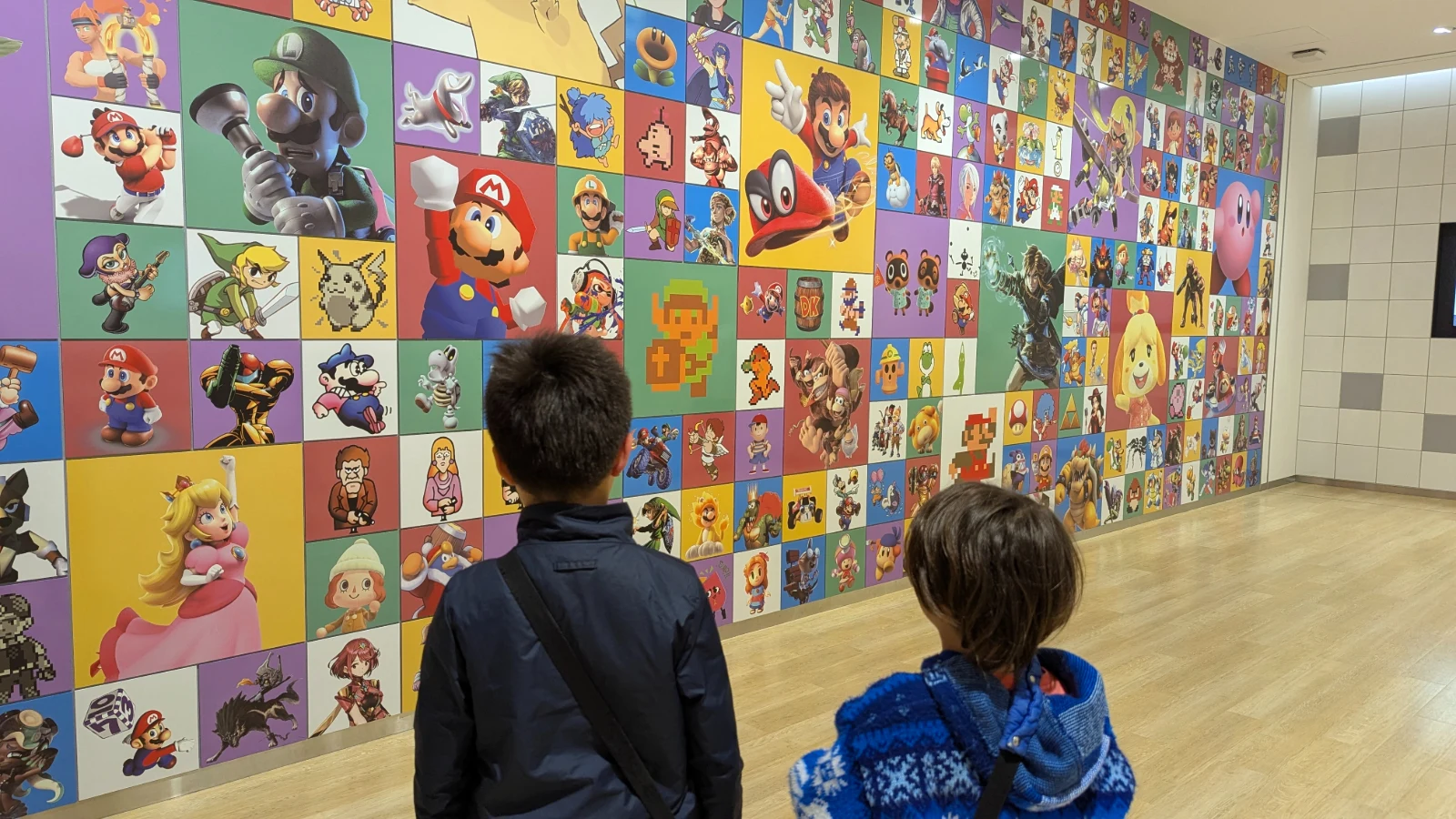
Getting in is the hard part, a lottery three months out with a name on every ticket; once inside, the question is how a child spends ten coins that cannot buy everything.
Junior and senior high ¥2,200; preschool free. Required: lottery first, three months out, then first come for freed places.
Closed Tuesdays (a holiday Tuesday opens, the next day closes) and December 30 to January 3.
Entry is at the time printed on the ticket; ten coins set the pace inside.
Elementary age and under come with someone 18 or over holding an adult ticket; junior high students and over may enter alone with their own ticket.
Park strollers beside the first-floor hands-on exhibits; use the elevators between floors.
Some links on this page are affiliate links. LuNi may earn a commission at no extra cost to you.
Is the Nintendo Museum worth it with kids?
The short version, before the costs, the timings and the case for each child.
Yes, for a child who knows the games, and for the family willing to plan hardest. The tickets are the hard part, won by lottery months ahead and checked by name at the door, so the child should hear that the date is not certain until the result arrives. Inside, the history of Nintendo’s products fills one floor and the floor below lets children play versions of it, paid for with ten coins each. Ten coins do not cover everything, which turns the visit into a small lesson in choosing that suits a child who likes to plan and costs most the child who wants to play without end. Settle the coins at home, and the day inside takes care of itself.
Planning Your Visit to the Nintendo Museum with Kids.
Most of the planning happens months before the day. Enter the lottery three months ahead with a free Nintendo Account; results come on the first of the following month, and freed places are sold afterward for dates up to two months out. Put every ticket in the name of the person using it, bring photo ID, and make sure an adult of 18 or over is in the same order as any elementary child, because an older sibling still in high school does not count. Then plan the coins with the children, since ten will not cover everything. Arriving at Kintetsu Ogura with a stroller, follow the marked detour, since the passage between the station’s two gates is stairs only. The museum is in Uji, a day of its own away from central Kyoto’s family stops.
Every LuNi attraction guide starts with a visit, with our own children
LuNi rates and writes about attractions only after visiting them with children. Luca and Nico were at the Nintendo Museum, and what they did there is recorded further down this page, including how each child actually met it.
Children arrive with different tolerances: for noise, for lines, for standing still, for being on their feet all day. A guide written for the average of them helps almost nobody. So every place on this site is read four ways, and each verdict says which children it already suits and what makes it work for the rest. Whoever you are bringing, the answer here is built for your family rather than for a general reader.
Restricted-movement depletion builds on a gallery floor of products to look at, so move through it briskly and spend the coins on physical games early.
Sensory-input depletion stays manageable in a museum entered by timed ticket, so keep meals away from the cafe’s busy hours between noon and three.
Unfamiliarity and unconfirmed structure hardly start when the date, the time and every name are fixed weeks ahead, so walk through the day before it.
Sustained walking and standing come from the journey to Ogura and a stroller parked at the hands-on hall, so plan the route and the seated stops.
Hotels we would book for this visit.
Three Kyoto family hotels at Kyoto Station, for a family that wants one base for Kyoto and gives the museum a single day: one by the Central exit and two with rooms that fit a family.
| Property | The LuNi Reason |
|---|---|
| LUNI Pick The Thousand Kyoto Kyoto Station Central exit, about 2 minutes east | On the Central exit side of Kyoto Station, for a family whose whole day turns on arriving at a set time. A fixed entry slot rewards a base where the morning starts at a station rather than with a long taxi ride, and a calm room is welcome after a day of noise and play. |
| Hotel Vischio Kyoto by GRANVIA Kyoto Station Hachijo exit, 2 minutes south | Two minutes south of the station’s Hachijo exit, with family rooms and a large public bath with a sauna. It suits a family doing the museum as one day of a longer stay, with a room that fits everyone and a bath that makes a long day on its feet at the exhibits easier to end. |
| MIMARU Kyoto Station Kyoto Station, 2 minutes’ walk | Every ticket here carries a name and a time, so the morning cannot slip, and a room that sleeps the whole family together, on singles and a bunk, means one alarm, one breakfast and everyone out of the door at once. Kyoto Station is two minutes away, which leaves the slot, not the journey, as the only thing to watch. |
Hotel Vischio Kyoto by GRANVIA
Nearby attractions, matched to your child.
Three pairings for what a day of play under a roof leaves unmet: a child who needs a long walk outdoors, a child who needs to ride rather than stand, and a child who wants another visit with its rules known.
| Pairing | Why This Solves the After-Visit | For Your |
|---|---|---|
| LUNI Pick Fushimi Inari Across the city: JR Inari Station | After a day at exhibits, Fushimi Inari is the opposite: free, outdoors, and a mountain path under about ten thousand torii that a child can climb as far as the family allows. Restricted-movement depletion lifts on open ground, though a Sprinter’s walking and standing run long on the climb. | Dynamo |
| Kyoto Railway Museum Kyoto Station side: Umekoji-Kyotonishi Station | The Kyoto Railway Museum is the easy second museum: two minutes from its station, mostly indoors, with free strollers while they last. Sustained walking and standing stay low when the family can borrow wheels at the door and keep the visit to two to three hours. | Sprinter |
| Nijo Castle Central Kyoto, walk-up entry | At Nijo Castle nothing needs a lottery: the grounds and the Ninomaru Palace are walk-up, and the rules are few and clear, shoes off and no photographs in the palaces, no re-entry. Unfamiliarity and unconfirmed structure ease when the next visit is as easy to describe as this one was. | Anchor |
Fushimi Inari
Across the city: JR Inari Station For YourDynamo
Kyoto Railway Museum
Kyoto Station side: Umekoji-Kyotonishi Station For YourSprinter
Nijo Castle
Central Kyoto, walk-up entry For YourAnchor
How two children actually met this attraction.
Two children walked the same floors on the same day and spent their energy in opposite ways. One imposed his own order on the history gallery and rationed his coins like a budget. The other was restless until a bat was in his hands, then came alive in a game that used his whole body. Both made their own burgers at the cafe, and only one of them liked the result. The coins, more than any single exhibit, shaped both of their days. For a parent, the pair shows how the museum divides children: those who enjoy the planning and those who need to move. Decide before entering who spends what, and on which games. A family with one of each should split the coins and the time accordingly, rather than touring the halls as one group.
Luca built his own order through the upstairs gallery, working the cases methodically rather than drifting. What held him most was watching Nico at the batting game, where hitting different objects in the room made each one react in its own way. Once he understood the ten coins were a fixed number of plays, he rationed them, choosing which activities were worth spending on. He ran out before the giant controller he most wanted, and took it in stride.
This is the Anchor pattern. A child whose Reserve depletes through unfamiliarity and unconfirmed structure settles by making a place predictable, and Luca did it twice: by putting the gallery in an order he chose, and by treating his coins as a fixed budget to plan against. Families with a similar child should name the ten-coin limit before entering and let the child plan the spending, so the structure exists before the building asks for it.
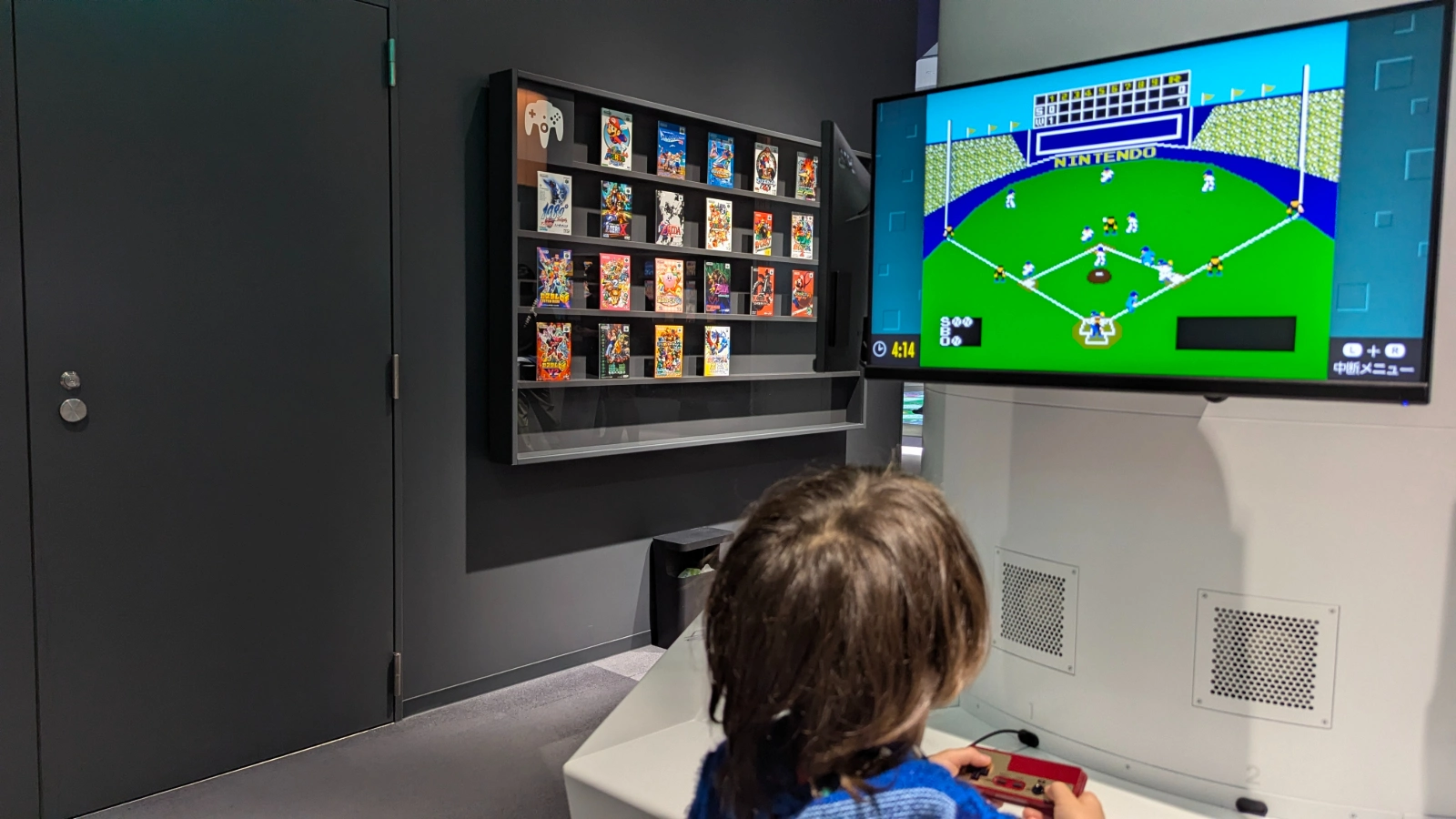
Nico moved through the upstairs gallery at speed and was restless until the family reached the hands-on hall. He came alive at the batting game, set in a recreated living room, where swinging at the pitched balls came easily, and hitting objects around the room set them reacting. The screen-based games lost him quickly; with no video games at home, they were too hard. He made his own burger too, and decided the black bun was not very tasty.
This is the Dynamo pattern. A child whose Reserve depletes through restricted movement holds attention where the body does the work and loses it where the play is static, which is why the batting game carried Nico and the screen games did not. Families with a similar child should move through the gallery quickly, get to the physical games in the hands-on hall early, and treat the screen-skill games as optional rather than as a test the child has to pass.
Ten coins that cannot buy everything give a child a gentle lesson in choice and trade-off, wrapped inside a day of play. Deciding which games are worth two coins and which are worth four, and sharing the paired game with a sibling, turns spending into thinking. Children learn more about value from small, real limits than from any explanation. A museum that celebrates play while quietly asking children to plan and prioritize is teaching a skill they will use long after the games themselves have faded.
The LUNI Rating for the Nintendo Museum.
One fact sits under all four verdicts: the Nintendo Museum is a day fixed in advance, down to the entry time. That is why two of the four are served without conditions: a child who needs structure has it before arriving, and a child sensitive to input enters a museum that admits visitors by the slot. The two harder cases are about the body. A child who needs to move gets one floor for looking and coins that run out on the floor for playing, and a child who tires pays in the journey and the standing. Plan the coins and the journey, and both costs shrink.
Walk the gallery briskly, and play early. The Dynamo depletes through restricted movement, and the museum is built in two halves that suit this child very differently. The second floor of the first exhibition building holds the history of Nintendo’s products, a floor for looking. The first floor below is where parts of that history can be played as hands-on exhibits, paid for with the ten coins on each entry pass. The difficulty is the balance: one floor asks the child to look, and the coins that pay for the doing run out, since ten do not cover every exhibit.
Spend the movement well. Keep the gallery brisk for this child, and head for the games that use the body, such as the Ultra Machine, played one person to a room. Plan the coins before entering, since no extra coins are sold and the costs run from one coin to four a play. The Craft and Play workshop is extra, booked on the day, and reached up a flight of stairs. And plan something outdoors for afterward, so the movement the museum could not use has somewhere to go.
What this means for your Dynamo: restricted movement builds on the looking floor. A younger Dynamo needs the hands-on games early and the coins planned; an older one can take the gallery if the physical games come next.Keep lunch out of the cafe’s rush. The Sensor depletes through sensory input, and the Nintendo Museum is easier on this child than a famous attraction usually is, because every visitor enters on a named, timed ticket. The building has elevators and four multipurpose restrooms, and free coin lockers before the security gate take the bags. The one known pressure point is the cafe: Hatena Burger is expected to be crowded from noon until about three.
Timing the food matters more than it sounds. A morning slot lets the family eat before noon, or wait until after three, and a child who loves the build-your-own burger gets it without the rush. In the hands-on hall, some exhibits are hard for small children and a guardian is recommended, which gives a parent a reason to stay close. Pick the order of the games together before entering, so the child is choosing from a plan rather than from everything at once.
What this means for your Sensor: sensory input stays manageable when meals miss the cafe’s busy hours. A younger Sensor needs a parent close in the hands-on hall; an older one can plan the day around a morning slot.Walk through the day the night before. The Anchor depletes through unfamiliarity and unconfirmed structure, and the Nintendo Museum settles nearly all of the day in advance. The date and entry time are fixed when the ticket is bought, the ticket carries the visitor’s name, and the building has two clear floors: the history upstairs, the hands-on exhibits on the first floor. The coins are fixed too, ten per pass for that day only, with the price of every exhibit known before the family arrives.
The one open question is the Craft and Play workshop, which can only be booked on the day, at the information counter after entry, for an extra fee. Decide as a family beforehand whether to try for it, and book it first thing if so, so the answer is settled early rather than improvised. Then walk the child through the day the evening before: the station, the ID check, the security gate, the two floors, the coins and lunch.
What this means for your Anchor: a day fixed in advance leaves unfamiliarity almost nothing. A younger Anchor needs the steps named the night before; an older one can plan the coins and the workshop themselves.Plan the route, then use the stroller area. The Sprinter depletes through sustained travel-style walking and standing, and the museum’s costs sit both outside and in. The walk is 5 minutes from Kintetsu Ogura’s East exit and 8 from JR Ogura, and at Kintetsu Ogura the passage between the West and East gates is outside the ticket gates and has stairs only, so a stroller needs the marked detour. Inside, strollers may be used, but they are parked at the stroller area beside the first-floor exhibits while the family plays.
Let the child’s legs choose the route. Come by Kintetsu Ogura and use the detour with a stroller, or take bus 64 from JR Uji. Inside, use the elevators, and treat the cafe, open until 20:00 with last orders at 19:15, as a planned seated stop outside its busy midday hours. Keep the rest of the day light, because the museum and its journey are a full outing for a child who tires.
What this means for your Sprinter: the Ogura trip and the hall floor both draw on walking and standing. A younger Sprinter needs the step-free detour and the stroller; an older one can manage if the rest of the day is light.The questions parents actually ask.
Getting a ticket is the hard part of the Nintendo Museum, and everything after it is easy by comparison. Entries open by lottery three months ahead, results arrive on the first of the next month, every ticket carries its user’s name, and an adult of 18 or over must come with any elementary child. After that come the coins, which shape the day inside more than any single exhibit, and the practical matters of hours, getting there and eating. At teamLab Biovortex Kyoto, a Sensor’s sensory input runs high in the dark, so keep that visit short. Inside, the ten coins are the plan.
Is the Nintendo Museum worth visiting with kids?
Yes, for a child who knows the games and a family willing to plan. Tickets come through a lottery three months out, each one named and checked against photo ID. Inside, the history of Nintendo’s products fills one floor and hands-on versions of it fill the floor below, played with the ten coins on each entry pass, which do not cover everything.
How do you get Nintendo Museum tickets?
Through a lottery. Entries open three months before the visit, results arrive on the first of the following month, and you pay after winning; a free Nintendo Account is needed. Places freed after the lottery are sold first-come for dates up to two months ahead. Book in each visitor’s own name, because photo ID is checked at entry.
How much are tickets, and do children need an adult?
Adults 18 and over pay 3,300 yen, junior and senior high students 2,200 yen and elementary children 1,100 yen; preschoolers enter free. Children of elementary age and younger cannot enter without someone 18 or over, and every elementary ticket needs at least one adult ticket in the same order. An 18-year-old still in high school buys the 2,200-yen ticket.
How do the coins work?
Each entry pass carries 10 coins for that day only, and no extra coins are sold. Exhibits cost from 1 to 4 coins a play: the Zapper and Scope 4, the Ultra Machine 2, and the Big Controller 2 for each of its two players. Ten coins cannot cover every exhibit. Preschoolers aged 3 and over get a hands-on card instead of coins.
What are the Nintendo Museum’s opening hours?
The museum is open 10:00 to 20:00, and you enter at the time on your ticket. It closes on Tuesdays; when a Tuesday is a national holiday it opens, and the next day closes instead. It also closes from December 30 to January 3, and may close for bad weather or a disaster, with notice sent by email.
How do you get to the Nintendo Museum?
It is 5 minutes’ walk from the East exit of Kintetsu Ogura Station, 8 minutes from the North exit of JR Ogura, or 6 minutes by bus 64 from the South exit of JR Uji. At Kintetsu Ogura the passage between the West and East gates is outside the ticket gates and has stairs only, so follow the marked detour with a stroller.
Where can families eat at the Nintendo Museum?
At Hatena Burger, open 10:00 to 20:00 with last orders at 19:15, where children can build their own burger. It is expected to be crowded from noon until about three, so eat earlier or later. The cafe and the shop take cash, cards, transit IC cards and QR payments; the art gallery is cashless only.
Is the Nintendo Museum suitable for preschoolers?
Preschoolers enter free and, from age 3, get a hands-on card at the security gate to play with a guardian, whose own coins pay for any turns the guardian takes. Some exhibits are hard for small children, and short children may not get the full experience. Strollers can be used inside and are parked beside the hands-on exhibits.
Where the Nintendo Museum fits your Japan trip.
Official site and opening information: Nintendo Museum