Shinjuku With Kids:which stop is for which child.
- Playground
- Chuo Park: a big slide and swings
- Indoors
- Toy Museum and Fire Museum, in Yotsuya
- With Teens
- Tocho, the ninja house, old lanes
- Room to Move
- Shinjuku Gyoen and the Olympic Museum
- Quieter Stops
- Hanazono Shrine and Ginkgo Avenue
Family things to do in Tokyo’s busiest district, and the green and quiet corners that sit a short walk from the station.
Some links on this page are affiliate links. LuNi may earn a commission at no extra cost to you.
Shinjuku with kids has a real playground in Shinjuku Chuo Park, with a big slide, swings and a summer splash pond, and two museums in Yotsuya, the Tokyo Toy Museum and the Fire Museum, a walk apart. Eleven stops are grouped by child. Shinjuku Gyoen, Chuo Park and the Japan Olympic Museum give a restless child room; the Tocho observation deck, Hanazono Shrine and Ginkgo Avenue are the quieter stops. With a teenager, the Tocho deck, the Ninja Trick House and a short daytime look at the old lanes are the stops an older child still engages with.
Which stop is for which child.
These stops are not ordered best to worst. They are grouped by which child each one is for. Shinjuku is the busiest station district on earth wrapped around some of Tokyo’s calmest green space, so the stop that thrills one of your children is the stop that empties another. Instead of one list, you get four short ones, organized by how each child runs out of steam. The Dynamo runs short when they cannot move. The Sensor runs short on noise and crowds. The Anchor runs short when nothing is predictable. The Sprinter runs short on walking and standing. Find your child below, and start there.
For the Dynamo
Stops that relieve restricted-movement depletion.
For a child who depletes through restricted movement, the strongest stops are Shinjuku Gyoen, Shinjuku Chuo Park, and the Japan Olympic Museum.
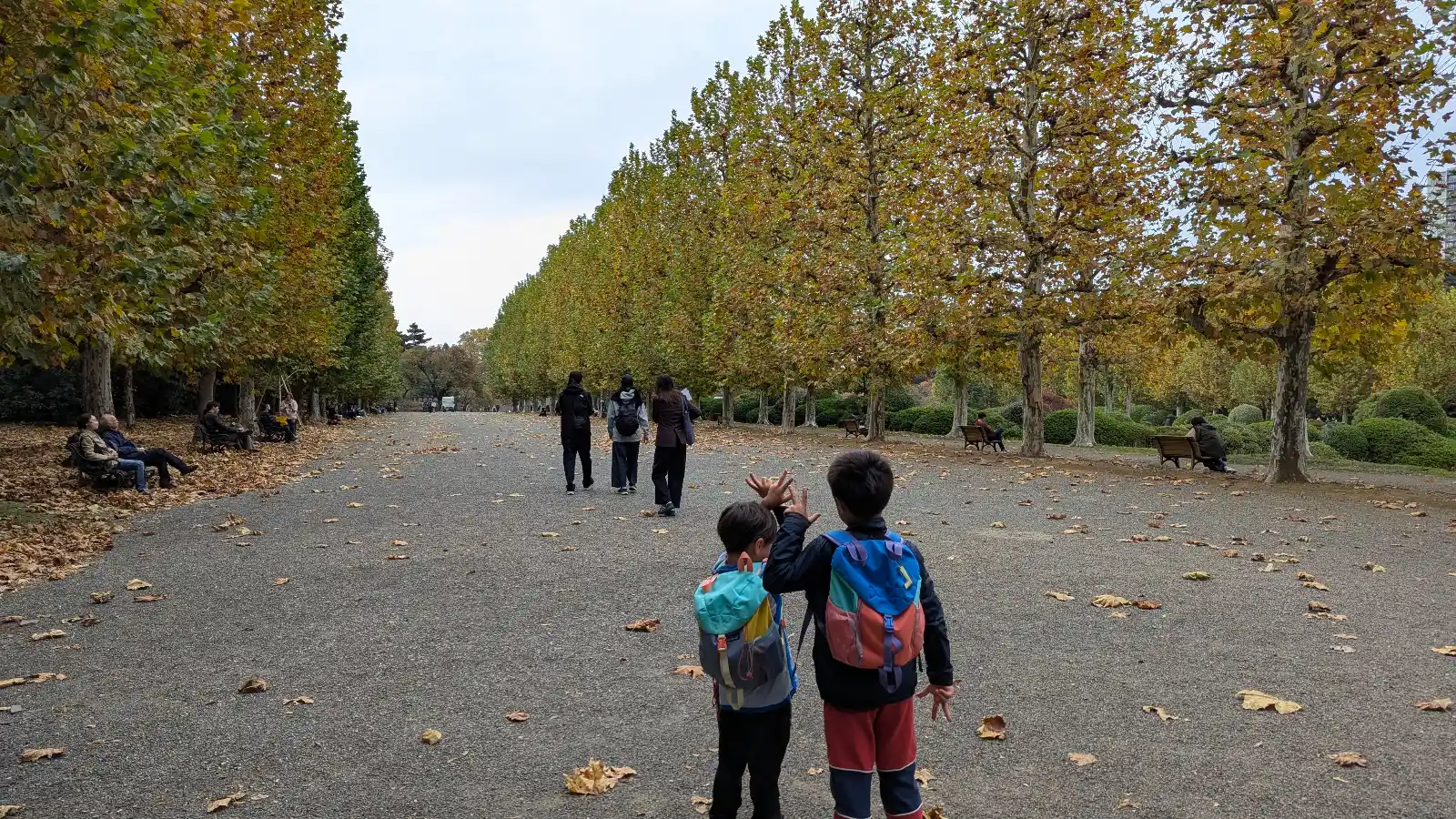
Fifty-eight hectares of open lawn give a movement-driven child the discharge the station and the shops deny them. It is the rare nearby stop that returns Reserve rather than spending it, which is why it anchors the Dynamo’s day rather than ending it. A younger Dynamo gets unbroken running room on the wide central grass, and an older one can take the longer loop between the English, French, and Japanese gardens without a queue or a rope line to hold them still. The garden opens early, which suits a jet-lagged family that needs to move before the city does.
Who it costs.The Sprinter. The scale that frees the Dynamo is real walking distance for a low-stamina child, and the paths run long between benches.
How to make it work.Enter at the Shinjuku Gate nearest the station, base yourselves on one lawn rather than circling the whole park, and let the movement child range while a tired one rests on the grass.
If this isn’t your child: still the calmest green space in the district, and a genuine reset for any family between louder stops.The free Kids Plaza on the park’s west side is the district’s true built playground: a large slide, swings, universal play equipment, a fenced area just for infants and toddlers, and a summer splash pond. For a Dynamo this is discharge with structure, energy spent on equipment rather than open lawn, which suits a child who wants something to climb rather than just somewhere to run. A younger Dynamo has the toddler enclosure and the bucket swings; an older one takes the big slide and the obstacle equipment. It is open daily and costs nothing.
Who it costs.The Sprinter, mildly. The park sits on the west side about a ten-minute walk from the station, which is a real distance to plan for rather than a quick hop.
How to make it work.Search “Shinjuku Chuo Park Children’s Square” rather than the park name so you arrive at the right end, and pair it with the Tocho deck a few minutes away rather than crossing back to the station between the two.
If this isn’t your child: a free, shaded break with a Starbucks on site, useful to any family on the west side.The draw for a movement-driven child is the test-your-ability zone: booths that pit a child’s sprint start, standing jump, and balance against real athlete benchmarks, which turns an indoor museum into a place to spend energy rather than absorb it. A younger Dynamo runs the simpler challenges on repeat; an older one chases the athlete numbers and the outdoor Monument plaza with its scale Olympic rings.
Who it costs.The Anchor, a little. The museum sits out by Gaienmae, away from the Shinjuku Station core, so the journey is the unfamiliar part rather than the visit.
How to make it work.Treat it as paired with the Ginkgo Avenue a few minutes away, a single trip out to the Gaien side rather than a detour you double back from.
If this isn’t your child: a compact, well-made sports museum, strongest for a family with a child who likes to compete.For the Sensor
Stops that let a sensory-loaded child recover.
For a child who depletes through sensory input, the strongest stops are the Tocho observation deck, Hanazono Shrine, and Ginkgo Avenue.
The free deck is the district’s quietest high point: a fast elevator, near-zero queue, and a calm 202-meter room above the street din rather than inside it. For a child whose sensory threshold has been spent at platform level, it is where the input drops away and the visit can continue. A younger Sensor settles by the glass and picks out landmarks at their own pace, while an older one can lap the full floor and find Mount Fuji on a clear afternoon.
Who it costs.The Dynamo, mildly. The deck is a contained, low-movement space, so it spends quiet rather than energy and pairs best with a discharge stop rather than another still one.
How to make it work.Use it as the planned reset between two louder stops, and time a late-afternoon visit so the daylight view rolls into the free evening projection-mapping show downstairs without a second trip.
If this isn’t your child: still the best free view in Shinjuku, worth the elevator for the sight alone.One block from the neon of Golden-Gai sits a red-and-green pocket of genuine quiet, a working Inari shrine where the traffic noise drops to a rustle of ginkgo leaves. For a Sensor child it is a true breathing space: dispersed sound, soft light, and a small, legible circuit with no sudden shifts. A younger Sensor watches for the fox guardians along the torii tunnel, while an older one can take in the main hall and the festival lanterns without a wall of crowd noise pressing in.
Who it costs.Almost no one, which is what makes it rare. The Dynamo gets little discharge here, so it works as a reset rather than a destination for a movement-driven child.
How to make it work.Enter from the Yasukuni-dori torii approach rather than the Golden-Gai stairs, which keeps the arrival calm and stroller-friendly, and go on a weekday morning before any festival crowds build.
If this isn’t your child: a two-minute oasis any family can use to reset between louder stops.A 300-meter corridor of 146 ginkgo trees turns molten gold from mid-November into early December, a big visual payoff that stays entirely open-air, so the spectacle never comes with enclosed noise or a ceiling of crowd sound. For a Sensor child the openness is the point: the scale impresses without trapping them in it, and they control their own distance from the busy parts. A younger Sensor kicks through fallen leaves at the quiet end, while an older one can walk the full avenue toward the museum plaza.
Who it costs.The Sprinter, in peak leaf season. The avenue draws dense crowds on autumn weekends, and the nearest stop, Gaienmae, sits away from the Shinjuku Station core.
How to make it work.Come on a weekday morning at the height of the color, and treat it as paired with the Olympic Museum a few minutes away rather than a trip back toward the station.
If this isn’t your child: outside late autumn it is a pleasant tree-lined walk, not a reason to cross the ward.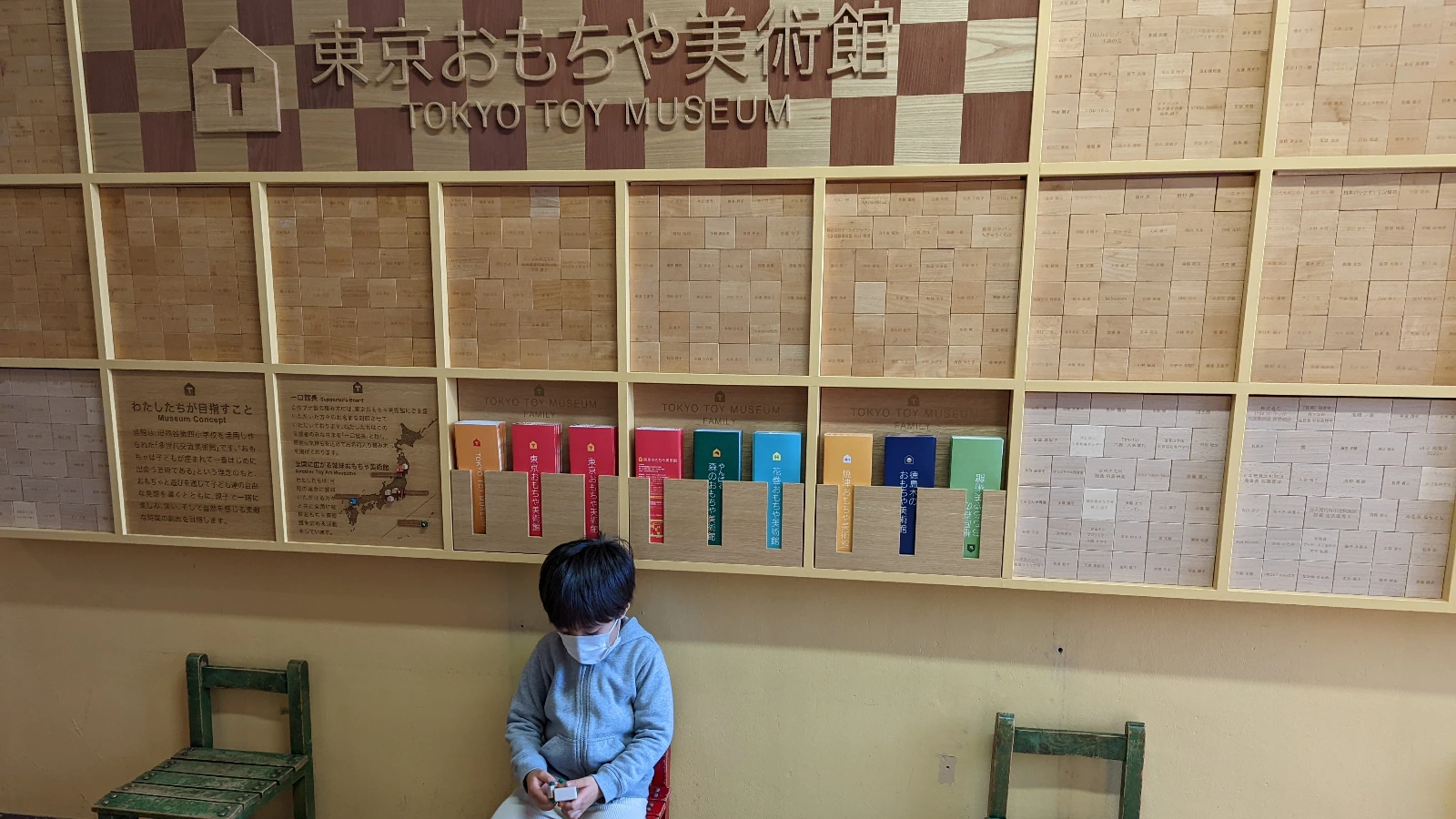
For the Anchor
Stops with confirmed, predictable structure.
For a child who depletes through unfamiliarity and unconfirmed structure, the strongest stops are the Tokyo Toy Museum, the Fire Museum, and the Shinjuku Historical Museum.
A former Yotsuya schoolhouse turned into bounded, staff-guided rooms of hands-on wooden toys is almost purpose-built for an Anchor: the space is enclosed and legible, the staff explain how each toy works so nothing has to be guessed, and the layout repeats predictably floor to floor. A younger Anchor stays in the dedicated baby-and-toddler room where the rules are simple and constant; an older one works the analog-game and craft rooms with a clear sense of what comes next.
Who it costs.The Sensor, at moderate risk. The wooden-toy rooms are absorbing but busy and sound-rich, and the open play floors concentrate other children’s noise, which spends a sensory-sensitive child’s Reserve faster than the calm look of the place suggests.
How to make it work.Go at opening on a weekday when the rooms are quiet and a staff member can walk your child in, which is exactly the confirmed start an Anchor wants and the lowest-noise window for a Sensor.
If this isn’t your child: a genuinely charming indoor stop and a reliable rainy-day answer for any family.The free Fire Museum is built on the kind of fixed, legible sequence an Anchor settles into: take the elevator up, then work down floor by floor, vintage engines in the basement, the climb-in helicopter on the roof terrace, and a drive-the-firetruck simulator in between, with each level a clear, self-contained step. A younger Anchor (the museum is strongest from about age six and down) loves the cab they can sit in; an older one reads the Edo-period firefighting history that the same floors carry. It costs nothing and needs no reservation.
Who it costs.Almost no one. The main caution is age: the doing is pitched young, so a much older child treats it as a quick, structured stop rather than a destination.
How to make it work.Start at the top and walk down as the staff suggest, and chain it with the Toy Museum a short walk away for one predictable Yotsuya half-day.
If this isn’t your child: a free, vehicle-filled hour that almost any young family enjoys.A small, orderly walk through Shinjuku’s past, from the old Naito estate to the post-town and the modern ward, gives an Anchor a low-surprise indoor stop with a single clear route and nothing that improvises. The dioramas and the recreated streetcar are concrete things to anchor to rather than abstract displays. A younger Anchor follows the model streets and the tram; an older one can read the Edo-to-Tokyo arc that ties the district together. It is quiet, rarely crowded, and inexpensive.
Who it costs.The Dynamo and the Sprinter both, a little. It is a still, contained visit with limited movement, best kept short for a child who needs to discharge.
How to make it work.Keep it to a focused pass rather than a full circuit, and use it as the calm, predictable open to a day that builds toward livelier stops.
If this isn’t your child: a quiet, well-kept local museum, more context than spectacle.For the Sprinter
Stops that deliver without a walking circuit.
For a child who depletes through sustained walking and standing, the strongest stops are the Ninja Trick House and a short daytime look at the old lanes.
A compact, guided 40-minute session in Kabukicho packs a full experience, hidden doors, swordplay, and shuriken throwing, into one room, with no walking loop to drain a low-stamina child. For a Sprinter the value is the ratio: a memorable stop measured in minutes of standing, not kilometers of pavement. A younger Sprinter (the floor is best from about age four) tries the lighter tricks, while an older one can attempt the full shuriken set and the harder passages.
Who it costs.The Anchor, a little. The house is up multiple floors with no elevator and a deliberately tricky entrance, so the arrival is less predictable than the activity itself.
How to make it work.Book a slot in advance so the session is confirmed, and screenshot the building photo, since the unmarked entrance is part of the gag and easy to walk past.
If this isn’t your child: a high-fun, low-distance stop any family short on walking legs can lean on.These two atmospheric lanes belong together: a short, dense look rather than a walking route. By day Golden-Gai’s warren of tiny bars is shuttered and quiet, a five-minute streetscape of hand-painted signs and impossibly narrow alleys, and Kakurenbo Yokocho (“Hide-and-Seek Alley”) is the same idea in miniature. For a Sprinter the brevity is the gift: a real slice of old Shinjuku absorbed in a few hundred steps. A younger child enjoys the maze of it; an older one clocks the history under the paint.
Who it costs.Everyone after dark. These are nightlife lanes once the bars open, with adult crowds and no family draw, so the honest window is daytime and the honest length is short.
How to make it work.Walk them in daylight as a brief detour between larger stops, not as a destination, and keep it to a single pass rather than a loop.
If this isn’t your child: a quick, photogenic glimpse of old Tokyo, best taken in passing.Open with the child who runs short first.
The order of a Shinjuku day is set by Reserve, not by the map. Each route opens with the stop that protects the named child, then chains to the nearest compatible one.
When to go, and what costs nothing.
Weekday mornings are the widest window for the parks, the museums, and the shrine, before the crowds build. Save the Tokyo Metropolitan Government Building for late afternoon, when the daylight view rolls straight into the free evening projection-mapping show on the towers. The free stops carry real weight here: the Tocho deck and its light show, Hanazono Shrine, the Chuo Park playground, the Fire Museum, and the Ginkgo Avenue all cost nothing, and several of them are also the calmest stops in the district, so the free route and the low-reserve route often run together.
Three bases that fit a family’s Reserve.
A shortlist chosen for location logic, not price tier. Each pairs with the child whose Reserve it protects best.
| Property | The LuNi Reason | Budget |
|---|---|---|
|
LUNI Pick
Hilton Tokyo
West side, by Chuo Park and Tocho
|
A calmer west-side base a short walk from Shinjuku Chuo Park and the Tocho decks, set back from the east-side neon and crowds. The lower-stimulation location protects a Sensor’s evening reserve, and the park playground and free observation deck sit within an easy flat walk. | ¥¥¥ |
| Keio Plaza Hotel Tokyo Steps from the west exit | A skyscraper hotel close enough to the station that the day starts and ends with almost no walking, which is the location logic a Sprinter needs. Family rooms and on-site dining keep a low-stamina child off their feet between stops. | ¥¥¥ |
| Tokyu Stay Shinjuku In-room laundry and kitchenette | An apart-hotel with kitchenette and in-room laundry that holds an Anchor’s routine across a multi-night stay, letting a child reset to the same familiar room and the same evening rhythm after a high-stimulation day. | ¥¥ |
Budget: ¥¥¥
Budget: ¥¥¥
Budget: ¥¥