Shiogama Shrine with Kids: Fifteen minutes on foot, or three by taxi.
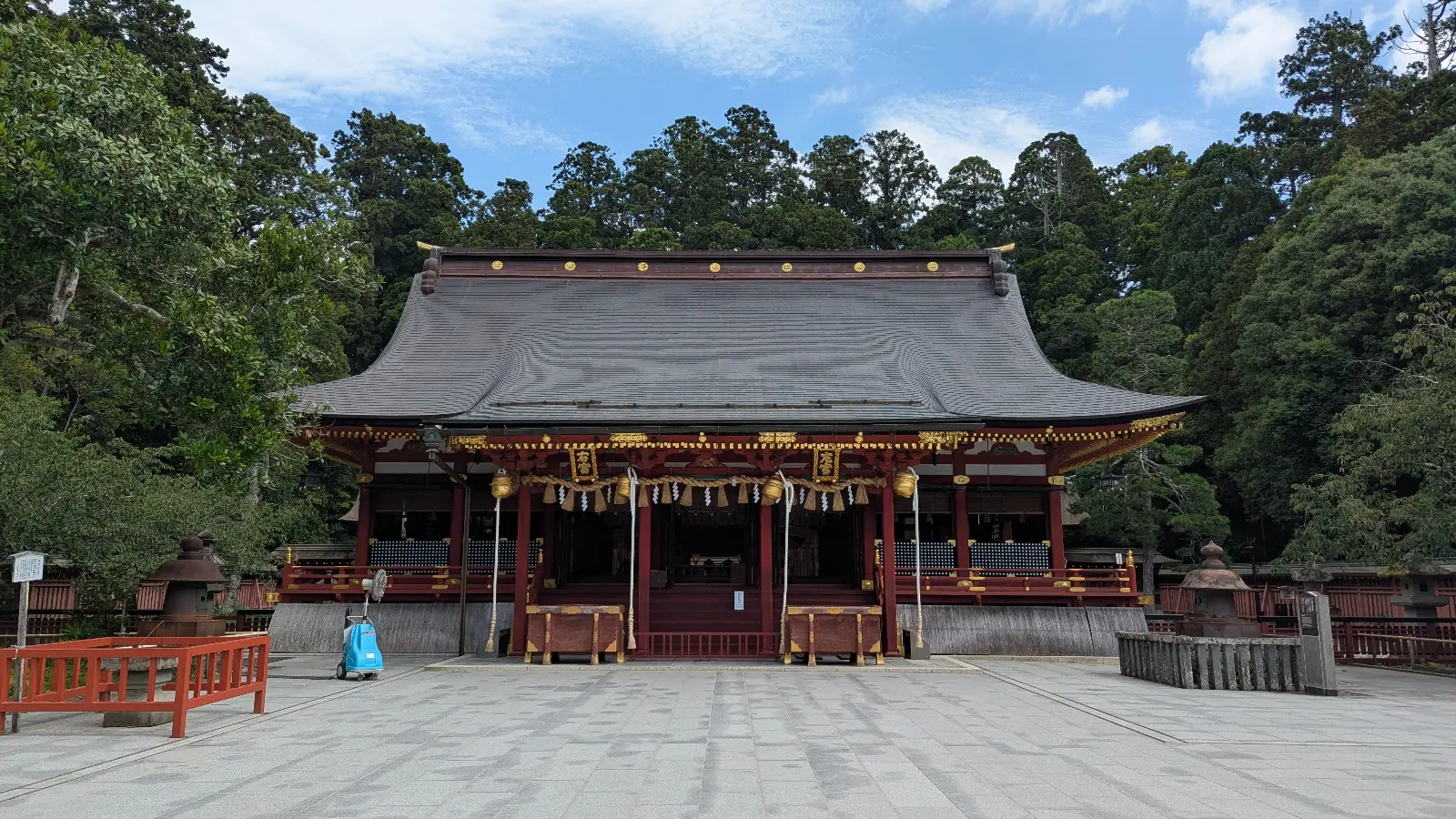
A hilltop precinct has free parking wrapped around it and a station fifteen minutes away on foot, and the choice between them decides what the day costs a child.
Museum ¥200 over 70, free to university students and younger. Nothing to book for the grounds.
5:00 to 17:00 from November to February, New Year aside; no closing day. The museum closes Thursdays, except on festival days.
Two shrines on the hill, and the museum on a day it is open.
Below five the hill is the visit; older children take the museum properly.
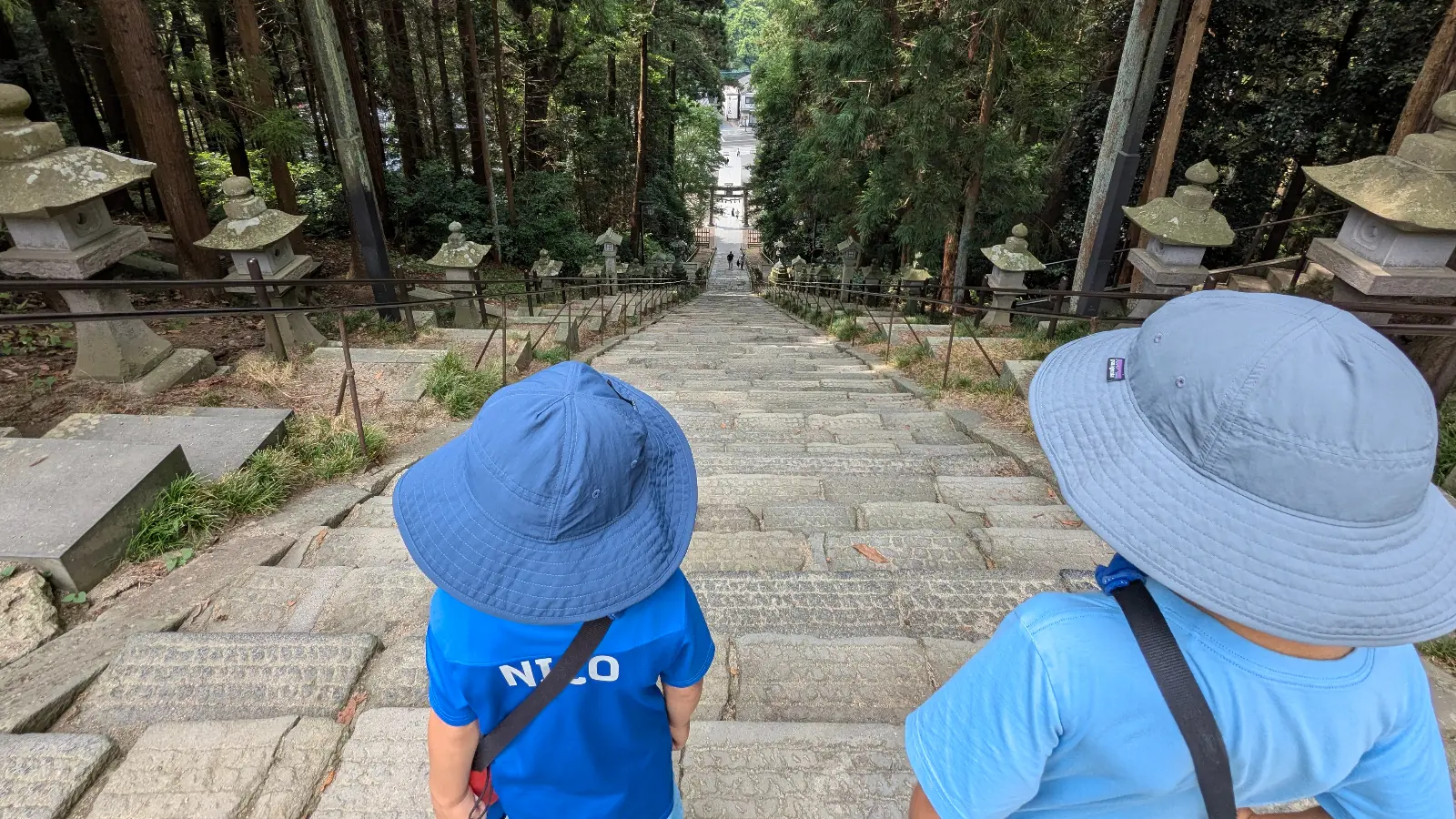
The shrine sits on a hilltop; the front approach is 202 steep stone steps, and the office helps if asked ahead.
Some links on this page are affiliate links. LuNi may earn a commission at no extra cost to you.
Is Shiogama Shrine worth it with kids?
The short version, before the costs, the timings and the case for each child.
Yes, and the first thing to know is that it is two shrines, not one. Shiwahiko Jinja and Shiogama Jinja share a single hilltop precinct on Ichimoriyama, above the coastal town northeast of Sendai, each with its own hall, its own origin and its own gate hours. The grounds are free. So, for every child in the family, is the museum standing inside them. What the visit costs is paid in height rather than money: roughly fifteen minutes on foot from Hon-Shiogama Station, or three minutes in a taxi, or very little if you drive, because free parking lots wrap the precinct from the east side around to the north, and the car does most of the climbing.
Planning Your Visit to Shiogama Shrine with Kids.
Two decisions shape this morning and neither is about the shrine itself. The first is how the family gets up the hill. A taxi from Hon-Shiogama Station and the walk up from it are the same journey priced very differently for a child with a limited walking reserve, and the free lots around the precinct make the car a third answer rather than a fallback. The second is the hour, and this is the rare one among Japan’s shrines for children where being early costs nothing, because the main shrine opens its gates long before most families are awake. Settle the taxi or the walk before leaving the hotel, and let the child know how much climbing the morning holds. A child told the shape of the hill in advance takes the stairs as a plan rather than a surprise.
Every LuNi attraction guide starts with a visit, with our own children
LuNi rates and writes about attractions only after visiting them with children. Luca and Nico were at Shiogama Shrine, and what they did there is recorded further down this page, including how each child actually met it.
Children arrive with different tolerances: for noise, for lines, for standing still, for being on their feet all day. A guide written for the average of them helps almost nobody. So every place on this site is read four ways, and each verdict says which children it already suits and what makes it work for the rest. Whoever you are bringing, the answer here is built for your family rather than for a general reader.
Restricted-movement depletion is answered once by the hill and then reversed, because a precinct asks for exactly the opposite of a run.
Sensory-input depletion stays low in open-air courtyards on a wooded hill, and the only real variable is which week of the year you pick.
Unfamiliarity is answered by a known ritual sequence, as long as the child is told before the first hall that a second shrine follows it.
Sustained walking is charged on the way up, so buy the three-minute taxi or use the free parking and start the day at the top.
Hotels we would book for this visit.
Three family hotels judged on the leg that decides this morning, because the shrine sits outside the city: how directly a family reaches the line to Hon-Shiogama with a child in tow.
| Property | The LuNi Reason |
|---|---|
| LUNI Pick Hotel Metropolitan Sendai East Connected to Sendai Station | It is the base for a Sprinter, whose legs the shrine’s 202 stone steps spend first. The Senseki Line to Hon-Shiogama leaves from the station this property is connected to, so the return at the end of a hill morning is the shortest of the three. |
| The Westin Sendai Sendai Trust Tower, 6 to 9 minutes’ walk from the station | The same rail logic with six to nine minutes on foot in front of it, which matters more on the way home than on the way out. Book it when the week wants the Westin as its base and the shrine is just one morning of several. |
| Sendai Royal Park Hotel Izumi Ward, about 30 minutes by taxi from Sendai Station | For a driving family the northern base genuinely helps here, because the expressway approach comes in from Rifu rather than through the city. From this side the shrine is closer than the map suggests, and parking at the top is free. Book it for a week with a rental. |
Hotel Metropolitan Sendai East
Nearby attractions, matched to your child.
Three pairings back in Sendai, chosen for what each adds to a morning spent climbing and then standing still: somewhere to move, somewhere to sit, or somewhere quiet just to look.
| Pairing | Why This Solves the After-Visit | For Your |
|---|---|---|
| LUNI Pick HOKUSHU Sendai City Science Museum North of central Sendai, by rail then subway | A precinct spends a child’s movement on a climb and then asks them to stop using it. The science museum is where the rest of it goes: numbered zones of stations built to be worked hard, indoors, with a forest park attached to the building. | Dynamo |
| Sendai Umino-Mori Aquarium Back down the Senseki Line, on the coast | This child has spent the morning going up. The aquarium is step-free, indoors, lent-stroller territory, with a seated stadium at the end of it, and it sits on the same coastal rail line the family is already standing on rather than across the city from it. | Sprinter |
| Sendai Astronomical Observatory West of central Sendai, by bus or car | An early start here is finished by eleven, which lands a family at the observatory in the afternoon, when its projections are open to families rather than held for groups. One seated show, chosen at the counter, and nothing else asked of anybody. | Sensor |
HOKUSHU Sendai City Science Museum
North of central Sendai, by rail then subway For YourDynamo
Sendai Umino-Mori Aquarium
Back down the Senseki Line, on the coast For YourSprinter
Sendai Astronomical Observatory
West of central Sendai, by bus or car For YourSensor
How two children actually met this attraction.
Two children came away from this place with the same review and spent very different amounts of effort arriving at it. Neither of them said anything about the ritual, the history or the two shrines, and neither asked what any of it was for. Both of them talked about how it looked, which is worth knowing before a parent prepares a lot of explanation nobody wants. What differed was the dwell time. One stood and took the buildings in properly. The other registered the whole thing in a few seconds, delivered a verdict, and was ready to go somewhere else. A precinct serves both of them, and it does not serve them for the same length of time. Plan the morning around the shorter of the two children and the longer one loses nothing by it.
Luca’s verdict came down entirely to how it looked. He took in the deep red of the halls and the gold detailing worked across the beams, and he singled the gold out without prompting. The size of the buildings seen from close up was the other thing he mentioned. Between the red and the gold, it came to cool and nice, and he stood there long enough to mean it.
This is the Sensor pattern. A child whose Reserve depletes through sensory input spends very little in an open-air precinct, and will often settle on one fixed, high-contrast thing to rest their eyes on rather than scanning a busy field. Families with a similar child should let the looking be the activity, and should pick the week rather than the hour with care, because the same grounds behave very differently in a festival season than they do on an ordinary Tuesday.
Nico disposed of the same subject in a handful of words. The gold on the shrine was cool, and that was the whole review, delivered at speed and without any interest in elaborating on it. He had registered the thing, found it good, and was visibly finished with the standing part of the morning some time before anybody else in the family was, without ever suggesting he had not enjoyed it.
This is the Dynamo pattern. A child whose Reserve depletes through restricted movement will give a place one honest look and then need the day to move again, and a precinct is built to be stood in. Families with a similar child should put the climb and the walk to the precinct’s oldest tree at the front of the visit, and should have the next stop of the day decided before the halls are reached rather than discussed in front of them.
A hilltop shrine reached by a long flight of stone steps makes arrival feel like an achievement, and children feel that. Climbing up early, while the air is cool and the precinct quiet, gives a child a sense of occasion and a moment of calm before the day begins. Shrines like this also mark the milestones of childhood itself, and a child who learns that families come here to celebrate growing up sees a tradition that belongs partly to them. A morning that begins with a climb sets the tone for everything after.
The LUNI Rating for Shiogama Shrine.
One fact drives all four verdicts, and it is about the car. The precinct is reachable by car, comfortably: four free worshippers’ parking lots wrap it from the east side around to the north, one of them reserved for buses. That is not a parking lot a family hopes for, it is one they can plan around, and it converts the single hardest thing about this site into an optional cost. Every verdict below is really a judgment about a family that either takes that option or does not, and about what the hill costs the child who walks it.
The hill pays this child once, and then the place asks for the opposite. The Dynamo depletes through restricted movement, and the walk up from Hon-Shiogama is a genuine fifteen minutes on foot that will discharge a good deal of it. The problem is what follows. A shrine precinct is somewhere a family stands still, moves quietly between halls and waits while an adult does something at each one, and there are two shrines here rather than one, so the standing happens twice. A child who has just spent their charge on the climb arrives at the part that needs it back.
There is one real target to move toward, and it is new. A bridge opened in 2026 reaches the great cedar to the left of the tower gate, the oldest tree in the precinct at an estimated eight hundred years, so worship at the tree is now possible up close, and on the first of every month the fence around it comes down entirely. That is a destination rather than a view: something to walk to, arrive at and be finished with. Give a moving child the climb and the tree, in that order, and let the halls be the adults’ half of the morning.
What this means for your Dynamo: restricted movement is discharged on the approach and then charged again at the top. A younger Dynamo should walk up and be carried through the halls; an older one can be sent ahead to find the tree and report back.Nothing here is enclosed, amplified or scheduled at a child. The Sensor depletes through sensory input, and this is open-air courtyards on a wooded hill outside a coastal town, with no dark room, no soundtrack and, on an ordinary day, no timed performance to sit through. The pace belongs entirely to the family. The museum, if it is taken, is indoors and quiet, and the salt-making rite on its upper floor is shown as a film rather than an event happening around a child.
The one variable is the week. The shrine’s own festival days in July, horseback archery included, are busy ones, so pick a different week for a child who finds a crowd hard going. Longer and less obvious is the Shichi-Go-San season, when the shrine takes children’s prayers through the whole autumn. That is worth knowing in both directions: it is the crowd, and it is also a shrine visibly set up for children.
What this means for your Sensor: sensory input is low and the date does the work. A younger Sensor does best at the gate hour on an ordinary weekday; an older one can take a festival day deliberately, knowing what it will be.The sequence is the most portable structure in Japanese family travel, and here it runs twice. The Anchor depletes through unfamiliarity and unconfirmed structure, and the standard shrine order, purify, approach the hall, make the offering, is the same here as everywhere else, which means a child who has done it once has done it. The catch is that this precinct holds Shiwahiko Jinja and Shiogama Jinja, two shrines with separate halls, separate origins and separate gate hours. A child who believes the visit ended at the first hall and then meets a second one has been handed a surprise by a page that promised a known order.
So say two before you say one. Told in advance that there are two shrines and a museum, this becomes three named, countable stops, and the profile is well served. The confirmable details are unusually good: the museum opens at nine and closes at four, and the fence at the great cedar comes down on the first of the month. Those are rules a child can be given and then watch hold, which is the currency this profile trades in.
What this means for your Anchor: unconfirmed structure is the only risk, and it is removed by one sentence at the gate. A younger Anchor holds two shrines; an older one can be given the museum hours and the first-of-the-month rule and hold the whole shape.The cost is the ascent and it is bought off cheaply. The Sprinter depletes through sustained travel-style walking and standing, and the honest figure is fifteen minutes on foot from Hon-Shiogama Station. The alternative is three minutes in a taxi from the same station. Decide which before leaving the hotel, not at the station. There is also a second station, JR Shiogama on the Tohoku Main Line, twenty-five minutes on foot or five by taxi, which is worth knowing for a family whose rail pass favors that line rather than the Senseki.
And driving removes the long front staircase, though some stairs on the hill cannot be avoided. Free parking lots, about 350 spaces in all, wrap the precinct from east to north, so a family that drives starts the morning in the grounds instead of below them.
What this means for your Sprinter: sustained walking is largely avoidable, and only if you decide in advance. A younger Sprinter should arrive by car or taxi; an older one can walk up and should be given the taxi for the way down.The questions parents actually ask.
Most of what a family wants to know here is about the hill and the clock, and both have better answers than the site’s reputation suggests. The hill can be paid for in three minutes of taxi fare or mostly avoided in a free parking lot with hundreds of spaces. The clock opens at five in the morning on nearly every day of the year, which is earlier than almost anything else a family will visit in Japan. The one genuine trap is a Thursday, and it belongs to the museum rather than to the shrine, which keeps its own quite separate hours.
Is Shiogama Shrine worth visiting with kids?
Yes, and it is two shrines rather than one. Shiwahiko Jinja and Shiogama Jinja share a hilltop precinct on Ichimoriyama, northeast of Sendai on the coast. The grounds cost nothing, the precinct museum is free to everyone up to and including university students, and the climb is the whole physical cost.
How do you get to Shiogama Shrine?
From JR Hon-Shiogama on the Senseki Line it is about 15 minutes on foot, or about 3 minutes by taxi. There is a second station: JR Shiogama on the Tohoku Main Line, about 25 minutes on foot or 5 by taxi, which suits a family whose rail pass favors that line.
Does Shiogama Shrine cost anything?
The grounds are free. Prayers and amulets are paid for, and the precinct museum charges 500 yen for a general visitor, 200 for over-70s and nothing at all for university students and younger. A disability certificate admits the holder plus one companion free, and everyone enters free on May 18.
What time does Shiogama Shrine open?
Shiogama Jinja opens its gates at 5:00 from March to October, closing at 18:00, and at 5:00 to 17:00 in the colder months. Shiwahiko Jinja keeps its own hours and changes them monthly. Even with the gates shut, the precinct outside them may be visited freely.
Is there parking at Shiogama Shrine?
Yes, and a great deal of it. Four free parking lots for worshippers wrap the precinct from the east side around to the north, about 350 spaces in total, one of them reserved for buses. This is a parking lot to plan around rather than one to hope for.
Can you take a stroller to Shiogama Shrine?
A structured carrier is the safer choice on foot from Hon-Shiogama: the front approach is 202 steep stone steps. Driving changes the question entirely, because the free lots put a family at the precinct rather than below it. The free lots hold about 350 spaces in all, from the east side of the precinct around to the north.
What is there for children at Shiogama Shrine?
More than the architecture. The precinct museum is free to every child and runs 9:00 to 16:00, closed Thursdays. A bridge opened in March 2026 reaches the precinct’s oldest tree, a cedar estimated at 800 years, and the fence around it comes down on the first of every month.
What age is Shiogama Shrine best for?
Five to twelve, once a child can hold a sequence and be told there is a second shrine coming. Below five the hill is the whole experience. Older children take the museum properly, and the 800-year cedar on its new bridge gives every age something to find.
Where Shiogama Shrine fits your Japan trip.
Official site and opening information: Shiwahiko Jinja and Shiogama Jinja