Wakayama Farm with Kids: A Forest Walk, Not a Photo Stop.
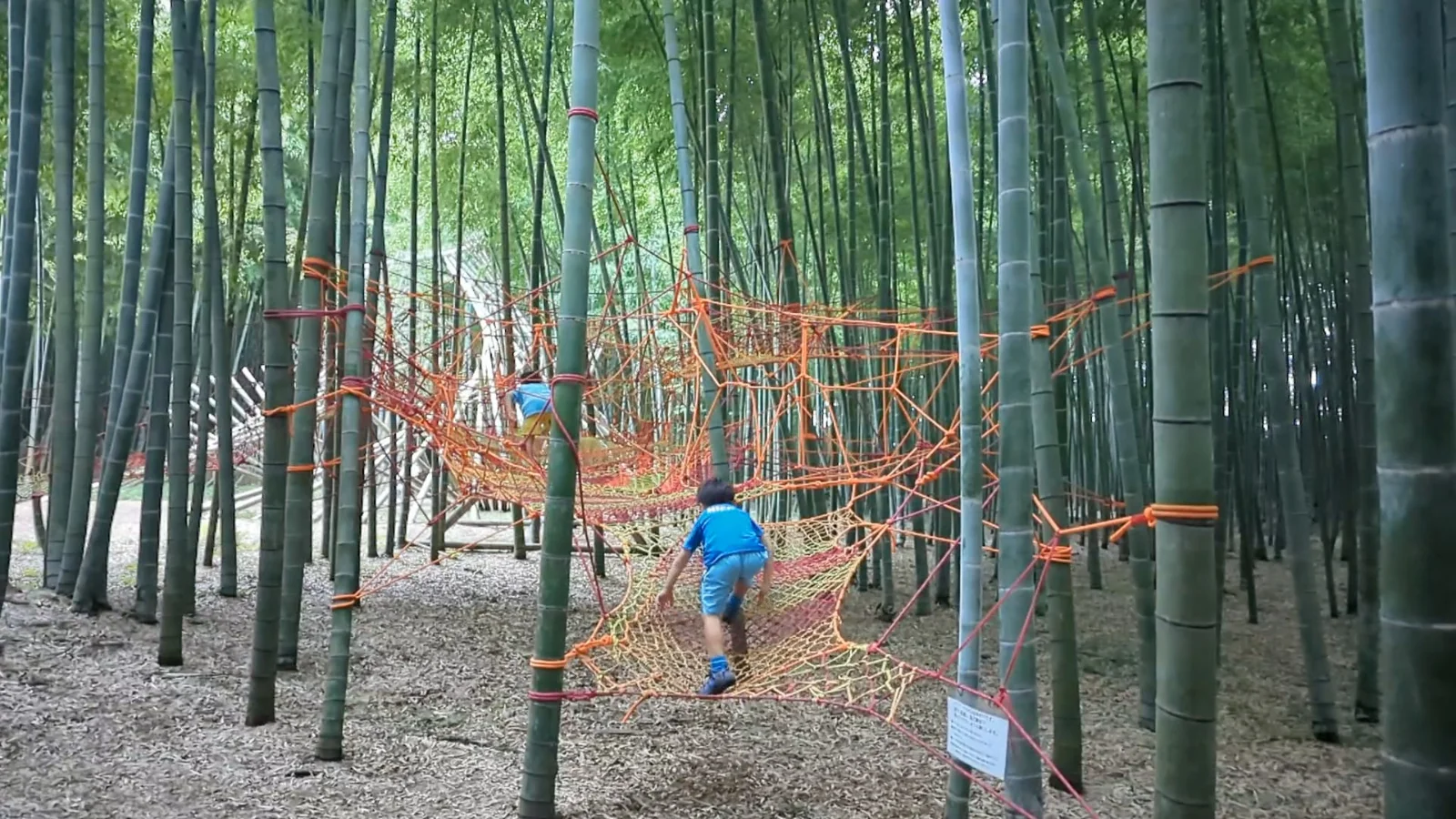
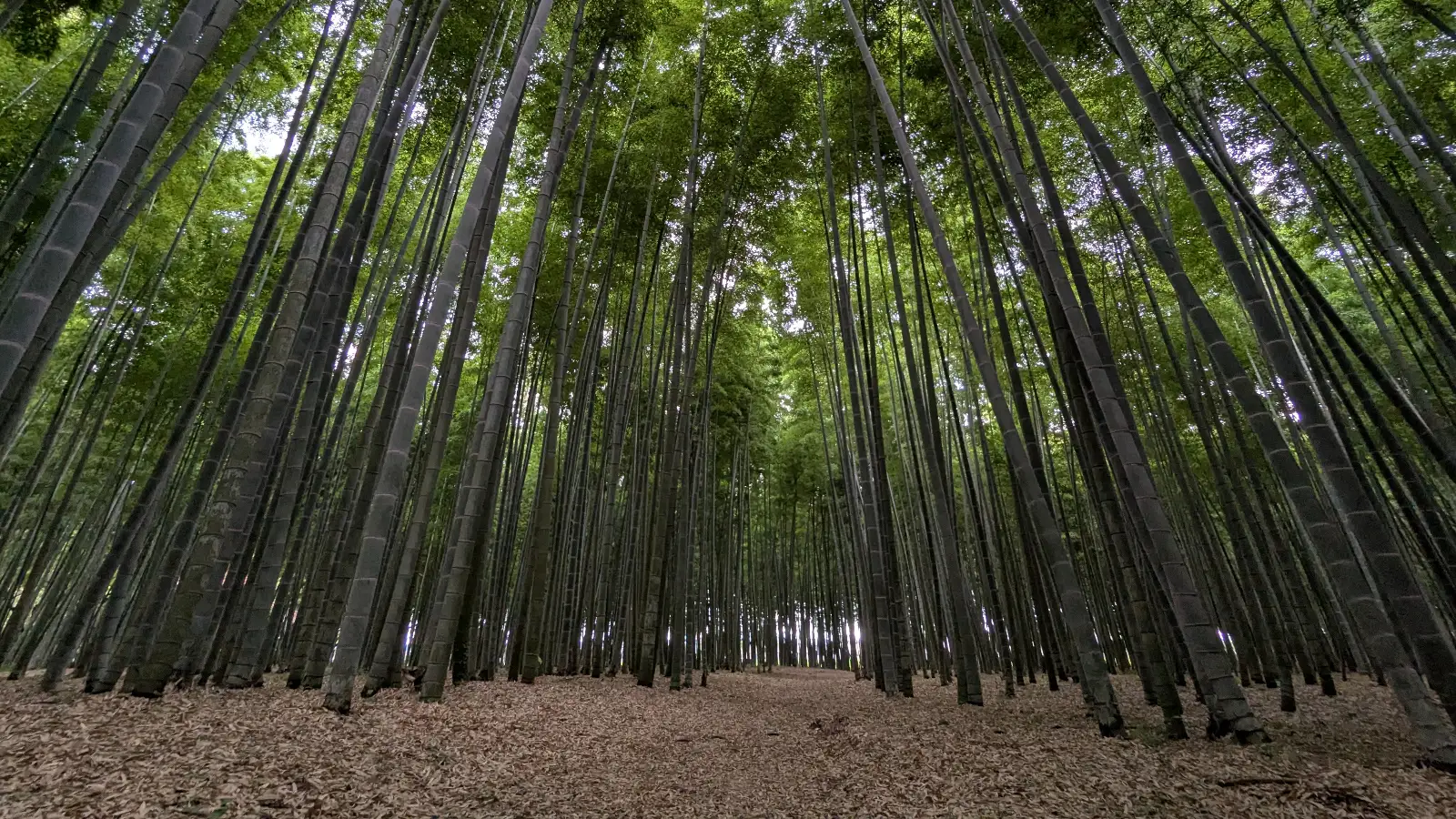
A bamboo forest of twenty-four hectares is open ground for a child who needs to move and a lot of walking for a child who tires on foot.
Valid all day with re-entry; web tickets offered, not required. Crafts from ¥750.
To 20:00 on weekends and holidays, and to 21:00 from June to August; the farm closes only over the New Year.
More on a weekend evening, when the illumination runs; a weekend bamboo craft takes about 30 minutes.
Preschoolers pay a reduced ticket; the bow and water gun crafts suit school-age hands.
Strollers and wheelchairs go in; the gravel paths are harder to push but passable.
Some links on this page are affiliate links. LuNi may earn a commission at no extra cost to you.
Is Wakayama Farm worth it with kids?
The short version, before the costs, the timings and the case for each child.
Yes, for most children, and more so on a weekend. Wakayama Farm is a bamboo forest of about twenty-four hectares in Utsunomiya, a working farm for bamboo shoots and chestnuts, and the ticket is good all day, with re-entry. A child who needs to move gets a forest to cover, and on weekends and holidays a bamboo craft to make with the hands, a bow and arrow or a water gun. A child who takes everything in gets daylight and open air, with one machine to know about: a mist that drifts across one clearing from March to November. The child it asks most of is the one who tires on foot, because there is no station near the farm and the forest is walked. Two decisions matter most: weekday or weekend, and car or bus.
Planning Your Visit to Wakayama Farm with Kids.
Two decisions make or break this day, and both are made at home. The first is the day of the week, because the farm is a different place on a weekend. The bamboo crafts, the matcha and the evening illumination run on Saturdays, Sundays and holidays; the cafe keeps a weekly closing day; and the mist machine runs every day but rests from December to February. Pick the day by the child, not by the calendar. The second is how to arrive. There is no train station near the farm, so it is a bus from Utsunomiya Station, a taxi, or a car, and drivers should know that the entrance and parking are hard to find. A bus-and-admission ticket covers the ride and the gate, and the same buses run on toward Nikko, so the farm can open a longer Nikko day.
Every LuNi attraction guide starts with a visit, with our own children
LuNi rates and writes about attractions only after visiting them with children. Luca and Nico were at Wakayama Farm, and what they did there is recorded further down this page, including how each child actually met it.
Children arrive with different tolerances: for noise, for lines, for standing still, for being on their feet all day. A guide written for the average of them helps almost nobody. So every place on this site is read four ways, and each verdict says which children it already suits and what makes it work for the rest. Whoever you are bringing, the answer here is built for your family rather than for a general reader.
Restricted-movement depletion stays low in a forest of twenty-four hectares with crafts to make on weekends, so let the child set the route.
Sensory-input depletion stays low in daylight and open air, so name the mist machine and its schedule before the child walks into its clearing.
Unfamiliarity and unconfirmed structure ease with a task that ends in a finished object, a weekend bamboo craft, so build the visit around it.
Sustained walking and standing build across a forest walked on foot, with no station at the gate, so rent a hammock and use re-entry.
Hotels we would book for this visit.
Three bases for a family combining the forest with Nikko: one in Nikko town, at the far end of the bus road that passes the farm, and two in Kinugawa Onsen for a family centering its trip there.
| Property | The LuNi Reason |
|---|---|
| LUNI Pick Nikko Kanaya Hotel Near the Shinkyo bus stop, in Nikko town | The Kanto Bus routes that stop near the farm run on toward Nikko, with JR Nikko and Nikko Toshogu among their destinations, so the forest can be the first stop of the day on the way up rather than a separate trip. The family arrives at this hotel with the bamboo already done and the shrine next. |
| Hoshino Resorts KAI Kinugawa About 15 minutes on foot from Kinugawa Onsen Station | For a family whose Tochigi days are built around Kinugawa, with Edo Wonderland and Tobu World Square both a bus ride from the station. The farm then becomes a day trip on the Utsunomiya side, and a hotel a short walk from the station keeps the evening simple for a family without a car. |
| Asaya Hotel In Kinugawa Onsen | A second Kinugawa Onsen base, for a family with a car. The farm is about ten minutes from Utsunomiya IC, but its entrance and parking are hard to find, so plan the drive with the farm’s map rather than the address, and let the hotel be the easy part of the day. |
Nearby attractions, matched to your child.
Three pairings for what a day in the forest leaves over: energy still unspent, a child who wants a smaller world with every stop named, and legs that want a short, fixed walk next. Two are in Oya, ten minutes away.
| Pairing | Why This Solves the After-Visit | For Your |
|---|---|---|
| LUNI Pick Oya History Museum About 10 minutes by car | The forest spends a moving child’s energy in the open; the Oya History Museum keeps it going underground, on a vast quarry floor. It suits restricted-movement depletion well and a Sensor badly, because sensory input builds fast in the cold below ground, so plan it with one child in mind. | Dynamo |
| Oya Temple and Heiwa Kannon Near the Oya museum, closed Thursdays | After an open forest, Oya Temple and Heiwa Kannon is a precinct whose every stop can be listed aloud: halls of stone Buddhas, a pond and a giant Kannon. Unfamiliarity and unconfirmed structure ease when a child knows each stop before arriving. Check the day, because Thursdays are closed. | Anchor |
| Ashio Copper Mine Museum On the Nikko side, a day of its own | The farm spends a Sprinter’s legs on a forest walk. The Ashio Copper Mine Museum asks for less: a trolley carries the family into the mine, one way, and they leave on foot, past the displays, up a stair and down a slope. That is short walking with a fixed end, not a rest. | Sprinter |
Oya History Museum
About 10 minutes by car For YourDynamo
Oya Temple and Heiwa Kannon
Near the Oya museum, closed Thursdays For YourAnchor
Ashio Copper Mine Museum
On the Nikko side, a day of its own For YourSprinter
How two children actually met this attraction.
Two children walked into the same bamboo forest and went looking for different things. One measured it against a place he already knew, decided it matched, and only then turned to the things in it he could test, until one of them went higher than he could predict. The other ignored the scenery and went straight to the workshop, because a forest mattered less to him than a bow he could make with his own hands. Neither cared that the farm grows bamboo shoots and chestnuts. Between them they show what the farm is for: a known kind of place for one child and a workbench for the other, and a parent who knows which one they are bringing can plan the day before arriving.
Luca compared the forest with something he already knew. His first read was a match: it looked, he decided, like the bamboo grove in Kyoto, and naming the pattern was part of how he settled in. The rope play area and the swing drew him next, and he called them fun, but he was frank that the swing turned a bit scary once it went high.
This is the Anchor pattern. A child whose Reserve depletes through unfamiliarity and unconfirmed structure grounds a new place by tying it to a known one, which is what Luca did in reaching for Kyoto. The swing showed the edge of that comfort: height he could not predict turned fun into something a bit scary. Families with a similar child should let the comparison happen out loud, and let the child decide how high anything goes, stopping at the point where the outcome stops being predictable.
Nico skipped past the scenery and went straight for the workshop. What he singled out was the making: the bamboo bow and arrow and the water gun, both of which he pronounced cool and, more to the point, fun to build. He was not there to look at a forest; he was there to produce something with his hands and then use it, and the craft table gave the constant activity he needs to stay engaged.
This is the Dynamo pattern, working through the hands. A child whose Reserve depletes through restricted movement is held by making, and a craft that ends in a bow or a water gun gives the making a purpose. Families with a similar child should plan the day around the workshop, which takes walk-ins from 10:00 but may not run on a weekday, and let the forest walk come after it, so the child arrives at the trees having already done the thing they came for.
A bamboo forest, tall and green and swaying overhead, gives a child a quiet kind of wonder, and on weekends the chance to make something from the bamboo itself. Crafting a toy or a lantern from material grown all around them helps a child see how people have long made useful things from nature. The forest’s stillness balances the busy hands. A day that joins making with wandering teaches children that the natural world is not only something to look at, but something that can be shaped with care.
The LUNI Rating for Wakayama Farm.
One fact sits under all four verdicts: Wakayama Farm is a bamboo forest walked on foot, with its best activities on a weekly schedule, crafts and matcha on weekends and holidays, the illumination on weekend evenings, the mist every day from March to November. That suits a child who needs to move, who gets ground to cover, and a child who needs structure, who gets a task with a finished object at the end of it. A child who takes everything in gets daylight and open air. What the farm asks is walking, and with no station near the gate, the walking starts before the forest does.
Give the child the forest and a thing to make. The Dynamo depletes through restricted movement, and a bamboo forest of about twenty-four hectares is the opposite of a place that holds a child still. The visit is walking and looking and stopping where the child wants, with the ticket good all day and re-entry allowed, so nobody is racing the clock. On weekends and holidays the farm adds the thing a moving child likes best, a craft with a physical result: a bamboo bow and arrow or a water gun, made by the child’s own hands.
The calendar comes first. On a weekend, put the workshop at the start of the visit, while the energy is highest, and let the forest walk follow. On a weekday the workshop may not run, so be ready to give the forest a purpose instead: a hunt for the clearing where the mist appears, outside winter, or a turn in a rented hammock strung between the bamboo. A moving child with a destination covers the ground gladly; one without a destination soon asks what comes next.
What this means for your Dynamo: restricted movement barely registers in a forest this size. A younger Dynamo needs the forest first and a short craft; an older one can take on the full workshop and then the hammock.Name the mist before the clearing. The Sensor depletes through sensory input, and most of what the farm offers is the natural kind: daylight through bamboo, open air, and a walk taken at the child’s own pace. The farm has added one machine to that. Every day from March to November a dry-fog system sends a fine mist across one clearing at ground level for a few minutes at a time, and then again, until closing. It is a feature called the bamboo cloud sea, and it arrives without warning to anyone who has not been told about it.
Name it in advance: where it is, how long it lasts, and that it comes back about every ten minutes, so the child can choose whether to walk into it or keep to the rest of the forest. No day in season is free of it; only December to February is. The other decision is the evening. On weekends and holidays the forest is lit after sunset, for an extra charge, and the mist runs until closing, so a forest in the dark carries the lights and the mist together. For this child, choose daylight first and treat the illumination as a later, separate visit, if at all.
What this means for your Sensor: sensory input stays low outdoors, with one machine to know about. A younger Sensor needs the mist described first; an older one can decide on the evening illumination for themselves.Build the visit around a finished object. The Anchor depletes through unfamiliarity and unconfirmed structure, and an open forest offers little structure on its own. The farm supplies it in two ways. On weekends and holidays the bamboo crafts give the day a task with a clear end, a bow and arrow, a water gun or a lantern, made at the workshop without booking, in about half an hour. A hammock strung between the bamboo, rented by the hour, is a second activity whose length the family sets in advance.
Name the plan: the craft first, then the walk, then the cafe or the car. Tell the child which day it is and what that means, because a weekday visit may have no workshop and a Tuesday visit has no cafe. The farm is also hard to find by car, with an entrance and parking that are easy to miss, so arrive with the map already open, and a child who dislikes uncertain arrivals will not have to watch the adults searching.
What this means for your Anchor: unfamiliarity is answered by a task with an end. A younger Anchor needs the craft named before arriving; an older one can choose it and plan the walk around it.Plan the rests, not the route. The Sprinter depletes through sustained travel-style walking and standing, and the farm charges for both before the forest even starts. There is no train station near the farm, so the day begins with a bus from Utsunomiya Station and a walk from the stop, or a taxi, or a drive to an entrance that is hard to find. Then the forest itself is walked. Nothing about a bamboo grove looks tiring, which is exactly why the walking adds up unnoticed.
Use the rests the farm already offers. A hammock, paid for by the hour on top of admission, lets a child lie still between the bamboo. On weekends and holidays the crafts and the matcha in a bamboo cup are stops that are not walking, and the cafe, closed on Tuesdays, is a third. Because the ticket allows re-entry all day, a family with a car can retreat to it and come back. A family arriving by bus should buy the bus-and-admission ticket, which allows hopping on and off the same day.
What this means for your Sprinter: walking adds up from the bus stop onward. A younger Sprinter needs the hammock and a car to retreat to; an older one needs a weekend, when the crafts break up the walk.The questions parents actually ask.
Wakayama Farm’s bamboo forest changes with the day of the week. Weekends and holidays bring the crafts, the matcha and the illumination; weekdays bring shorter hours and a quieter program. The farm rewards the family that decides the day before leaving home rather than at the gate. A child who wants the crafts should come on a weekend; a child who needs quiet should come on a weekday, when the program is smaller. Tell the child which version of the farm they will meet before the trip. The elevator at Kegon Waterfall does the walking for a child whose legs did the forest the day before.
Is Wakayama Farm worth visiting with kids?
Yes, for most children, and more so on a weekend or holiday, when the bamboo crafts run. It is a bamboo forest of about 24 hectares in Utsunomiya, with a ticket valid all day. A child who needs to move or to make something does well here. Plan around tired legs, because there is no station near the farm and the forest is walked.
How much are Wakayama Farm tickets?
Adults pay 900 yen, elementary and middle school students 600 yen, and preschoolers aged 3 to 5 pay 300 yen, so two adults and two school-age children pay 3,000 yen. Tickets are valid all day, with re-entry. Evening illumination tickets, sold on weekends and holidays, include admission and cost more.
What crafts can children make at Wakayama Farm?
On Saturdays, Sundays and holidays: a bamboo water gun or a bow and arrow for 750 yen each, and a lantern or a pair of chopsticks for more. No reservation is needed; reception opens at 10:00 and runs into the evening, subject to staff. Groups should contact the farm ahead.
What is the bamboo cloud sea at Wakayama Farm?
A dry-fog system, new in 2026, sprays a fine mist at ground level in one clearing for a few minutes about every ten minutes. It runs every day, 9:00 to 17:00 on weekdays and to 20:00 on weekends and holidays, or 21:00 from June to August, and rests from December to February. Admission covers it. Warn a wary child first.
When is Wakayama Farm open?
Weekdays 9:00 to 17:00; Saturdays, Sundays and holidays 9:00 to 20:00, or 21:00 from June to August, with last admission 30 minutes before closing. The forest is lit after sunset on weekends and holidays only. The cafe closes on Tuesdays, and the farm closes at the year-end and New Year and occasionally on short notice.
How do you get to Wakayama Farm?
There is no train station near the farm. From JR Utsunomiya Station, Kanto Bus routes stop near it, a ride of about 24 minutes plus a short walk, and a newer stop called Bamboo Forest at Wakayama Farm is the nearest; a taxi takes about 20 minutes. By car it is about 10 minutes (3 km) from Utsunomiya IC, and the entrance is hard to find.
Can you combine Wakayama Farm with Nikko Toshogu Shrine?
Yes. The Kanto Bus routes that stop near the farm run on toward Nikko Toshogu Shrine and JR Nikko, and a bus-and-admission ticket allows hopping on and off the same day. Keep the farm to the morning: the forest will already have drawn on a Sprinter’s walking and standing reserve, and the shrine’s stairways spend what is left.
Is Wakayama Farm good for young children?
Yes, with a plan. Preschoolers from age 3 pay a reduced ticket. A hammock, 550 yen an hour on top of admission, lets a small child lie still, and the ticket allows re-entry all day, so a nap in the car is an option. The crafts suit school-age hands better than small ones, so a young family can pick either day.
Where Wakayama Farm fits your Japan trip.
Official site and opening information: Four Seasons Bamboo Forest Wakayama Farm