LEGOLAND Japan with Kids: Seven Outdoor Areas, a Half Day.
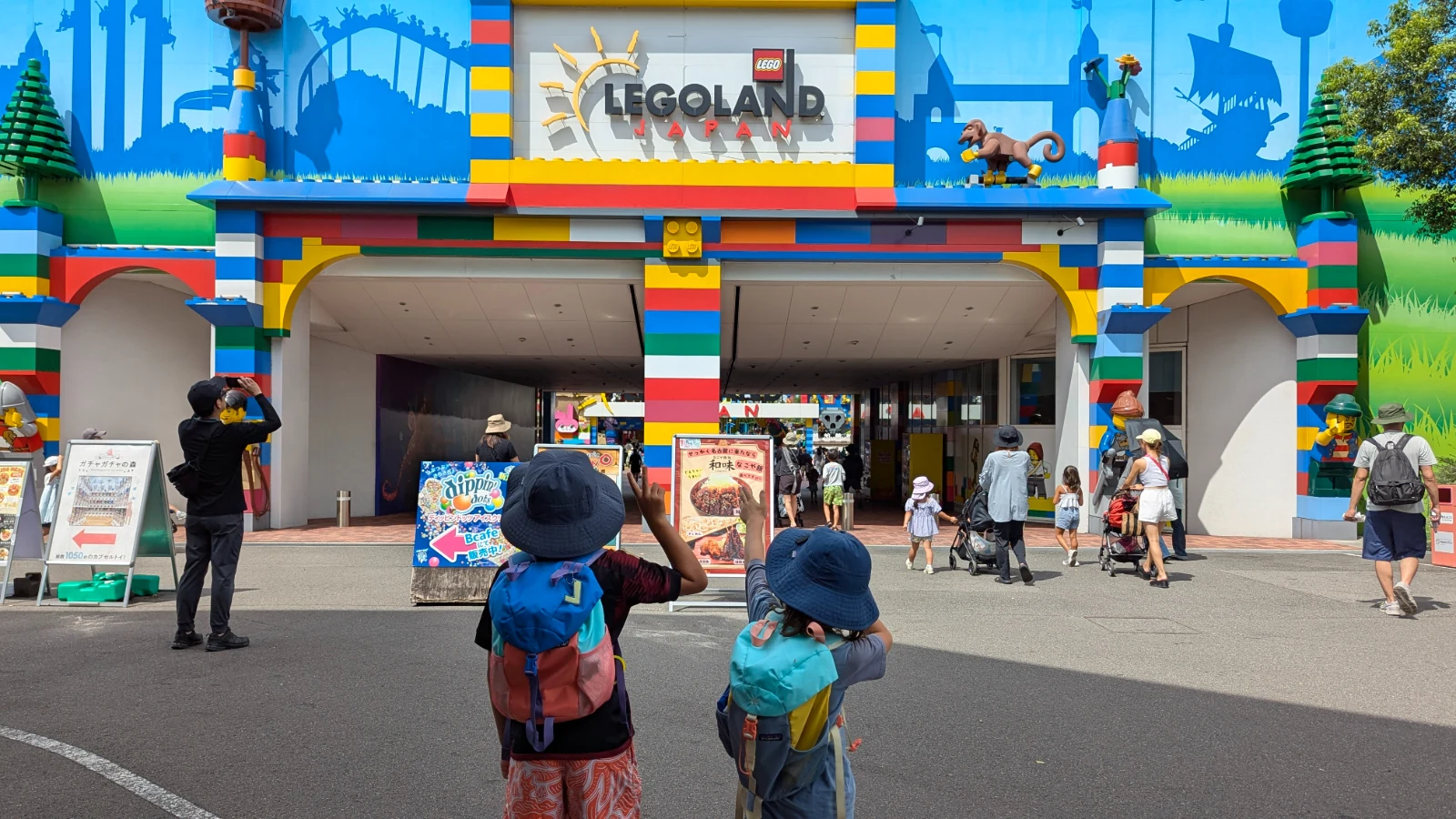
A park built for children from two to twelve, with seven outdoor areas and more than 40 rides, where the ticket price and the opening hours both move by date.
Child is age 3 to 18; under 3 free. Prices vary by date; ¥500 more per ticket at the gate on the day.
To 18:00 on weekends, holidays and winter-break days; open daily on the current calendar. Gates may open early on busy days.
More than 40 rides, shows and attractions across seven outdoor areas.
Children 12 and under need someone 16 or over with them.
For 1 month to 4 years, up to 18 kg; no wagon-style strollers.
Some links on this page are affiliate links. LuNi may earn a commission at no extra cost to you.
Is LEGOLAND Japan worth it with kids?
The short version, before the costs, the timings and the case for each child.
Yes, if the child is the age the park is built for, roughly two to twelve, and the family gives it half a day or more. LEGOLAND Japan is an outdoor park of seven themed areas built for children from two to twelve, and that focus is its strength. Two things decide how well the day goes. The first is height, because the bigger rides set height floors, and a child a few centimeters short of them misses the rides he came for. The second is the outdoor day itself, in Nagoya’s heat or rain, with no outside food allowed. In summer the heat turns it into something closer to a water park than a dry outdoor one. The park also offers real sensory support, which makes it a sound choice for a child who finds theme parks hard.
Planning Your Visit to LEGOLAND Japan with Kids.
Three decisions settle this park well before the day itself begins. The first is the date, because ticket prices change with it and a gate purchase costs more, so buy dated tickets online once the plan is fixed. The second is the weather: nearly all of the park is outdoors, Nagoya’s early autumn is wet, and a summer visit means being ready to get wet, so put the child in a swimsuit and read Japan in summer with children before choosing August. The third is food, since outside meals are refused unless a child has an allergy. Plan lunch inside the park, where four restaurants serve low-allergen menus, keep a water bottle in the bag, and settle the height question at home with a tape measure, so that no ride surprises the child at the front of a line. Tell the child those answers the night before.
Every LuNi attraction guide starts with a visit, with our own children
LuNi rates and writes about attractions only after visiting them with children. Luca and Nico were at LEGOLAND Japan, and what they did there is recorded further down this page, including how each child actually met it.
Children arrive with different tolerances: for noise, for lines, for standing still, for being on their feet all day. A guide written for the average of them helps almost nobody. So every place on this site is read four ways, and each verdict says which children it already suits and what makes it work for the rest. Whoever you are bringing, the answer here is built for your family rather than for a general reader.
Restricted-movement depletion builds in ride lines of unknown length, so ride in short bursts and spend the time between rides moving across areas.
Sensory-input depletion is eased by a sensory rating for each attraction and a cool-down room, so check ratings before joining a line.
Unfamiliarity and unconfirmed structure ease with a known brand and published height rules, so show the child the ride list before the trip.
Sustained walking and standing add up across seven outdoor areas, so rent a stroller for a younger child and plan seated breaks.
Hotels we would book for this visit.
Three hotels on the park’s own train line or at the station where it starts, for a family who wants the park visit to end with a short ride back rather than a crossing of the city.
| Property | The LuNi Reason |
|---|---|
| LUNI Pick LEGOLAND Japan Hotel | Theme and Premium rooms sleep two adults and two children, and Premium Plus rooms add a bed for a third child, so a family of five needs no second room. Breakfast is included for everyone booked, and a children’s water play area on the first floor gives a younger child somewhere to splash before bed. |
| Nagoya Prince Hotel Sky Tower Sasashima Live Station, Aonami Line, 2 min | The park’s official partner hotel sits on the same Aonami Line as Kinjo-futo, so the ride out needs no change of line. Corner rooms on the 32nd floor and above sleep up to four and run up to about 79 square meters, which gives a family of four room to spread out after an outdoor day. |
| Nagoya Marriott Associa Hotel Above JR Nagoya Station | Above Nagoya Station, where the Aonami Line starts its 24-minute run to Kinjo-futo, so the park works as a day out from a central base. The Family Fourth room sleeps up to five, and children from 4 to 12 may swim in the hotel pool until 18:00 with an adult in the water, for a nightly fee. |
Nearby attractions, matched to your child.
Three visits for the days either side: a hall of still trains at the same station, for the child the noise wore down, the castle’s settled route in the city, or open parkland east of the city at Ghibli Park.
| Pairing | Why This Solves the After-Visit | For Your |
|---|---|---|
| LUNI Pick Ghibli Park Linimo, Ai-Chikyuhaku Kinen Koen Station | East of the city, Ghibli Park puts five areas inside the Expo 2005 Aichi Commemorative Park, with three play spaces for children of elementary age and under. The ride lines build restricted-movement depletion, and open ground between every area spends it. Book it before anything else: entry is by reservation. | Dynamo |
| Nagoya Castle Nagoyajo Station, exit 7, 5 minutes on foot | In the city, Nagoya Castle is a fixed route of open grounds and one palace, taking about an hour to an hour and a half, with a canteen for noodles. Unfamiliarity and unconfirmed structure ease where lunch, the route and the closed keep are all known before the gate. | Anchor |
| SCMaglev and Railway Park Kinjo-futo Station, about 2 minutes on foot | At the same station, SCMaglev and Railway Park keeps 39 real vehicles indoors, all standing still, with a large diorama to sit and watch. Sensory-input depletion, run high by a day of rides and music, eases where every show is the child’s choice. Save it for a quiet morning. | Sensor |
Ghibli Park
Linimo, Ai-Chikyuhaku Kinen Koen Station For YourDynamo
Nagoya Castle
Nagoyajo Station, exit 7, 5 minutes on foot For YourAnchor
SCMaglev and Railway Park
Kinjo-futo Station, about 2 minutes on foot For YourSensor
How two children actually met this attraction.
Two children came away from this park wanting more of the same thing, which says the park works for the children it is built for. One wanted to stay longer and spent his best time studying the brick models, counting pieces and wondering how long each one took. The other went for the themed areas and the rides, and above all for the ride he rated highest and the water. For a family, that is the case for leaving the end of the visit open: half a day covers the park, the models reward a careful child who looks slowly, and the rides reward an active one. Plan on half a day, let each child spend a good part of it in the corner of the park that suits him, and let a LEGO fan stretch it.
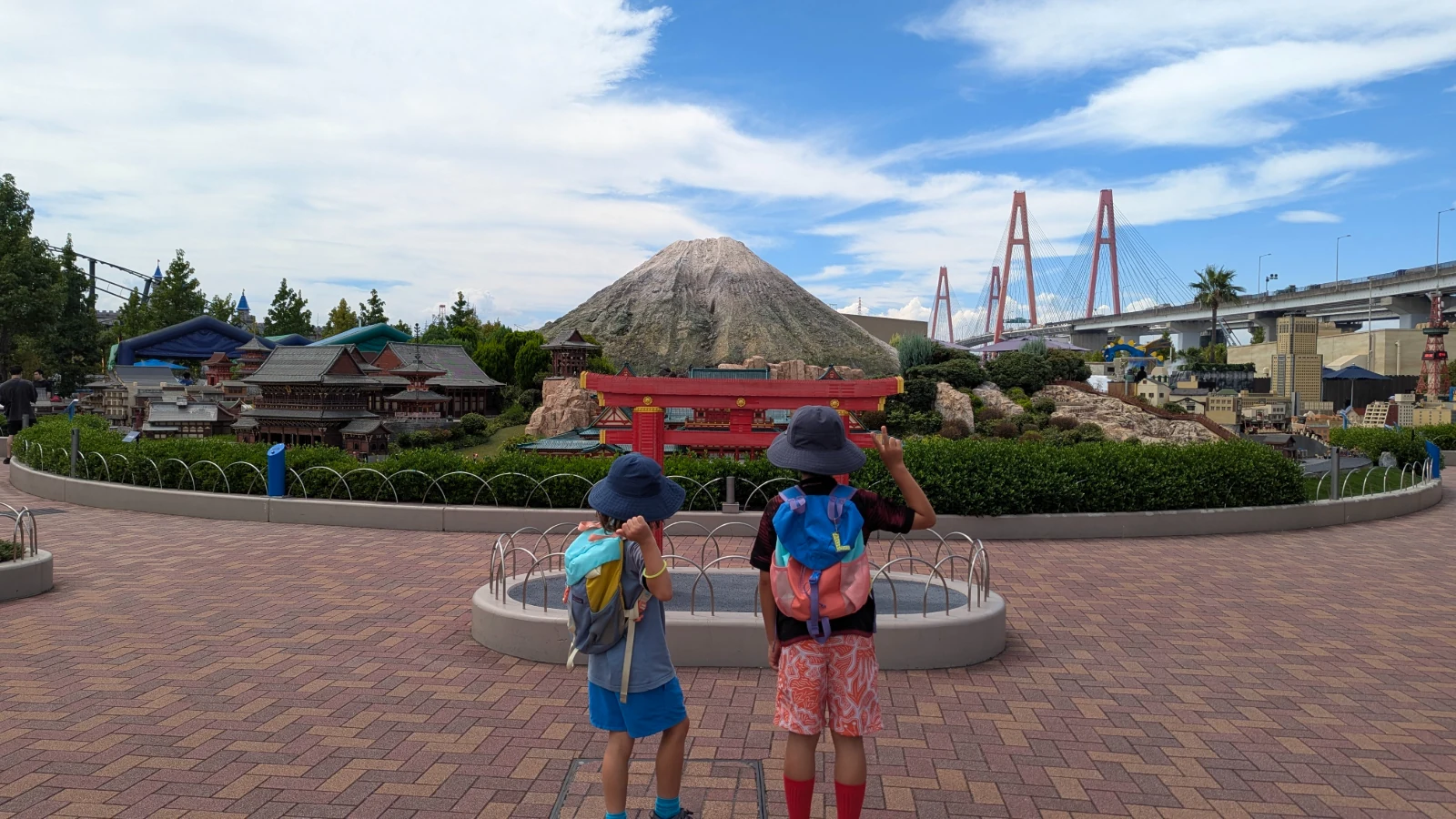
Luca found the whole park fun and wanted to stay longer. LEGOLAND Japan is laid out in seven themed areas, and the pirate, ninja and knight sections all held him, but his favorite part was the brick models themselves: how many pieces had gone into each one, and how long somebody had spent building it. Those are a builder’s questions, and a park full of brick models invites them at every turn.
This is the Anchor pattern. A child whose reserve depletes through unfamiliarity and unconfirmed structure settles by working out how a thing is made, and a model built from bricks he knows invites exactly that question. Families with a similar child should leave unhurried time at the models and let the questions about pieces and hours run, because for this child the counting is the ride, and a rushed day would cut away the part that suits him best.
Nico went for the same pirate, ninja and knight areas, and the knight theme stayed with him far enough that he wanted to buy a knight sword and shield. The ride he liked most was the ninja ride, and the other thing he named was spraying people with water. A ride and a water fight are both things a child does rather than watches, and an outdoor park with rides and water play offers both.
This is the Dynamo pattern, a reserve that depletes through restricted movement, and it shows in what he chose: he was at his best where he could act on the place, and the ride he rated highest and the water he aimed at others are both things he did rather than watched. Families with a similar child should build the day around the rides and the water, keep the spare clothes and the dryer in the plan, and treat the lines as the part to shorten.
A park built to a child’s scale changes how a child carries themselves. Here the rides, the shows and the models are sized for them, and a younger child who is usually too small for things finds, for once, that the world fits. That feeling of being the intended guest builds a quiet, lasting confidence. Seeing familiar bricks turned into castles and whole cities also shows a child what patience and imagination can make, a lesson they can carry straight back to the floor at home.
The LUNI Rating for LEGOLAND Japan.
One fact sits under all four verdicts, and it is a simple one: LEGOLAND Japan is an outdoor park built for younger children, with its height rules published and real sensory support. The child who needs structure gets a known brand and rules to read in advance, which is why the Anchor fares best here. The others turn on what no family can check ahead, the lines and the crowds, and on the hours spent outdoors. Among Japan’s theme parks for families it is one built squarely for a younger child, and each profile below names the one step that settles it for that child.
Ride in short bursts. The Dynamo depletes through restricted movement, and a theme park looks like the obvious answer until the lines arrive. LEGOLAND Japan is full of things to do rather than watch, more than 40 rides, shows and hands-on attractions across seven areas, and some of them are water rides, with a walk-in dryer to follow. Line length on the day is the open question, and a line is exactly where this child’s day goes wrong. That uncertainty is the whole reason to plan ahead.
Keep the child moving between rides rather than standing in front of them. Walk from area to area, choose shorter lines over favorite rides when the two collide, and save the water rides for the warmest part of the day, with spare clothes and 300 yen for the dryer. Check the height rules at home first, because a Dynamo who reaches the front of a long line and is turned away loses twice.
What this means for your Dynamo: LEGOLAND Japan answers restricted movement with rides and water, but its lines are unknown. A younger Dynamo needs short lines and the water; an older one can take a longer wait for a bigger ride.Use the sensory ratings. The Sensor depletes through sensory input, and a theme park can be loud, bright and busy. LEGOLAND Japan is manageable rather than hard for this child because it does a great deal to help: each attraction carries a sensory rating on a scale of 0 to 10 for touch, taste, sound, sight and smell, and a cool-down room is kept for guests who need to step out of the noise. The park is also outdoors, so the child is rarely shut in.
Let those ratings plan the day. Choose rides with low sound and sight scores for the start, when the child is fresh, and leave the higher ones for later only if the day is going well. Find the cool-down room on arrival, and treat an early exit as a sound plan rather than a failure. For a qualifying child, the Assist Access Pass lets the child spend the wait away from the line.
What this means for your Sensor: at LEGOLAND Japan sensory input is rated ride by ride, with a cool-down room to step into. A younger Sensor needs the low-scoring rides first; an older one can read the ratings and choose the rides.Show the rides before the trip. The Anchor depletes through unfamiliarity and unconfirmed structure, and LEGOLAND Japan is unusually easy to confirm in advance. The brand is one many children already know, the park lists its rides with their height rules, and the sensory ratings describe each attraction before the child meets it. Four park restaurants serve low-allergen menus with published allergen lists. That is enough known ground for this child, even if the visit runs long.
Turn the unknown parts into a plan the child has seen. Go through the ride list together, mark which rides the child is tall enough for, and agree the order of the areas. The food rule matters for this child too: outside meals are refused unless a child has an allergy, so tell a child with a set snack routine where lunch will be. A water bottle in the bag is always allowed, and a child who knows that is carrying one worry fewer. For an older Anchor, handing over the park map and the choice of the next area gives him the structure in his own hands.
What this means for your Anchor: LEGOLAND Japan gives unfamiliarity a known brand and published rules. A younger Anchor needs the ride list shown at home; an older one can plan the order of the areas himself.Plan the stroller and the breaks. The Sprinter depletes through sustained travel-style walking and standing, and hours in an outdoor park ask a great deal of both. The park spreads across seven outdoor areas, the lines on the day are unknown, and nearly all of it is spent on foot outside. Strollers can be rented for 1,000 yen, but only for a child up to age 4 and 18 kg, and wagon-style strollers are refused at the gate, so an older child has wheels only if the family brings its own stroller, and not a wagon-style one.
Schedule the rest before the child needs it. Rent a stroller for a younger child or bring a standard one from the hotel, since wagons are refused. For an older child, use the shows as seated breaks, keep bags in a locker so nobody carries weight between areas, and stop at lunch for longer than feels necessary. On a hot day, a shorter visit that ends well is the better day, and the ride back on the Aonami Line is short enough that leaving early costs nothing but the last hour.
What this means for your Sprinter: an outdoor visit to LEGOLAND Japan is a long walk and stand. A younger Sprinter needs the rental stroller; an older one needs shows and lunch as planned rest.The questions parents actually ask.
LEGOLAND Japan comes down to the date, the child’s height and the food rule, and each one is settled at home. Prices move by date and cost more at the gate, the bigger rides set height floors, and outside food is refused unless a child has an allergy. The ride out is simple: the Aonami Line runs from Nagoya Station to Kinjo-futo, and Japan’s trains with small children covers strollers and bags on the way. A family that fixes those three before the trip, with tickets bought and the child measured, spends the day in the park rather than at the ticket window.
Is LEGOLAND Japan worth visiting with kids?
Yes, for children from about two to twelve, which is exactly who the park is built for. It holds more than 40 rides, shows and hands-on attractions across seven themed areas, all outdoors, and half a day covers it, more for a LEGO fan. Buy dated tickets online before the day, since prices vary by date, and plan the day around the weather.
How much are LEGOLAND Japan tickets?
Prices change by date. A one-day park ticket starts from 3,700 yen for a child aged 3 to 18 and from 4,900 yen for an adult, and a combined ticket with SEA LIFE Nagoya starts from 4,500 and 5,700 yen. Children under 3 enter free. Buying at the gate on the day costs 500 yen more per ticket, and tickets are not refunded.
What ages is LEGOLAND Japan best for?
The park is aimed at children aged 2 to 12 and their families, and anyone 12 or under must be with someone 16 or over. Height rules decide the bigger rides: Flying NINJAGO takes riders from 125 cm, and a child of 105 to 120 cm rides The Dragon only with an adult. Measure the child before the trip, not at the gate.
Can you bring food into LEGOLAND Japan?
No, with three exceptions. Outside food, cans, bottles and alcohol are refused, but baby food is allowed, a family managing a food allergy may bring its own meals, and a water bottle that fits in a bag is fine. Four park restaurants serve low-allergen menus with published allergen lists, so a family with an allergy can plan lunch in advance.
Are strollers allowed at LEGOLAND Japan?
Yes, but not wagon-style ones. Wagon strollers, outdoor wagons, push tricycles, carts and large luggage are all refused at the gate. Strollers can be rented for 1,000 yen at the Corner Shop, for a child from one month up to age 4 and 18 kg. A child past the rental limit needs the family’s own stroller or planned breaks through the day.
How do you get to LEGOLAND Japan from Nagoya Station?
Take the Aonami Line from Nagoya Station to Kinjo-futo, a ride of 24 minutes, then walk to the gate. The city’s subway and bus day tickets do not cover the Aonami Line, so buy a normal fare for this trip. The resort has no parking of its own; drivers use the city’s multi-level parking garage at Kinjo-futo, linked by a walkway.
Does LEGOLAND Japan help children who are sensitive to noise?
Yes, and in some detail. Every attraction carries a sensory guide that rates touch, taste, sound, sight and smell on a scale of 0 to 10. There is a cool-down room, and Guest Services lends ear muffs for a child who is very sensitive to sound. An Assist Access Pass lets a qualifying guest spend the waiting time away from the line itself.
What should you know about lockers and water rides?
Lockers cost 400 to 1,000 yen by size, behind The Photo Shop and at the entrance, which frees a family from carrying bags through the park. After the water rides, a walk-in full-body dryer costs 300 yen. For a baby, DUPLO Baby Care next to Brick House Burger in LEGO City has hot water, nursing space and changing tables.
Where LEGOLAND Japan fits your Japan trip.
Official site and opening information: LEGOLAND Japan