Nagoya Castle with Kids: The Palace Is Open; the Keep Is Not.
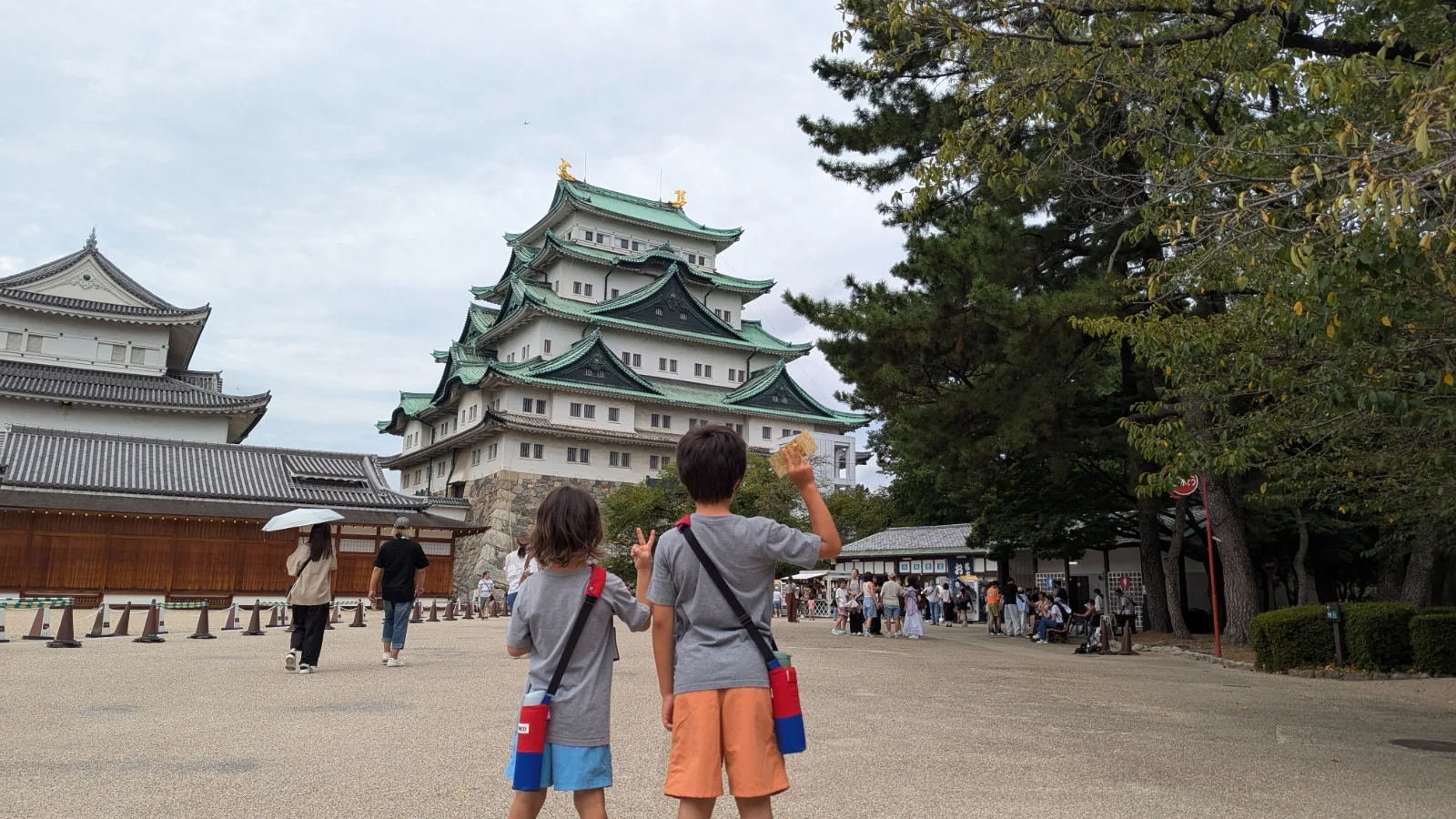
The keep a child sees above the grounds is closed, but the palace beside it is open, children through junior high enter free, and the whole visit fits easily in one morning.
Junior high and under free. A joint ticket with Tokugawa-en is ¥1,040, cash only.
The palace admits until 16:00, about 10 minutes on foot from the gates. Closed December 29 to January 1.
The grounds and the Hommaru Palace; the main keep is closed.
Children through junior high school enter free.
Main and East gates; limited, and cannot be booked ahead.
Some links on this page are affiliate links. LuNi may earn a commission at no extra cost to you.
Is Nagoya Castle worth it with kids?
The short version, before the costs, the timings and the case for each child.
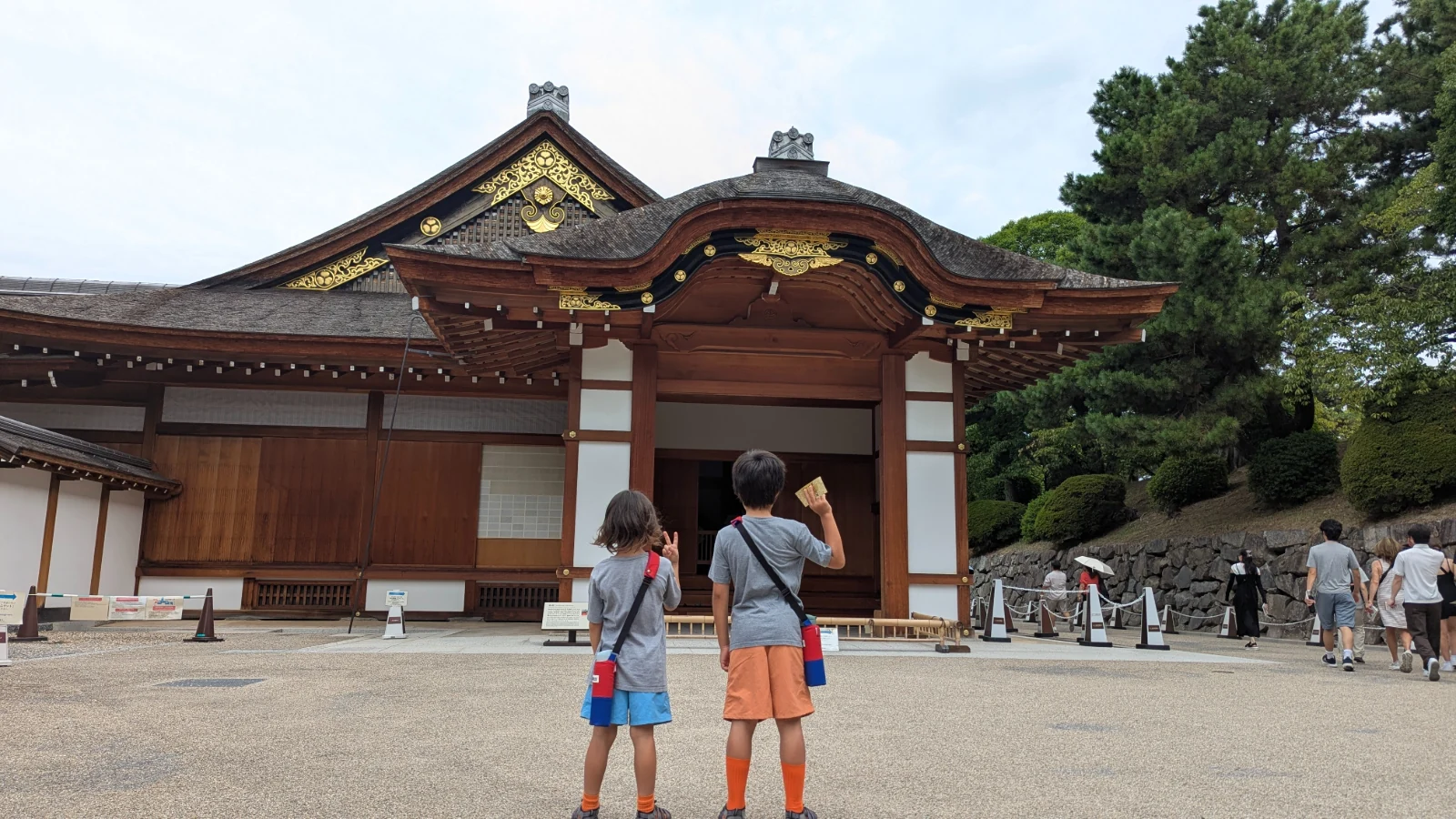
Yes, as long as the family knows what it is coming to see. The main keep, the tower most photographs of the castle show, is closed because of its low earthquake resistance, and no date is set for it to reopen. Everything around it is open, and the best of it is the Hommaru Palace, rooms of painted screens a family may photograph without flash. Children through junior high school enter free, the visit takes about an hour to an hour and a half on foot, and the grounds leave plenty of room to move before and after the palace. Tell the child in advance, at home and with pictures, that the tower is closed, make the palace the goal of the morning, and the castle becomes one of the easiest and cheapest half days a family can plan in the city.
Planning Your Visit to Nagoya Castle with Kids.
Three decisions settle the morning. The first is the approach from the station: from Tuesday to Sunday the Me~guru sightseeing bus leaves Nagoya Station early and its first runs go straight to the castle, while the subway, the way in on a Monday, takes about 15 minutes with one change, then five minutes on foot. The second is the order: walk to the Hommaru Palace first, because it closes to new visitors earlier than the grounds and sits about ten minutes from the gates, then let the grounds and gardens take the rest of the time. The third is lunch: a picnic at Ninomaru Plaza, or the canteen in the grounds for a family that packed nothing. Leave bags in the coin lockers at the gates. For the season, which matters more outdoors than in, Japan season by season with children covers the heat and the rain.
Every LuNi attraction guide starts with a visit, with our own children
LuNi rates and writes about attractions only after visiting them with children. Luca and Nico were at Nagoya Castle, and what they did there is recorded further down this page, including how each child actually met it.
Children arrive with different tolerances: for noise, for lines, for standing still, for being on their feet all day. A guide written for the average of them helps almost nobody. So every place on this site is read four ways, and each verdict says which children it already suits and what makes it work for the rest. Whoever you are bringing, the answer here is built for your family rather than for a general reader.
Restricted-movement depletion stays low when open grounds come before and after the palace interior, so let the child walk the open grounds first.
Sensory-input depletion rises on a busy palace route with other visitors, so arrive at opening and walk to the palace before the crowds build.
Unfamiliarity and unconfirmed structure ease with a canteen, a picnic plaza and fixed hours, so tell the child the keep is closed in advance.
Sustained walking and standing add up on the ten-minute walk to the palace and back, so borrow a stroller at the gate and use rest areas.
Hotels we would book for this visit.
Three hotels for a family who wants to be at the castle gate at opening: one above Nagoya Station, where the early sightseeing buses leave, one on the Aonami Line with rooms for four, and Hilton Nagoya, with tatami suites and a pool.
| Property | The LuNi Reason |
|---|---|
| LUNI Pick Nagoya Marriott Associa Hotel Above JR Nagoya Station | The Associa stands above Nagoya Station, where the Me~guru sightseeing bus starts, and from Tuesday to Sunday its first two morning runs go straight to the castle, so a family can be at the gate early with no change of transport. The Family Fourth room sleeps up to five, as does a Japanese-style room of 101 square meters. |
| Nagoya Prince Hotel Sky Tower Sasashima Live Station, Aonami Line, 2 min | From Sasashima Live Station, two minutes from the Nagoya Prince Hotel Sky Tower, the Aonami Line runs into Nagoya Station, where the morning Me~guru leaves for the castle. No room sits below the 32nd floor, and corner rooms of up to about 79 square meters sleep four. |
| Hilton Nagoya About 20 min by subway, one change | Hilton Nagoya keeps six Japanese-style suites, each two tatami rooms where futons are laid for a family of four, giving the children a floor to spread out on after the palace. Its indoor pool costs guests nothing, though a child shorter than 140 centimeters needs an adult swimming alongside. |
Nearby attractions, matched to your child.
Three afternoons to follow the castle, each an easy ride by public transport: a science museum with a room for every large lab, a museum of working machines on the same bus route, or a hall of trains to board.
| Pairing | Why This Solves the After-Visit | For Your |
|---|---|---|
| LUNI Pick Fuji Nagoya Science Museum Fushimi Station, exit 4 or 5, 5 minutes on foot | The Fuji Nagoya Science Museum, five minutes on foot from Fushimi Station, is free for children through junior high and builds its visit around four large exhibits. Sensory-input depletion, raised by a morning among other visitors, gets a building where the child chooses what to enter. Go after lunch. | Sensor |
| Toyota Commemorative Museum Me~guru bus stop in the museum grounds | On the same Me~guru route, the Toyota Commemorative Museum sets its looms and a steam engine running at posted times through the day and serves a children’s menu at its restaurant. Unfamiliarity and unconfirmed structure ease where the afternoon runs on a posted schedule and lunch is settled before the family even arrives. | Anchor |
| SCMaglev and Railway Park Kinjo-futo Station, about 2 minutes on foot | A 24-minute Aonami Line ride from Nagoya Station, SCMaglev and Railway Park lets a child climb aboard some of its 39 real vehicles and take the controls of a simulator. Restricted movement, kept to a walk through the palace rooms, turns into doors, steps and cabs. Buy the simulator ticket first. | Dynamo |
Fuji Nagoya Science Museum
Fushimi Station, exit 4 or 5, 5 minutes on foot For YourSensor
Toyota Commemorative Museum
Me~guru bus stop in the museum grounds For YourAnchor
SCMaglev and Railway Park
Kinjo-futo Station, about 2 minutes on foot For YourDynamo
How two children actually met this attraction.
Two children met the same closed keep and took the news in opposite ways, and between them they show how to plan this castle. One was let down that he could not go inside, until a ninja posing for photos with visitors outside gave him something to watch and puzzle over. The other shrugged off the closed door, decided he could get in as a ninja himself, and turned the grounds into a game of hiding. Neither visit depended on the tower. For a family, the lesson is to settle the closed keep at home, before it can disappoint, and to plan the open grounds as the heart of the morning: room to stand and watch for a careful child, room to roam for an active one, and the palace as one stop inside it.
Luca came to Nagoya Castle excited, and was not happy to learn that he could not go inside: the main keep is closed. What caught him instead was a ninja outside, posing for photos with visitors. He wanted to stay and watch how the ninja dealt with people passing by and coaxed them into a picture. He said no to a photo himself, then, as the family walked away, wondered whether he should have taken one.
This is the Anchor pattern, and the closed keep shows why it matters: unfamiliarity and unconfirmed structure drain his reserve, so a plan that changes at the gate is what costs him. What held him next was something he could stand and watch, to see how it worked. Families with a similar child should break the news about the keep at home, find him a thing on the grounds to study, and leave a choice such as a photo open until he has watched long enough to decide.
Nico was not bothered that he could not go inside: he said he would simply turn into a ninja, climb the castle and get in by himself. He wanted no photo with the ninja outside, whom he judged a fake, because in his mind he was the real one. So he gave himself a mission, a ninja under orders to hide from everyone, and started darting around the grounds to carry it out.
This is the Dynamo pattern, and a closed door never held him back: restricted movement is what drains this child, and he met a building he could not enter by turning the open ground around it into a game to run. Families with a similar child should treat the grounds as the main event rather than the walk between sights, give him a role to play out there, and keep the palace rooms short, with open ground on both sides of them.
A castle gives a child something rare: a story they can walk through. Moving from the gate across the grounds to the palace, a child starts to picture who lived here, who guarded the walls and who walked these rooms. Learning that the palace was rebuilt adds a second story, of people choosing to restore what was lost. Children who see history as something made by hands, and remade, begin to understand that the past is not finished, and that caring for it is work every generation shares.
The LUNI Rating for Nagoya Castle.
One fact sits under every verdict, and it is this: with the keep closed, Nagoya Castle is open grounds around one rebuilt palace, visited in about an hour to an hour and a half. The child who needs to move gets grounds before and after the palace; the child who needs structure gets a canteen, a picnic plaza and fixed hours. The Sensor and the Sprinter need the most planning, for the crowd on the palace route and the walk to it. Among Japan’s attractions for children it is a short visit, and a free one for any child of school age.
Let the grounds do the work. The Dynamo depletes through restricted movement, and a castle is a good place for this child as long as the interior is short and the outdoors is long. Nagoya Castle, with its keep closed, fits that shape. The Hommaru Palace is one building to walk through, room after room, and around it lie the grounds and the gardens (its corner turrets are normally closed), open ground that brackets the one indoor stretch on both sides, so the child is never indoors for long.
Give the child real movement on both sides of the palace. Walk the grounds from the gate at the child’s own pace, make the palace the middle of the visit rather than the start, and plan the picnic at Ninomaru Plaza for afterward, where there is room to move again.
What this means for your Dynamo: Nagoya Castle brackets one indoor palace with open grounds. A younger Dynamo needs the grounds first and the picnic after; an older one can linger in the palace.Walk to the palace at opening. The Sensor depletes through sensory input, and the concern here is about the one part of the visit that is indoors and shared: the Hommaru Palace, a sequence of rooms shared with every other visitor that day. How busy that route is on the day is what a family cannot see in advance. Outside, the grounds are open and a child can always step away, and inside the palace the flash ban keeps sudden light out of the rooms.
Timing settles it. Arrive at the 9:00 opening, walk straight to the palace, about ten minutes from the gates, and see it before the day fills up, then spend the busier hours outside in the grounds and gardens. Describe the palace rooms before going in, and agree a signal for leaving early.
What this means for your Sensor: at Nagoya Castle sensory input peaks on the shared palace route, not the grounds. A younger Sensor needs the palace at opening; an older one can choose their time.Name the closed keep early. The Anchor depletes through unfamiliarity and unconfirmed structure, and Nagoya Castle is well structured for this child once one fact is dealt with: the main keep is closed. Everything else can be settled before the family leaves the hotel, with fixed hours, a palace that admits until 16:00, a canteen in the grounds for noodles and light meals, and Ninomaru Plaza for a packed lunch.
The closed keep is the one thing to explain at home, before the child ever sees it. Show pictures of the tower and say plainly that it is closed and why, then show the palace and make it the destination, so the child has a new goal ready. Settle lunch before leaving the hotel, canteen or picnic, and tell the child the route: grounds, palace, grounds, lunch.
What this means for your Anchor: Nagoya Castle gives unfamiliarity fixed hours, set meals and one clear goal. A younger Anchor needs the closed keep explained at home; an older one can plan the route himself.Borrow wheels on arrival. The Sprinter depletes through sustained travel-style walking and standing, and the walk is the thing to plan here. The Hommaru Palace is about ten minutes on foot from the Main and East gates, and the whole visit takes about an hour to an hour and a half. With the keep closed, there is no tower climb to add, and the station is five minutes from the gate, which keeps the walk manageable.
Take the weight off early, before the walk to the palace. Ask for a stroller or wheelchair at the Main or East gate on arrival, since the number is limited, or bring one for a younger child. Leave bags in the gate lockers, go straight to the palace, and treat the rest areas and the picnic plaza as planned stops.
What this means for your Sprinter: the walk to the palace and the grounds at Nagoya Castle add up. A younger Sprinter needs a stroller from the gate; an older one needs the rest areas as planned stops.The questions parents actually ask.
Nagoya Castle is a morning of grounds and one palace, and the practical questions are mostly about what is closed and what it costs. The keep is shut with no date to reopen, children through junior high enter free, and adults pay 1,000 yen by cash, card or e-money at the window. For a family counting yen across a long trip in Japan, Japan on a family budget sets out more places where children go free or nearly so. Arrive at opening, walk to the palace while it is quiet, and leave the grounds and gardens for the part of the morning when the palace route is at its busiest.
Is Nagoya Castle worth visiting with kids?
Yes, as a morning out rather than a whole day. The main keep is closed, but the grounds, the gardens and the rebuilt Hommaru Palace are open, and the palace is the part that matters. Children through junior high school enter free, which makes it an easy yes, and the whole visit usually takes about an hour to an hour and a half, palace included.
How much does Nagoya Castle cost?
Children through junior high school are free, and adults pay 1,000 yen each. A joint ticket with Tokugawa-en is 1,040 yen, sold for cash only, while single tickets take cash, card or e-money at the window. Two adults with children of junior high age or under pay 2,000 yen in all, before the bus or the subway. An annual pass is 4,000 yen.
Can you go inside the main keep of Nagoya Castle?
No. The rebuilt concrete keep is closed because of its low earthquake resistance, and a wooden reconstruction is planned, with no reopening date set as yet. What a family can visit is everything around it: the grounds, the gardens and the Hommaru Palace, which is open, and is, for children, the best part of the castle and the center of the morning. Say so early.
What are Nagoya Castle’s opening hours?
The castle is open from 9:00 to 16:30. The Hommaru Palace and the Nishinomaru Treasure Hall admit visitors until 16:00, and the palace is about 10 minutes on foot from the Main and East gates, so be at the palace door by then, not at the gate. The castle closes from December 29 to January 1, and dates can change for events.
How do you get to Nagoya Castle from Nagoya Station?
By subway, about 15 minutes with one change, to Nagoyajo Station on the Meijo Line, then 5 minutes on foot from exit 7. Or take the Me~guru bus from Nagoya Station: its 8:30 and 9:00 runs go straight to the castle, Tuesday to Sunday, which suits a family that wants to be at the gate when it opens at 9:00.
Can you borrow a stroller at Nagoya Castle?
Yes. Strollers and wheelchairs are lent at the Main Gate and the East Gate, asked for from the staff, but the number is limited and they cannot be reserved. A family with a toddler who will certainly need one should bring its own, since a busy morning can empty the supply, and the walk to the palace alone is about ten minutes each way.
Can you eat at Nagoya Castle?
Yes. A canteen inside the grounds serves noodles and light meals, and families with their own food can picnic at Ninomaru Plaza. There are free rest areas with a roof for rainy days, though their space is limited. A packed lunch on the plaza after the palace is the easiest meal for a family, and it gives a younger child the break he needs.
Are there lockers, and what are the palace rules?
Coin lockers stand at the Main and East gates, and bags too big for them can be left at the Main Gate information desk for 300 yen each. Photographs are allowed inside the Hommaru Palace, but without flash, which protects its painted screens. Shoes come off at the palace entrance, and it has no restrooms, heating or air conditioning, so use a restroom first.
Where Nagoya Castle fits your Japan trip.
Official site and opening information: Nagoya Castle (in Japanese)