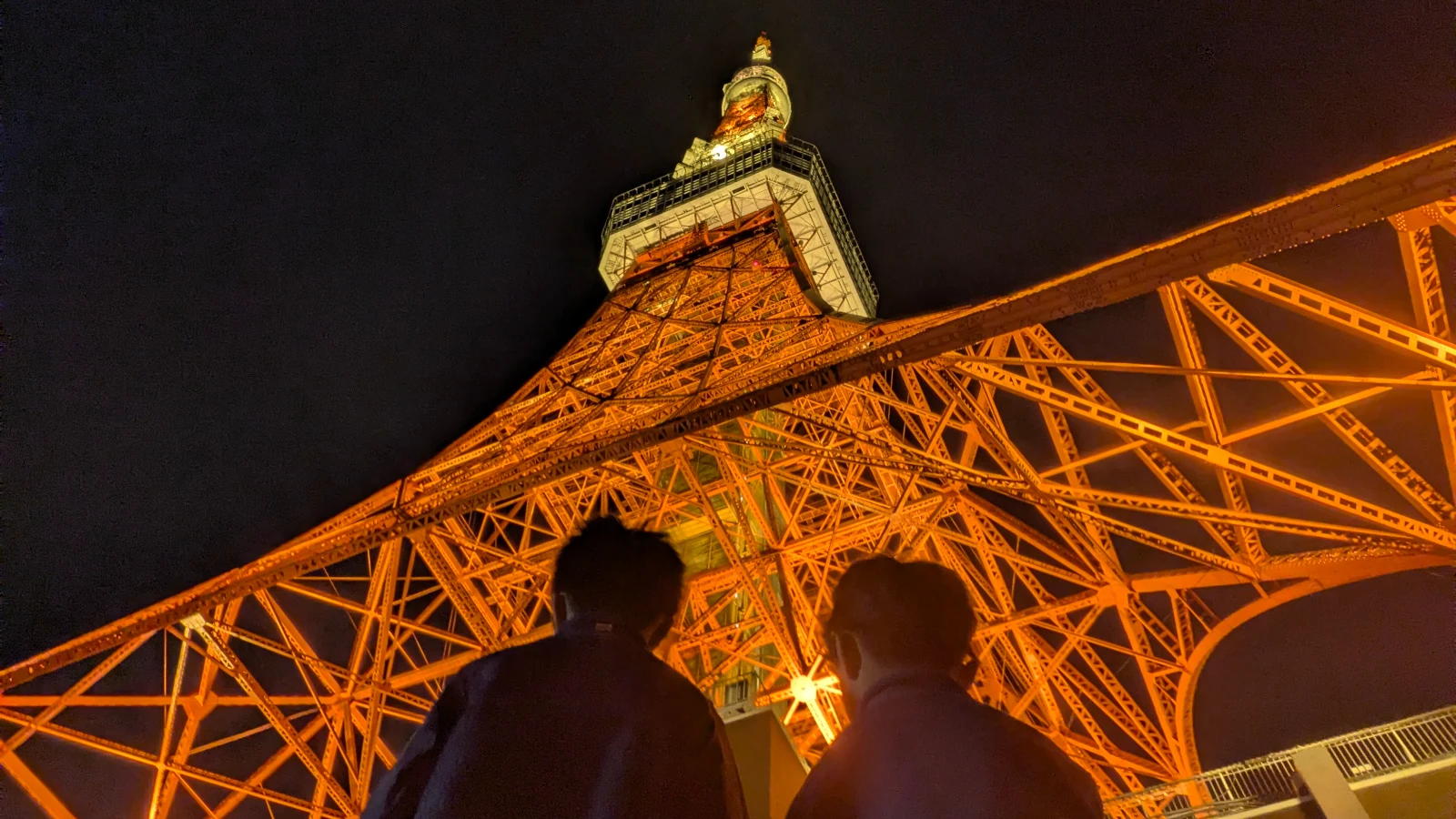
Tokyo Tower has anchored the city’s skyline since 1958, and that longevity is precisely what makes parents hesitate. Newer, taller observation decks now compete for the same itinerary slot, and the question families ask before booking is whether the tower’s iconic red lattice still justifies the elevator queues and ticket price when children are in the picture. The hesitation is reasonable, but the answer depends less on the tower than on the child standing at the base of it.
This guide applies the Family Fit™ framework to tell you exactly which profiles thrive here, which route to take, and which families should skip it entirely. For broader Tokyo itinerary planning, start with our complete hub to Tokyo family-friendly travel.
Is Tokyo Tower Worth Visiting with Kids? (Quick Answer)
Tokyo Tower is worth visiting for most families, but the visit that works for one child can fail completely for another at the identical attraction. The compact, structured format makes it a strong match for Anchors and Sprinters, while the enclosed main observation deck creates a high risk environment for Sensors that no timing strategy reliably resolves. The guide below maps each Family Fit™ profile to the specific structural characteristic of the tower that drives its verdict, so you can make the decision before you arrive.
Pros of Visiting Tokyo Tower with Kids
- The 600-step outdoor staircase option gives children the ability to physically climb to the main deck through open air, turning a passive observation deck into a kinetic ascent. This delivers a mid-city physical discharge zone that rarely exists in observation deck format and makes the visit highly productive for active children who struggle with contained, queue-dependent formats.
- The main observation deck’s glass floor panels provide a direct, unmediated visual thrill that older children and teens respond to without requiring an all-day commitment. The intensity of the experience is concentrated into a single viewing moment rather than distributed across a long visit, which suits families with limited time or limited patience for stretched itineraries.
- The globally recognized red lattice exterior and structured interior format mean the attraction operates inside a predictable, contained environment with an internationally familiar format. Children who depend on advance mental preparation for new experiences can be fully briefed before arrival using photographs and video of the exact format they will encounter.
- The elevator route keeps total visit duration well under 90 minutes for most families. This compact time ceiling prevents the energy collapse that longer attraction visits produce in children with lower stamina, while still delivering a major Tokyo skyline experience.
- Weekend crowd density at the viewing windows and glass floor sections requires families to manage position actively. Arriving before midday peak periods significantly improves access to the key visual elements that justify the ticket price for younger children.
Cons of Visiting Tokyo Tower with Kids (Important for Parents)
- The main observation deck is an enclosed environment where sensory stimulus is inescapable once families are inside. There is no quick exit mid-experience, no external noise reduction, and no lower-stimulus section to retreat to within the deck itself. This structural quality makes the standard elevator visit a high-risk environment for sensory-sensitive children regardless of arrival timing.
- The elevator ascent requires families to queue in single-file, confined corridors for an extended period. Without the outdoor staircase option, this pre-visit structure forces children into sustained stillness inside a narrow space, which creates immediate friction for high-energy profiles before the viewing deck is even reached.
- The observation deck functions strictly as a visual platform. There are no interactive exhibits, tactile installations, or hands-on elements once families arrive at the top. Parents must actively direct younger children toward specific landmarks to sustain engagement beyond the first few minutes of arrival.
- The primarily visual experience lacks the engagement architecture that keeps children occupied independently. Families who visit expecting the tower to entertain children without active parental involvement will find the experience shorter and less satisfying than the ticket price suggests.
Why “Worth It” Depends on Your Child
Two families can ride the same elevator to the same deck at Tokyo Tower and arrive at completely opposite assessments of whether the visit was worth it. The Family Fit™ framework makes that divergence predictable rather than a matter of luck.
The Dynamo – Go. The 600-step outdoor staircase is the structural feature that drives this verdict: it converts the ascent into an open-air physical challenge rather than a passive queue through enclosed corridors. Skip the elevator entirely, use the staircase for the climb, and the visit delivers a physical discharge opportunity that most mid-city attractions cannot match.
The Sensor – High Risk. The main observation deck is an enclosed environment where crowd density and ambient noise are inescapable once families pass through the entry point. No timing strategy changes the structural reality of the space itself. Bypass this attraction and prioritize an open-air viewpoint where the exit is immediate and crowd density is manageable.
The Anchor – Go. The attraction operates inside a contained, structured environment with an internationally recognized format that can be previewed in exact detail before arrival. Show your child photographs of the red lattice exterior and the glass floor panels in advance to establish the full visit sequence before the family reaches the entrance.
The Sprinter – Go. The elevator route keeps total experience duration comfortably under 90 minutes for most families. Use the elevators for both ascent and descent to conserve physical output, and treat the glass floor panels as the visit’s focal point rather than extending the deck time beyond what stamina allows.
Knowing which profile applies to your child before arriving at the tower is the single most useful planning decision you can make for this visit. The Family Fit™ Quiz identifies your child’s profile in under two minutes.
The LUNI Framework
Planning around Japan.
Or planning around your child?
Every child travels differently. The LUNI Profile Quiz identifies your child's specific profile in three minutes, and tells you exactly how to structure your itinerary around it.
Who Will Enjoy Tokyo Tower with Kids (By Age Group)
Toddlers (under 3)
A toddler’s depth perception and spatial cognition have not yet developed the capacity to meaningfully interpret a cityscape viewed from a high altitude. The visual experience of looking down over Tokyo registers as a flat surface rather than a three-dimensional environment, which means the observation deck delivers almost nothing specific to this age group that a street-level park cannot. The ticket price and queue time are not worth it for children under three.
Preschoolers (3 to 5)
Children at this stage have enough visual focus to respond to the glass floor panels, which deliver an immediate physical sensation that does not require the spatial cognition a full skyline view demands. The visit is conditionally worth it for this age band, provided the family keeps the total deck time brief and uses the glass floor panels as the specific focal point of the ascent rather than attempting a full landmark-identification session.
School-Age Kids (6 to 10)
School-age children have developed the spatial awareness and geographic understanding to connect a physical city map to the panoramic view in front of them, which transforms the observation deck from a visual experience into a comprehension exercise. The visit is highly worth it for this age band, and the outdoor staircase option adds a physical achievement layer that makes the experience genuinely memorable rather than simply visual.
Older Kids and Teens (11+)
Teenagers apply cultural and aesthetic weight to iconic landmarks that younger children do not yet have the reference points to appreciate. Tokyo Tower carries a specific photographic and cultural currency within the Tokyo skyline that makes the visit worth it for this group as a low-effort, high-visual-return stop, particularly for children who have already been to a newer or taller viewpoint and want the comparative experience of the city’s original landmark.
Best Alternatives to Tokyo Tower for Families with Kids
- Tokyo Skytree. The Skytree’s base complex at Solamachi adds an extensive walkable commercial and dining environment that Tokyo Tower’s immediate surroundings cannot match, giving families meaningful activity before and after the ascent rather than a direct entry-to-exit observation deck format. Tokyo Skytree guide
- Shibuya Sky. The open-air rooftop design eliminates the enclosed observation deck format entirely, providing an outdoor environment where the exit is always visible and crowd density is distributed across open exterior space rather than compressed into windowed corridors.
- Tokyo Metropolitan Government Building. The free observation floors require no advance booking, no ticket queues, and no transit complexity from central Shinjuku, delivering a full Tokyo skyline view at a fraction of the planning overhead a ticketed observation deck requires.
For a complete guide to planning your Tokyo visit around your child’s profile, visit the Tokyo family-friendly travel hub.
Final Recommendation: Is Tokyo Tower Worth It with Kids?
Tokyo Tower earns its place in a family itinerary not because it is Tokyo’s most impressive viewpoint, but because its compact, enclosed format happens to map almost perfectly onto the planning needs of Anchors and Sprinters. The contained structure, predictable format, and sub-90-minute visit duration make it a reliable success for families who need a globally recognizable Tokyo experience without committing a half-day to a single building. For Sensors, the main observation deck’s enclosed format is not a manageable friction point but a structural incompatibility, and no timing adjustment changes that assessment. The condition that determines success for the largest group of families, those with high-energy children who are weighing the visit, is entirely dependent on route selection: the outdoor staircase transforms the Dynamo’s experience from a queue-and-stand format into a physical achievement. Arriving before 10:00 AM on a weekday secures viewing window access before the midday crowd compression makes the glass floor panels inaccessible for younger children.
The Tokyo Tower Briefing: Essential Intel
Families planning a Tokyo Tower visit with kids ask these questions most consistently, from whether the landmark still justifies the ticket price against newer competitors to whether the enclosed format creates problems for children who struggle in crowds.
A: For Anchors and Sprinters, yes, with a high degree of reliability. The contained, structured environment and sub-90-minute elevator visit format make it one of the more predictable observation deck experiences in Tokyo for families who need a manageable, globally recognizable landmark stop.
A: No. The main observation deck is an enclosed environment where crowd density and ambient noise are inescapable once families are inside, which places it in the High Risk category for Sensors. Open-air viewpoints with immediate exit routes serve this profile significantly better.
A: The standard elevator route requires sustained stillness through confined queue corridors, which creates immediate difficulty for high-energy children. The outdoor staircase option changes this verdict entirely by converting the ascent into a 600-step open-air climb, and it is the single routing decision that determines whether the visit works for active children.
A: Children under three lack the spatial cognition to interpret a cityscape from altitude in a meaningful way, which means the glass floor panels and observation deck deliver very little that is specific to this age group. The queue time and ticket price are not justified for toddlers.
A: Yes. Teenagers apply photographic and cultural significance to the iconic red lattice that younger children do not yet have the reference points to appreciate. The visit functions as a low-effort, high-visual-return stop that most teenagers accept readily, particularly when paired with independent time on the deck.
A: No. The observation deck is a visual platform with no tactile exhibits, interactive installations, or hands-on engagement. Families whose primary planning priority is active, manipulable environments for children should prioritize a digital art museum or interactive science center over this attraction.
