LuNi HomeJapanKyotoIs Fushimi Inari Worth It?

Two children walking through the endless red torii gates of Fushimi Inari Taisha in Kyoto, Japan, during a family visit. The vibrant pathway of Shinto gates creates a tunnel of color that captures the spirit of this iconic shrine, perfect for families exploring Kyoto with kids.

The Fushimi Inari Trap Is Not the Stairs. It Is the Trail.

By Josh Hinshaw

April 26, 2026

The physical reality of Fushimi Inari stops many parents mid-planning: thousands of uneven stone steps climbing a 233-meter mountain, no flat alternative route back to the base, and no obvious point where the trail signals that a family has seen enough. The concern is not whether the torii gate corridor is visually worth it. It is whether a specific child can handle what the trail actually demands.

This guide answers that question using the Family Fit™ framework, separating the families for whom Fushimi Inari is a genuine highlight from those who will spend the climb managing a child already past their limit. For the full picture of how to build a Kyoto itinerary around your child’s profile, see our Kyoto family travel hub.

Some links on this page are affiliate links. If you book through them, LuNi Travels may earn a small commission at no extra cost to you.

Is Fushimi Inari Worth Visiting with Kids? (Quick Answer)

Fushimi Inari is worth visiting for most families, but the trail’s defining structural problem is that it provides no natural stopping point that feels like a conclusion, which means families who do not decide in advance where they will turn around often walk further than their child can sustain. The gate corridor delivers its full visual impact well before the summit, and the Family Fit™ framework reveals a sharp divide between the profiles that thrive on the physical demand of the ascent and the one profile for whom the stair-heavy terrain creates a stamina risk that planning cannot reliably prevent. The rest of this guide explains exactly what each profile encounters on the mountain and what that means for your itinerary.

Pros of Visiting Fushimi Inari with Kids

  • The torii gate corridor creates a continuous, tunnel-like visual structure from the base all the way up the mountain trail. Unlike a panoramic viewpoint or an open cultural site, the gates form physical walls on both sides of the path, giving Anchors a defined and readable environment rather than a vast open space requiring self-direction.
  • The trail has no enforced stillness at any point. Children move through the entire visit at their own pace without behavioral restrictions, which makes Fushimi Inari one of the few culturally significant Kyoto sites where Dynamos are not working against the attraction’s requirements.
  • Entry to the shrine and the full trail is free. There is no ticket gate, no booking window, and no capacity limit, which means families can adjust their visit length in real time based on how the child is performing without any sunk-cost pressure to continue.
  • The upper sections of the trail, beyond the first 20 minutes of climbing, thin out substantially compared to the dense entrance crowds below. Families who clear the lower bottleneck gain significantly more open path space, which changes the sensory environment for Sensors in a way that the lower entrance section cannot offer.
  • Fox statues (kitsune) and smaller offshoot shrines appear at irregular intervals throughout the ascent. For school-age children, these landmarks function as natural pacing markers and provide the kind of visual variety that sustains engagement during a long physical climb.

Cons of Visiting Fushimi Inari with Kids (Important for Parents)

  • The trail consists of a continuous steep incline across uneven stone steps with no flat rest platform between the entrance and the Yotsutsuji intersection approximately 40 minutes up. There is no route back to the base that avoids covering significant ground on foot, which makes this a complete stamina commitment the moment a family moves past the lower gate section, and one that places Sprinters at genuine risk of mid-mountain depletion.
  • The lower entrance area generates severe crowd compression during peak hours, with foot traffic moving slowly through a narrow corridor of gates. For Sensors, this section carries genuine sensory risk that early arrival is the only reliable way to prevent.
  • Strollers are not usable on the stone step sections of the trail, which begin within a few minutes of the main gate. Families traveling with infants or toddlers must use a wearable carrier for any portion of the visit beyond the main shrine forecourt, adding meaningful physical load to the parent during the climb.
  • The visual environment of the trail, repetitive gate corridors and dense forest, remains largely unchanged across the full ascent. Children who require shifting interactive stimulation to maintain engagement will lose interest within the first 20 to 30 minutes, and there is no change of environment available without either going higher or going back down.
  • The mountain trail is fully exposed to weather with no covered sections beyond the main lower shrine buildings. In summer, the dense forest canopy traps heat and humidity in a way that accelerates fatigue for smaller bodies, and the physical exertion of continuous stair climbing compounds this significantly.

Why “Worth It” Depends on Your Child

Two families can visit the exact same mountain path on the same morning and arrive at completely opposite assessments, because the difference is not the trail, it is the child. The Family Fit™ framework makes that difference predictable rather than accidental.

The Dynamo – Go. The physical demand of the stone stair ascent is the mechanism that makes Fushimi Inari work specifically for this profile, not a liability it must overcome. Parents can give Dynamo children the lead on pace and treat the climb as a purposeful energy discharge before transitioning to a quieter cultural site later in the day.

The Sensor – Go. The outdoor trail with its clear upward path and visible exit at any point provides the controllable exposure and predictable structure that this profile requires. Arriving at or before sunrise eliminates the lower entrance crowd compression entirely, which is the one environmental condition that converts a potential sensory overload into a genuinely calm and visually absorbing experience.

The Anchor – Go. The continuous, unbroken line of torii gates creates one of the most structurally readable environments in Kyoto: a single path, a visible direction, and a consistent format from start to finish. Showing photos or a short video of the gate corridor before arrival removes the anxiety of the unknown and allows this profile to settle into the visit quickly.

The Sprinter – High Risk. The stair-heavy ascent with no flat section and no accessible shortcut back to the base means the physical cost of any visit beyond the main entrance shrine is difficult to contain. Families should either plan to view the large lower gates only and exit before the steps begin, or remove Fushimi Inari from the itinerary and protect the stamina budget for a site this profile can engage with fully.

Identifying your child’s profile before building your Kyoto itinerary is the most consequential planning decision you will make for this city. The Family Fit™ Quiz takes under two minutes.

Who Will Enjoy Fushimi Inari with Kids (By Age Group)

Toddlers (under 3)

Children at this stage lack the gross motor development to safely navigate steep uneven stone steps independently, and the continuous climbing demand is well beyond their physical range. The visit is conditionally viable only for parents who are willing to carry their child in a wearable carrier for the full duration and who intend to limit the visit to the shrine forecourt and the first few gate sections before the bigger steps begin.

Preschoolers (3-5)

Children this age have enough physical coordination to manage short sections of the stone steps with active parental support, but their attention span for a repetitive visual environment is genuinely limited. The visit works for this age group only when it is framed as a short exploration of the lower fox statues and the first gate tunnel rather than a goal-oriented hike, and when parents plan to exit well before the child signals they are done.

School-Age Kids (6-10)

This age group has the physical capability to handle the ascending terrain and the cognitive engagement to appreciate both the scale of the gate corridor and the folklore attached to the kitsune statues along the trail. For children in this range who have any physical resilience, the climb to at least the Yotsutsuji intersection is genuinely worth it and often becomes one of the most recalled experiences of a Kyoto trip.

Older Kids and Teens (11+)

Teens have the stamina to complete the full mountain circuit and the autonomy to set their own pace, which is important at a site where the higher trail sections feel materially different from the crowded lower entrance. This age group often values Fushimi Inari specifically because the summit requires effort, and the physical achievement is part of what makes the experience memorable.

Family Fit™ Travel Method

Planning around Japan.
Or planning around your child?

Every child travels differently. The Family Fit™ Quiz identifies your child's specific profile in under two minutes, and tells you exactly how to structure your itinerary around it.

Find My Child's Profile → Free · Under 2 minutes

Best Alternatives to Fushimi Inari for Families with Kids

  • Arashiyama Bamboo Grove. The main path through Arashiyama is fully paved and flat, which makes it the strongest direct alternative for families who want the outdoor immersive environment of a visually singular Kyoto attraction without the stamina cost of a mountain climb.
  • Nijo Castle. The castle’s prescribed interior walkway circuit has a fixed entry and exit structure with no decision points about where to go next, and the castle grounds are entirely flat. For children who need the environmental readability that Fushimi Inari also provides but cannot manage the stair terrain, Nijo Castle delivers the same structural clarity without the physical demand. Nijo Castle guide
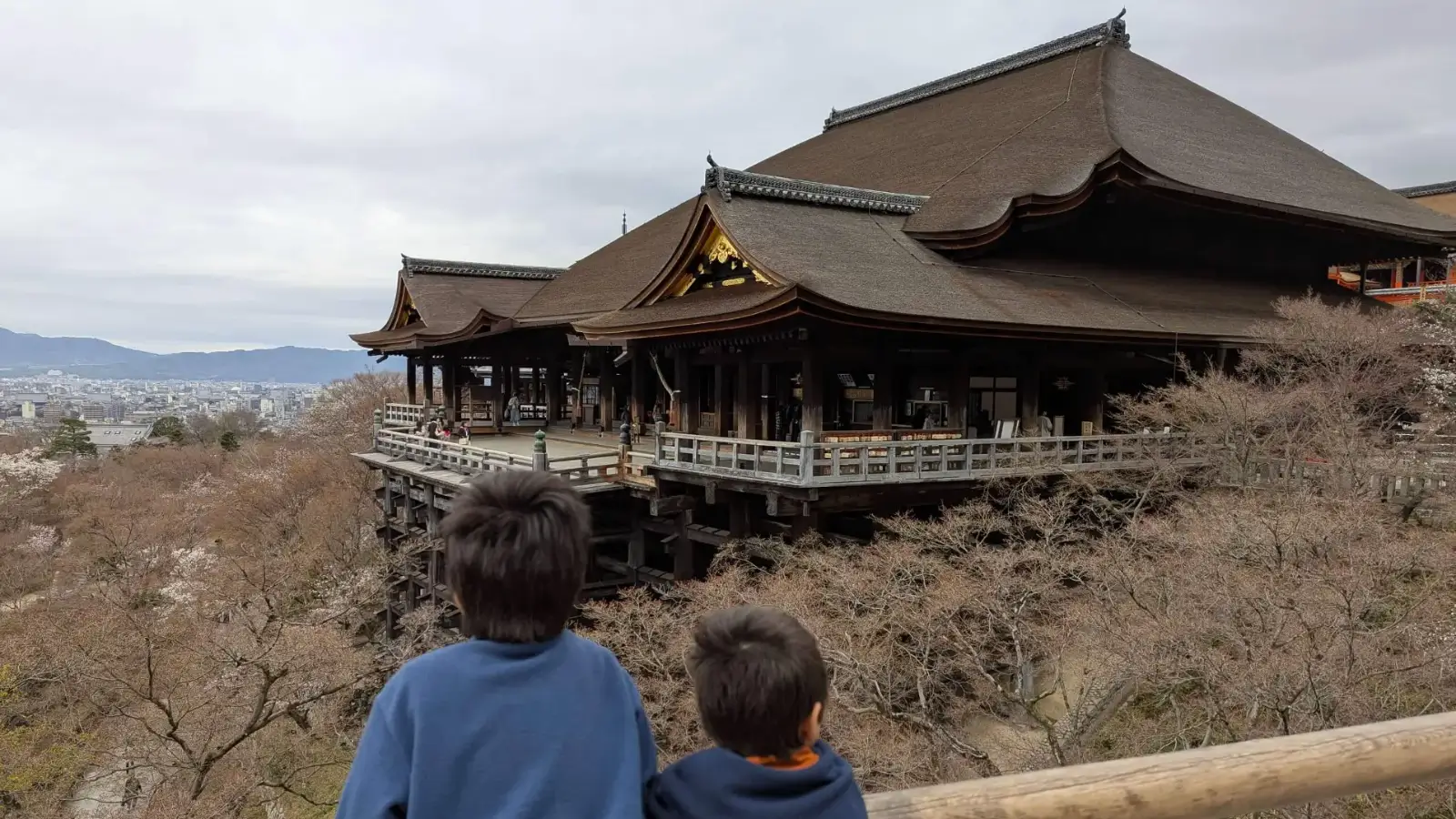
  • Kiyomizu-dera. For families who cannot manage any meaningful section of the Fushimi Inari trail, Kiyomizu-dera delivers significant architectural scale and a rewarding elevated city view over a much shorter total walking distance than even the lowest viable turnaround point on the Fushimi Inari ascent. Kiyomizu-dera guide

For a complete view of how to sequence these sites within your Kyoto days, the Kyoto family travel hub maps the full city by neighborhood, terrain, and child profile.

Final Recommendation: Is Fushimi Inari Worth It with Kids?

Fushimi Inari is worth visiting for families who recognize that the summit is not the destination, the gate corridor is, and that a visit ending at the Yotsutsuji intersection is not a partial experience but the complete one that most families with children should be planning for. Dynamos, Sensors, and Anchors all have a strong case for visiting; Sprinters do not, because the mountain’s specific structure places the physical cost beyond what reasonable mitigation can absorb. The single condition that determines whether a visit succeeds for most families in the conditional range is a decided turnaround point agreed on before the first step is taken, not negotiated mid-climb when the trail’s momentum is already pulling everyone upward. Arriving within the first hour after sunrise handles both the summer heat and the lower entrance crowd density in a single logistical decision.

The Fushimi Inari Briefing: Essential Intel

Families deciding whether Fushimi Inari belongs in their Kyoto itinerary ask these questions most consistently, from whether the climb is manageable with young children to how different child profiles experience the gate corridor at different elevations.

Q: Is Fushimi Inari worth visiting with kids?

A: Yes, for most families, with one non-negotiable planning step: decide your turnaround point before you leave the entrance, not after you have started climbing. The gate corridor delivers its full visual impact well before the summit, and the Yotsutsuji intersection roughly 40 minutes up provides a natural stopping point with a viewpoint that rewards the effort without requiring families to continue on a trail that only becomes more physically demanding from that point.

Q: Is Fushimi Inari family friendly for sensory-sensitive children?

A: Yes, with a firm timing condition. The outdoor trail with its single upward path and always-available exit is structurally well-suited to Sensor children, but the lower entrance gate section generates crowd compression during peak hours that this profile finds genuinely difficult. Arriving at or before sunrise eliminates that crowd variable entirely and converts Fushimi Inari into one of the quieter and more visually absorbing experiences available in Kyoto.

Q: Is Fushimi Inari good for kids with low stamina?

A: No. The trail climbs continuously on uneven stone steps with no flat rest section and no shortcut back to the base. For children who deplete physically from sustained walking, Fushimi Inari is not a viable itinerary choice, not because the lower section is inaccessible, but because the trail’s structure makes it genuinely difficult to stop before more ground has been covered than a low-stamina child can recover from by mid-afternoon.

Q: Is Fushimi Inari worth visiting with toddlers?

A: Conditionally, and only in a wearable carrier from the outset. The stone steps that form the primary trail begin within a few minutes of the main gate and are not safely navigable for children under 3 independently. Parents who are comfortable carrying their child for the full visit and who plan to limit their time to the shrine forecourt and earliest gate sections will find the experience manageable; parents expecting toddlers to walk any meaningful section of the trail should redirect to a flat alternative.

Q: Is Fushimi Inari worth it for teens?

A: Absolutely. Teens have the physical capability to reach the higher trail sections where the crowds thin significantly and the forest environment changes character, and the effort required to get there is part of what makes the site memorable for this age group. Giving teens the autonomy to set pace and lead the route maximizes engagement at a site where the sense of physical achievement is as much a part of the experience as the visual reward.

Q: Is Fushimi Inari worth visiting in summer with kids?

A: Only with an early start. The forest canopy traps heat and humidity in a way that accelerates fatigue for children, and the stair climbing compounds the physical toll significantly in July and August. A sunrise arrival resolves both the crowd density at the lower gates and the temperature exposure on the upper trail, making summer visits viable for physically capable families who treat the timing as non-negotiable rather than preferable.

Q: Is Fushimi Inari worth it if we only visit the lower section?

A: Yes. The lower gate corridor delivers the full visual identity of the site and is the section that appears in nearly every photograph of the shrine. Families with Sprinter children or toddlers who view the large lower gates, walk the first tunnel section, and exit at the main shrine area leave with the essential Fushimi Inari experience. Not reaching the summit is not an abbreviated visit; it is the correctly calibrated visit for a large portion of families who come here.