HomeJapanKyotoWorth Visiting?

Luca & Nico walking along a lantern-lit traditional street in Kyoto’s Gion district at dusk, a peaceful cultural moment for families exploring Kyoto with kids.

Kyoto Is Worth Visiting with Kids – One District at a Time

By Josh Hinshaw

April 24, 2026

The volume of walking required to navigate a city built around quiet temple corridors and strict behavioral expectations causes genuine parental doubt. Kyoto’s geographic fragmentation across bus-reliant districts means families cannot simply show up and wing their days the way they might in Osaka or Tokyo.

Yet the cultural imagery on offer here, red torii gate tunnels, towering bamboo groves, and historic streetscapes that exist nowhere else in Japan, makes the city impossible to dismiss from an itinerary without deliberate justification. Understanding your child’s specific travel profile is the deciding factor in whether Kyoto belongs on your routing, and that analysis begins with the Japan family travel hub.

Some links on this page are affiliate links. If you book through them, LuNi Travels may earn a small commission at no extra cost to you.

Is Kyoto Worth Visiting with Kids? (Quick Answer)

Kyoto is conditionally worth visiting for families whose children can manage a slower, outdoor-heavy itinerary structured around deliberate pacing rather than dense interactive entertainment. The city naturally rewards Sensors through its calmer aesthetic baseline and Anchors through a consistent cultural rhythm, while placing immediate structural pressure on Sprinters through its fragmented geography and on Dynamos through the behavioral restrictions inside its most iconic sites. The analysis below explains exactly how each profile interacts with the city’s environment so you can make a confident routing decision.

Pros of Visiting Kyoto with Kids

  • The Kyoto Imperial Palace grounds provide one of the largest flat, open outdoor areas in the city, giving Dynamos a physical release valve between the structured behavioral demands of temple visits without requiring any transit.
  • The city’s concentration of distinct cultural rituals, hand-washing at purification pavilions, drawing paper fortunes at shrines, ringing temple bells, converts passive sightseeing into a sequence of short tactile experiences that hold the attention of young children more reliably than museum formats.
  • The Kamo River’s flat pedestrian path connects key districts without relying on crowded bus routes, giving families a navigable inter-district corridor they can use at their own pace and abandon without a transit cost.
  • Sequencing a full day inside the Arashiyama district allows families to pair natural bamboo scenery, river access, and historic structures within a compact walkable zone, removing the need to cross the city by bus and dramatically reducing the transit load that makes multi-district days collapse for lower-stamina children.
  • Kyoto’s outer temple gardens, particularly those away from the tier-one sites, operate at a sensory baseline that is significantly calmer than anything available in Tokyo or Osaka, giving Sensors genuinely restorative time during the itinerary rather than only managed endurance.

Cons of Visiting Kyoto with Kids (Important for Parents)

  • The city’s major attractions are distributed across geographically distinct districts connected by an overcrowded public bus network, and the time and physical cost of inter-district movement accumulates quickly for Sprinters.
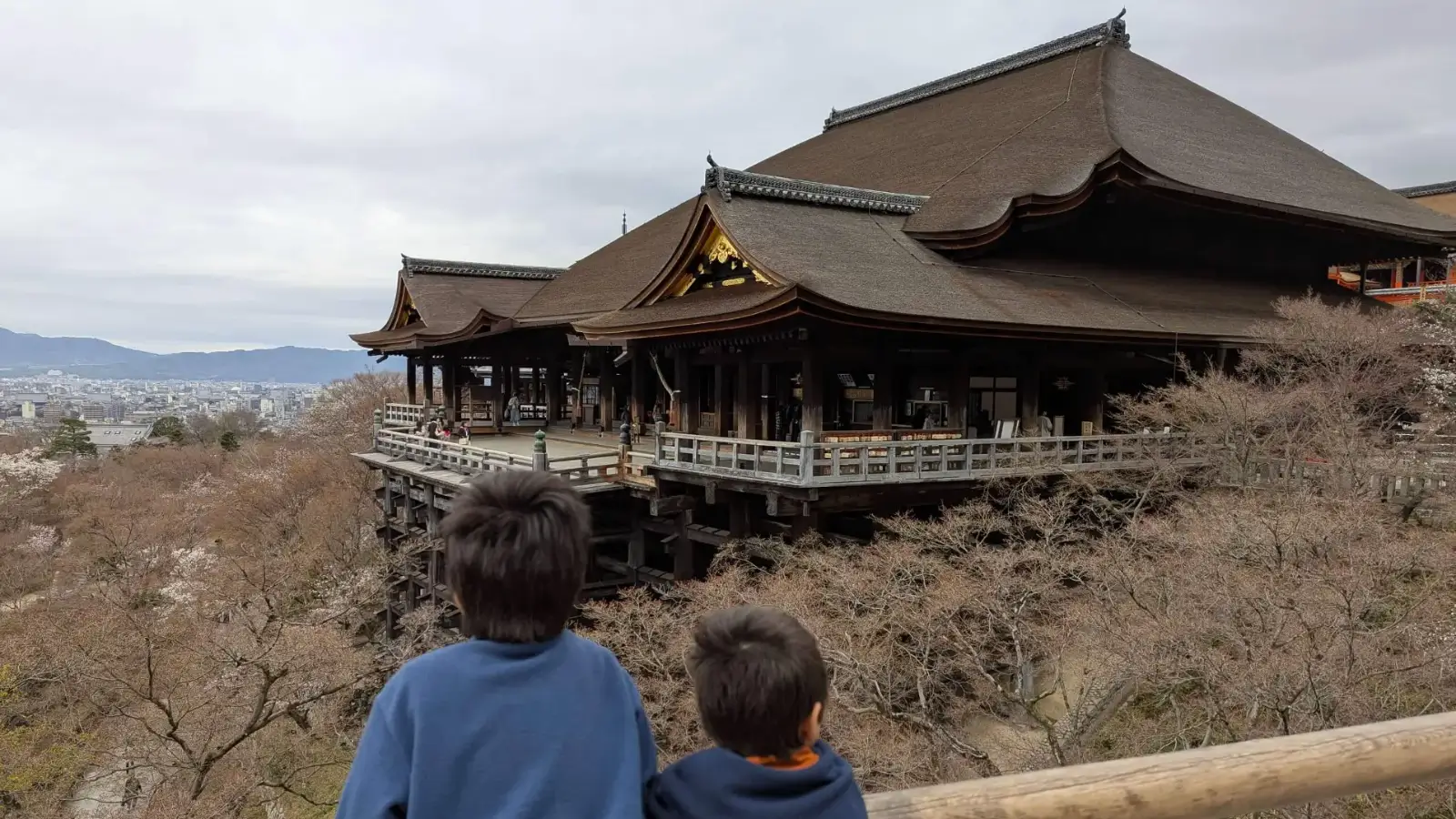
  • Narrow historic approach lanes leading to the city’s highest-profile sites, particularly Kiyomizu-dera’s stone-paved approach, compress high visitor volumes into tight pedestrian funnels during peak afternoon hours, creating sensory conditions that Sensors cannot sustain without a deliberate arrival strategy.
  • The behavioral expectations inside Kyoto’s historic temple interiors, silent movement, no running, strict noise limits, create direct conflict with Dynamo’s regulatory needs and cannot be negotiated away mid-visit.
  • The city’s near-total reliance on outdoor exposure across its major sites leaves families without a weather buffer during peak summer humidity or winter cold, reducing operational flexibility on difficult weather days in a way that an urban center with covered transit and indoor venues does not.
  • The repetitive visual grammar of successive historic sites, stone lanterns, gravel gardens, tatami interiors, produces diminishing engagement returns for school-age children who lack the cognitive frame to distinguish between them after the second or third visit.

How Kyoto Works for Your Child’s Profile

Kyoto’s baseline environment rewards steady, observant travel styles while requiring structural adjustments for children whose needs conflict with the city’s dominant rhythm. The Family Fit™ framework identifies these dynamics before they arrive as surprises.

The Dynamo

Kyoto’s mix of unrestricted outdoor shrine grounds and tightly controlled temple interiors creates a high-contrast environment for high-energy children. The city’s primary friction point is the abrupt shift from open outdoor space into silent, fragile historic interiors where movement is actively prohibited. The overarching structural adjustment is to pair every temple visit directly with an outdoor park or riverbank stop where vocalization and physical activity are acceptable, and to build this alternating rhythm into the day’s scaffolding rather than treating it as a bonus.

The Sensor

The city’s traditional aesthetic operates at a significantly calmer visual baseline than Japan’s major urban centers, but the crowd compression on narrow approach streets to tier-one sites creates peak sensory load at precisely the moments this profile is most invested in the experience. The central friction is the pedestrian funneling effect along stone-paved historic lanes during afternoon hours, which cannot be avoided on a standard visit schedule. Families must commit structurally to opening-hour arrivals at all major sites, treating the timing decision as non-negotiable rather than aspirational.

The Anchor

Kyoto’s structure relies on outdoor, district-based exploration that lacks the clearly bounded, sequentially experienced formats that routine-reliant children use to orient themselves through a day. The primary friction is the absence of checkpointed environments where a child can track progress through the visit, which makes the day feel ambiguous and open-ended in ways that generate anxiety for this profile specifically. To make the city function, parents must impose their own rigid daily structure anchored around predictable food stops and a fixed afternoon rest period at the same time each day, creating internal consistency that the city’s format does not provide.

The Sprinter

Kyoto’s geographic spread, combined with the steep uneven inclines in the eastern temple district and a reliance on crowded bus routes between major areas, creates a stamina demand that depletes this profile’s reserves before the primary destinations are reached. The highest friction occurs when inter-district transit is combined with the uphill approach paths that characterize multiple major sites. The necessary structural decision is to limit each day to a single geographic quadrant and budget to use taxis for any movement between districts, treating stamina conservation as a non-negotiable planning constraint, not a fallback option.

Identifying your child’s profile before building an itinerary is the difference between a Kyoto trip that succeeds and one that unravels by midday. Take the Family Fit™ Quiz if you have not confirmed your child’s profile.

Who Will Enjoy Kyoto with Kids (By Age Group)

Toddlers (under 3)

Toddlers require continuous physical containment, which conflicts directly with Kyoto’s high step counts, frequent gravel paths, and silent interior spaces that prohibit the movement and vocalization this developmental stage cannot suppress. Kyoto is not worth routing the trip through for this age band unless parents have committed to child carriers as the primary mobility strategy and are prepared to skip the majority of interior temple access entirely.

Preschoolers (3 to 5)

Children at this stage process new environments through tactile novelty rather than cultural context, and Kyoto provides a consistent supply of interactive rituals, coin offerings, bell ringing, fortune drawing, that engage this developmental instinct without requiring sustained attention. Kyoto is conditionally worth it for preschoolers if parents cap the itinerary at one major historical site per day and treat the ritual interactions as the primary content rather than the architecture or history surrounding them.

School-Age Kids (6 to 10)

Children in this developmental window have the cognitive capacity to register genuine difference between their home environment and Kyoto’s traditional aesthetic, and the physical stamina to sustain moderate walking days when pacing is managed. Kyoto is worth visiting for school-age kids precisely because the city provides a cultural reference point that no amount of textbook learning can replicate, and their ability to hold that observation through the day is what separates this age band from younger travelers in terms of itinerary value.

Older Kids and Teens (11+)

Teens at this developmental stage are motivated by aesthetic environments that reward independent observation and by the social currency of having experienced something genuinely distinctive. Kyoto’s bamboo groves, lantern-lined streets, and historic shopping districts provide exactly that, at a level of visual and cultural sophistication that respects their maturity without requiring engineered entertainment. Kyoto is an excellent routing choice for this age group, and it is among the few Japanese cities where the experience improves meaningfully as children get older.

The LUNI Framework

Most families skip this.
It's why Day 3 falls apart.

The LUNI Profile Quiz identifies the specific planning adjustments your child needs. Two minutes now saves the whole trip.

Find My Child's Profile → Free · Under 2 minutes

Best Alternatives to Kyoto for Families with Kids

  • Osaka — Best for Dynamos. Osaka’s dense concentration of indoor entertainment venues and its tolerance for noise and energy directly resolves the behavioral friction that Kyoto’s temple environments create for high-energy children.
  • Tokyo — Best for Anchors. Tokyo’s highly predictable train infrastructure and its massive inventory of clearly structured indoor attractions provide the routine framework that Kyoto’s outdoor, district-based format cannot replicate.
  • Hiroshima — Best for Sprinters. Hiroshima’s compact, centralized layout and flat streetcar-connected core removes the inter-district transit burden and steep incline approach paths that make Kyoto physically demanding for low-stamina children.

Families who determine Kyoto is the right routing choice can move directly into itinerary structure through the Kyoto family-friendly travel hub.

Final Recommendation: Is Kyoto Worth Visiting with Kids?

Kyoto is worth visiting for families who accept the city’s terms. Those terms are a reduced daily sightseeing load, a strict arrival-time discipline at major sites, and a geographic strategy that limits each day to a single district rather than attempting to cross the city repeatedly. Families who apply those constraints will find that Kyoto delivers a cultural experience unmatched elsewhere in Japan for older children and school-age kids with sufficient stamina. Families who ignore them and build a standard multi-stop day will find the city’s combination of transit demands, behavioral expectations, and outdoor exposure exhausting before noon. The most consistent planning error is not choosing to visit Kyoto but choosing to over-schedule it. One or two major sites per day, built around a morning-first timing discipline, is not a reduced version of Kyoto. It is the version that actually works.

The Kyoto Briefing: Essential Intel

Families planning a Kyoto trip with children ask these questions most consistently, from whether the city’s cultural weight translates for younger travelers to how its outdoor-heavy infrastructure interacts with specific child travel profiles.

Q: Is Kyoto worth visiting with kids?

A: Kyoto is conditionally worth visiting for families with school-age children and teens who can sustain a walking-heavy itinerary structured around one or two major sites per day. The city rewards older children who can register genuine cultural difference and penalizes over-scheduled days regardless of which profile the child fits.

Q: Is Kyoto family friendly?

A: Kyoto is a safe and welcoming city, but its infrastructure was not designed with family logistics in mind. The dependence on public buses, frequent stair climbs, and gravel temple approaches creates friction for families navigating with strollers or young children that no amount of goodwill from the city itself can remove.

Q: Is Kyoto good for kids who need constant entertainment?

A: Kyoto is a poor fit for children who require dense, interactive entertainment between every cultural stop. The city’s highest-value experiences are observational rather than participatory, and Dynamo profiles in particular will hit behavioral limits inside temple interiors that active itinerary management cannot fully prevent.

Q: Is Kyoto worth it for families on a short Japan trip?

A: Kyoto is worth including on a condensed itinerary only if the family commits to a single geographic quadrant per day rather than attempting cross-city coverage. A family with one day in Kyoto who concentrates entirely on the Arashiyama district or the eastern temple district will get more value than a family with one day who tries to cover both.

Q: Is Kyoto worth visiting with toddlers?

A: Kyoto presents significant logistical challenges for this developmental stage. The volume of stairs, gravel paths, and enforced quiet inside historic spaces is structurally incompatible with what toddlers physically and behaviorally require. It is not a recommended routing priority for families with children under three unless parents are committed to carrier-based mobility and a severely reduced site list.

Q: Is Kyoto worth visiting with teens?

A: Kyoto is one of the strongest routing choices in Japan for teenagers. The city’s aesthetic distinctiveness, its photogenic streets, independent shopping lanes, and historically layered sites, provides the kind of autonomous and visually rewarding environment that engages teens without requiring engineered activity. The absence of theme park infrastructure is not a weakness for this age group.

Q: Is Kyoto better for families than Osaka?

A: The two cities serve different family needs and are best treated as complements rather than alternatives. Osaka absorbs energy and delivers density; Kyoto rewards patience and delivers depth. Families with Dynamo children will find Osaka easier to manage. Families with Sensor or Anchor children will often find Kyoto the more sustainable city once the timing strategy is in place.