Indoor Activities in Kobe With Kids:which room is for which child.
- The One to Book First
- Bando Kobe Youth Science Museum
- Four Weeks Out
- Kobe Anpanman: a dated museum ticket
- No Re-Entry
- Arima Toy Museum: stepping out ends it
- No Ticket
- Kobe City Museum’s Kobe history gallery
- Dry-Hour Repair
- The Trick Art Museum, for a dry hour
Some links on this page are affiliate links. LuNi may earn a commission at no extra cost to you.
Kobe’s indoor activities for kids sit in three separate clusters between the mountain and the port, and most families only ever find one of them. Bando Kobe Youth Science Museum is the one to book first, because no other building in the city lets a family break the visit and come back: the ticket carries same-day re-entry, and a rest floor allows food you brought. Kobe Anpanman sells a dated museum ticket four weeks ahead; the Kobe City Museum’s ground-floor history gallery needs no ticket at all. Nine buildings in all, each grouped by the child it holds.
Which room is for which child.
Family travel runs on three currencies, not two. Money and time are the pair every parent already counts; the third is the child’s Reserve, their finite capacity to absorb what travel asks of them. These nine are not ordered best to worst. They are grouped by which child each one is for, across the four profiles, because a Kobe wet afternoon is decided by what a building lets a child do with their body rather than by what is in the display cases. The Dynamo runs short when they cannot move, the Sensor on unfiltered input, the Anchor when nothing is confirmed, the Sprinter on standing.
Bando Kobe Youth Science Museum.
The claim is not that it is the best room here for any single child. It is that no other building in the city lets a family break the visit and come back. The exhibition ticket carries same-day re-entry, and the basement holds a rest floor where you may eat food you brought with you.
| The Building | What It Settles | Best For |
|---|---|---|
| Kobe AnpanmanHarborland | Eleven play areas built for movement, not for viewing. | Dynamo |
| Kobe Trick Art MuseumKitano | Six rooms where the instruction is to touch the artwork and climb in. | Dynamo |
| Kobe City MuseumKyukyoryuchi | A silence-regime museum with one room built for making a sound. | Sensor |
| UCC Coffee MuseumPort Island | Timed entry in, then no clock at all. Seven rooms and a glasshouse. | Sensor |
| Hakutsuru Brewery MuseumSumiyoshi, Nada | The brewing staged in order, a short film at every step. | Anchor |
| Arima Toy MuseumArima Onsen | Three floors, one subject each, tellable before you go up. | Anchor |
| Bando Kobe SciencePort Island | The one ticket in Kobe that lets you leave, eat, and come back. | Sprinter |
| Kobe Maritime MuseumMeriken Park | Exhibits a child sits down into, plus two fixed-seat theaters. | Sprinter |
| Kobe Port TowerNaka-ku | A third floor that turns a full circle in about thirty minutes. | Sprinter |
Kobe Anpanman
Dynamo
Kobe Trick Art Museum
Dynamo
Kobe City Museum
Sensor
UCC Coffee Museum
Sensor
Hakutsuru Brewery Museum
Anchor
Arima Toy Museum
Anchor
Bando Kobe Youth Science Museum
Sprinter
Kobe Maritime Museum and Kawasaki World
Sprinter
Kobe Port Tower
Sprinter
For the Dynamo
Rooms where the child’s own body is part of the exhibit.
For a child who empties out when they cannot move.
Eleven play areas, and almost none of them asks a child to stand still. The museum floor is built for movement rather than viewing: a climbing and slide zone, a ball park, a rainbow slide, a bakery hill to run up, and a secret base holding the giant robot with control panels a child works themselves. A movement-led child is not being managed here, they are being spent, which is the thing a Kobe indoor day otherwise struggles to arrange. A two-year-old goes for the ball park; a five-year-old works the panels and the slide until the energy is genuinely gone. The mall beneath is free to walk into and sells no ticket at all, which is where a family waits if the slot is later.
Who it costs.The Sprinter, and precisely. Strollers are barred from the museum floor and the secret base entirely, parked at the ticket counter with a carrier recommended instead, so a child who normally rides walks the whole visit.
How to make it work.Tickets go on sale at 10:00 on the 28th day before the date, so the visit is decided a month out rather than on the morning. The official route from Kobe Station runs underground through the Duo Kobe arcade before it surfaces, which is the half of the walk that stays dry.
If this isn’t your child: a whole floor built around characters a small child already knows, and a ticket that has to be bought before the trip rather than during it.The artwork is not finished until the child is standing inside it. Six themed areas fill a converted two-story wooden house, the old Panama Consulate, and the instruction posted through all of them is to look, touch, and photograph. Every other gallery in Kobe spends its signage telling a child where the line is. Here the child is the missing element, and the piece does not work without a body in front of it. A five-year-old poses in the adventure rooms and laughs at the result; a fourteen-year-old works the optical-illusion set and the brain-training pieces on their own terms.
Who it costs.The Sensor. The interior is dark apart from spotlights on the pieces, and one of the six areas is a labyrinth room.
How to make it work.Nothing is booked and same-day entry is the norm, so it is the stop you insert when a plan falls apart in Kitano. Bring the phone charged, because the whole visit is photographs. The approach from Shin-Kobe or Sannomiya is an uphill street walk with no cover, so it is a dry-hour stop rather than the thing you run to in the rain.
If this isn’t your child: the one museum in the city a child is told to climb into, on a hill they have to climb first.For the Sensor
Rooms where the building decides how much arrives, and decides less.
For a child who empties out on noise, crowding and unfiltered input.
This museum runs a silence regime and then keeps one room where a child is invited to make a noise. Phones are silenced, calls in the galleries are discouraged, nothing may be eaten or drunk anywhere inside including sweets and gum, and notes are taken in pencil or not at all. Against that, the ground-floor hands-on room asks a child to ring a replica bronze dotaku bell, look inside a pit dwelling, try on ancient clothing and work a large figure puzzle. For a child short on input the ratio is the point: one permitted outlet in a building that has ruled out everything else. A six-year-old rings the bell and climbs into the dwelling; a thirteen-year-old takes the collection floors above.
Who it costs.The Dynamo. Four levels of glass cases and one room to touch, with backpacks worn on the front when it gets busy.
How to make it work.The Kobe history gallery on the ground floor needs no ticket at all, and nothing here takes a booking, so this can be a twenty-minute insert into a walk rather than a museum afternoon. Eight stations reach it within ten to fifteen minutes, which makes it the easiest room on this map to reroute into.
If this isn’t your child: the calmest ticketed hour in central Kobe, and a ground floor that costs nothing to try first.The ticket fixes the hour you arrive and then stops counting. Entry runs in timed slots, prepaid and completed the day before, but once a family is through the door they may stay as long as they like. That matters: everywhere else a ticket buys a session, and a sensory-led child spends the back half of it being moved along by a clock they can feel. Seven exhibition rooms run in order from origin and cultivation through distribution, processing and culture to a room on coffee science, with a glasshouse of living coffee plants and a tasting counter at the end. A five-year-old works the glasshouse and the smells; a fifteen-year-old takes the roasting or latte-art program.
Who it costs.The Dynamo. Nothing may be touched except the pieces marked as interactive, and each of the seven hands-on programs needs its own separate reservation made in advance.
How to make it work.Book by the day before at the latest, because there is no walk-up of any kind and a family that turns up is turned away. If a hands-on program is the reason you are going, book it at the same time and not after, since it does not come with the entry.
If this isn’t your child: seven rooms and a glasshouse on Port Island, behind a door that will not open to anyone who has not already booked.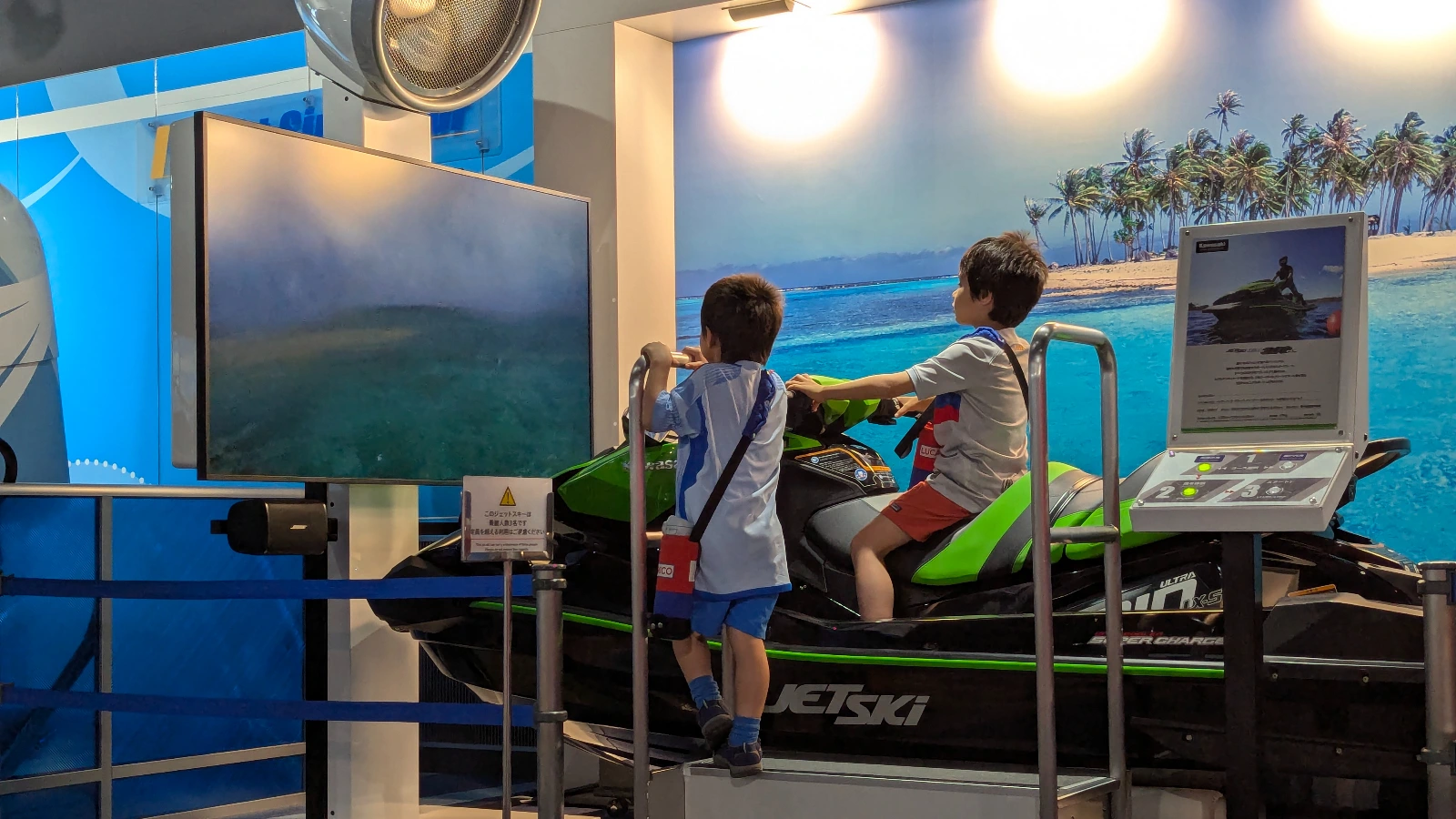
For the Anchor
Buildings whose shape can be told to a child before they walk in.
For a child who empties out when nothing is confirmed and everything is new.
The brewing runs in order and the building makes you walk it that way. A preserved warehouse that worked as the main store until 1964 holds the whole process staged stage by stage, life-size figures at the scale the work was actually done, with a short film at each step explaining what the figures are doing. A child who needs to know what comes next gets a spine for the visit at the first panel and is never asked to improvise after it. A five-year-old follows the figures and the water; a twelve-year-old follows the rice from polishing to pressing and understands why the order cannot change.
Who it costs.The Dynamo. The route is a set order with a screen at each stop, so a movement-led child is asked to stand and watch again and again, and the only thing they may handle is the shop uniform kept by the door for photographs.
How to make it work.It is free, with no ticket and no booking for a family-sized party, so it drops into a morning at no notice. Put it first while a structure-reliant child still has the patience for a sequence, and know that the tasting counter at the end serves alcohol to adults.
If this isn’t your child: a preserved brewery five minutes from Sumiyoshi that costs nothing and asks for an hour, best taken on the way somewhere rather than as the day.Three exhibition floors, one subject each, and nothing mixed. Automata and mechanical dolls on the fourth. Modern toys from Europe and elsewhere on the fifth, where handling them directly is the sanctioned activity. German traditional crafts and Erzgebirge figurines on the sixth. A child who depletes on unfamiliarity can be told this building in one sentence in the elevator, and then finds it true, which is the part most museums cannot deliver. A four-year-old lives on the fifth floor and watches the automata wind; a twelve-year-old follows the mechanism from the automata up to the carved work.
Who it costs.The Sprinter. There is no re-entry once you leave, so the visit is a single push, and the elevator car measures 80 centimeters by 88, which will not take a large stroller between floors.
How to make it work.Entry is walk-in. The craft workshop on the ground floor takes signups rather than advance booking, so decide about it before you go up, because a family that steps outside cannot come back in on the same ticket. Treat the museum as part of an Arima day rather than a reason to make one.
If this isn’t your child: three stacked collection floors in a hot-spring town thirty minutes out, worth it if the town was on the plan anyway.For the Sprinter
Buildings that let a family stop without losing the day.
For a child who empties out on sustained walking and standing.
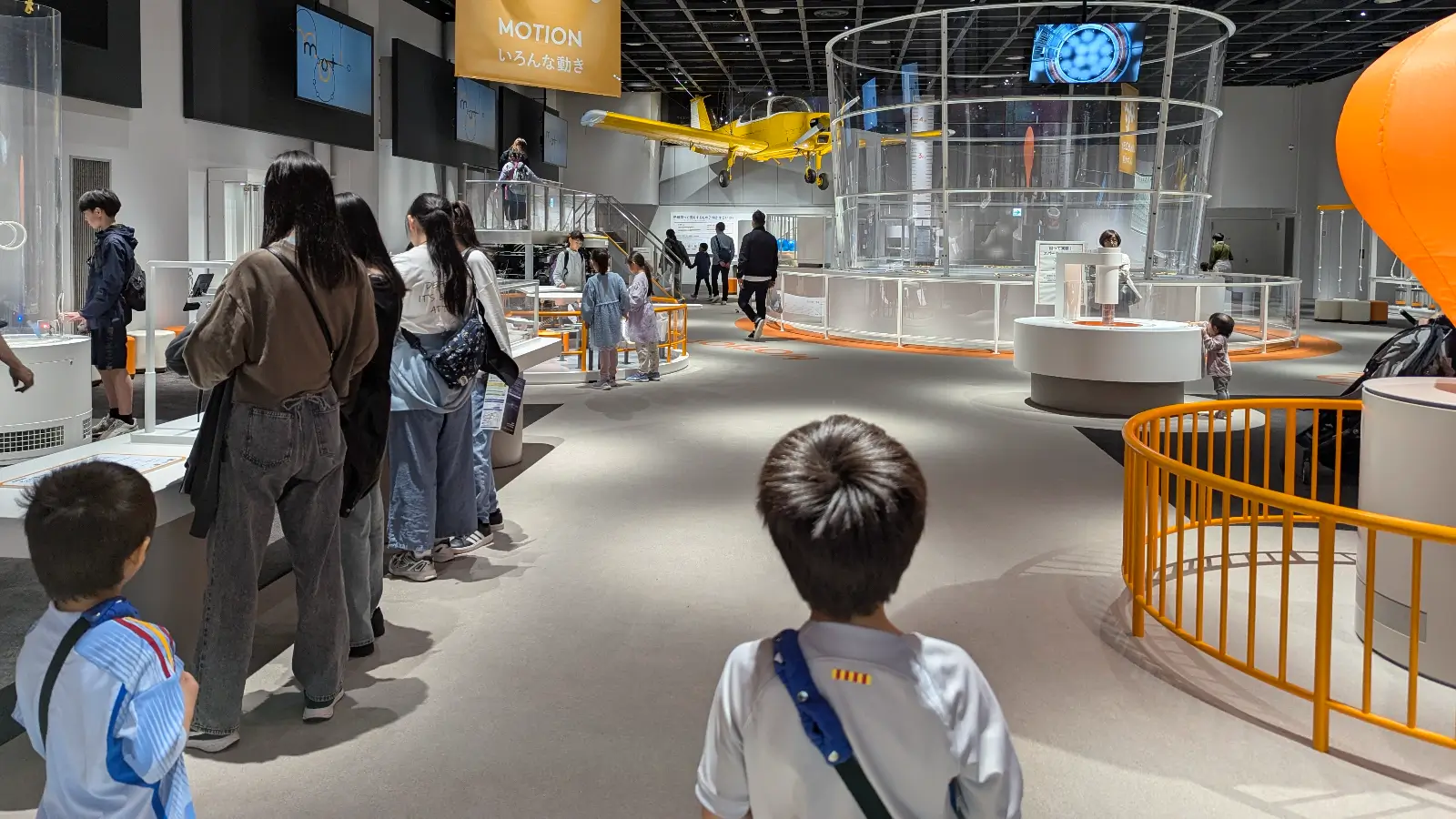
The only museum in Kobe a family may leave and walk back into on the same ticket. Same-day re-entry is written into the exhibition ticket, and the basement of the north building is a rest floor where you are allowed to eat food you brought with you. Everywhere else a low-stamina child’s visit is one push, and the moment they run short it is over. Here it can be broken across lunch and resumed. Six levels across two connected buildings run one theme per floor: physics and chemistry, information science, space and earth, life and industry, a laboratory floor, and at ground level a dome theater and an interactive Science Park. A five-year-old works the Science Park; a fourteen-year-old sits the dome and the solar observation room.
Who it costs.The Sensor. Experiment shows are staged on the floors and the dome runs scheduled programs with live commentary, so there are fixed moments when the building gets loud on a schedule rather than at random.
How to make it work.The standard approach from Minami-Koen crosses an elevated footbridge. The museum publishes a step-free alternative that uses street-level crossings instead, and that is the route to take with a stroller or a tired child. Stroller spaces sit beside the dome theater and inside the exhibition rooms themselves, so the buggy does not have to be abandoned at the door.
If this isn’t your child: five floors of science three minutes from the Port Liner, with a floor at the bottom built for stopping.A museum whose best exhibits are things to sit down in. Inside Kawasaki World a child climbs onto the motorcycles, and is told to, then takes the driver’s seat of a genuine 0 Series Shinkansen nose car. Two theaters carry the rest: a 180-inch screen with a surround system on the upper floor, and a projection-mapping theater at ground level, both with fixed seating. For a child who runs out of legs that changes the arithmetic entirely, because sitting stops being the repair and becomes the visit. A six-year-old takes the Shinkansen cab; a thirteen-year-old works the TECHNO-LAB and the aircraft exhibits.
Who it costs.The Sensor. Two theaters, one of them built around a surround-sound system, and the dark screen rooms are where the queue collects.
How to make it work.A family books nothing, so this absorbs a late start better than anything else on the map. Lifts, ramps and handrails run throughout and the baby room is at ground level. Keep the outdoor exhibits, the ship-launch trigger and the steam turbine, for a dry moment: they are open to the weather, as is the whole walk across Meriken Park.
If this isn’t your child: the best wet hour in Meriken Park, and the only museum in Kobe you can do sitting down.The third floor turns. The cafe and bar on it completes a full circle in about thirty minutes, which means the harbor is delivered to a seated child rather than walked past by a standing one. That is the rare tower arrangement where the view costs nothing in legs. Above it the fifth floor is indoor viewing and the fourth is a light-based art installation; below, the ground-floor gallery rotates its own exhibition and carries a partial glass floor, which is worth knowing about in advance for a child who does not like heights. A four-year-old sits out a whole turn; a twelve-year-old takes the light room and the panorama.
Who it costs.The Anchor. The rooftop deck is the part every photograph shows, and it is also the part that closes without notice in wind or rain, so the tower a child was promised is not always the tower they get.
How to make it work.The observation floors and the rooftop need a date and time specified ticket. Counter tickets exist only while a slot still has room and stop entirely once slots go, so treat this as booked rather than as a walk-in. The rooftop is reached by stairs from the fifth floor and by nothing else, which rules it out for a wheelchair and makes it a decision for a tired child.
If this isn’t your child: a rotating room with the whole harbor in it, and the one floor everyone comes for is on foot.Open with the child who runs short first.
Open with whichever child runs short first: the Dynamo on restricted movement, the Sensor on input, the Anchor on unconfirmed structure, the Sprinter on standing.
Three things worth getting right.
Kobe Anpanman sells a dated, time-specified ticket and releases it at 10:00 on the 28th day before the visit, and the museum floor admits nobody without one. The mall beneath it is free and sells no ticket at all, which is the part families confuse. Book the slot when the dates are fixed, not when the trip starts.
Kobe Anpanman’s museum floor cannot be walked into. The dated web ticket is compulsory and there is no counter alternative for a family without one, so a rainy morning is not the moment to decide on it. The mall below is the opposite case: free, open, and useful precisely because nothing was committed.
Two of the nine take no booking of any kind and no ticket for part of the building: the Kobe City Museum’s ground-floor history gallery and the Kobe Trick Art Museum. They are the two to keep in reserve for the afternoon a plan collapses.
How a room earns a place here.
Kobe indoor lists sort on fame and on proximity to the harbor. Neither tells a parent which building their child will last two hours in.
The axis here is what a building asks of a body. Four things settle it: whether there is anything to work rather than watch, whether the room or the child sets the rate, whether the order of the visit can be stated before anyone walks in, and whether a family can sit down without leaving. Sorted that way, a converted consulate full of painted illusions outranks several larger collections, and a science museum wins on a rest floor rather than on its exhibits.
The questions parents actually ask.
What are the best indoor activities in Kobe with kids?
If you are only doing one, make it the Bando Kobe Youth Science Museum, the only building here a family can leave, eat in, and walk back into on the same ticket. Beyond that the choice belongs to the child rather than the weather. Kobe Anpanman and the Kobe Trick Art Museum hold a child who empties out when they cannot move; the Kobe City Museum and the UCC Coffee Museum a child short on noise and input; the Hakutsuru Sake Brewery Museum and the Arima Toy Museum a child who needs to know what happens next; the Kobe Maritime Museum and Kobe Port Tower a child who runs out of legs.
Which indoor activities in Kobe need advance booking?
Three of the nine, and the lead times are nothing like each other. Kobe Anpanman’s museum floor sells a date and time specified ticket from 10:00 on the 28th day before the visit and admits nobody without one. The UCC Coffee Museum takes prepaid timed entry that must be completed by the day before, and each of its hands-on programs is booked separately again. Kobe Port Tower sells dated timed tickets and stops selling at the counter once a slot fills. The other six take no booking at all, and the Hakutsuru Sake Brewery Museum takes no ticket either.
What is there to do in Kobe with kids when it rains?
The Kobe Maritime Museum, because the approach is the only part that gets wet and the exhibits are things a child sits down into: motorcycles they are told to climb onto, and the driver’s seat of a genuine 0 Series Shinkansen nose car. Two theaters with fixed seating carry the rest of the visit. It takes no booking from a family, so it absorbs a late start and a changed plan. The one caution is Meriken Park itself, which is open ground with no cover between the station and the door.
Which indoor activity in Kobe works for a toddler?
Kobe Anpanman, with one thing to plan around. Eleven named play areas fill the museum floor, from a ball park and a rainbow slide to a bakery hill and a secret base with a giant robot in it, and a ticket is needed from age one. But strollers are not allowed on the museum floor or in the secret base at all. They are parked at the ticket counter and a carrier is the recommended substitute, so a child who normally rides is on their feet for the whole visit.
Which Kobe indoor stops actually hold a teenager?
Three of the nine, and none of them is a play center. Kawasaki World is the strongest: a teenager sits in the driver’s seat of a 0 Series Shinkansen nose car and gets on the motorcycles, which is a rare thing to be allowed to touch at that age. Kobe Port Tower turns a full circle on its third floor in about thirty minutes, so the view arrives without a walk. The upper collection floors at the Kobe City Museum hold an older child who reads rather than handles. The play floors elsewhere in this guide are built for a much younger visitor.
Which Kobe indoor stop suits a child who tires quickly?
Kobe Port Tower, because one floor of it moves instead of the child. The third-floor cafe and bar completes a full circle in about thirty minutes, so the whole harbor arrives at a seated child rather than being walked past by a standing one. The rooftop deck is the exception and the honest cost: it is reached by stairs from the fifth floor and by nothing else, and it can close without notice in wind or rain.
Is the Kobe Trick Art Museum still open?
Yes. It operates in the former Panama Consulate building in Kitano and holds six themed areas, among them an optical-illusion set, a famous-paintings set and a labyrinth room. Touching the artwork and photographing it is not merely permitted, it is the instruction, which is what separates it from every other gallery in the city. The interior is dark apart from the spotlights on the pieces, which matters for a child who finds dark rooms difficult.