Temples and Shrines With Kids:what each one is for.
- The Famous Ones, Early
- Senso-ji and Kiyomizu-dera, early or not at all
- For a Sensitive Child
- Horyu-ji, where quiet is the rule
- A Thousand Statues Indoors
- Sanjusangendo: 1,001 statues in one flat hall
- Downhill to the Hall
- Izumo Taisha, on a paved approach
- A Shrine That Is a Mountain
- Fushimi Inari starts at the station platform
Activities for families at temples and shrines, from Kyoto’s mountain shrine to a Nara hall, and the rules each one holds for a child.
Some links on this page are affiliate links. LuNi may earn a commission at no extra cost to you.
The best temples and shrines in Japan for kids are the ones whose walking a family can see coming, and seventeen places across ten prefectures are carried here by region, not ranked. What separates them is distance, gradient, surface, darkness and the rules about where a child may walk, sit or talk. The famous names are time-boxed rather than skippable: Senso-ji, Kiyomizu-dera, Fushimi Inari, Kinkaku-ji and Todai-ji work early and turn into something else once the crowd arrives. Horyu-ji, quiet by rule, suits a sensitive child; Sanjusangendo keeps its thousand and one statues in one flat hall.
Seventeen places, and the one thing each of them is for.
Family travel runs on three currencies, not two. Money and time, plus the child’s Reserve: their finite capacity to absorb what travel asks of them. Temples are the category where that third one is spent invisibly, because nothing at the gate tells a parent about the gravel, the gradient or the rule against sitting down.
One thing is worth settling before you start. The famous names are not overrated and they are not skippable. They are time-boxed. Senso-ji, Kiyomizu-dera, Fushimi Inari, Kinkaku-ji and Todai-ji all work early and turn into something else once the crowd arrives, which makes the hour the decision rather than the alternative. Read that way, the usual rankings invert: the oldest wooden buildings on earth are the calmest place to bring a sensitive child, and the most famous shrine in the country is a mountain.
Six, all reachable from a Tokyo base.
Six places, all of them a day trip or less from central Tokyo. Two sit inside the city, two are out at Kamakura and Narita, and two are north into Tochigi. No two of them ask the same thing of a child.
The Long Walk In: Senso-ji, Tokyo.
Nakamise runs about 250 meters and 87 shops on stone paving before the temple appears, and it is busy from opening. A child who comes apart in crowds meets the crowd first and the building second, which no photograph of the gate ever shows. The fix is the hour rather than the route: arrive before the shops do and the same approach is a different place.
Ten Minutes of Gravel: Meiji Jingu, Tokyo.
The approach is loose gravel for roughly ten minutes each way, and it stays that way on purpose, as a purification. That makes it a pushing surface rather than a rolling one, so a stroller becomes the parent’s afternoon and a small child is better carried. The precinct itself is flat forest, so once the walk is done nothing else costs anything.
A Hall Open to Anyone: Naritasan Shinshoji, Chiba.
Anyone may walk into the Great Main Hall, and a wheelchair elevator serves it, which nothing else here provides. A child who needs the day confirmed before it starts can be told exactly what will happen, because the fire ritual runs to a fixed rhythm and a wish written on a wooden tablet is burned in front of you. It is also the one temple on this list a family can reach between a hotel and a flight.
The One for a Tired Afternoon: Kotoku-in, Kamakura.
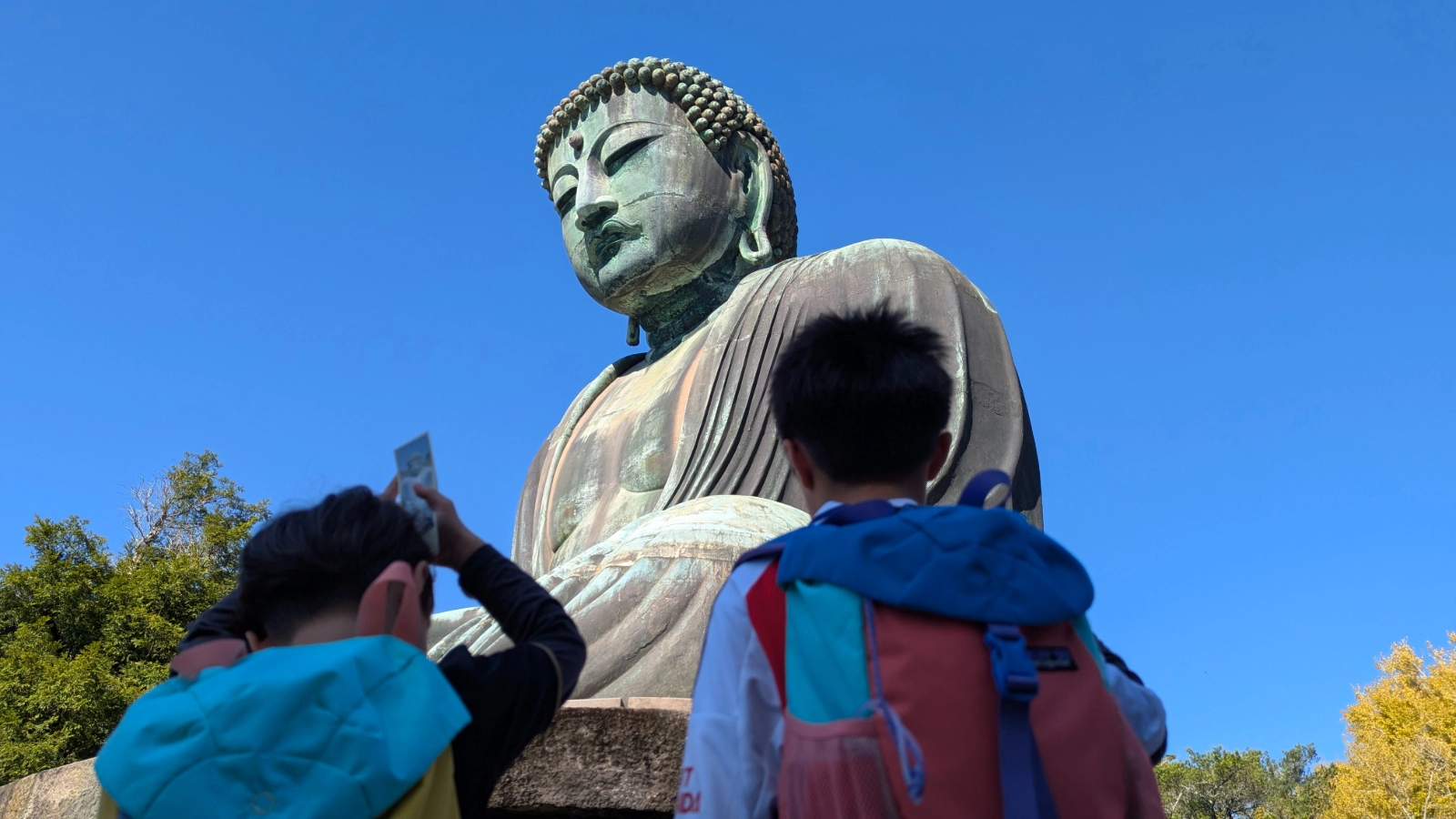
One bronze in an open courtyard, level from the gate, with the hall that once covered it long gone. Nothing here asks for legs, which for a child whose walking is already spent is worth more than anything inside a building. The statue is hollow and can be entered on a separate ticket, so the reward arrives without the climb.
Rising Past the Yomeimon: Nikko Toshogu, Tochigi.
Past the steps below the Yomeimon, every part of the site rises. The Okumiya climb sits inside the basic ticket whether a family uses it or not, so the longest walk of the day is already paid for and easy to drift into. Decide at the steps rather than at the gate.
The One You Cannot Photograph: Oya-ji, Utsunomiya.
Ten Buddhas carved into the cliff inside the hall, where photography is refused, though it is permitted out in the grounds. A child spends the visit looking rather than capturing, which is rarer than it sounds and changes how long they stay. Outside, a stairway cut into the quarry wall climbs to a platform level with the Heiwa Kannon’s face, and nothing prepares you for it, so treat it as a decision made on sight.
Eight, and the only region where you have to choose.
Four sit inside Kyoto, three in Nara and its countryside, and one is a mountain that wants its own night. This is the densest temple country in the world and the only region here where a family cannot fit them all in, so the choosing is the work.
The Mountain That Starts at the Platform: Fushimi Inari Taisha, Kyoto.
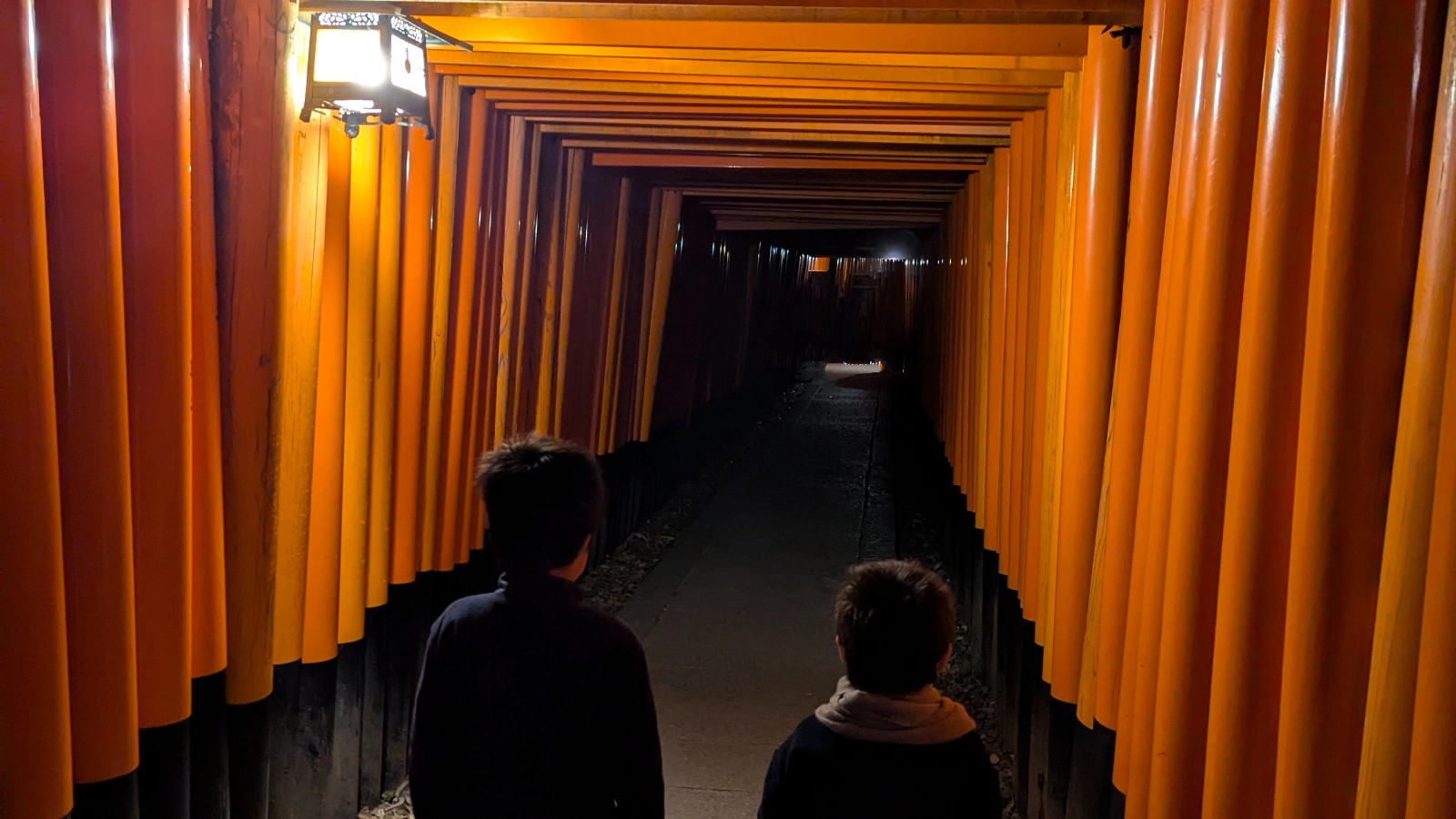
The climb toward a 233-meter summit begins at the gate, and the station sits at the gate, so nothing about arriving warns anyone what they have walked into. Nothing on the mountain tells you where to turn back, so the parent has to name a point at the bottom, out loud, and then hold it. Shouting is prohibited and so is sitting down, which is worth saying before the first torii rather than halfway up.
Fifteen Halls, in Order: Kiyomizu-dera, Kyoto.
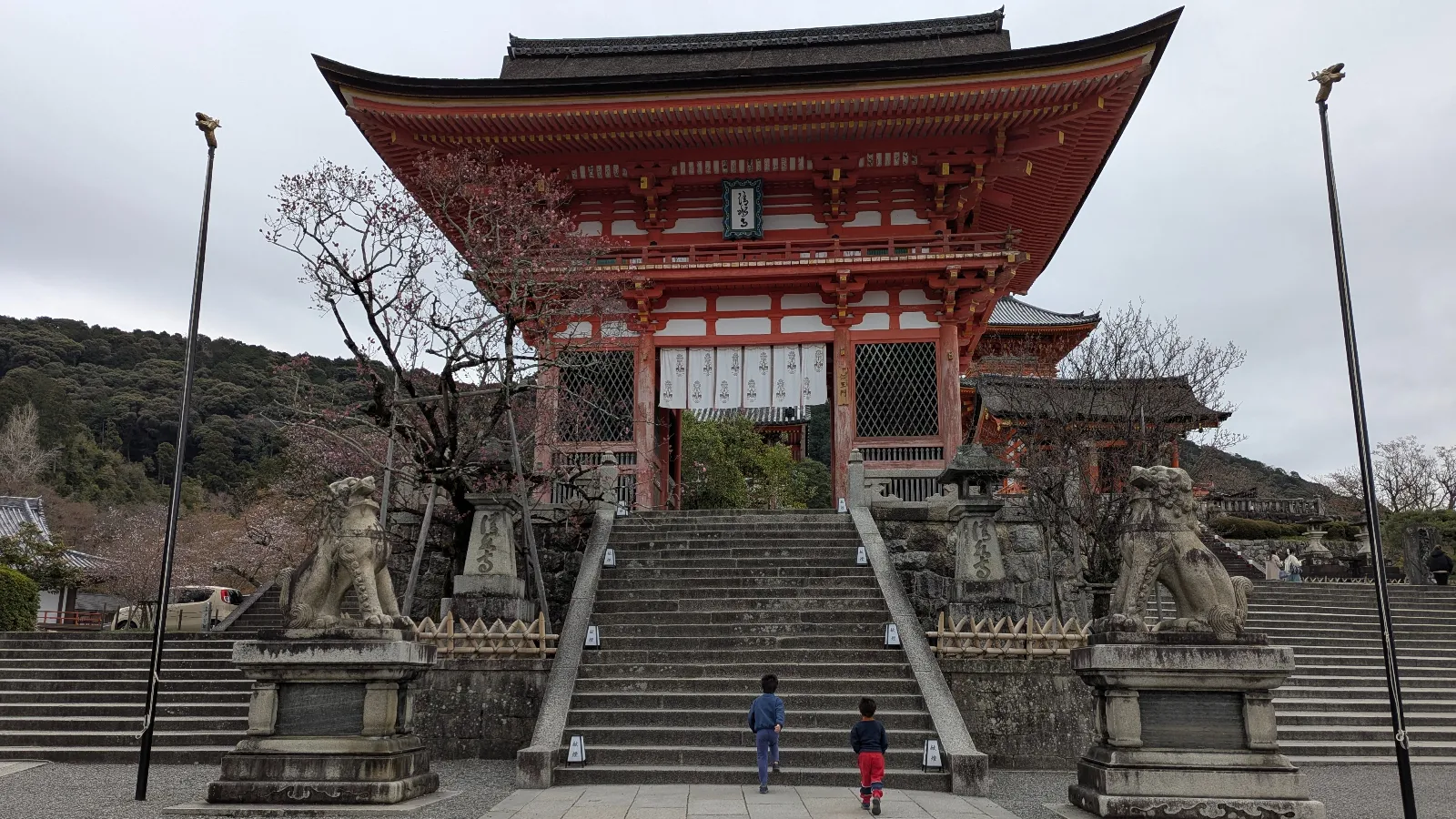
Fifteen halls run in a numbered order, which is as close to a script as a temple gets, and a child who needs the shape of a day settled can tick it off as a list. One element breaks the pattern and is the reason to come: at the Zuigudo a family walks a passage in total darkness. Both ways in are hill climbs through the busiest lanes in Kyoto, so the certainty is bought with legs.
The Photograph You Cannot Post: Kinkaku-ji, Kyoto.
The most photographed building in Japan is one you are asked not to post: photography here is for your own album, not for anybody’s feed. The visit is a one-way circuit around a pond to see a pavilion nobody enters, level as far as the view and stepped after it. It is short, and the crowd is concentrated into the few meters that hold the view, which is the hardest arrangement here for a child who empties in noise.
A Thousand and One, All Indoors: Sanjusangendo, Kyoto.
One hall about 120 meters long, flat, walked in a single direction, holding 1,001 gilded Kannon with twenty-eight guardians ranged in front of them. There is no climb anywhere in the visit and no weather in it either, which makes it the rainy-day answer for Kyoto that almost no itinerary carries. For a child, a thousand and one is a number they can test rather than a fact they are told.
The Scale a Child Can Measure Against: Todai-ji, Nara.
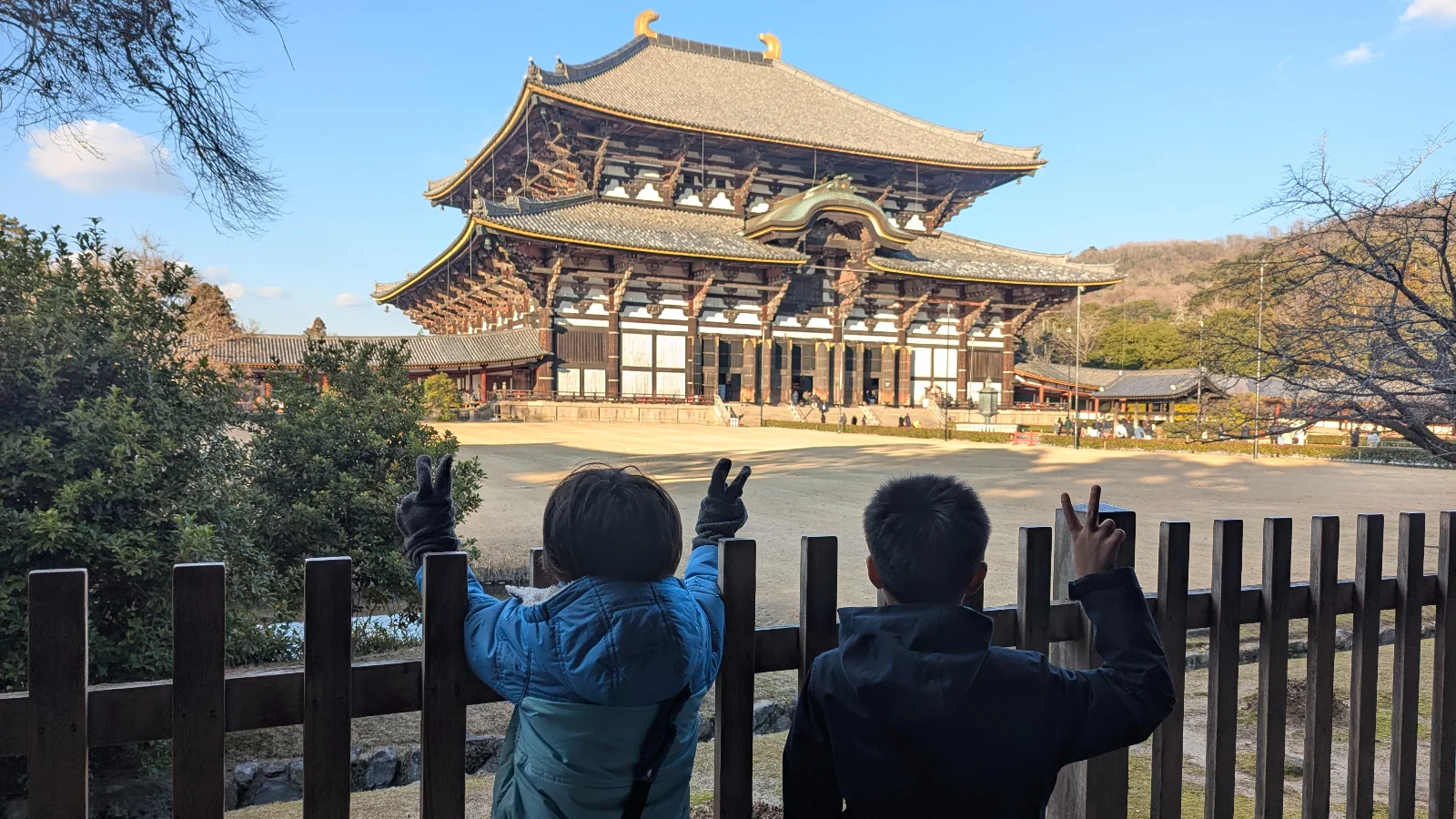
Twenty-one structures spread through Nara Park rather than one building, so the day is walked between things and a child who cannot hold still has somewhere to put it. The Great Buddha comes in parts a child can use: one eye is 1.02 meters, an ear 2.54, the face 5.33. Nigatsudo sits above on its own terrace and is open around the clock, which is the way to see this place without the crowd.
Flat, Then Suddenly Not: Kasuga Taisha, Nara.
The long approach runs level and then tilts into stone steps at the Chakutoden, and knowing that name is the whole planning value. A family walks the easy part knowing exactly where the decision comes, instead of meeting it with a child already spent. Thousands of stone lanterns line the flat stretch, which gives a younger child something to do while the legs still work.
Quiet Is the Rule Here: Horyu-ji, Ikaruga.
Anything amounting to clamor is barred across the entire precinct, and photography, video and sketching with it. For a child who empties out in noise that removes almost everything that makes a famous temple loud: no phones held up, no groups posing, no crowd stopped dead in a gateway. The trade is a precinct where running is out of the question, so it suits a quiet child and punishes a restless one.
Where the Walking Is the Visit: Okunoin, Koyasan.
Two kilometers of forest path under thousand-year cedars, past more than two hundred thousand gravestones, with nothing to stand still in until the very end. A child who cannot hold still gets the rare cultural site that rewards movement instead of forbidding it, and the rules here are physical enough to hand over: keep left, hat off at the bridge, phones off past it. The middle bridge halves the distance if two kilometers turns out to be optimistic.
Two, and they sit on opposite coasts.
One is half an hour from Hiroshima on the Inland Sea. The other is beyond Matsue on the Japan Sea side. Neither is a detour from the other, whatever the map suggests, and both want a day of their own.

Check the Tide, Not the Clock: Itsukushima Shrine, Hatsukaichi.
One route, one direction, which a parent can walk a child through before the ferry has even docked. What cannot be promised is the shrine over water: a tide table decides whether you get a shrine that floats or a torii you walk out to across sand, and both are worth seeing but only one can be described in advance. The East Corridor is under reinforcement until December 2026 and the pagoda until November 2027.
Downhill to the Hall: Izumo Taisha, Shimane.
The approach descends rather than climbs. It is paved rather than graveled, so it takes a wheeled child without an argument, and a level path runs in from the east parking lot for anyone who wants to skip the slope. It asks less of a child’s legs than any other major shrine in the country.
One, and it is a choice.
The only entry here a family goes out of its way for rather than past. It sits at Nagano, on the Shinkansen line from Tokyo to Kanazawa, which makes it the easiest thing on this list to fold into a travel day.
The Corridor in the Dark: Zenko-ji, Nagano.
A passage beneath the main hall in complete darkness, walked by feeling along the wall for a hidden lock, and that is all anyone will tell you about it beforehand. For a sensory-led child it is either the best thing in this guide or the worst, and unusually the family gets to decide: it sits inside one ticket alongside the gate tower, the sutra repository and the museum, so everything else can be taken and the corridor skipped. Describe it before you buy rather than at the entrance to it.
What has to be settled before you go.
Almost nothing here is booked, which sounds easy and is the trap. What decides these days is not a ticket but a tide, a bus, a rule or an hour of the morning.
Not age, not beauty, and not the world heritage list.
Most temple lists sort by age, by beauty or by the world heritage register, and none of the three tells a parent whether the afternoon will hold. What decides it is the walk in, the gradient, the surface underfoot, the rules about noise and sitting down, and whether any of that can be described to a child before you arrive. Sorted that way the order changes completely, and a place nobody puts on a list turns out to be the easiest day in the country.
The questions parents actually ask.
What are the best temples and shrines in Japan to visit with kids?
It depends which child is coming, so each of the seventeen here carries the one thing it is good for. Naritasan is the one whose hall anyone may enter. Izumo Taisha’s approach runs downhill. Kotoku-in is the one for a tired afternoon. Sanjusangendo is a thousand and one statues, all indoors. Fushimi Inari is the mountain that starts at the platform, which is a warning rather than a recommendation.
What is the most famous temple in Japan?
Senso-ji in Tokyo by visitor numbers, and the approach is the part to plan for rather than the hall. Nakamise runs about 250 meters with 87 shops on stone paving, so the visit begins with a slow shuffle through a crowd before a child sees anything. Kinkaku-ji in Kyoto and Todai-ji in Nara are the other two names that come up, and all three are morning visits by the time the crowd builds.
Which Japanese temple is easiest with a stroller or a tired child?
Izumo Taisha, and it is not close. The approach goes downhill rather than up. It is paved rather than graveled, and a separate level path runs in from the east parking lot for anyone who wants to miss the slope entirely. Kotoku-in in Kamakura is the other flat answer: one bronze in an open courtyard, level from the gate.
Which temples in Japan are hard work with a small child?
Four, for four different reasons. Fushimi Inari climbs toward a 233-meter summit from a station that sits at the gate. At Nikko Toshogu everything past the foot of the Yomeimon rises, including the Okumiya climb inside the basic ticket. Okunoin is two kilometers of forest path each way. Kasuga Taisha runs level and then tilts into stone steps at the Chakutoden.
Do you have to be quiet in Japanese temples and shrines?
At most of them it is manners rather than a rule, but at three it is enforced. Horyu-ji bars anything amounting to clamor across its whole precinct, and photography, video and sketching with it. Fushimi Inari prohibits shouting and sitting down anywhere in the grounds. At Okunoin phones go off entirely past the mausoleum bridge, not silent. Kinkaku-ji asks you not to post your photographs at all.
How many temples should you visit on one trip to Japan?
Two or three across a fortnight, and not in the same week. Seventeen places sit across ten prefectures here and few are near each other, so the limit is geography rather than appetite. The other reason is repetition: a child who has walked one long gravel approach reads the second as the same day again. Pick one from the region you are already in, then leave distance and days before the next.