Best Museums in Japan for Kids:all sixteen, by region.

- A Seat in the Middle
- Nagoya City Science Museum’s planetarium
- Nothing Behind Glass
- Tokyo Toy Museum, Shinjuku
- Made by Hand
- Cup Noodles Museum Ikeda: you carry it out
- Hands-On by Raffle
- The Railway Museum in Saitama
- Nothing at the Door
- Nintendo Museum, Uji: entry is by draw
Interactive museums and discovery centers for a family day trip, and what each experience asks of a child before the visit is booked.
Some links on this page are affiliate links. LuNi may earn a commission at no extra cost to you.
The best museums in Japan for kids are the ones that let a child work the exhibit rather than watch it, and sixteen of them across eleven prefectures are carried here by region rather than as a shortlist. What separates them is what the building asks of a body: how long a child stands, how much noise arrives, and whether anything can be handled. Nagoya City Science Museum sits the family down in a reclining planetarium seat; the Tokyo Toy Museum puts nothing behind glass; the Railway Museum draws its hands-on experiences by raffle; the Nintendo Museum admits by draw alone.
Sixteen museums, and the one thing each of them does.
Family travel runs on three currencies, not two. Money and time, plus the child’s Reserve: their finite capacity to absorb what travel asks of them. A museum spends that third one faster than almost anything else on a trip, because it asks a child to stand still, stay quiet and look at objects they did not choose, indoors, for an hour.
One thing is worth settling before you start, and it is a date rather than a preference. Two of these sixteen are on a clock. Kanazawa’s 21st Century is closed from May 6, 2027, with nothing scheduled to reopen until March 2028. The Tottori Sand Museum shuts between annual themes for about three and a half months. A trip planned around either of them is a trip planned around its calendar first.
Seven, and three of them are in Tokyo.
Three sit inside Tokyo, one is half an hour north in Saitama, two are up in the Hakone hills and one is underground outside Utsunomiya. The quietest hour in this guide and the loudest one are both on this list, and they are forty minutes apart.
The Robots Keep to a Schedule: Miraikan, Tokyo.
The live robot demonstrations run at fixed times and draw the densest crowd in the building, which makes them the thing to plan the visit around rather than walk into. Everything else is flat, fully indoor, served by elevators and dotted with benches, so the two to three hours cost a child’s legs close to nothing. Two things fill daily and are worth securing on arrival: the Curiosity Field play space and the Dome Theater, and with those held the rest of the museum runs at the child’s own pace.
Free Until the End of High School: National Museum of Nature and Science, Tokyo.
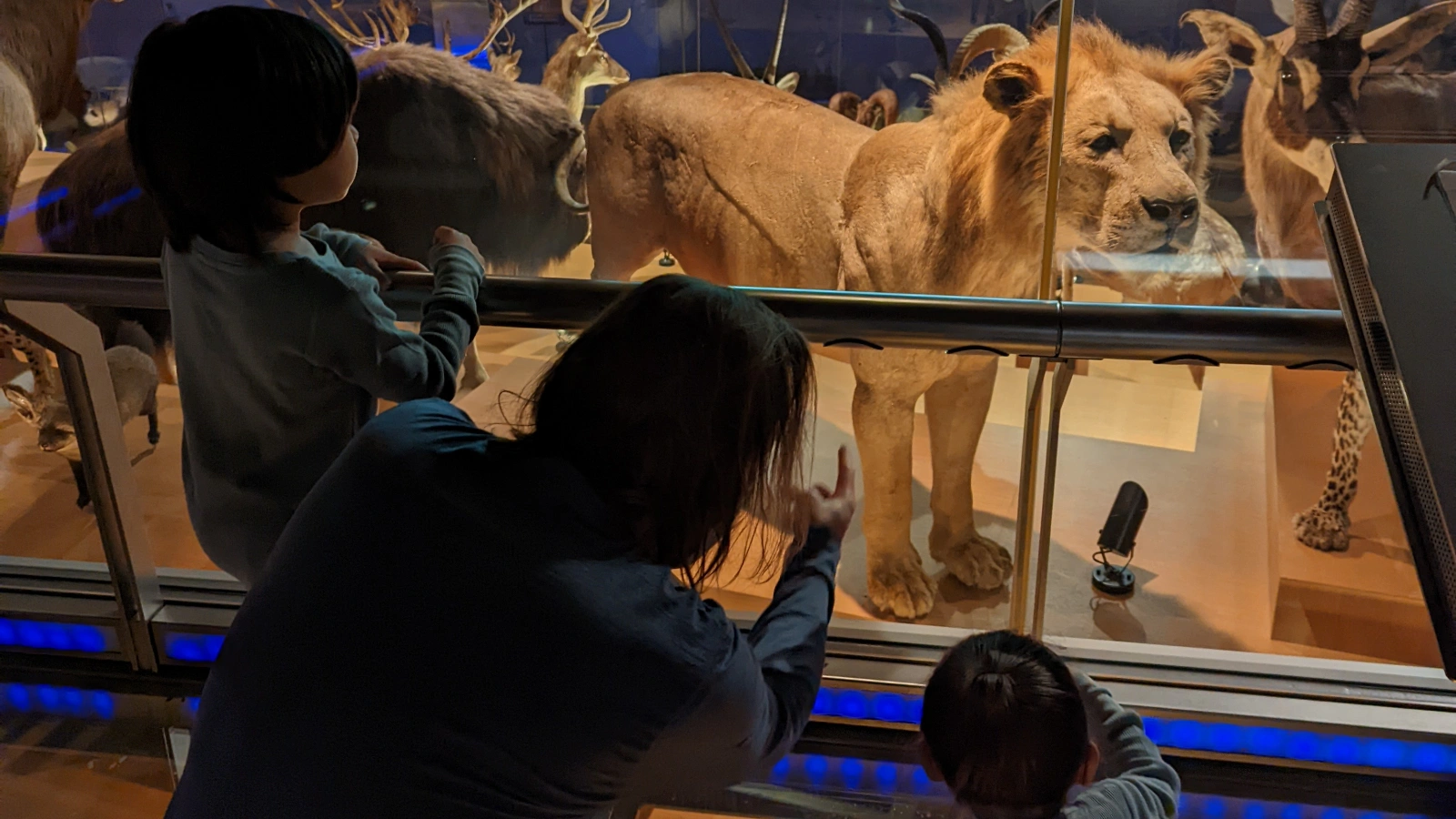
Adults pay ¥630, children pay nothing at all until they finish high school, and the doors are shut on Mondays. What it costs instead is distance: the collection splits across the Japan Gallery and the Global Gallery, and the walk between them is why two to three hours is the ceiling rather than the dinosaurs. Theater 360 is an enclosed dome with no easy sightline to the way out, so take it first or not at all.
Nothing Behind Glass: Tokyo Toy Museum, Shinjuku.
A converted elementary school where every object is meant to be handled: a wooden ball pit, a spinning-top table, kendama and koma, and a Wooden Toy Forest with no queue anywhere in it. The hard wooden floors that make it warm also make it loud, and on a weekend or during a school vacation the popular rooms fill with noise that has nowhere to go, so the ten o’clock opening on a weekday is a different building from the same rooms on a Sunday afternoon. Interest tapers past about ten, which is honest rather than a flaw.
A Draw You Can Lose: The Railway Museum, Saitama.
The driving simulators are free and they are not first come: an app lottery opens the instant the ticket is scanned at the gate, and a family can spend the whole day there without winning one. Say that out loud before you arrive, because the simulators sit in plain sight and a child who was promised one is owed the odds. What is guaranteed is the Rolling Stock Hall, three dozen full-size locomotives in an open hangar where steam-whistle blasts arrive without warning, and the outdoor Mini Driving Train, which is worth taking before eleven.
Where Adults Are Not Allowed: Hakone Open-Air Museum, Kanagawa.
Woods of Net is a hand-knitted rope structure children climb inside with their shoes off, and adults are barred from the mat: twelve and under only, with no lower age limit at all. Reaching it is the problem, because roughly 70,000 square meters of hillside carry about 120 outdoor works spread so that no two are seen from one spot, and a child who arrives at the nets with nothing left cannot use them. Go there first, and check the forecast, because the nets are only partly roofed and close in storms and snow.
The Light Never Changes: POLA Museum of Art, Kanagawa.
Mostly underground, and that was a lighting decision before it was an engineering one: a circular pit 74 meters across, with the above-ground height held to 8 meters so the building never rises above the Hakone trees. No daylight falls across the route, so the walk through the galleries does not track the weather or the hour, which is rarer than it sounds and is the whole reason to bring a child who reads every shift in light as one more thing to process. Nothing here is touched, worked, ridden or climbed, and the 1 km forest trail waiting outside closes without notice in bad weather.
Cold, Dark, and Underground: Oya History Museum, Utsunomiya.
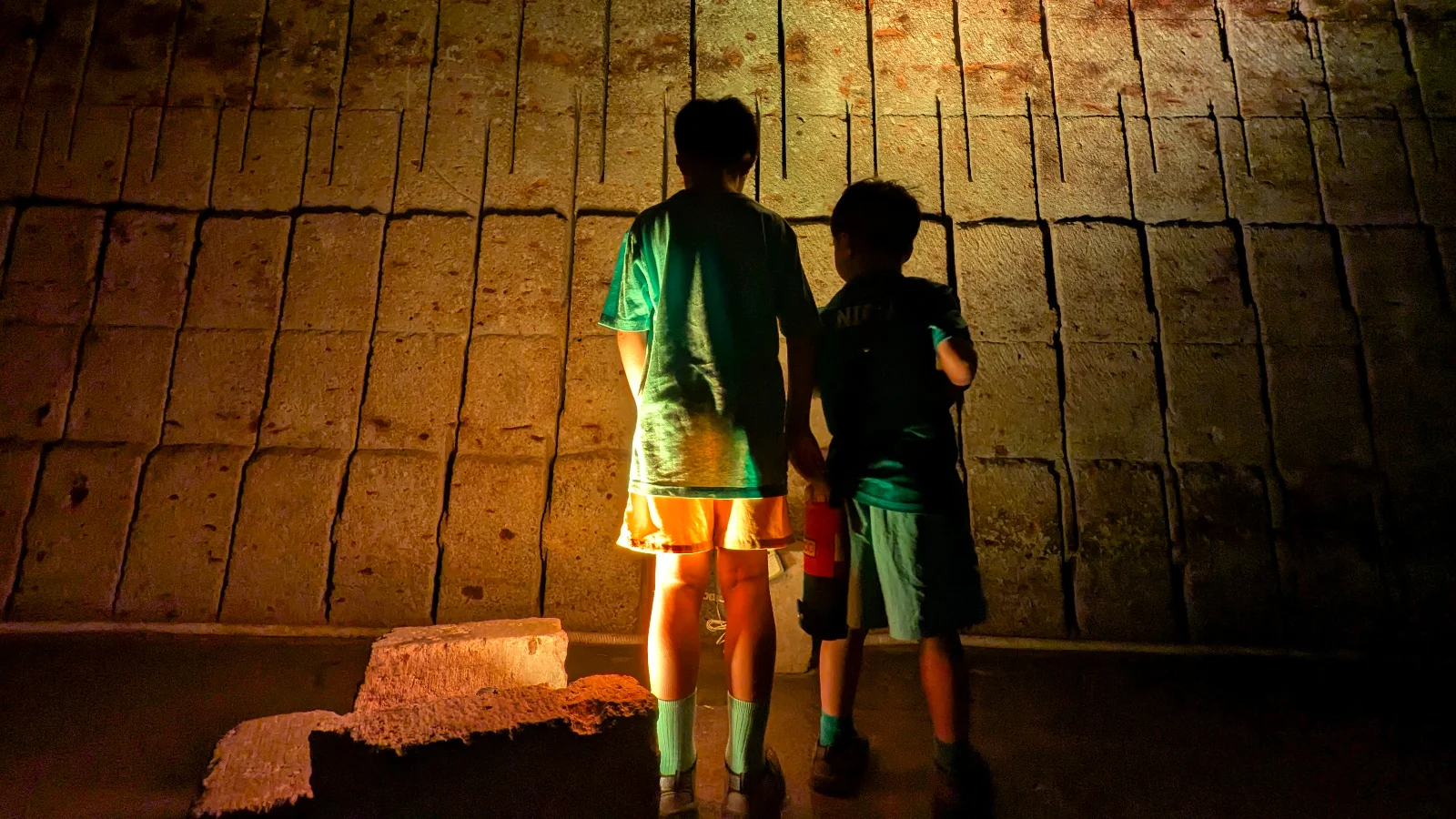
Not a building but a worked-out quarry, a vast lit void reached down stone stairs, where the walls are the exhibit and the echo is part of it. It is cold down there whatever the month, and the cold and the dark together are what make it a hard sell below about five, while an older child gets the scale and the history and stays the full hour. Tickets are bought at the entrance, the hours shift with the season, and forty-five minutes is the honest figure for a child who finds the dark expensive.
Four, and two are settled before you leave home.
Two sit in Kyoto prefecture, one of them out at Uji, and two are in Osaka. It is the only region here where the booking is harder than the travel, and the two that need booking need it in opposite ways.
The Exhibit That Leaves the Building: Kyoto Railway Museum, Kyoto.
SL Steam is a working steam locomotive that runs out of the halls onto its own track for about ten minutes, so the best thing in the museum is not in the museum. Tickets for the ride are sold at the boarding area on the day and never online, so buy them on the way in rather than after the halls, and take the earlier departure, because on a busy day a group may not get on at all. Inside, the roundhouse is a working shed: twenty stalls, hard surfaces, and the whistle carrying across all of it.
No Tickets at the Door: Nintendo Museum, Uji.
Entry is by advance lottery only, opening three months ahead and needing a free Nintendo Account, with cancellations sometimes releasing places up to two months out. Every pass carries ten activity coins for the interactive floor downstairs, which is where the visit actually happens; the gallery upstairs is a display case and a quick walk through. Elementary age and up is the honest floor, preschoolers enter free and get less from it, and the doors are shut on Tuesdays.
You Carry It Out With You: Cup Noodles Museum, Osaka Ikeda.
Free to walk into, and the center of it is not an exhibit but a production line a child works: decorate a cup, choose one soup from four and four toppings from twelve, about forty-five minutes end to end, and walk out holding the thing you made. The numbered tickets for that line go early and the count runs live on the congestion page, so check it before you set out and go first thing rather than after lunch. The Chicken Ramen Factory is the opposite booking, reserved from the same calendar date three months ahead until the day before, seventy minutes long and closed to preschoolers.

A Street on the Ninth Floor: Osaka Museum of Housing and Living, Osaka.
Three floors of an office building stacked over Exit 3 at Tenjimbashisuji-rokuchome, so there is no approach walk at all: floors eight to ten hold a full-scale Tenpo-era street, modern Osaka, and an observation floor above them. The exhibit is a street walked once end to end rather than a circuit of rooms, which is why it holds up in the second week when a child’s legs have already gone. One thing decides it: the kimono rental that fills the ninth floor through the middle of the day is cash only and sets a 110 cm minimum height.
Two, and nothing alike except the map.
Nagoya sits between Tokyo and Kansai on the Shinkansen, which makes it the easiest museum in this guide to fold into a travel day. Kanazawa is the opposite: a trip taken on purpose, and one on a clock.
Fifty Minutes, Reclined: Nagoya City Science Museum, Aichi.
The planetarium is a dome 35 meters across with 350 seats that recline and rotate through thirty degrees, and the show runs about fifty minutes. It is the only entry in this guide that gives stamina back instead of spending it, because sitting down normally arrives after the damage as a repair and here it arrives in the middle of the day. Seats are a separate ticket, every child needs one of their own, they sell from three months ahead and they sell out, so buy them the moment you arrive and let the galleries fill the wait.
Go Before May 2027: 21st Century Museum of Contemporary Art, Kanazawa.
A glass circle 113 meters across with no front and no back, built without a designated route or a main entrance, and its public zone is free to walk into and stays open long after the ticketed galleries have shut. That is the unusual part: leaving a gallery is not leaving the museum, so a child who needs to get out of a room has somewhere to go that is still the building. It closes for repairs on May 6, 2027, and nothing is scheduled to reopen until March 2028, and the underground half of the Swimming Pool is reserved on the day only, by web or ticket machine and never by phone.
Two, and neither is on the way to the other.
One is a single hall on the Japan Sea coast in Tottori. The other is twenty minutes out of Fukuoka at Dazaifu. Both are a day chosen rather than a day passed through, and they sit on opposite sides of the country.
Rebuilt Every Year, Shut in Between: Tottori Sand Museum, Tottori.
One room, one material and one theme a year, and at the end of each run the same sand builds the next one. Nothing in it lights up, plays a sound or asks to be pressed, because none of that can be made out of damp sand, which makes it the quietest hour in this guide and the hardest thing here to describe to a child in advance. The seventeenth run ends 3 January 2027 and the eighteenth opens 23 April 2027; there is no booking and no timed entry, no re-entry once you leave, and the hall is held close to the outside temperature, so in winter dress for outdoors and go in once.
One Tunnel, No Turnings: Kyushu National Museum, Dazaifu.
The approach is the argument: from Dazaifu the building is reached through a single enclosed access tunnel fitted with escalators and a moving walkway, about ten minutes from Nishitetsu Dazaifu Station, with no turnings and nowhere else it could go. A child who cannot settle until they know what happens next arrives by a route that could not have led anywhere else, which is worth more on the day than anything in the cases. Count the return leg, because the tunnel is the only way out as well, and take Ajippa, the free hands-on room, first, since it accepts no reservations and can be full.
One, and it has no indoors at all.
The only entry here a family flies for. It sits on the edge of Sapporo and it is the largest thing in this guide by a wide margin, which is both the reason to go and the reason to think twice.
A Town Reassembled: Historical Village of Hokkaido, Sapporo.
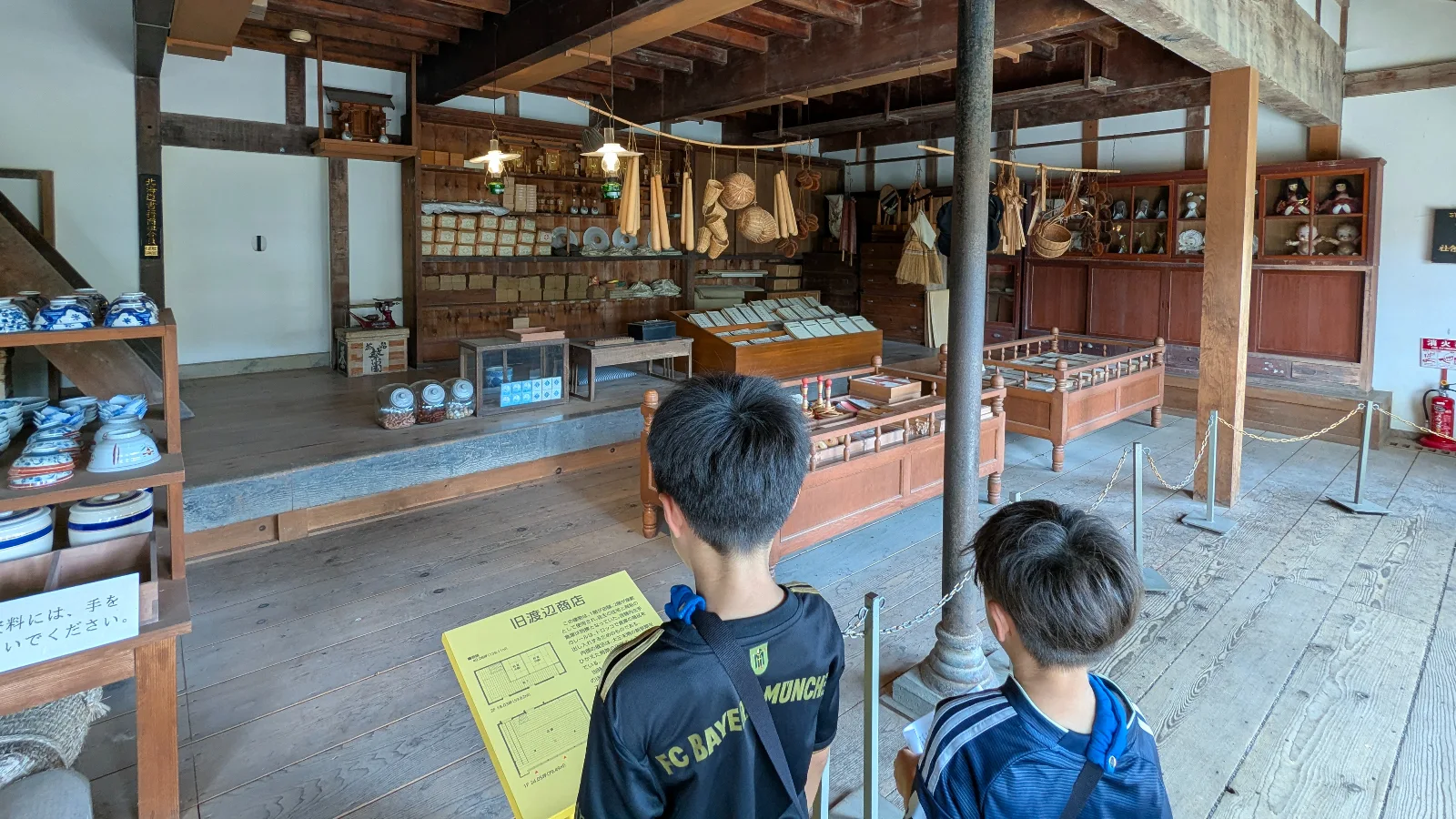
Fifty-two buildings put up between the late 1860s and the 1920s were taken down and re-erected across 54.2 hectares as a town, a fishing village and a farm village. There is no corridor, no route marker and no moment of being inside rather than outside, which removes the thing that usually makes an exhibition hard for a child who cannot hold still. It is also the hardest day in this guide for a child who runs out of legs: two hours minimum, outdoors, in Hokkaido weather, with the return leg still to come, so ride the horse-drawn tram out to the far end and walk back rather than the other way around.
What has to be settled before you go.
Not one of these sixteen needs a reservation to get through the door, which is the easy half. The hard half is that four of them are decided somewhere else entirely: by a closing date, by a lottery, by a seat sold separately from the ticket, and by a tram that stops running in October.
Not the collection, not the building, and not the visitor numbers.
A national museum list is normally sorted on the collection, the architecture or how many people came last year, and none of the three tells a parent how the next two hours will go. What decides it is what the building asks of a child between the ticket desk and the exit: how much of it is spent standing, how much noise arrives whether anyone wants it or not, how much of the sequence can be described on the train, and whether anything in the room can be worked rather than watched. Sorted that way the order changes completely, and a single room of sand on the Japan Sea coast outranks buildings holding a hundred times its collection.
The questions parents actually ask.
What are the best museums in Japan for kids?
Sixteen are worth a family’s day, and which one is best depends entirely on the child. Miraikan in Tokyo is flat, indoor and seated throughout. Hakone Open-Air has a rope structure adults may not enter. Tottori is one silent room of sand. Nagoya’s planetarium gives stamina back instead of spending it, and Kyoto Railway has a working steam locomotive that leaves the building.
Which museums in Tokyo are worth it with kids?
Three, and they are nothing alike. Miraikan in Odaiba is flat, elevator-served and full of benches, with robot demonstrations at fixed times. The National Museum of Nature and Science in Ueno is free for anyone still at school and split across two buildings, which is what sets the ceiling. The Tokyo Toy Museum in Shinjuku is a converted school where nothing sits behind glass.
Which Japanese museum is easiest with a tired child?
Nagoya City Science Museum, and it is not close. The planetarium show runs about fifty minutes in a reclining seat under a dome 35 meters across, so the rest arrives in the middle of the day rather than after the damage. The Osaka Museum of Housing and Living is the other answer: three floors stacked over a station exit, with no approach walk at all.
Which museums in Japan are hard work with a small child?
Three, for three different reasons. The Historical Village of Hokkaido is 54.2 hectares outdoors with no interior at all and a two-hour minimum. Hakone Open-Air spreads about 120 works across 70,000 square meters of hillside, so the nets come at the end of a long walk. Oya is cold, dark and reached by stone stairs, which is a hard sell below about five.
Do museums in Japan need to be booked in advance?
Mostly no, with one flat exception. The Nintendo Museum is advance lottery only, opening three months ahead, and sells nothing at the door. Everywhere else takes general admission on the day, and only four things inside them are bookable at all: Nagoya’s planetarium seats, Miraikan’s Dome Theater and Curiosity Field, the Chicken Ramen Factory at Ikeda, and Kanazawa’s Swimming Pool, same day only.
How many museums fit into a two-week trip to Japan?
Three or four, not sixteen. Take one per region you were already visiting, pick it by the child rather than by the reputation, and treat the following morning as recovery. One carries a date worth checking first: Kanazawa’s 21st Century is closed from May 6, 2027, with nothing scheduled until March 2028.