

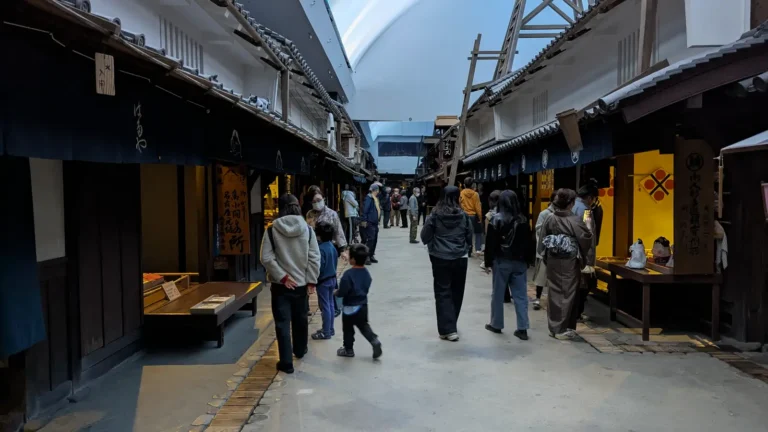
Step back into 1830s Osaka at the Osaka Museum of Housing and Living (大阪市立住まいのミュージアム), where your family can walk through a life-sized replica of an Edo-period town, fully indoors and air-conditioned.
This interactive museum is a parent’s secret weapon for rainy days or hot afternoons. Kids can explore merchant houses, play with interactive exhibits, and, best of all, rent a traditional yukata to wear while they explore.
Bonus for budget travelers: If you have the Osaka Amazing Pass, entry to this museum is 100% free.
Wondering, “Is Osaka worth visiting with kids?” Start there to see if the city is the right fit for your family!
Once you’re ready to plan, begin with our Osaka Family Travel Guide for the essentials on where to stay, how to get around, and what to eat. Then visit the Osaka with Kids Hub to explore all our Osaka guides, attractions, and age-specific tips in one place.
For even more ideas, browse our Ultimate Guide to Family Attractions in Japan with Kids for the top castles, shrines, museums, aquariums, and theme parks.
Why Osaka Museum of Housing and Living is Great for Families with Kids
- Kids can walk inside and around life-sized homes, experiencing what Osaka looked and felt like over 150 years ago.
- There’s an option to rent traditional yukata and explore the recreated town in costume, a big hit with kids.
- The museum’s compact layout and interactive details make it easy to enjoy, even with younger children.
- Fully indoors and air-conditioned, it’s ideal for rainy days or hot summer afternoons.
Parent Insight: Immersive environments let kids step into the past, but it’s the questions you ask that bring it to life. Try asking, “What job would you have had back then?” or “Which house would you want to live in?” to help them connect emotionally with history through imaginative play.
LuNi Family Fit Check: Osaka Museum of Housing and Living
Every child experiences busy places differently. Not sure which profile fits your kid? Run the free Family Fit Check in 2 minutes to see if this spot is a ‘Green Light’ for them.
🟢 The Dynamo
🟡 The Sensor
🟢 The Anchor
🟢 The Sprinter
Best Things to Do at Osaka Museum of Housing and Living with Kids
- Edo-Era Osaka Street: Lantern-lit alleys, merchant houses, and shopfronts to explore, complete with ambient sounds and seasonal decorations.
- Traditional Costume Rental: Dress in yukata and take photos in the old town street, fun for the whole family.
- Miniature Osaka Displays: Scale models of homes, neighborhoods, and markets with buttons and lights that kids can activate.
- Interactive Screens & Maps: Easy-to-understand visuals that show how Osaka changed over time.
- View from Above: The museum’s entrance floor looks down onto the street scene below, a great spot to start your journey with a wow!
The Family Fit Reality
Memorizing height requirements, mapping out parade routes, and calculating the cost of Premier Access passes are essential steps for any family hoping to conquer Japan’s major theme parks.
But here is the hidden trap most parents fall into: securing a skip-the-line pass won’t save your day if the sheer volume of crowds, loud noises, and back-to-back attractions pushes your child past their breaking point before noon. What is magical for one kid can be a complete sensory nightmare or physical drain for another.
Surviving a 12-hour park day depends entirely on how your child is wired to process that environment. A high-energy Dynamo might need constant physical movement rather than standing in a structured queue, while a noise-sensitive Sensor can easily experience a rapid shutdown from the flashing lights and dense crowds. A low-stamina Sprinter will physically burn out without a strict plan, and a routine-craving Anchor needs predictable, familiar anchors built into the day to avoid severe anxiety.
Before you buy hundreds of dollars in non-refundable tickets and lock in an aggressive ride strategy, you need to discover exactly what your child can actually handle. Take the free, 60-second Family Fit Check to reveal your child’s travel profile and unlock the exact modifications you need to engineer a park day that actively supports them.
Practical Tips for Visiting Osaka Museum of Housing and Living with Kids
- Cost: ¥ – Adults ¥600, high school students ¥300; kids under high school free. Included with the Osaka Amazing Pass.
- Best Age Range: Ages 4+, but toddlers love the open walkways too
- Stroller-Friendly? Yes, elevators and flat paths throughout
- Rest Areas: Benches inside the exhibit space and lobby area
- Food: No eating inside the museum, but plenty of nearby cafés and restaurants in the Tenjinbashisuji Shotengai
- Special Note: See our Osaka Amazing Pass Attractions Full Guide for Families to see what to pair this with
LuNi Strategy: Don’t Miss the Kimono Moment
This museum recreates a full Edo-period town indoors and is famous for its affordable kimono experience. For many kids, dressing up is the highlight, and that’s where families often get caught off guard.
Promising Costumes You Can’t Deliver – Kimono rentals run on a strict first-come, first-served system. On weekends and busy days, slots frequently sell out by late morning. Families who arrive too late often hear “no more costumes today” after their kids have already built the moment up in their heads.
The LuNi Move – Treat the kimono like the main event. Arrive at the opening, and go straight to the rental counter before exploring anything else. Securing the costume first protects the rest of the visit from disappointment.
Families who secure the kimono early enjoy the museum relaxed and smiling. Those who don’t often spend the visit managing disappointment instead of exploring.
Best Time to Visit Osaka Museum of Housing and Living with Kids
The best time to visit Osaka Museum of Housing and Living with kids is in the morning on weekdays, when the museum is quieter, and children can freely explore the recreated Edo-period streets without large crowds. Mornings also allow families to enjoy hands-on exhibits like dressing up in yukata before peak groups arrive.
Seasonally, the museum is an indoor attraction, making it perfect for summer when Osaka is hot and humid, or during rainy days when outdoor sightseeing is less comfortable. In winter, it’s a cozy cultural stop that gives kids a playful way to imagine daily life in old Osaka.
Arriving early not only avoids school tour groups but also gives children the space to wander at their own pace, peek into traditional houses, and soak in the feeling of stepping back in time.
If You’re Still Deciding on Dates
For year-round planning, explore our Japan Seasonal Guides for Families, including detailed resources for spring, summer, autumn, winter. You can also read our full Best Time to Visit Japan with Kids guide to compare crowds, weather, and seasonal experiences across the country.
Once Your Dates Are Set
When your travel window is locked in, use our Packing Guide for Japan with Kids to pack with intention. It focuses on real-life logistics, cultural nuances, and the small systems that make daily travel in Japan calmer and easier.
How Long to Spend at Osaka Museum of Housing and Living with Kids
Plan to spend about 1–2 hours at the Osaka Museum of Housing and Living with kids, enough time to stroll through the recreated streets, try on traditional yukata, and enjoy the interactive displays. Families who want to take lots of photos or join temporary exhibitions may spend closer to two hours.
For toddlers and younger kids, a shorter 45–60 minute visit works well since the highlight is walking through the lifelike Edo-style streets. School-age children will likely enjoy trying activities, spotting details in the exhibits, and dressing in costume, making a 1.5–2 hour visit ideal. Older kids and teens may also want to explore the rotating exhibits on Osaka’s urban history, adding extra time.
How to Get to Osaka Museum of Housing and Living with Kids
- Take the Osaka Metro Tanimachi Line to Tenjinbashisuji 6-chome Station, the museum is located directly above the station.
- It’s also connected to Japan’s longest shopping street, Tenjinbashisuji Shotengai, making it easy to pair with lunch or snacks.
Luca & Nico’s Tip: Ask for the scavenger hunt sheet at the entrance, it turns the whole museum into a mini Edo-era adventure!
Planning Bullet Train Travel?
Our Shinkansen With Kids guide covers seat selection, luggage strategies, and how to navigate major stations with little travelers.
Comparing Rail Options?
Before buying tickets, read our Japan Rail Pass Guide to understand when the pass is actually worth it for families, and when it’s not.
Want to Travel Light Between Cities?
Our Japan Luggage Delivery Guide explains how to send suitcases ahead, making station transfers dramatically easier with kids.
Family-Friendly Hotels Near Osaka Museum of Housing and Living
Looking to stay close to the museum? These family-friendly hotels offer a mix of luxury, comfort, and convenience:
- Luxury
- Imperial Hotel Osaka – approximately 20 minutes on foot from the museum. This upscale option features elegant rooms, multiple dining venues, and a spa ideal for families.
- Hotel Hankyu International – about a 17‑minute walk from the museum. This high-end hotel includes spacious rooms and a pool, making it a great stay for families.
- Mid-Range
- Toyoko Inn Osaka Tenjimbashi-suji Rokuchome – an affordable, budget-friendly option about a 7‑minute walk from the museum. Includes free breakfast and clean, practical rooms.
- Budget
- APA Hotel Osaka‑Temma – about a 15‑minute walk to the museum. A clean, budget-friendly stay with compact rooms and quick access to JR Temma Station.
Choose Your Base
As you finalize your Osaka plans, you might be thinking about where to stay. Our Osaka Hotel Guide highlights the best family options across every budget, whether you’re aiming for the energy of Namba, the convenience of Umeda, or a riverside stay with easy transport links.
Looking beyond Osaka? Our Ultimate Guide to Family Hotels in Japan compares the best options nationwide.
Plan What to Do
Once your hotel is sorted, dive into our Best Things to Do in Osaka with Kids guide for castles, aquariums, and epic play spaces, from the dazzling lights of Dotonbori and the towering Osaka Castle to Universal Studios Japan, Osaka Aquarium Kaiyukan, and the hands-on fun at Kids Plaza Osaka.
Don’t miss our Osaka Indoor Activities Guide and Osaka Indoor Playgrounds Guide for weather-proof fun.
Family-Friendly Attractions Near the Osaka Museum of Housing and Living
- Tenjinbashisuji Shopping Street – Right outside the museum, this is Japan’s longest shopping arcade. Families can stroll through covered walkways filled with snack stalls, toy shops, and quirky local stores.
- Kids Plaza Osaka – Just a short walk away, this interactive children’s museum has science experiments, climbing structures, and plenty of play zones. Perfect for younger kids after exploring history at the Housing Museum.
- Osaka Tenmangu Shrine – One of Osaka’s most important shrines, known for its Tenjin Festival. Families can enjoy a calm cultural stop paired with the bustling shopping street nearby.
- Ogimachi Park – Located next to Kids Plaza Osaka, this park offers open lawns, a playground, and a good spot for picnics or letting kids run free.
- Umeda Sky Building – Just a short subway ride away, this futuristic landmark has an open-air observatory with sweeping views of Osaka. Families can enjoy spotting trains, planes, and city lights.
If You’re Planning Your Full Japan Route
If you’re mapping out your wider Japan route, start with our Japan 14-Day Family Itinerary for a balanced mix of major cities, culture, and kid-friendly highlights. Families comparing trip lengths often find it helpful to look at multiple options, including classic 7-day and 10-day Japan itineraries that show how to pace Tokyo, Kyoto, and Osaka with kids.
If You’re Focused on Osaka
And for travelers focusing mainly on Osaka, our Osaka 3-Day Family Itinerary offers an easy, child-friendly way to plan your days.
If You Want Everything in One Place
For bigger-picture planning, our Japan Family-Friendly Travel Hub brings together every city guide, attraction breakdown, and family resource in one place.
You can also dive into Planning a Family Trip to Japan and Japan Budget Family Travel Tips for help with routes, pacing, and realistic costs.
FAQs: Visiting Osaka Museum of Housing and Living with Kids
Planning your visit? These family-focused FAQs cover everything from tickets and rentals to rainy-day tips and scavenger hunt fun. For the most up-to-date hours and admission details, check the official Osaka Museum of Housing and Living website.
A: Yes, the museum is included in the Osaka Amazing Pass, giving families free entry with the pass. This makes it an excellent stop for pass holders looking to combine cultural experiences with other attractions around the city.
A: Yes! The museum is stroller-friendly, fully indoors, and designed with wide open spaces, making it easy for families with toddlers or preschoolers. Younger children especially enjoy the life-sized Edo-period street and hands-on visuals, making it an ideal stop on hot or rainy days.
A: Yes! Families can rent yukata costumes for an additional fee and stroll through the Edo-era town in traditional dress. It’s one of the most popular activities, especially for kids who love taking photos and imagining themselves as part of old Osaka.
A: Most families spend about 1–2 hours exploring the museum. This allows time to walk through the recreated town, peek into homes and shops, and join extras like the scavenger hunt or yukata rental. Families with toddlers and younger kids may finish faster, while school-age children often enjoy a longer visit.
A: Absolutely. The museum is fully indoors, air-conditioned, and interactive, making it one of the best rainy-day attractions in Osaka for kids. Families can enjoy exploring without worrying about weather, while still experiencing a cultural and hands-on activity.
A: Yes! Children can press buttons to trigger lights and sounds, walk freely through the full-scale Edo street, and peek inside traditional homes and shops. There are also interactive scavenger hunts, which make the visit fun and engaging for school-age explorers.
A: The museum is typically open from 10:00 AM to 5:00 PM, with last entry at 4:30 PM. It is closed on Tuesdays and during select holidays. Families should check the official schedule before visiting, especially during school breaks or public holidays.
A: Admission is ¥600 for adults and ¥300 for high school and university students, while children up to junior high school age enter Free with proof of age. Group discounts are available, and set tickets that include special exhibitions are offered at higher rates. Always check the current pricing, as special exhibitions may change costs.
A: Tickets can be purchased on-site at the entrance or reserved online through official partners. Buying in advance is recommended, especially on weekends or holidays, to avoid long waits and possible timed-entry restrictions.
A: Kids can explore a life-sized Edo-period street, peek into merchant homes and bathhouses, activate miniature city models with sound and light, and join an interactive scavenger hunt. The immersive setup makes history feel like play for young explorers.
A: The museum is located in Tenjinbashi, central Osaka, directly connected to Tenjimbashisuji 6-chome Station (Osaka Metro Tanimachi and Sakaisuji Lines). Its convenient location makes it easy for families to include as part of a day exploring the city.
A: The best time to visit is in the morning on weekdays, when crowds are lighter and children can explore freely. Since the museum is fully indoors, it’s also ideal on rainy days or in hot summer months. Arriving early helps families enjoy activities like yukata rental without waiting in line.
A: Yes, the museum is stroller-friendly with elevators and wide indoor pathways. Families with infants will find it easy to navigate, though strollers may need to be left outside certain small exhibition areas.
A: Yes, families are welcome to take photos inside the Edo-period town, especially if renting yukata costumes. It’s one of the most photogenic spots in Osaka, with kids loving the chance to pose in recreated streets, shops, and traditional homes.
Until Next Time…
The Osaka Museum of Housing and Living turns a history lesson into an adventure, letting families walk, see, and even dress like locals from long ago. It’s a short visit, but a lasting memory of how the city once felt, sounded, and looked.
Stay curious, stay adventurous, and keep dreaming!
~ The LuNi Travels Family ~