Yokohama Chinatown with Kids: A Dense Walk, Not a Calm Stroll.
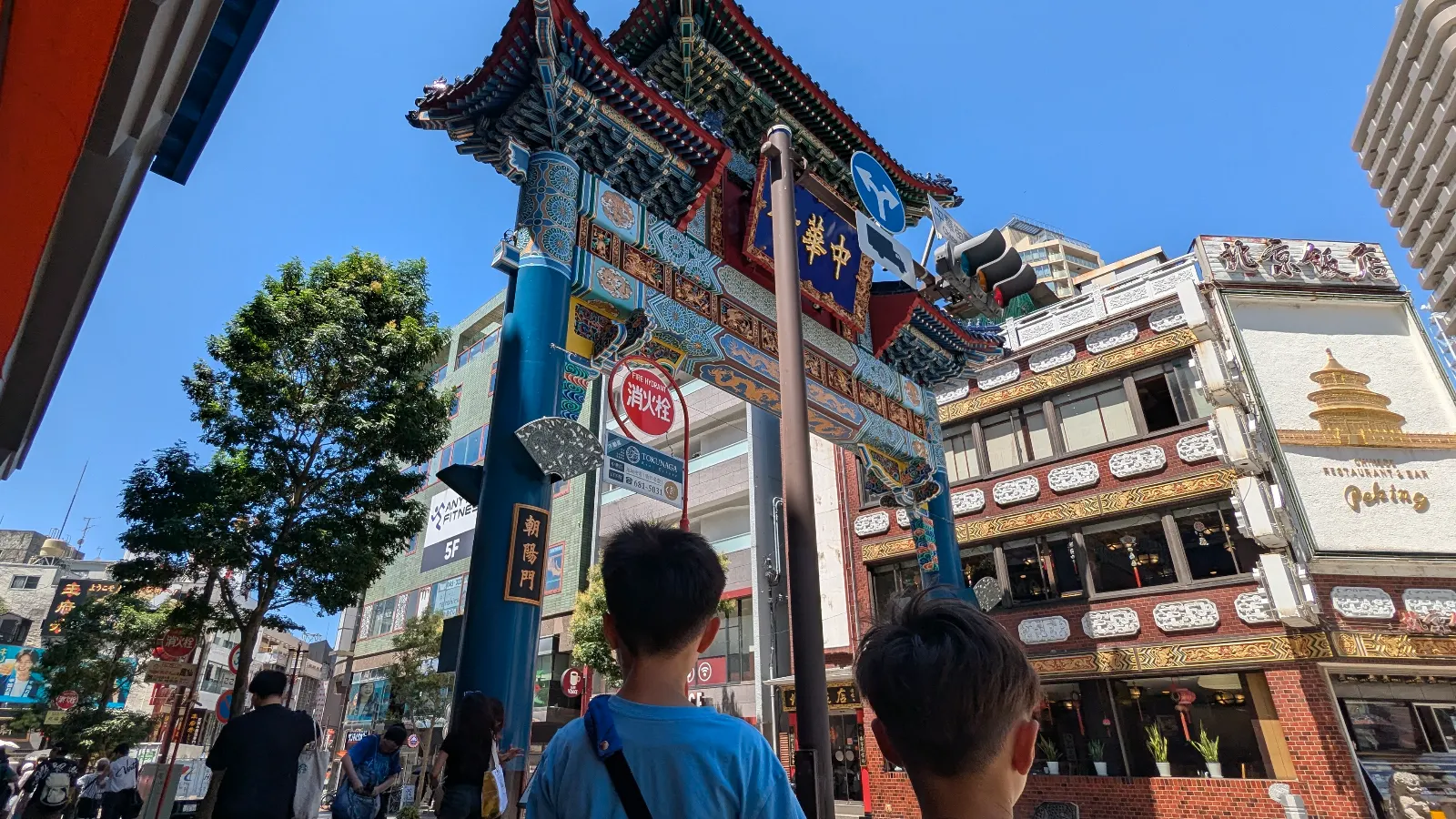
Ten gates, some 630 shops and about 200 restaurants packed into about 500 meters square, which is a feast for one kind of child and a flood for another.
Free to walk and nothing to book; food and shopping are paid shop by shop.
Each shop and restaurant sets its own hours and closing days.
The main street runs about 300 meters; a short, planned route beats wandering around.
Older children cope best with some 630 shops and a crowd to move through.
No rules of its own; in streets this dense, a carried child moves more easily.
Some links on this page are affiliate links. LuNi may earn a commission at no extra cost to you.
Is Yokohama Chinatown worth it with kids?
The short version, before the costs, the timings and the case for each child.
It depends on the child, more than most stops do. For a child who needs to move, Chinatown is a good walk: about 500 meters square, entered through ten gates, with a main street of about 300 meters and roughly 630 shops, some 200 of them Chinese restaurants. For a child who is overwhelmed by a lot at once, or one who needs to know what comes next, the same density is the problem. It is free and a minute from Motomachi-Chukagai Station, so go in with a plan: one way in, one thing to eat, and a time to leave. Yamashita Park lies on the Choyo-mon side for the reset afterward, and most families will want it.
Planning Your Visit to Yokohama Chinatown with Kids.
Four decisions turn Chinatown from a gamble into a plan. First, decide which child the visit is for, because it is a good walk for one who needs to move and a hard hour for one who is easily overwhelmed. Second, choose the station: Motomachi-Chukagai is a minute from the district, JR Ishikawacho five and Kannai seven, and the nearer the station, the shorter the walk before the crowd. Third, choose the food before arriving, something the child already likes, so nobody decides hungry in a crowded street. Fourth, set the exit before going in, and make it the park if the child who came is the one who struggles, since open air after a dense street is a quick reset. Chinatown is one hour of Yokohama with children, not the whole day.
Every LuNi attraction guide starts with a visit, with our own children
LuNi rates and writes about attractions only after visiting them with children. Luca and Nico were at Yokohama Chinatown, and what they did there is recorded further down this page, including how each child actually met it.
Children arrive with different tolerances: for noise, for lines, for standing still, for being on their feet all day. A guide written for the average of them helps almost nobody. So every place on this site is read four ways, and each verdict says which children it already suits and what makes it work for the rest. Whoever you are bringing, the answer here is built for your family rather than for a general reader.
Restricted-movement depletion stays low walking a district of ten gates and some 630 shops, so let the child lead from gate to gate on foot.
Sensory-input depletion runs fast with about 630 shops and 200 restaurants packed into 500 meters square, so keep it short and exit to the park.
Unfamiliarity and unconfirmed structure pile up with ten gates, many ways in and hours that vary shop by shop, so fix one gate and one plan.
Sustained walking and standing add up across a district about 500 meters square, so walk the 300-meter main street and rest in the park after.
Hotels we would book for this visit.
Three Yokohama family hotels chosen by district: one in Yamashita Park’s district on Chinatown’s Choyo-mon side, one by the Cup Noodles Museum, and one for a family that wants a quiet evening base after the streets.
| Property | The LuNi Reason |
|---|---|
| LUNI Pick Hotel New Grand | Hotel New Grand stands in the park district on Chinatown’s Choyo-mon side. After a dense hour in the streets, a room there puts the park, the calm half of the day, in the hotel’s own district, which is what a child who found Chinatown too much needs by the afternoon. |
| Citadines Harbour Front Yokohama In Yokohama | For a family planning a short Chinatown walk and a quiet evening, with Motomachi-Chukagai, a minute from the district, as the station to aim for. A room to come back to that asks nothing more of a child who has had enough of the crowd is the whole point of the evening. |
| InterContinental Yokohama Pier 8 | InterContinental Yokohama Pier 8 stands in the district of the Cup Noodles Museum. It suits a family giving Chinatown only an hour, as the moving part of a day whose main stops are the museum and Cosmo World, with the hotel in the museum’s own district at the start and end of it. |
Citadines Harbour Front Yokohama
InterContinental Yokohama Pier 8
Nearby attractions, matched to your child.
Three nearby visits for what Chinatown takes out of a child: open air for one flooded by it, a booked, predictable morning for one unsettled by it, and a free park of rides for one who wants more movement.
| Pairing | Why This Solves the After-Visit | For Your |
|---|---|---|
| LUNI Pick Yamashita Park Motomachi-Chukagai Station Exit 4, 3 minutes | Chinatown’s largest gate, Choyo-mon, stands on the Yamashita Park side, and the park is free open air of about 74,000 square meters, with a rose garden and a fountain. Sensory-input depletion from some 630 shops in 500 meters square eases fastest in open space, so make it the exit. | Sensor |
| Cup Noodles Museum Yokohama Shinko: Minatomirai or Bashamichi Station, 8 minutes | At the Cup Noodles Museum the day can be fixed at home: a factory slot booked online by midnight the day before, set hours, and a Tuesday closing. After a district with ten gates and shop-by-shop hours, unfamiliarity and unconfirmed structure ease in a morning that runs to a time. | Anchor |
| Yokohama Cosmo World Minatomirai Station, about 2 minutes | Free to enter and about two minutes from Minatomirai Station, Yokohama Cosmo World gives a Dynamo rides and a park to move between, paid ride by ride in cash. Restricted movement has somewhere to go, though preschoolers ride only with a paying companion aged 16 or over. | Dynamo |
Yamashita Park
Motomachi-Chukagai Station Exit 4, 3 minutes For YourSensor
Cup Noodles Museum Yokohama
Shinko: Minatomirai or Bashamichi Station, 8 minutes For YourAnchor
Yokohama Cosmo World
Minatomirai Station, about 2 minutes For YourDynamo
How two children actually met this attraction.
Two children, the same streets, and two completely different problems, which is Chinatown for families in a sentence. One child found his footing in the fixed things, the gates above all, and lost it at the food, which only worked once something familiar had been planned for him. The other was happy for as long as he could keep walking and eating as he went, and was drained the moment he had to stand still and wait. Neither problem is solved by the place itself. Both are solved by the plan a parent brings, and both plans take a minute to make at breakfast: something to study and a known snack for the first child, and a moving route with food in hand for the second.
Luca went straight for the gates and the temple, studying the dragon carvings and picking out the zodiac figures worked into the ornament the same way he reads a museum panel. The food, though, was not an automatic win. He strongly prefers western food, and the unfamiliar Chinese dishes were something he circled rather than committed to, so the eating only worked once a known-quantity item had been planned for him rather than assumed.
This is the Anchor pattern. A child whose Reserve depletes through unfamiliarity and unconfirmed structure looks for something that stays put, and Luca found it in the gates rather than in the food, where every choice was new. Families with a similar child should give that child a fixed thing to study before arriving and a known food planned in advance, because a confirmed focus and a familiar snack keep the unfamiliarity of everything else from draining the day.
Nico barely stopped moving, pulled from one gate to the next by the density and the color, and the street food he could hold and walk with held him far better than anything that meant sitting down to a meal. His energy ran highest early, and the moments that drained it fastest were the ones where the crowd forced him to stand still and wait, so the trick was to keep him moving rather than pausing in place.
This is the Dynamo pattern. A child whose Reserve depletes through restricted movement stays regulated while moving, which is why the walking held Nico and the waiting did not. Families with a similar child should plan food that can be carried, as his was, rather than a sit-down meal, choose a route that keeps going rather than one that stops at every shop, and avoid the moments that force standing still, because for this child a pause costs more than a long walk.
Chinatown gives a child a feast for the senses in a small space: colors, smells, voices and food from another culture, all at once. For a curious child it is a first taste, quite literally, of how many ways there are to live and eat within one city. For a more sensitive child the same richness is a lesson in knowing when enough is enough. Either way, a family that lets a child choose one food, one street and one gate turns a crowded place into an adventure the child can call their own.
The LUNI Rating for Yokohama Chinatown.
One fact sits under all four verdicts: Chinatown is a dense, free district of ten gates and some 630 shops in about 500 meters square, with hours that change shop by shop. For the child who needs to move, that is a good walk, and the Dynamo is served well. For the child sensitive to input and the child who needs structure, the same density is the problem, which is why both pay the most. The Sprinter needs a plan, because the district is compact but the walking inside it adds up. Choose the hour for the child who needs to move, and keep it short for the other two.
Walk it gate to gate. The Dynamo depletes through restricted movement, and Chinatown is a district to be walked rather than a building to line up for. It is about 500 meters square, entered through ten gates, with a main street of about 300 meters from Zenrin-mon to the police box and some 630 shops around it. For a child who needs to keep moving, that is a ready-made route with targets along it, and it costs nothing to enter.
A route with two ends turns the walk into a mission. Enter at one gate and set another as the goal, so the walk has a direction and the child can lead it. Keep food portable and the stops short, since standing still is where this child starts to spend. Traffic on the streets is not confirmed either way, so hold hands at every crossing and do not assume the streets are closed to cars. Finish at Choyo-mon, and Yamashita Park takes the rest of the energy.
What this means for your Dynamo: restricted movement has a route of gates to spend itself on. A younger Dynamo needs one gate-to-gate walk and a held hand; an older one can plan a route across the district.Keep it short, and plan the exit. The Sensor depletes through sensory input, and Chinatown concentrates it: about 630 shops, some 200 of them Chinese restaurants, packed into roughly 500 meters square, one storefront after another. That density is the attraction for most visitors and the source of this child’s difficulty. The district is the experience, all of it at once, rather than a place with a quiet corner to retreat to and a door to close.
Keep it short, and keep an exit in view. Plan a short visit with one purpose, a single gate or a single food, and leave before the child reaches the edge, not at it. Enter from Motomachi-Chukagai at Choyo-mon, on the Yamashita Park side, so the way out leads straight to open air. A Sensor who has had twenty good minutes and then a park has had a better day than one who stayed for two hours.
What this means for your Sensor: sensory input builds with every block. A younger Sensor needs twenty minutes and the park; an older one can manage longer if the route and exit are fixed first.Fix the gate, the food and the time. The Anchor depletes through unfamiliarity and unconfirmed structure, and Chinatown offers little to confirm in advance. There are ten gates rather than one entrance, hours and closing days vary from shop to shop, and the choices, food above all, are many and unfamiliar to most visiting children. For a child who needs to know what comes next, a district with this many ways in and this much choice is exactly the hardest case.
Three things can be confirmed, so confirm all three. Choose the gate: Choyo-mon, the largest, is on the Yamashita Park side and the one Motomachi-Chukagai Station leads to. Choose the food before arriving, something familiar, so the child is not asked to decide in the street. And set the time the visit ends. With those three fixed, the rest of the district becomes scenery rather than a series of decisions.
What this means for your Anchor: unfamiliarity runs high where nothing is fixed. A younger Anchor needs the gate, the food and the end time named; an older one can pick the food from a short list.Walk the main street, then rest in the park. The Sprinter depletes through sustained travel-style walking and standing, and Chinatown is compact but not short. The district is about 500 meters square and the main street runs about 300 meters from Zenrin-mon to the police box. The stations are close, a minute from Motomachi-Chukagai, five from JR Ishikawacho and seven from Kannai, but the visit itself is a walk, and that walk is the whole cost.
A fixed length protects this child. Walk the main street once, pick one restaurant to sit and eat at, which gives the legs a seated rest, and leave by the Choyo-mon side for Yamashita Park, where a tired child can stop. Arriving at Motomachi-Chukagai rather than walking in from Kannai saves a few minutes each way, which matters more at the end of the day than at the start.
What this means for your Sprinter: each block of the district adds to the day’s walking and standing. A younger Sprinter needs the main street once and a seated meal; an older one can cover more if the park comes after.The questions parents actually ask.
Chinatown is easy to reach and hard to pace. It is free, a minute from Motomachi-Chukagai Station and open on each shop’s own hours, so getting in takes no planning; the real decision sits behind that, which is whether this is the right stop for the child in front of you. A child who needs to move will take to the streets, and a child who tires of crowds needs a short route, one meeting point and a set end. The calmer half of a Yokohama stay, the park and the museums, is where the day should end for that child.
Is Yokohama Chinatown worth visiting with kids?
For some children, yes. It is free, a minute from Motomachi-Chukagai Station, and a good walk for a child who needs to move, but its density of shops and restaurants is hard on a child who is easily overwhelmed or who needs to know what comes next. Plan one gate, one food and a time to leave.
How many gates does Yokohama Chinatown have?
Ten. Four are the directional guardian gates of east, south, west and north, among them Choyo-mon on the east, the largest at 13.5 meters tall and 12 meters wide, on the Yamashita Park side, and Enpei-mon on the west. The others include Zenrin-mon, Seiyo-mon, Tencho-mon, Chikyu-mon and two Market Street gates.
Which station is closest to Yokohama Chinatown?
Motomachi-Chukagai on the Minatomirai Line, about a minute on foot, which leads to Choyo-mon, the east gate. JR Ishikawacho is about five minutes away, and Enpei-mon, the west gate, is the second gate you reach from there. Kannai, on JR and the Blue Line, is about seven minutes away.
Does it cost anything to visit?
No, walking the district is free. What costs money is the food and shopping, paid shop by shop, and each shop and restaurant sets its own hours and closing days, so a place seen online may not be open on the day you go. Decide the food before arriving and check that one place’s hours.
How big is Yokohama Chinatown?
About 500 meters square, the area inside the four directional gates, with a main street of about 300 meters from Zenrin-mon to the police box. Inside it are about 630 shops open to the public, some 200 of them Chinese restaurants, which is why a short, planned route works better than wandering around.
What are the opening hours?
The district itself has no set hours. Each shop and restaurant keeps its own hours and closing days, so check the specific restaurant you plan to eat at. For a family, the practical plan is to arrive with one or two places already chosen rather than browsing the streets for somewhere open.
Is it a good idea with a toddler or a sensitive child?
Plan it carefully. With about 630 shops and 200 restaurants in roughly 500 meters square, the district asks a lot of a child who is easily overwhelmed. Keep the visit short, use Choyo-mon as the way in and out, and let Yamashita Park, on that same side, be the next stop.
What should families plan before going?
Four things: the gate to enter and meet at, the food, the time to leave, and where to go after. Choyo-mon is the easiest gate from Motomachi-Chukagai, a familiar food chosen in advance saves decisions in the street, and Yamashita Park on the Choyo-mon side gives the afternoon its open-air end.
Where Yokohama Chinatown fits your Japan trip.
Official site and opening information: Yokohama Chinatown