Nikko With Kids:which stop is for which child.
- Day Trip or Stay
- Two hours from Tokyo; better overnight
- With a Toddler
- Chuzenji, Tobu World, Shinkyo
- Room to Move
- Edo Wonderland and the Akechidaira Ropeway
- Quieter Stops
- Lake Chuzenji, Rinnoji and Futarasan
- A Plan to Follow
- Toshogu Shrine and Tobu World Square
Some links on this page are affiliate links. LuNi may earn a commission at no extra cost to you.
Nikko with kids is about two hours from Tokyo and better as an overnight, because a stay splits the town from the uplands. With a toddler, Lake Chuzenji, Tobu World Square and the Shinkyo view give open space or a single route with no waiting in line. Edo Wonderland, Shinkyo Bridge and the Akechidaira Ropeway are for the child who cannot sit still. Lake Chuzenji, Rinnoji Temple and Futarasan Shrine are the quieter stops. Toshogu Shrine and Tobu World Square give the child who wants the route in advance a clear shape, and Kegon Falls and Kinugawa Onsen rest tired legs.
Which stop is for which child.
These stops are not ordered best to worst. They are grouped by which child each one is for. The reason is structural: Nikko spreads its attractions across the shrine cluster in the town, the Chuzenji uplands above the hairpin road, and the hot-spring valley at Kinugawa, and the stop that energizes one of your children is the stop that drains another. This is the third currency The LUNI Framework tracks alongside money and time: each child’s Reserve, their finite capacity to absorb what travel asks of them. So instead of one list, you get four short ones, organized by how each child runs out of steam. The Dynamo runs short when they cannot move. The Sensor runs short on noise and unpredictable input. The Anchor runs short when nothing is confirmed. The Sprinter runs short on walking and standing. Find your child below, and start there.
For the Dynamo
Stops that relieve restricted-movement depletion.
For a child who depletes through restricted movement, the strongest stops are Edo Wonderland, Shinkyo Bridge, and the Akechidaira Ropeway.
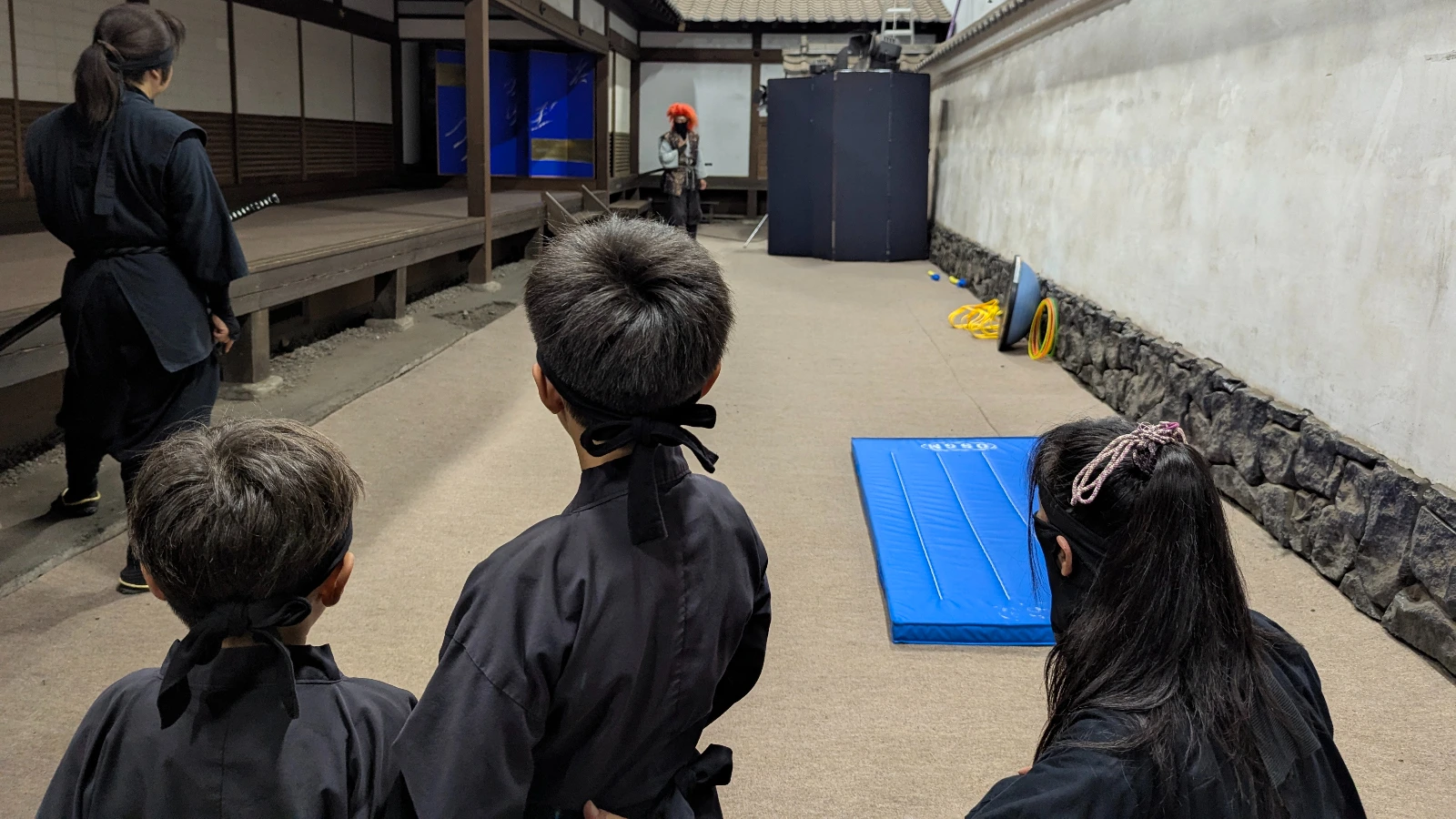
Edo Wonderland is a walk-through Edo-period village where the whole site is active: costume rentals, a ninja maze, trick houses, sword demonstrations, and stage shows spread across streets built like a film set. For a movement-driven child that layout is the point, because forward motion between attractions is the activity and restricted-movement depletion discharges instead of building behind a rope line. A younger Dynamo runs the maze and chases the street performers in costume; an older one works the trick houses and times the ninja show.
Who it costs.The Sensor, mildly, and the budget. The ninja show packs smoke effects, sudden sound, and a press of crowd into a fixed window that pushes a sensory-sensitive child toward a cascade, and admission makes it one of the pricier stops here.
How to make it work.Rent costumes early so the Dynamo spends the day in character with a task, go on a weekday morning before the shows fill, and let a Sensor sibling take the maze and open streets rather than the front row of the performances.
If this isn’t your child: still Nikko’s most immersive stop and an easy half-day for any family, best for ages four and up, where the costumes and shows land at full enthusiasm.Shinkyo is a short, striking red bridge over the Daiya River at the gateway to the shrine cluster, and it is walked, not toured. For a movement-driven child that makes it a quick, satisfying target rather than a stop that pens them in: cross it, take in the rushing water below, and move straight on to the shrine paths above. A younger Dynamo leads the family across to the far bank; an older one carries the legend of the bridge’s snake-built origin into the walk toward Toshogu.
Who it costs.No profile heavily, which is what makes it a connector rather than a destination. Its only real cost is expectation: it is a five-minute crossing, not a half-hour attraction, so treat it as the opening move of the shrine walk.
How to make it work.View it free from the riverbank with a stroller, pay only to walk across if the crossing itself matters to your child, and chain it directly into the uphill path toward the shrines while the Dynamo still has the momentum.
If this isn’t your child: the most photographed spot in Nikko and a free view from the bank for any family, best caught early before the tour groups gather.The Akechidaira Ropeway is a short cable-car ride to an observation deck overlooking Lake Chuzenji, Mount Nantai, and Kegon Falls in a single sweep. The ride itself is the draw for a Dynamo: a brief, novel ascent that breaks up the seated bus climb up the Irohazaka hairpins, then a deck to move around on at the top. A younger Dynamo watches the valley drop away through the glass; an older one picks out all three landmarks from the platform and works out how they connect.
Who it costs.The Sensor, mildly, on a crowded deck, and the Anchor if low cloud makes the view (the whole reason to ride) uncertain on arrival.
How to make it work.Ride it on a clear day on the way up to Chuzenji rather than as a separate trip, keep the visit to the ride and the deck, and check the forecast so an Anchor is not promised a view that the cloud has taken.
If this isn’t your child: the fastest way to take in the Chuzenji panorama without a hike, a high-reward fifteen minutes for any family on a clear day.For the Sensor
Stops that let a sensory-loaded child recover.
For a child who depletes through sensory input, the strongest stops are Lake Chuzenji, Rinnoji Temple, and Futarasan Shrine.
Lake Chuzenji sits high above the town at the foot of Mount Nantai, and its value for a sensory-loaded child is the open air itself: wide water, mountain breeze, and no crowd compression, the conditions a Sensor needs to stay under threshold. A lakeside stroll or a boat cruise carries the visit without a single loud, enclosed moment. A younger Sensor settles by the water and the boats; an older one takes the lakeside path or the cruise and chooses the pace. The nearby Nikko Natural Science Museum makes a good all-weather extension here, with quiet exhibits on the area’s ecology when the lakeside turns cold, and the calm Yudaki Cascades a short way on continue the low-input nature theme.
Who it costs.The Sprinter, mildly. The uplands involve some walking between the bus stop, the shore, and the museum, so a low-stamina child needs the boat or a short loop rather than the full lakeside circuit.
How to make it work.Take the boat to bank the walking for a Sprinter, and use the lake as the calm counterweight to a morning in the busy shrine cluster so a Sensor arrives before their Reserve is already spent.
If this isn’t your child: the scenic heart of the uplands and a genuine change of pace from the temples, worth the climb for any family, at its best in autumn foliage.Rinnoji is Nikko’s principal Buddhist temple, and it pairs a contained, low-light main hall of three large gilded Buddha statues with a calm garden outside. For a Sensor that combination is a controlled dose rather than an assault: the hall is dim and hushed, the garden gives an immediate exit to open air, and the child governs how long they stay inside. A younger Sensor takes a short look at the statues and then the garden pond; an older one lingers with the scale of the hall before stepping out.
Who it costs.The Dynamo. The hall rewards stillness and quiet looking rather than movement, so a high-energy sibling reaches their ceiling quickly and needs the garden as a discharge space.
How to make it work.Keep the interior visit short and frame the garden as the reward, and slot Rinnoji as the calm bridge between the intensity of Toshogu next door and the open lake beyond so a Sensor recovers mid-cluster.
If this isn’t your child: a substantial temple that balances the busier Toshogu, best for ages six and up who can settle inside the hall, with the garden carrying younger visitors.Futarasan is the quiet counterpart to Toshogu a short walk away, set among wide forested paths, small bridges, and sacred trees, and measurably calmer than its famous neighbor. For a sensory-sensitive child that hush is the whole value: it is a genuine reset inside the shrine cluster, not just another stop, and the quiet is a structural result of the thinner crowds rather than luck. A younger Sensor decompresses on the open forest paths; an older one takes in the eighth-century shrine without a crowd pressing in.
Who it costs.The Dynamo, mildly. The grounds reward a slow walk rather than fast movement, so a movement-led child needs a discharge stop chained to it rather than a second still one.
How to make it work.Time it right after Toshogu so the drop from the crowded, ornate complex to the quiet forest lowers the sensory load a Sensor carries into the rest of the day.
If this isn’t your child: a calm, forested shrine a few minutes from the crowds, an easy fold into any morning in the cluster.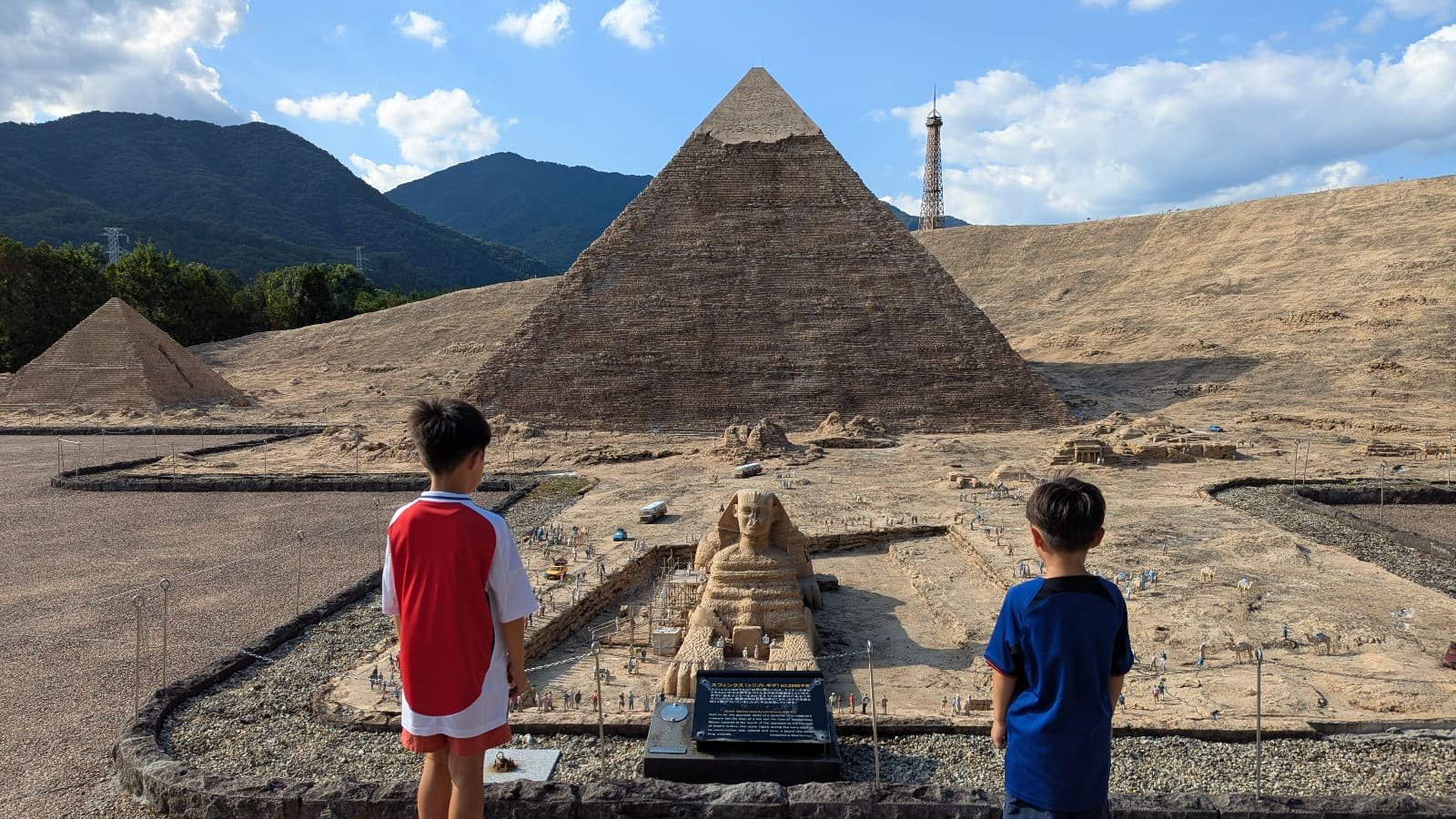
For the Anchor
Stops that reward confirmed, predictable structure.
For a child who depletes through unfamiliarity and unconfirmed structure, the strongest stops are Toshogu Shrine and Tobu World Square.
Toshogu is Nikko’s headline site, a dense complex of gilded gates and carvings, and for an Anchor its saving grace is that it runs on a legible, fixed route. A child who depletes when nothing is predictable can be given the visit as a defined sequence with a task: find the “see, speak, hear no evil” monkeys, then the sleeping cat, then the dragon ceiling, each a confirmed waypoint on a known path. A younger Anchor works the carving treasure hunt; an older one follows the complex in order with the shape of the visit settled in advance.
Who it costs.The Sprinter, at high risk, and the Sensor. The complex is built on many steep stone steps and uneven paths with sustained standing at each carving, which a low-stamina child cannot bank, and it is the most crowded, most concentrated stop in Nikko for a sensory-sensitive one.
How to make it work.Arrive at opening for the thinnest crowds and softest light, carry a toddler rather than fighting a stroller up the stone steps, and give an Anchor the carving checklist in advance so the route is confirmed before you enter.
If this isn’t your child: the one unmissable cultural site in Nikko, worth the steps for any family, but a genuine stamina cost for a low-reserve child.Tobu World Square lays out more than a hundred 1/25-scale replicas of world landmarks along a fixed walking circuit, and that defined loop is exactly what an Anchor needs: a clear route, a visible sequence, and a predictable end, with no open-ended choices to negotiate. A child who needs confirmed structure can see the whole shape of the visit from the entrance. A younger Anchor hunts for the tiny people and trains in the models; an older one follows the circuit continent by continent and connects the landmarks to places they know.
Who it costs.The Sprinter, mildly. The full circuit is a sustained flat walk, longer than it looks, so a low-stamina child needs the benches along the route and permission to skip a section.
How to make it work.Walk the loop in its set direction so an Anchor keeps the sequence intact, use the flat, stroller-friendly paths to your advantage with a toddler, and pace the benches for a Sprinter.
If this isn’t your child: a genuinely impressive, fully stroller-accessible stop that sparks curiosity for any family, and one of the easiest walks in the Nikko area.For the Sprinter
Stops that limit sustained walking and standing.
For a child who depletes through sustained travel-style walking and standing, the strongest stops are Kegon Falls and Kinugawa Onsen.
Kegon Falls drops nearly a hundred meters into a gorge, and an elevator carries families straight down to a viewing platform near the base, which is precisely why it suits the Sprinter: the descent that would otherwise be a steep, draining climb is replaced by a short ride to the payoff. The reward, the roar and spray of the falls up close, arrives without the sustained walking cost that defines this profile. A younger Sprinter feels the mist from the deck; an older one takes in the full height from base to rim.
Who it costs.No profile heavily, which is what earns it a place for a low-stamina child: the elevator does the work. The upper free platforms involve a little more walking, and the base deck can get tight when a tour group arrives.
How to make it work.Pay for the elevator to bank the walking for a Sprinter rather than using the free upper viewpoints, and pair it with Lake Chuzenji next door so the uplands become one low-effort half-day.
If this isn’t your child: one of Japan’s great waterfalls and a short, high-reward stop for any family, spectacular in autumn and sometimes frozen in winter.Kinugawa is Nikko’s hot-spring town, and for a Sprinter it is the rarest thing on an active mountain trip: a stop that asks for almost no walking or standing and banks Reserve rather than spending it. A family-friendly ryokan with a private or family bath lets a low-stamina child soak and rest at the end of a demanding day, with the riverside town and its sweet shops a short, flat stroll away. A younger Sprinter splashes in a warm private bath; an older one takes the riverside foot baths and the walkable main street at an easy pace.
Who it costs.The Dynamo, mildly. The appeal is rest rather than movement, so a high-energy sibling needs the town stroll or the ryokan’s grounds to discharge before settling into the bath.
How to make it work.Book a ryokan with a private or family bath so a young child never has to navigate onsen etiquette in a communal pool, and treat Kinugawa as the overnight base or the evening wind-down after the uplands rather than a daytime sightseeing stop.
If this isn’t your child: a relaxing counterweight to Nikko’s steps and slopes for any family, and the natural place to turn a day trip into an easier overnight.Open with the child who runs short first.
Nikko’s stops split between the shrine cluster in the town and the Chuzenji uplands up a winding mountain road, so the order of a day is set by Reserve and by the bus schedule, not by the map alone. Each route opens with the stop that protects the named child, then chains to the nearest compatible one.
Settle these first. Two things control the shape of a Nikko day. The town-versus-uplands split is the first: the shrine cluster (Toshogu, Rinnoji, Futarasan, Shinkyo) sits together in the town, while Chuzenji, Kegon Falls, and the Akechidaira Ropeway are a bus ride up the Irohazaka hairpin road, so group each into its own half-day rather than crossing between them twice. The bus is the second: local buses from Nikko Station serve both zones but get crowded on autumn weekends, so travel midweek where you can and start early. Getting in is straightforward: the Tobu Limited Express Spacia reaches Nikko from Asakusa in about two hours with reserved seating, and the Nikko All Area Pass covers the buses to the uplands. Edo Wonderland rewards an early costume rental before the shows fill, and Tobu World Square is a flat, walk-up stop that fills any gap.
Utsunomiya add-ons for families with a spare day.
A cluster of stops sits about forty minutes south of Nikko around Utsunomiya, close enough to fold into a longer trip but too far to slot between the shrines and the lake, so treat them as a separate day rather than a Nikko afternoon. The strongest for families is the Oya stone district, where the Oya History Museum leads down into a vast, cool underground quarry, a genuinely unusual space that suits an Anchor’s appetite for a contained, structured route and gives a Sensor a hushed, low-light environment, with the towering Heiwa Kannon carved into the cliff at the adjoining Oya Temple a short walk on.
The Bandai Museum in nearby Mibu is a large toy museum that rewards a Dynamo’s need to move between hands-on displays and an Anchor’s for ordered galleries. Rounding out the area, Utsunomiya Zoo pairs animals with small rides for a Sprinter-friendly low-walk visit, the Four Seasons Bamboo Forest at Wakayama Farm is a photogenic seasonal stroll, and Hachimanyama Park stacks a hilltop tower and open green space into one easy stop. These reward a family with a spare day, not a detour carved out of a tight Nikko itinerary.
Three bases that fit a family’s Reserve.
A shortlist chosen for fit and location logic, not price tier. Each suits a different way a family runs short: one to settle into on the lake, one to soak and decompress in, one to keep transit simple.
| Property | The LuNi Reason | Budget |
|---|---|---|
|
LUNI Pick
The Ritz-Carlton, Nikko
Lakefront base, on-site onsen
|
A lakefront base in the Chuzenji uplands with spacious family rooms and an on-site onsen, so a Sensor decompresses fully at day’s end and a Sprinter stays beside the lake and falls without a second climb, while the confirmed routine of a single settled base holds an Anchor across several nights. | ¥¥¥ |
| Hoshino Resorts KAI Kinugawa Riverside ryokan, family baths | A hot-spring ryokan on the Kinugawa river with spacious family rooms and private-bath options, the Sprinter’s base: the soak banks Reserve after an active day, and the private bath means a younger child never has to navigate a crowded communal onsen. | ¥¥¥ |
| Fairfield by Marriott Tochigi Nikko Simple, transit-easy | A clean, straightforward base for a family that wants transit kept simple, with easy access to the shrine cluster and the buses to the uplands, so a Sprinter spends the shortest possible time getting between the town and the lake each day. | ¥¥ |
Budget: ¥¥¥
Budget: ¥¥¥
Fairfield by Marriott Tochigi Nikko
Budget: ¥¥