Arahama Elementary School with Kids: Kept as the water left it.
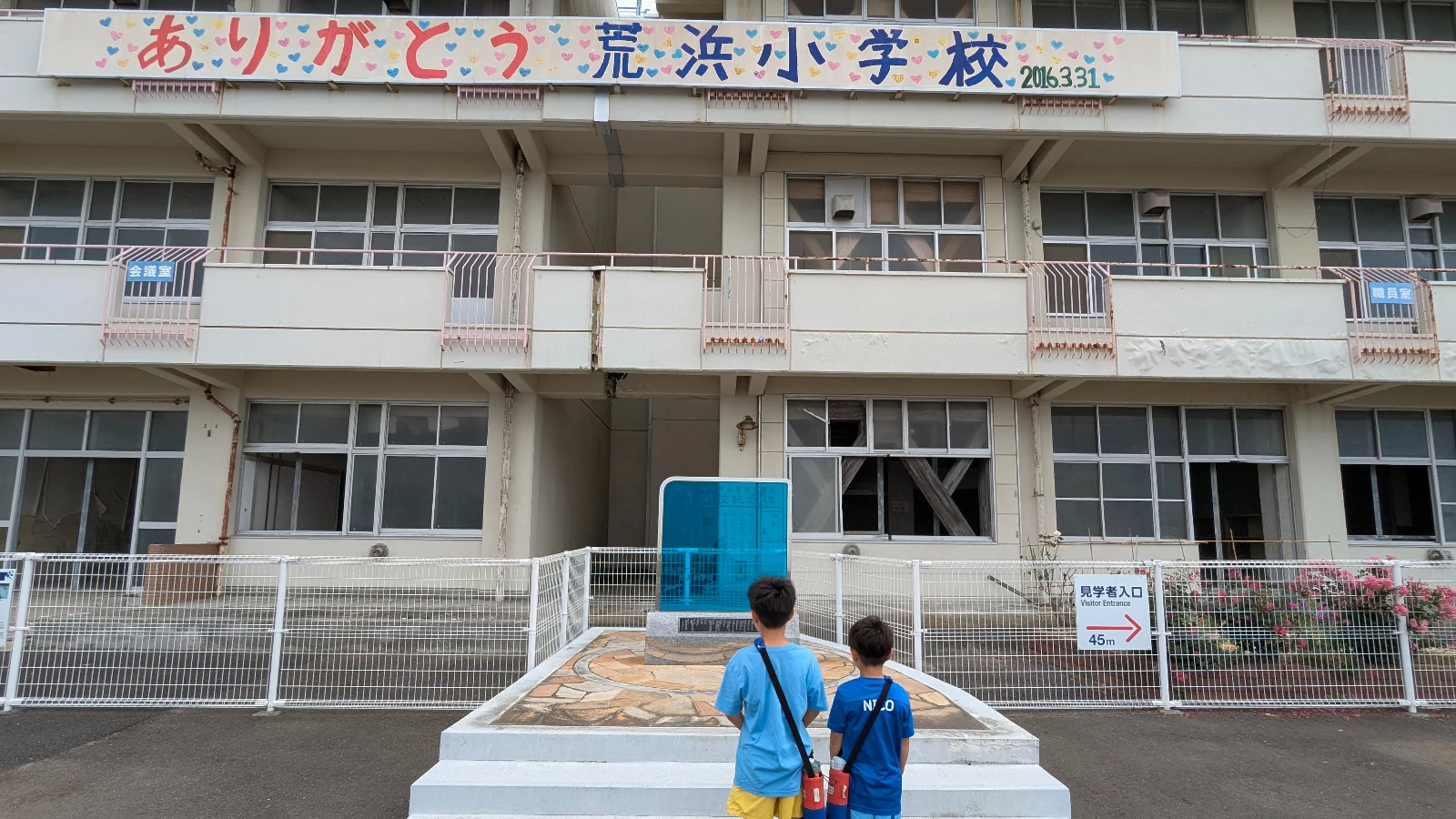
A free half hour on the Sendai coast asks more of a family than any paid day in the city, and the deciding question is which child you are bringing.
No ticket for a self-guided visit; a staff guide is booked ahead by phone, fax or email.
Closed Mondays and the fourth Thursday (open when either is a public holiday), and December 29 to January 4.
A self-guided visit, at whatever pace the family keeps.
The floor is set by the subject, not the building; older children read the exhibits.
An elevator, a wide multipurpose restroom and two accessible parking spaces.
Some links on this page are affiliate links. LuNi may earn a commission at no extra cost to you.
Is Arahama Elementary School worth it with kids?
The short version, before the costs, the timings and the case for each child.
Yes, for a child who has been told what happened here before they walk in, and no for one who has not. This is a school on the Sendai coast that the city has kept rather than demolished. On March 11, 2011 the tsunami reached its second floor and 320 students, teachers and local residents sheltered inside; all of them were rescued 27 hours later. The district around the building was destroyed, and the foundations of its houses are preserved as a second site seven minutes’ walk toward the coast. Admission is free and a short visit is a complete one, so the honest planning question is not cost or timing at all. It is whether this particular child is ready to stand in it.
Planning Your Visit to Arahama Elementary School with Kids.
Two things need settling before anybody sets out, and neither is money, because there is no ticket. The first is the conversation. What a child is told in the car or on the subway decides what the building does to them, and there is no version of this visit where the subject can be discovered gently on arrival. The second is arrival itself, which is simpler than it sounds: the Tozai subway runs out to Arai and a city bus covers the rest, terminating at the school, so nobody has to watch for a stop. Drivers should key in the address rather than the name, because there is a second school of the same name further down this coast, and should read the case for taking the train first.
Every LuNi attraction guide starts with a visit, with our own children
LuNi rates and writes about attractions only after visiting them with children. Luca and Nico were at Arahama Elementary School, and what they did there is recorded further down this page, including how each child actually met it.
Children arrive with different tolerances: for noise, for lines, for standing still, for being on their feet all day. A guide written for the average of them helps almost nobody. So every place on this site is read four ways, and each verdict says which children it already suits and what makes it work for the rest. Whoever you are bringing, the answer here is built for your family rather than for a general reader.
Restricted-movement depletion runs fast in a building with nothing to operate, and this is the worst place in the city to let it run out.
Sensory-input depletion concentrates in one exhibition room and one 17-minute film, so choose which rooms to enter deliberately rather than walking the whole floor.
Unfamiliarity and unconfirmed structure are what the subject itself unsettles, so give the child the sequence and its ending before the door.
Sustained walking is barely charged at all, because the bus terminates at the door and half an hour inside the building is a complete visit.
Hotels we would book for this visit.
Three properties judged on the one leg that matters, because the coast is a subway ride rather than an expedition: how directly a family reaches the Tozai Line, and which base earns the week.
| Property | The LuNi Reason |
|---|---|
| LUNI Pick Hotel Metropolitan Sendai East Connected to Sendai Station | The whole journey begins on the Tozai Line at Sendai Station and takes thirteen minutes to Arai. Connected to the station, this property removes the only variable part of the trip, which matters more on the way back, when a family may want the morning over quickly rather than extended. |
| The Westin Sendai Sendai Trust Tower, 6 to 9 minutes’ walk from the station | The same subway platforms, six to nine minutes’ walk from the door. Book it when the rest of the week suits it, and treat the coastal leg as identical whichever of the two central properties the family is coming from, since the train does the rest. |
| Sendai Royal Park Hotel Izumi Ward, about 30 minutes by taxi from Sendai Station | This is the weakest of the three for this particular morning, because it sits on the northern edge, about thirty minutes by taxi from Sendai Station, and the school is on the southeastern coast, which is a corner-to-corner crossing by car. Book it for other reasons and accept the drive. |
Hotel Metropolitan Sendai East
Nearby attractions, matched to your child.
Three pairings chosen for what a family needs after a morning like this one: one on the way in, two further out. They are also chosen for where the heavy day sits in a longer trip.
| Pairing | Why This Solves the After-Visit | For Your |
|---|---|---|
| LUNI Pick Sendai 3.11 Memorial Community Center Built into Arai Station, on the way in | It takes the Pick because it is a preparation stop rather than a recovery one, and it costs no extra journey: it stands inside the station the family already changes at. Sendai City’s own memorial route allows thirty minutes there, 10:00 to 17:00, before the bus east. | Anchor |
| Sendai Umino-Mori Aquarium North along the same coast, by rail | After an hour of still rooms a sensitive child needs somewhere quiet that moves. The aquarium is self-paced and indoors, and the loud part of it, the stadium, can simply be skipped or watched from the back of the stand. | Sensor |
| Sendai Dai Kannon North of the city, across town by car | A building with nothing in it to do is the worst possible morning for this child. Sendai Dai Kannon is the opposite errand: an elevator up into twelve levels, then 108 figures to cover across nine of them, a count that keeps a child who depletes through restricted movement going from level to level. | Dynamo |
Sendai 3.11 Memorial Community Center
Built into Arai Station, on the way in For YourAnchor
Sendai Umino-Mori Aquarium
North along the same coast, by rail For YourSensor
Sendai Dai Kannon
North of the city, across town by car For YourDynamo
How two children actually met this attraction.
Two children walked out of the same building carrying two entirely different things, and neither was distress. One came out holding a rule he had worked out for himself and repeated it for the rest of the day. The other came out holding a question he could not close, and said so plainly. Both of those are the building doing what it was kept for, and a parent should expect one or the other rather than tears. What the visit actually asks of an adult is not comfort. It is the willingness to let a child sit with something unresolved. Answer the parts that have answers, which here are unusually well documented, and leave the parts that do not have any alone rather than filling them in.
Luca came out fixed on a single rule he had extracted for himself: that he did not want the disaster to happen again, and that the way you stay safe is you have to listen. He was not rattled by it. He was resolved. He carried away a protocol rather than an image, and he repeated it, unprompted, several times over the hours that followed.
This is the Anchor pattern. A child whose Reserve depletes through unfamiliarity and unconfirmed structure will convert a frightening subject into a rule at the first opportunity, because a rule is something that holds. Families with a similar child should take the preparedness room deliberately, since it is built around exactly that conversion, and should let the rule be repeated as often as the child needs to repeat it, without correcting it into something more complicated than it is.
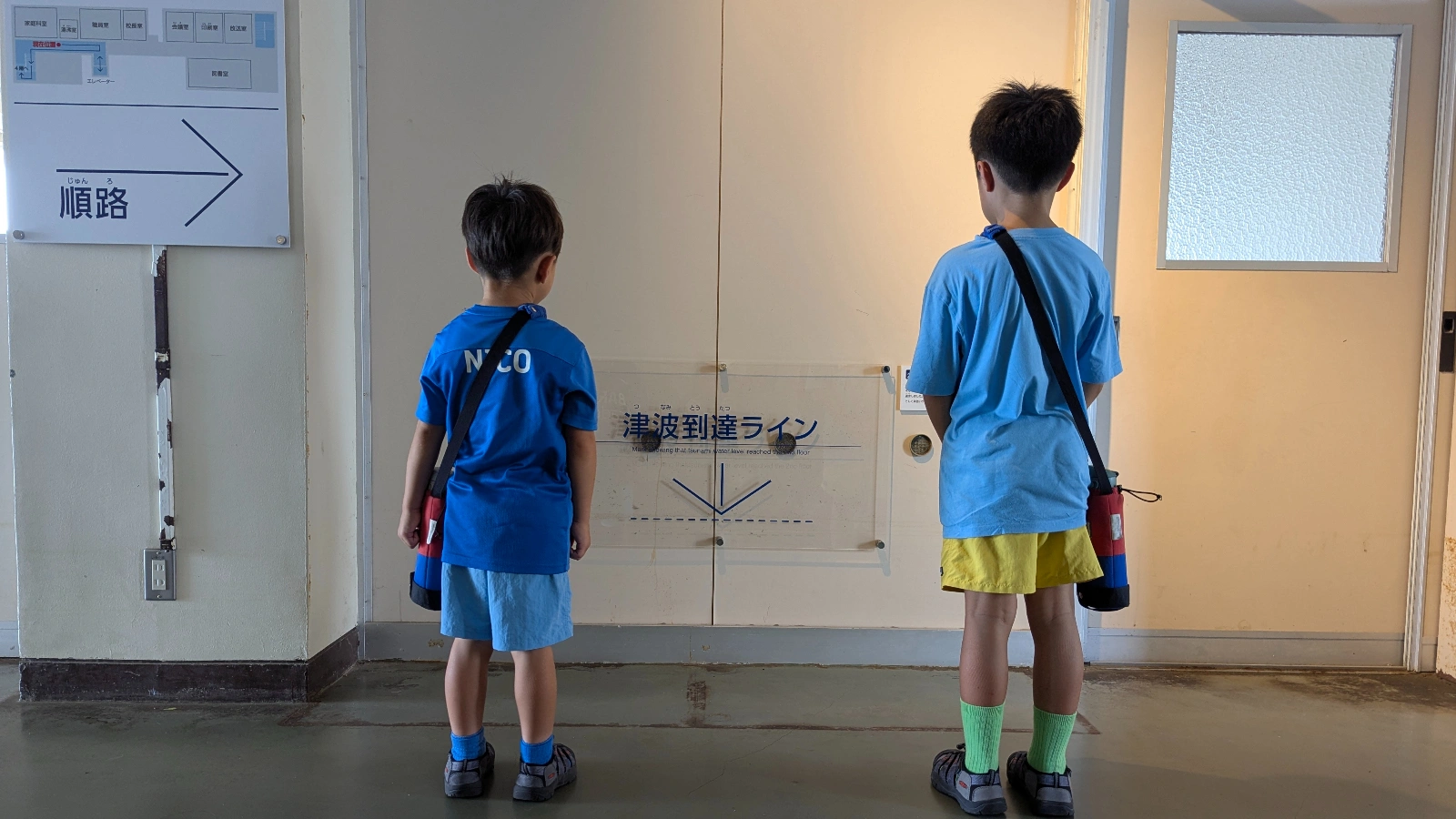
Nico stood at the water line and worked out how much water it would take to climb all the way to the second floor, picturing the volume of it and the force behind it. Then he put himself inside the picture. If it really happened, he said, he did not know what he would do. He was not asking for an answer, and he did not get one.
This is the Sensor pattern. A child whose Reserve depletes through sensory input takes in the physical scale of a thing first and the meaning afterward, and the meaning is where the cost lands. Families with a similar child should keep the room count low, watch for the moment the imagining starts, and resist filling the silence, because a question left open is not the same thing as a child left unsupported, and this is a place where the honest answer to some questions is that nobody has one.
A school kept as a memorial to a tsunami asks a child to understand something enormous through small, real details: a water line on a classroom wall, the marks the water left above it. Children grasp disaster best when they can measure it against their own bodies and their own school days. Handled gently, a visit like this builds empathy and a quiet respect for the people who lived through it and rebuilt. A child who has stood in that classroom understands why preparing for the worst is an act of care.
The LUNI Rating for Arahama Elementary School.
One fact drives all four verdicts and it is the shape of the building rather than its subject. The route runs upward through preserved damage and ends outdoors. The first floor holds curved walls, a curved blackboard and a broken ceiling. The second carries the inundation mark and the splash marks above it. The fourth holds the school’s history, a stopped clock and three exhibition rooms, and the rooftop looks out over the whole district, the sea and the Teizan Canal. A family therefore chooses how far up the building to go, and for most children that choice is the verdict rather than the building itself.
There is nothing here for a body to do, and that is the point of the place. The Dynamo depletes through restricted movement, and this is a building of rooms to be looked at, a corridor, a film and a rooftop. Nothing is operated, nothing is entered, nothing responds. On most quiet days out that produces a fidgety hour and a frustrated parent. Here it produces something worse, because the cost of a child running out of Reserve is not inconvenience, it is a family managing a restless child in a place where other visitors have come to think about their own losses.
The mitigation is the clock, and it is a short one. A visit here is 30 to 90 minutes, and the lower end is a complete visit rather than a truncated one. So the honest plan for a movement-led child is the short version: the second floor, the fourth-floor corridor, the roof, and out, with the physical part of the day already chosen. Strong wind is routine across this coastal site, and car doors are worth watching in the parking area at both ends of the visit. Seven minutes’ walk toward the coast, the preserved house foundations stand as a separate site with their own parking and thirty minutes of open ground.
What this means for your Dynamo: restricted movement empties fast and the setting raises the price of it emptying. A younger Dynamo is better left for another year; an older one can take the thirty-minute route with the next stop already agreed on.The load is in named rooms, so it can be chosen rather than discovered. The Sensor depletes through sensory input, and the fourth floor holds three exhibition rooms that are not equivalent. The heaviest is the memory room, built around a 17-minute film that runs from the earthquake through to the rescue, with interviews and fire-helicopter footage in it. The gentlest is the room on the district’s life before 2011, told in film, photographs and models made with the help of former residents. Between them sits the preparedness room, which teaches what to do through animation and a reconstruction of the evacuation.
Knowing the running time is what turns advice into a plan. Seventeen minutes is a decision a parent can actually make, and there are two calmer rooms on the same floor to move to afterward rather than leaving the building. The damage photographs sit on the first and second floors, and the elevator on the north side reaches the fourth floor and the rooftop without going past them. The other variable is company: this site is used heavily for school disaster-prevention education and can be busy when group bookings are in, which argues for an early weekday morning.
What this means for your Sensor: sensory input arrives as content rather than noise, and it is room-shaped. A younger Sensor should skip the film and take the two gentler rooms; an older one can be told what the film contains and choose it.This subject unsettles precisely what this profile runs on. The Anchor depletes through unfamiliarity and unconfirmed structure, and a preserved disaster site is a demonstration that the ordinary world can stop behaving. What steadies this child is a sequence with a beginning, a length and an end, and the building supplies one exactly: the earthquake at 14:46, the clock at the west end of the fourth-floor corridor stopped at 15:55 when the tsunami arrived, 320 people sheltering inside, and every one of them taken out 27 hours later. That is a true sequence, and it can be given before the door rather than assembled inside.
What a parent should not do is round it up. The rescue is the story of the people in this building. It is not the story of the district outside it, which was destroyed and whose house foundations are preserved a seven-minute walk toward the coast, and an older child who reads the exhibits will find that out. A child given a reassurance that the exhibits then contradict has been handed the exact thing this profile cannot hold. A staff member can also walk a family through the building, which has to be booked ahead and is the most Anchor-shaped facility on offer.
What this means for your Anchor: unconfirmed structure is the risk and a true sequence is the answer. A younger Anchor holds the clock and the 27 hours; an older one should be given the district’s story too, before finding it on a wall.Almost nothing here is paid for on foot. The Sprinter depletes through sustained travel-style walking and standing, and this visit charges very little of it. The subway and a city bus that terminates at the school do all of the traveling, so there is no stop to watch for and no walk from one. Driving takes about as long, with parking on site, which makes the train no slower in practice than the car and the easier choice with a child who tires.
And the visit itself is short by design. Thirty minutes is a complete visit here, ninety is the long version, and the building is viewed freely rather than led at somebody else’s pace, so a family sets its own stopping point. The route up through the building does not have to be climbed: an elevator serves all four open levels, the rooftop included, and there are restrooms on the first floor. The one thing a family cannot plan for is where to sit down.
What this means for your Sprinter: sustained walking is close to zero at the school itself, door to door, and the foundations site adds a walk each way if a family takes it. A younger Sprinter manages the whole route comfortably; an older one will not notice the physical cost at all, and the only gap left is somewhere to sit.The questions parents actually ask.
Two questions come up more than the rest, and the first is not about logistics at all. It is whether a particular child should be brought, and the useful answer is a floor set by the subject rather than the building, plus the knowledge that half an hour here is a whole visit. The second is the water line, which is easy to picture wrongly before the visit. The mark is on the second floor and it sits low on the wall, and the reason that matters is the floor it is on rather than the height of the mark itself.
Is Arahama Elementary School worth visiting with kids?
Yes, for a child old enough to be told what happened here first. It is a preserved school on the Sendai coast, kept by the city as earthquake heritage, and entry is free. A visit takes 30 to 90 minutes, and the shorter end is a complete visit.
What happened at Arahama Elementary School?
On March 11, 2011 the tsunami reached the second floor of the building, and 320 students, teachers and local residents took refuge inside. All of the people who sheltered here were rescued 27 hours later. The district around the school was destroyed, and its house foundations are preserved seven minutes’ walk away, toward the coast.
How do you get to Arahama Elementary School from Sendai Station?
The Tozai subway runs to Arai in 13 minutes, then a Sendai City Bus takes about 15 more and terminates at the school, so there is no stop to miss. Driving, confirm the address rather than the name: navigation may offer a different Arahama Elementary School in Watari Town.
What does Arahama Elementary School cost and when is it open?
Admission is free for every visitor. Hours are 9:30 to 16:00, extending to 17:00 in July and August. It closes on Mondays and on the fourth Thursday of the month, except when those fall on a public holiday, and from December 29 to January 4.
How long does a visit to Arahama Elementary School take?
Between 30 and 90 minutes, and the building is viewed freely rather than led. Sendai City’s own memorial route allows 60. If a staff member is wanted to walk a family through the building, that has to be booked ahead by phone, fax or email rather than asked for at the door.
How high did the water reach inside the school?
The tsunami reached the second floor of the building. The inundation mark preserved there sits 40 cm above floor level, and there are tsunami splash marks on the ceiling above it. A child standing at that mark is already well above the ground outside the building, which is the part worth saying out loud.
Is Arahama Elementary School too upsetting for a young child?
That depends on the child and on which rooms you enter. The heaviest is the one holding a 17-minute film with survivor interviews and helicopter footage. Two other rooms on the same floor are gentler, one on preparedness told through animation and one on the district’s life before 2011. The damage photographs are on the lower floors, and the north-side elevator skips them.
What age is Arahama Elementary School best for?
Eight and up, and that floor is set by the subject rather than by the building. Below it the rooms are simply a school with broken ceilings. Older children read the exhibits and find the wider story of the district, which is the conversation a family should be ready for.
Where Arahama Elementary School fits your Japan trip.
Official site and opening information: Earthquake Heritage Arahama Elementary School