The Railway Museum with Kids: Win the Simulator Lottery.
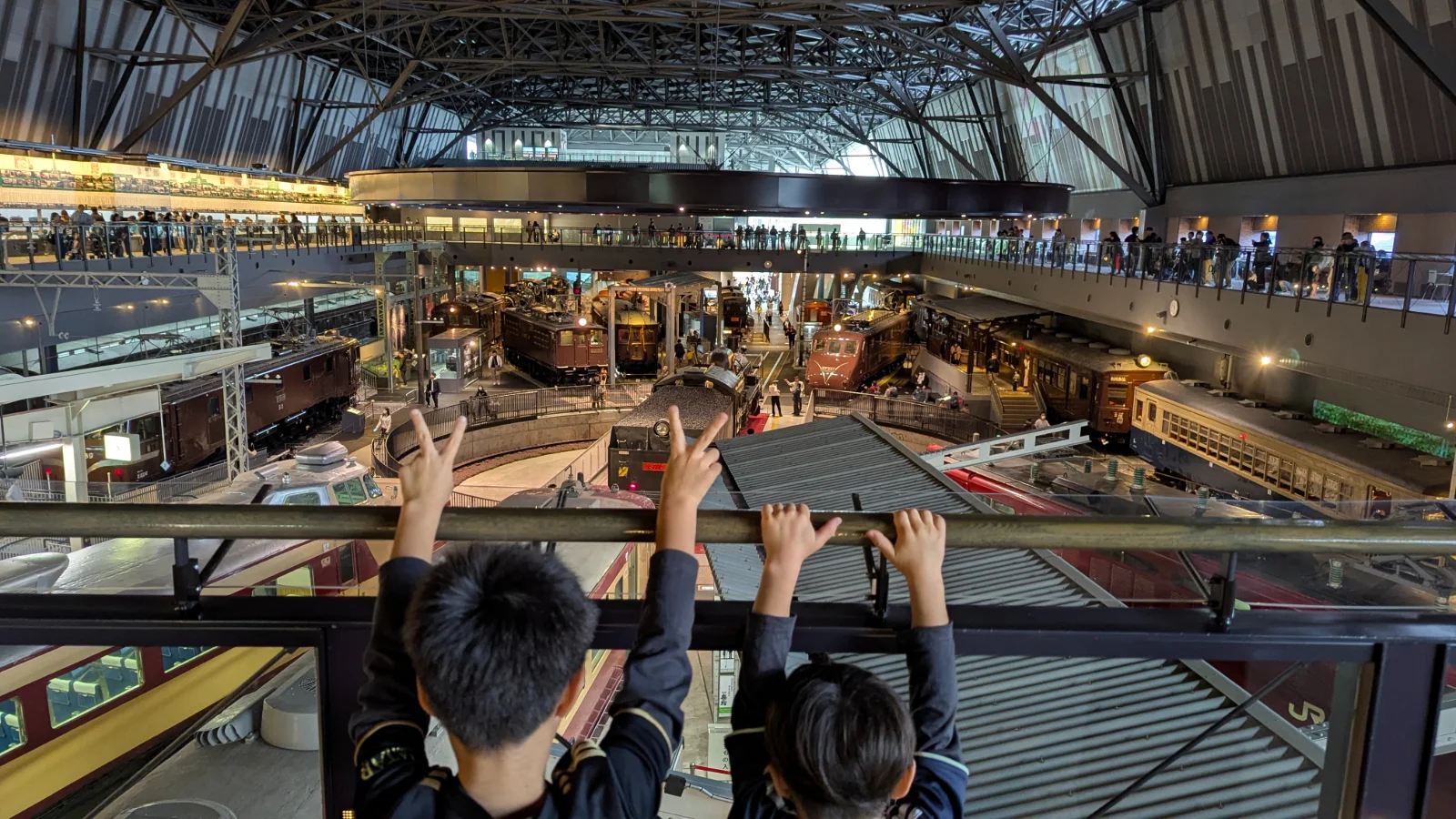
The children sure to drive at The Railway Museum are the ones whose parents booked ahead, because on the day the controls go to a raffle.
On the day; preschoolers 3 and over ¥300, and each ticket is ¥100 less bought ahead online or at a convenience store.
Closed Tuesdays and over the New Year holidays; the annual calendar governs.
Room for the hands-on exhibits and the diorama.
Driving from elementary school, the D51 simulator from junior high; anyone may ride the Mini Driving Train.
Loans go through the paid Babycal service, with membership.
Some links on this page are affiliate links. LuNi may earn a commission at no extra cost to you.
Is The Railway Museum worth it with kids?
The short version, before the costs, the timings and the case for each child.
Yes, for any child who loves trains, and it is worth the day trip from Tokyo, on one condition: book the driving. The Railway Museum holds a hall of cars to walk through, play areas for younger children and driving experiences, from a Mini Driving Train to E5 and D51 simulators, that a child will talk about for weeks. For the child who has come for the controls, the booking decides the day: booked, the turn is certain; unbooked, it rests on a draw. So book the driving, plan the play areas as the place to move, and let the rest of the day be walking among trains, at a pace the youngest can keep.
Planning Your Visit to The Railway Museum with Kids.
Three decisions shape the day, and the first and biggest is the booking. Reserved driving experiences are sold with entry through Seven Ticket only, so a child who wants a certain turn needs that ticket before you leave Tokyo. The second is the date: the museum has a weekly closing day and follows an annual calendar, so check it against your dates, and buy entry by the day before, which is also cheaper. The third is the journey, a JR train to Omiya and then the New Shuttle to the museum’s own station, which makes this a full day trip from Tokyo rather than an afternoon. Let the child choose the halls in advance, too, so the long day has its high points fixed before the train leaves.
Every LuNi attraction guide starts with a visit, with our own children
LuNi rates and writes about attractions only after visiting them with children. Luca and Nico were at The Railway Museum, and what they did there is recorded further down this page, including how each child actually met it.
Children arrive with different tolerances: for noise, for lines, for standing still, for being on their feet all day. A guide written for the average of them helps almost nobody. So every place on this site is read four ways, and each verdict says which children it already suits and what makes it work for the rest. Whoever you are bringing, the answer here is built for your family rather than for a general reader.
Restricted-movement depletion builds where running is banned and small children are held by the hand, so plan the three play areas as their outlet.
Sensory-input depletion builds over a long day across two buildings of trains and visitors, so keep to fewer halls and plan quiet meals as breaks.
Unfamiliarity eases with reserved experiences sold ahead and five named areas in two buildings, so book the slot and walk through the layout at home.
Walking and standing build across two buildings and several floors, so plan the play areas and set eating places as rests through the day.
- Cost
- ¥1,600 adult / ¥600 studentsOn the day; preschoolers 3 and over ¥300, and each ticket is ¥100 less bought ahead online or at a convenience store.
- Booking
- Seven Ticket for the drivingReserved simulator and Mini Driving Train slots come with entry, sold ahead only; plain entry is asked for ahead too.
Hotels we would book for this visit.
This is a long day out of Tokyo, so the room matters most at its two ends: the early start and the tired return. Three Tokyo family hotels in Shinjuku, with kitchens in the first.
| Property | The LuNi Reason |
|---|---|
| LUNI Pick MIMARU Tokyo Shinjuku West | MIMARU Tokyo Shinjuku West has a kitchen and a dining table in every room, so the family can eat breakfast in and leave early for Saitama, then eat in again after a long day out rather than hunting for dinner with a tired child. For a day trip whose length is its cost, both ends of the day stay simple. |
| Park Hyatt Tokyo | Park Hyatt Tokyo is for a family treating the trip as a celebration for a train-loving child. A day trip to Omiya ends with the long ride back, and a room waiting in Shinjuku gives that child a finish worth the day, and the family a slow morning after it before the next plan starts. |
| Hilton Tokyo | Hilton Tokyo is for a child who travels better knowing exactly where the long day will end. It covers the same long day: an early start for Saitama, hours among the trains, and an evening ride back to a room in the same part of Shinjuku as the other two. |
Nearby attractions, matched to your child.
Three pairings, for the hour after or the day after: a wide garden for a child the halls have worn down, a view from above reached by elevator, and a small free zoo in Omiya itself.
| Pairing | Why This Solves the After-Visit | For Your |
|---|---|---|
| LUNI Pick Shinjuku Gyoen National Garden Shinjuku; free for junior high and under | Back in Tokyo, Shinjuku Gyoen National Garden gives a Sensor lawns and wide paths after a day of halls and trains. Sensory input thins out in space, and a child who spent the museum’s hours among engines and halls gets a morning with neither. | Sensor |
| Tokyo Skytree Tokyo Skytree Town; timed Deck tickets | For a Sprinter whose walking and standing added up in Saitama, Tokyo Skytree carries the family up by elevator to a deck with a seated cafe. Its deck can be busy, and a Sensor’s sensory input climbs there, so book a late slot. | Sprinter |
| Omiya Park Small Zoo Omiya Park; free; closed Mondays | In Omiya itself, Omiya Park Small Zoo is a free zoo inside Omiya Park, open until 16:00 and closed on Mondays. After halls where running is not allowed, a Dynamo’s restricted movement gets outdoor paths and animals, and the visit ends in time for the ride back to Tokyo. | Dynamo |
Shinjuku Gyoen National Garden
Shinjuku; free for junior high and under For YourSensor
Tokyo Skytree
Tokyo Skytree Town; timed Deck tickets For YourSprinter
Omiya Park Small Zoo
Omiya Park; free; closed Mondays For YourDynamo
How two children actually met this attraction.
Two children loved the same museum for different reasons and hit the same wall. One wanted to understand the trains he could board, lingering in cars and studying their fittings; the other wanted to see as many trains as possible, covering ground rather than stopping. Both were stopped by the same thing, the controls of the trains they could not climb into, and they took it very differently. That is the useful lesson. A child who loves trains will want to drive one, and at this museum that wish is answered by booking a driving experience before the day. Book it, and the disappointment of a roped cab becomes a small thing beside a real turn at the controls, which is the memory the child will carry home.
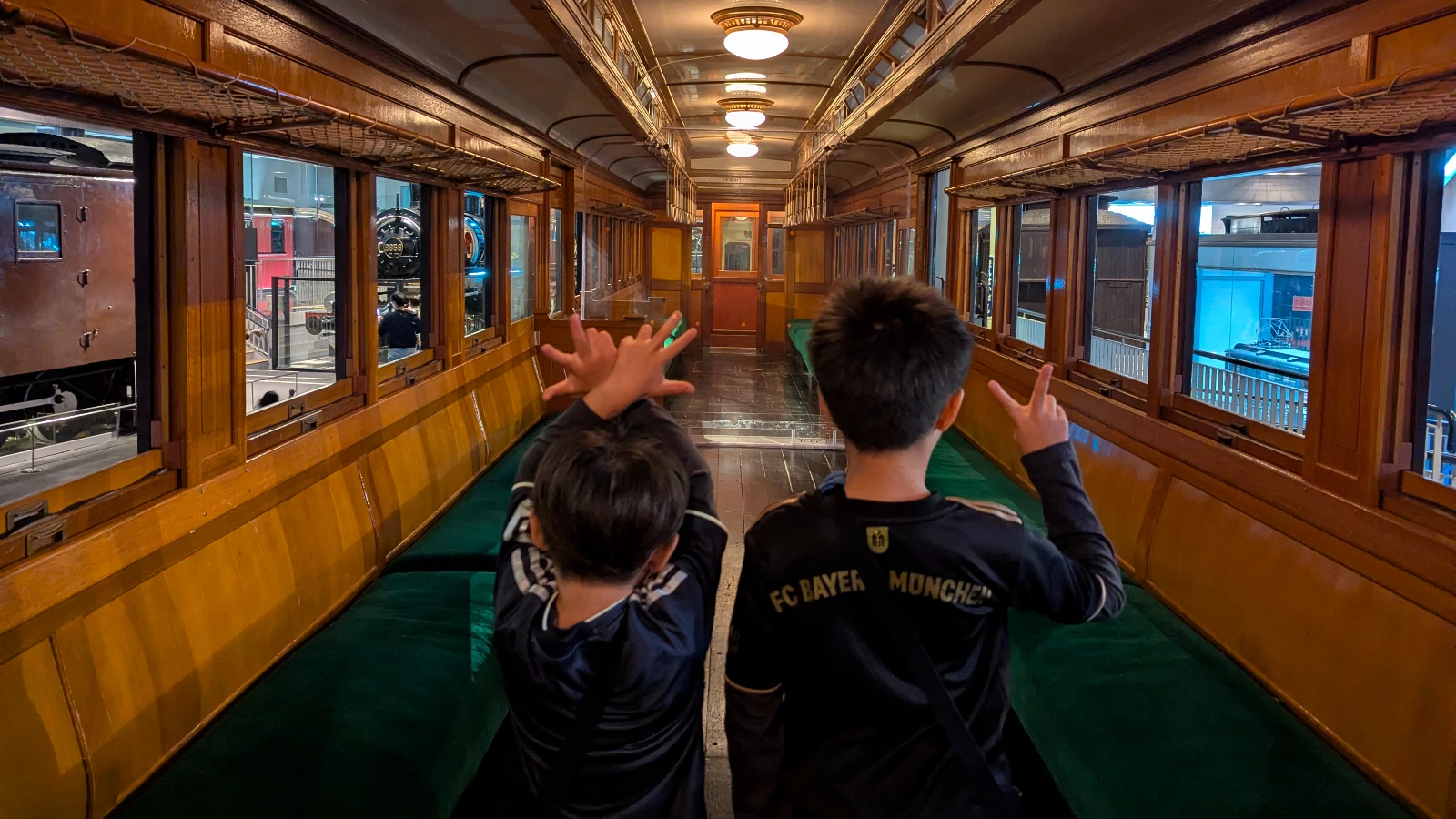
Luca gravitated to the cars he could actually board, walking through them slowly and settling into the seats rather than passing by. He lingered over the old-fashioned trains, taken with how fancy they looked. His clear disappointment was the driver’s seats: he wanted to get into the controls of most of the trains and could not, and being kept out of the mechanism he most wanted to examine landed hard on him.
This is the Anchor pattern. A child whose Reserve depletes through unfamiliarity and unconfirmed structure takes a limit he has been told about in stride and struggles with one met on the spot, and the closed cabs met Luca on the spot. For a similar child, tell him before the trip which cars can be boarded and which are only to look at, so the closed cab is expected. Then book a simulator or driving experience ahead, so the one thing he most wants is confirmed rather than hoped for.
Nico covered the halls at speed, taking in how many trains and Shinkansen there were instead of stopping at any single one. The count of machines held him more than the story behind any of them. Like Luca, he was unhappy that most of the driver’s seats were closed to him, but for Nico that was a passing snag, and he kept moving from train to train.
This is the Dynamo pattern. A child whose Reserve depletes through restricted movement meets a hall of trains as ground to cover, and he stays happy as long as he is moving. For a similar child, remember that running is banned here, so give him a counting game to walk with, let him spend energy in the play areas, and book a driving experience so his hands have a real job at least once in the day.
For a child who loves trains, a museum like this is proof that a passion is taken seriously. Standing inside real cars, reading how they were built and, with a booked session, sitting at the controls turns a fascination into knowledge, and knowledge into confidence. Parents sometimes worry that an obsession is narrow. Days like this show the opposite: a single interest, followed deeply, opens onto history, engineering and patience, and a child encouraged to go deep learns how satisfying it is to truly understand one thing.
The LUNI Rating for The Railway Museum.
The verdicts split on the museum’s rules. It asks children to walk, not run, and to hold a hand outside the play areas, which is harder for some children than others. The Dynamo still does well, because the play areas and the cars give a moving child plenty, and so does the Anchor, because the best experiences can be booked in advance. The Sensor and the Sprinter need a plan, for a long day of halls and a long day on foot. Both are eased by fewer halls and planned rests. A family that sees half the halls well has done the day right.
Plan the play areas as the place to move. The Dynamo depletes through restricted movement, and The Railway Museum is gentler on that than most museums, but not as free as it looks. The museum asks visitors not to run or shout, and small children should be held by the hand everywhere except the three play areas: Kids Plaza, Teppaku Hiroba and the Mini Driving Park. Within those limits, there is a great deal to do, with 36 cars in the Rolling Stock Station alone.
The play areas should set the day’s rhythm. Give a younger child time in each, where they can be let go, and treat the halls between as walking with a purpose: a count of trains, a search for the oldest car. Book a driving experience for an older child. And tell them before you arrive that running is not allowed, since a hall full of trains is exactly where a moving child is tempted.
What this means for your Dynamo: three play areas give restricted movement an outlet in a museum where running is banned. A younger Dynamo needs time in each play area; an older one needs a booked driving experience.Keep the day to fewer halls. The Sensor depletes through sensory input, and a museum full of trains and visitors builds up for this child over a long day: five named areas across two buildings, a hall of cars at its center, and a journey out and back on top. The museum asks visitors not to run or shout, which helps, but the load here is the length of the day rather than any single room.
A shorter day is the answer. Keep to fewer halls rather than all of them, plan meals in the set eating places as quiet breaks, and leave before the child reaches the end of their patience, since the journey home is still ahead. A Sensor with a short list of halls and a known time to leave will enjoy the ones they see.
What this means for your Sensor: input builds over a long day in two buildings full of trains. A younger Sensor needs fewer halls and a quiet meal; an older one can choose the halls and the order.Book the slot, and walk the layout at home. The Anchor depletes through unfamiliarity and unconfirmed structure, and the simulators are where this museum leaves things unconfirmed. On the day, the remaining turns are raffled in the museum’s app, which the family can enter only from inside, so a child’s turn is never certain until the draw is won. The best experiences can be booked instead: a Mini Driving Train, E5 simulator, D51 simulator or conductor simulator slot, sold with entry through Seven Ticket. The museum itself is laid out in five named areas across two buildings.
This child should hold the plan. Book the experience, then look at the layout together and choose the order of the areas. Tell them which cars can be boarded and that covered or roped exhibits are for looking only, so the closed cab is expected rather than a shock. An Anchor with a booked slot and a known route will spend the day in happy, focused study.
What this means for your Anchor: unfamiliarity eases with a booked slot and five named areas to plan around. A younger Anchor needs the order of areas told at home; an older one can carry the plan and the booking.Plan rests in the play areas and eating places. The Sprinter depletes through sustained travel-style walking and standing, and this is a day of both, from the train journey out of Tokyo to the floors of two buildings. The museum is easy to reach from its station, a minute on foot from Tetsudo-Hakubutsukan on the New Shuttle, but the day inside covers the Main and South Buildings over several floors.
Plan rests in advance: the play areas for younger children, and the set eating places for everyone, since food is eaten only there. Keep to fewer areas rather than all five, and leave before the child is exhausted, since the journey back to Tokyo still lies ahead. A Sprinter who sat down at lunch and in the afternoon will manage the ride home.
What this means for your Sprinter: two buildings and a day trip from the city are where walking and standing build. A younger Sprinter needs rests in the play areas; an older one needs fewer halls and an early start home.The questions parents actually ask.
The driving is either booked ahead or left to a draw on the day, and that one choice sets the tone of the trip. Reserved driving experiences are sold through Seven Ticket only, and advance entry tickets are cheaper. Running is banned, and small children are held by the hand outside the play areas. The museum closes on Tuesdays. And it is a full day trip from Tokyo, so start early and plan the ride home as part of the day. For a train-loving child, the ride to Omiya is the first exhibit. At the museum, book first and plan the halls second.
Is The Railway Museum worth visiting with kids?
For a child who loves trains, it is one of the best days out near Tokyo: 36 cars in the Rolling Stock Station alone, play areas for younger children and driving experiences to book. It is not a place to run, though, and small children must be held by the hand outside the play areas, so plan for walking, not racing about.
How much does The Railway Museum cost?
On the day, adults pay 1,600 yen, elementary, junior high and high school students 600 yen, and preschool children of 3 and over 300 yen. Buying by the day before costs 100 yen less: 1,500, 500 and 200 yen. Day tickets are sold from the museum’s machines from 10:00, by transit IC card or cash.
Can you book the simulators at The Railway Museum in advance?
Yes, some of them. Entry tickets with a reserved Mini Driving Train, E5 simulator, D51 simulator or conductor simulator experience are sold in advance through Seven Ticket only. Otherwise, the remaining turns are drawn by raffle in the museum’s own app from opening time. The app works only once you are inside, on a phone or tablet with location on.
Can children run around at The Railway Museum?
No. The museum asks visitors not to run, shout or damage exhibits, and small children should be held by the hand everywhere except Kids Plaza, Teppaku Hiroba and the Mini Driving Park. Covered or roped exhibits and the undersides of cars are not to be touched. The play areas are where a younger child can move freely.
When is The Railway Museum open?
Its hours are 10:00 to 17:00, last entry 16:30, and it is shut on Tuesdays and over the New Year holidays, though the museum’s annual calendar governs, so check the date before planning a day trip from Tokyo. The museum asks visitors to buy tickets ahead rather than at the machines.
How do you get to The Railway Museum from Tokyo?
Take a JR train to Omiya, then the New Shuttle to Tetsudo-Hakubutsukan Station, which is a minute on foot from the museum at 3-47 Onaricho, Omiya-ku, Saitama. For a family driving, parking costs 1,000 yen a day. From central Tokyo, it makes a full day trip rather than a half day.
How is The Railway Museum laid out?
In five named areas across two buildings. The Rolling Stock Station, on the first and second floors of the Main Building, holds 36 cars, and the Science Station is on its second and third floors. The Job, Future and History Stations are in the South Building, from the first floor to the third.
Can you eat and take photos at The Railway Museum?
Food is eaten only in the set places, so plan meals around them rather than carrying snacks through the halls. Photographs and video are for personal enjoyment only, without tripods, monopods or selfie sticks, and unpermitted advertising is refused. A child with a camera should know the rules before the first train.
Where The Railway Museum fits your Japan trip.
Official site and opening information: The Railway Museum