Ueno Zoo with Kids: two gardens, one stamina budget.
Ueno Zoo is free for younger children and home to about 300 species, but its two gardens and several steep slopes ask more of small legs than most families expect.
Junior high ¥200, or free for Tokyo students with a card; 65 and over ¥300. Online tickets offered, not required.
Closed Mondays (the next day after a Monday holiday) and December 29 to January 1; some Mondays open.
Two gardens a walk apart, joined by a free shuttle bus.
Paths are paved but include several steep slopes, which small legs feel first.
For about 7 months to 4 years, cash only; a map shows the routes strollers can use.
Some links on this page are affiliate links. LuNi may earn a commission at no extra cost to you.
Is Ueno Zoo worth it with kids?
The short version, before the costs, the timings and the case for each child.
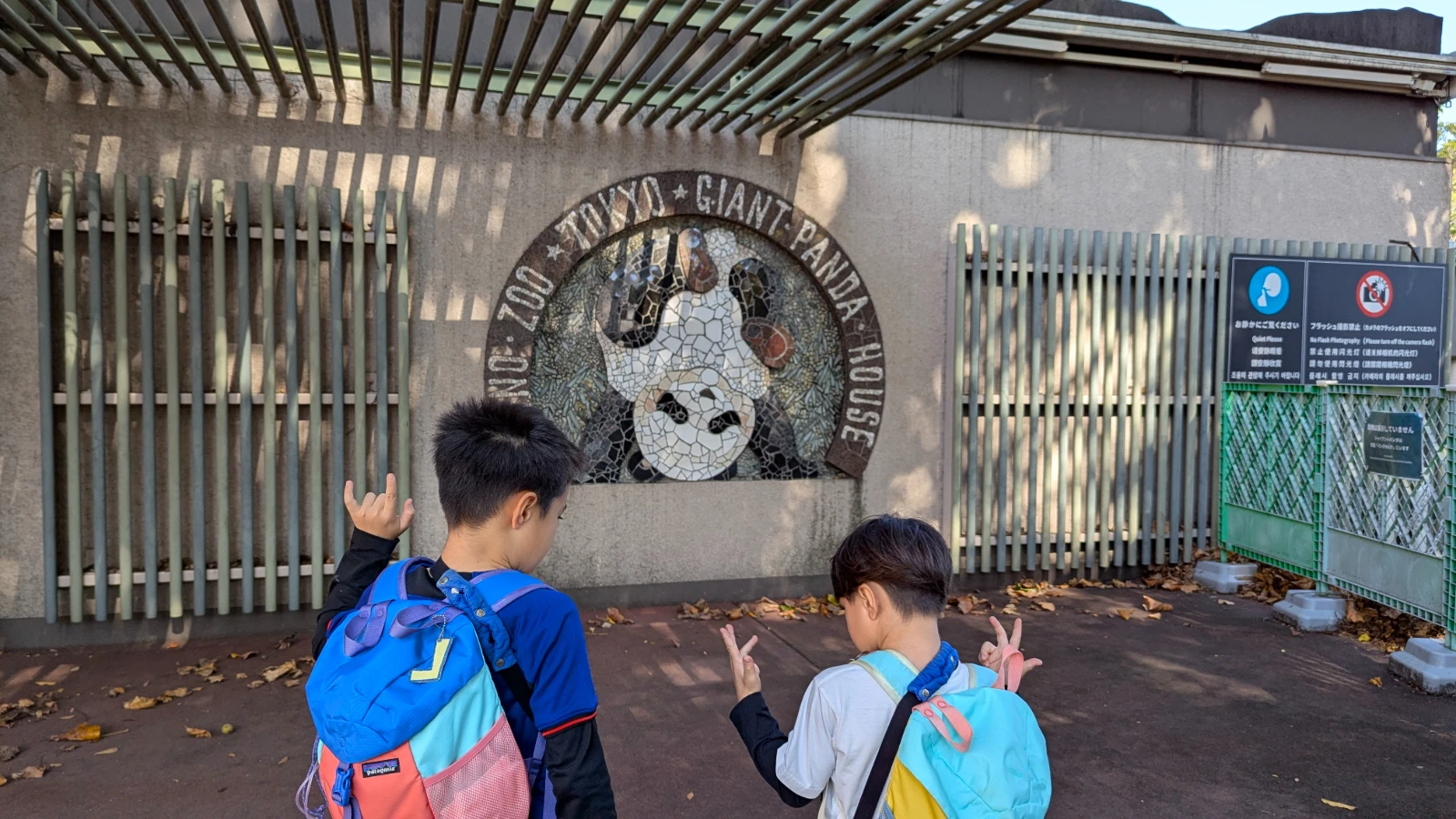
Yes, for almost any child who loves animals: the zoo keeps about 300 species across two gardens in Ueno Park, and children of elementary age and under enter free. The real cost of the day is paid in legs. Steep slopes and the walk between the East and West Gardens are where small legs give out, so the one decision that matters is how the youngest child travels: rent a stroller at the gate, and use the free shuttle for the crossing. Bring a packed lunch, since there are seated areas for it inside. One more thing to say before you go, so no child is disappointed at the gate: there are no pandas at present.
Planning Your Visit to Ueno Zoo with Kids.
Three decisions shape a day at Ueno Zoo, and the first is the order of the gardens, since the crossing between them is the day’s hardest walk: plan it for when the free shuttle is running, not for when the child is already tired. The second is lunch. Bring one, and eat at Saruyama Kitchen, the West Garden rest house or the roofed Shinobazu Pond terrace, since seats cannot be reserved. The third is the day itself: the zoo has a weekly closing day and stops selling tickets an hour before it closes, so start by late morning at the latest, and give the youngest child the morning, when the slopes cost least. Save Ueno’s museums and park for another day, since the zoo alone uses up small legs.
Every LuNi attraction guide starts with a visit, with our own children
LuNi rates and writes about attractions only after visiting them with children. Luca and Nico were at Ueno Zoo, and what they did there is recorded further down this page, including how each child actually met it.
Children arrive with different tolerances: for noise, for lines, for standing still, for being on their feet all day. A guide written for the average of them helps almost nobody. So every place on this site is read four ways, and each verdict says which children it already suits and what makes it work for the rest. Whoever you are bringing, the answer here is built for your family rather than for a general reader.
Restricted-movement depletion eases across two gardens of animals, with a children’s zoo in the West, so let a moving child set the route between enclosures.
Sensory-input depletion builds on a busy day, but the zoo publishes a sensory map, so choose a route from it and plan a seated lunch.
Unfamiliarity eases with published hours and maps and a shuttle on a set schedule, so plan the gardens and the crossing before you arrive.
Walking and standing build over steep slopes and two gardens, so rent a stroller, take the free shuttle and time the crossing around its breaks.
- Cost
- ¥600 adult / elementary and under freeJunior high ¥200, or free for Tokyo students with a card; 65 and over ¥300. Online tickets offered, not required.
- Booking
- At the gate, or online aheadA date-specified online ticket is scanned as a QR code at the gate.
Hotels we would book for this visit.
A zoo day spends small legs, so the morning after should start gently, and that is what these rooms are for. Three rooms: one for a day in Asakusa next, and two for a family staying on in Ueno.
| Property | The LuNi Reason |
|---|---|
| LUNI Pick The Gate Hotel Kaminarimon by Hulic | The Gate Hotel Kaminarimon is for a family pairing a zoo day in Ueno with a temple morning in Asakusa. After a day of slopes and a garden crossing, the second day should start gently, and this room makes Asakusa the next morning’s first stop, with no train before it. |
| Mitsui Garden Hotel Ueno | Mitsui Garden Hotel Ueno is for a family that wants the zoo gate early and the afternoon free. A small child is freshest at opening, and a base in Ueno makes the gate the first stop of the day, with a rest back in the room once the slopes have done their work. |
| NOHGA HOTEL UENO TOKYO | NOHGA HOTEL UENO TOKYO suits a family of three, or a family of four content with two rooms, since most rooms sleep two and the largest take a third on an extra bed. For that family it is a base on the Ueno side, with the zoo gate as the first stop and the room for the afternoon. |
The Gate Hotel Kaminarimon by Hulic
Nearby attractions, matched to your child.
Three pairings for what a zoo day leaves unmet: a museum in the same park with a lounge for resting, a short, gentle toy museum for tired legs, and an open-air temple in Asakusa for a child who likes a set shape.
| Pairing | Why This Solves the After-Visit | For Your |
|---|---|---|
| LUNI Pick National Museum of Nature and Science Ueno Park; free through high school | Also in Ueno Park, the National Museum of Nature and Science charges nothing for children up to the end of high school and keeps a basement lounge set aside for eating and resting. For a Sensor, sensory input settles in a museum that explains itself quietly, room by room. | Sensor |
| Tokyo Toy Museum Yotsuya; closed on Thursdays | For a Sprinter whose walking and standing added up on the zoo’s slopes, the Tokyo Toy Museum is a gentle next morning: a suggested 90 to 120 minutes, an elevator and corridor benches. Book online ahead, and avoid Thursdays, when it is closed. | Sprinter |
| Senso-ji Temple Asakusa; free, main hall opens early | For an Anchor, Senso-ji Temple is a morning with a simple, fixed shape: the great gate, the walk through the precinct, a second gate, then the main hall, which opens early. Unfamiliarity has little to catch on in a sequence a child can recite before breakfast, and the precinct costs nothing. | Anchor |
National Museum of Nature and Science
Ueno Park; free through high school For YourSensor
Tokyo Toy Museum
Yotsuya; closed on Thursdays For YourSprinter
Senso-ji Temple
Asakusa; free, main hall opens early For YourAnchor
How two children actually met this attraction.
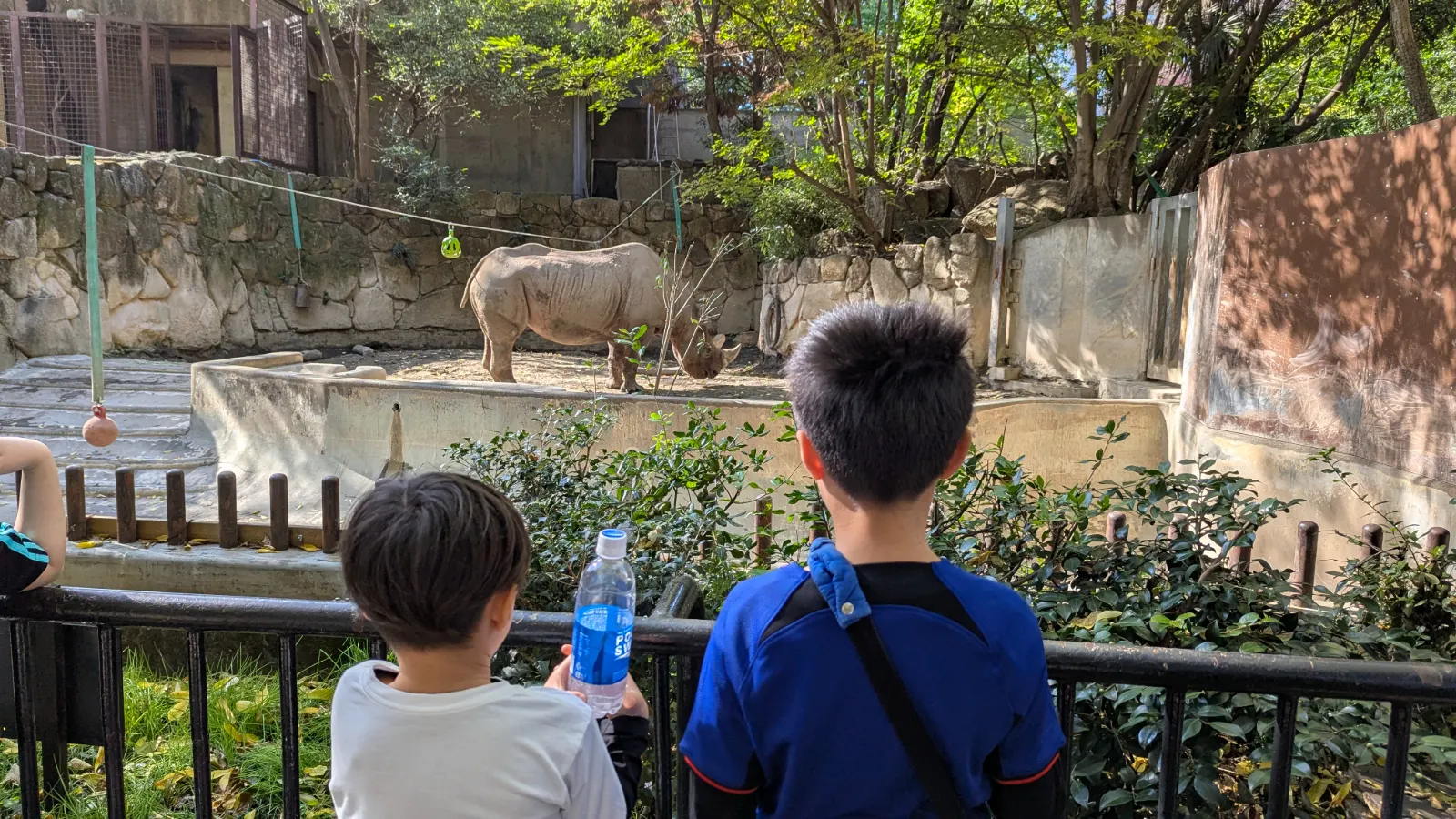
Two children walked the same zoo and remembered completely different animals. One remembered the encounters that felt close and vivid, and was unimpressed by an animal that only sat and ate; the other remembered the animals that did something, and followed movement wherever he found it. Neither of them cared much for the famous animal everyone had come to see. That is worth knowing before a zoo day with children. The animals a child remembers are rarely the ones on the poster. Let the day follow the child rather than the map: the close encounters for the one who wants to feel the size of a thing, and the active enclosures for the one who wants to watch something happen, as often as he likes.
Luca was held by the close, vivid encounters more than the rare ones. Seeing the tiger up close at the viewing window was the highlight he named first. The panda he read without much patience: it just sat and ate the entire time. The big male gorilla was where he lingered longest, sizing up its scale and imagining what it would be like to face an animal that huge.
This is the Anchor pattern. A child whose Reserve depletes through unfamiliarity and unconfirmed structure warms fastest to a place that confirms itself quickly, and an animal close at a window does that at once: its size, its face and what it will do are all known in a moment. An animal far off leaves it open. For a similar child, look at the zoo map together before you go, choose the two or three animals he most wants to see up close, and plan the route between them.
Nico tracked motion and play wherever he could find it. At the gorilla enclosure he narrated movement: the big male looked, to him, like it was doing leg stretches while lying on its back, and the baby gorilla was the clear winner of his whole day, playing with a branch caught on its neck and coming right up to the window to greet the people watching.
This is the Dynamo pattern. A child whose Reserve depletes through restricted movement is drawn to the animals that move, and loses interest in the ones that do not. For a similar child, keep the pace up between enclosures, let him lead toward whatever is active, and do not hold him at an animal that is asleep. Put the busiest walking early in the day, before the energy runs down, and use the shuttle to save his legs for the afternoon.
Children rarely fall for the animal a zoo advertises, and a zoo day is a good reminder to let them lead. Watching an animal sleep, eat or pace is a first lesson in noticing other lives on their own terms, and a child who chooses what to watch learns that interest cannot be assigned. Parents often arrive with a list. The better day follows the child’s attention from enclosure to enclosure, because the moment of real connection, with whichever animal it happens to be, is what a zoo is really for.
The LUNI Rating for Ueno Zoo.
The verdicts split on legs and crowds. Two gardens of animals suit a child who needs to move, so the Dynamo is well served without much planning at all; the Anchor is served as well, with published hours and maps and a shuttle on a set schedule. The Sensor needs a plan because the zoo can grow busy enough to shorten its hours, and the Sprinter because the paths include several steep slopes. The sensory map, the shuttle and a rented stroller answer both. Neither child needs more than a plan made at home and a stroller at the gate.
Let the child set the route between enclosures. The Dynamo depletes through restricted movement, and a zoo of about 300 species across two gardens gives a moving child plenty of places to go. The West Garden also has a children’s zoo of domestic animals. For a child who needs to keep moving, a route that runs from one enclosure to the next, at the child’s pace, is exactly the right kind of day.
The adult’s job is to keep the pace up and to follow the child’s interest toward whatever is active. Do not hold a moving child at an animal that is asleep. Put the longest walking early, while energy is high, and use the free shuttle between the gardens to save legs for the afternoon. A Dynamo who has moved all morning will enjoy a seated lunch, and will have the energy for the second garden after it.
What this means for your Dynamo: two gardens of animals give restricted movement room to roam. A younger Dynamo needs the children’s zoo and a stroller for later; an older one can lead the route between enclosures.Choose a route from the sensory map. The Sensor depletes through sensory input, and a zoo on a busy day builds up for this child, busy enough that the zoo may shorten its opening hours. What keeps it manageable is that the zoo publishes a sensory map, alongside its map for wheelchairs and strollers, so a family can see in advance where the calmer routes and the harder spots are.
Map the route from it before you go. Choose fewer areas rather than all of them, and plan lunch at one of the seated areas, the roofed Shinobazu Pond terrace, the West Garden rest house or Saruyama Kitchen, as a scheduled quiet break. Arrive early on a weekend, and leave before the afternoon if the day is busy. A Sensor with a planned route can enjoy a crowded zoo, and may well ask to come back to a favorite enclosure before leaving.
What this means for your Sensor: input builds on a busy day, and the sensory map lets a family plan around it. A younger Sensor needs a short route and a seated lunch; an older one can choose the areas from the map.Plan the gardens and the crossing before you arrive. The Anchor depletes through unfamiliarity and unconfirmed structure, and Ueno Zoo can be planned closely. The hours are set in advance but can change, and ticket sales stop an hour before the gates close. The zoo publishes maps, and the shuttle between the gardens runs to a set schedule, with two breaks in the middle of the day that a child can be told about in advance.
Describe the shape of the day to this child. Look at the map together, choose the order of the gardens, and tell them when the family will cross and whether by shuttle or on foot. Mention that there are no pandas at present, so the empty house is not a surprise on the day itself. An Anchor who knows the plan will enjoy the animals rather than wondering what comes next, and may well keep the family to it.
What this means for your Anchor: unfamiliarity eases with published hours and maps and a shuttle on a schedule. A younger Anchor needs the order of the gardens told at home; an older one can hold the map and the shuttle times.Rent a stroller, and time the shuttle. The Sprinter depletes through sustained travel-style walking and standing, and Ueno Zoo asks for more of both than it looks. The paths are paved, but there are several steep slopes, and the ground can be uneven at tree roots. The East and West Gardens are a walk apart, about 300 meters by the shuttle route, and a full day covers both.
That is the cost here, and the fixes for it are practical. Rent a stroller at one of the three points for a small child, and take the free shuttle between the gardens, timing the crossing around its midday breaks. And sit down for a packed lunch at one of the seated areas, which the zoo provides for exactly that. A Sprinter who sat down twice will reach the far garden still smiling.
What this means for your Sprinter: steep slopes and two gardens are where walking and standing build. A younger Sprinter needs a rented stroller and the shuttle; an older one needs the crossing timed and a seated lunch.The questions parents actually ask.
Two gardens a walk apart, on paths with steep slopes, shape nearly every plan for Ueno Zoo. Children of elementary age and under are free. There are no pandas at present. A free shuttle crosses between the gardens but pauses twice in the middle of the day. Packed lunches have seated areas inside. Strollers are lent at the gates. And the zoo closes on Mondays, so check the date before building a day around it. A family staying in one of Ueno’s family hotels can come back for the second garden another morning. At the zoo itself, the crossing between the gardens is the decision that shapes the day.
Is Ueno Zoo worth visiting with kids?
Yes, and it is one of the best-value days in Tokyo: children of elementary age and under are free, adults pay 600 yen, and the zoo keeps about 300 species across two gardens. Plan the walking, though. The paths include several steep slopes, and a free shuttle bus links the East and West Gardens for visitors who find the move hard.
How much does Ueno Zoo cost?
General admission is 600 yen, 65 and over 300 yen, and junior high students 200 yen, or free for Tokyo residents and students with a student card. Children of elementary age and under are free, and they can walk straight to the gate without a ticket. Children who enter free skip the machines entirely.
Are there pandas at Ueno Zoo?
Not at present. The zoo keeps no giant pandas now, so a child hoping to see one should know before the visit rather than at the empty house. There is still plenty to see, with about 300 species and some 3,000 animals across the East and West Gardens, including a children’s zoo of domestic animals in the West Garden, which suits the youngest visitors.
How does the shuttle bus at Ueno Zoo work?
A free electric shuttle runs about 300 meters between the East Garden, in front of the Animal Hospital, and the West Garden, under Aesop Bridge, every 20 minutes. It starts at 11:00 and stops for breaks from 12:00 to 13:00 and 14:30 to 15:00. It seats 11, and priority goes to visitors who find the crossing hard.
Can you bring a packed lunch to Ueno Zoo?
Yes, and there are seats for it. Packed lunches can be eaten at Saruyama Kitchen in the East Garden, about 130 seats over two floors, at the West Garden rest house, about 110, and on the roofed Shinobazu Pond terrace, about 300. Seats cannot be reserved or held. Take your lunch trash home with you, as the zoo asks of every visitor.
Can you rent a stroller at Ueno Zoo?
Yes. Strollers are lent at three points in the zoo for 500 yen a day, cash only, for children of about 7 months to 4 years, up to 18 kg. With several steep slopes on the paths, a stroller and the free shuttle between the gardens together make a long day much easier for a small child and the parent pushing.
When is Ueno Zoo open?
It opens from 9:30 to 17:00, with admission and ticket sales ending at 16:00. Mondays are closing days, moving to the Tuesday after a Monday holiday, as is the stretch from December 29 to January 1, though some Mondays open. Hours may be shortened on crowded days, so arrive early on a busy weekend or holiday.
Is Ueno Zoo good for a child who is sensitive to noise and crowds?
With planning. The zoo publishes a sensory map, alongside a map for wheelchairs and strollers, which is the tool to use: choose a route from it before you go. Flash photography that startles animals is not allowed. Plan lunch at one of the seated areas as a quiet break, and leave before the afternoon if the day is busy.
Where Ueno Zoo fits your Japan trip.
Official site and opening information: Ueno Zoo