Japan Attractions With Kids:which kind of day to choose.
- Choose the Kind First
- Each kind of place asks something different
- A Day in One Piece
- Disney, Universal, Ghibli Park and JUNGLIA
- Towers and Views
- The way up decides it, not the view
- Museums by Draw
- Nintendo Museum: nothing sold at the door
- Measure at Home
- Disneyland’s lowest gate: eighty-one centimeters
Fun, family-friendly days from Tokyo to Osaka and Kyoto, sorted by the demands of the visit rather than by its name, so the choice fits the child first.
Some links on this page are affiliate links. LuNi may earn a commission at no extra cost to you.
The fun things to do in Japan with family fall into kinds, and each kind asks something different of a child. A temple charges for the walk in, an aquarium for a slow line in the dark, a theme park for the whole day in one piece. So a child who is easy all afternoon at an aquarium can be finished by eleven in the morning on a shrine mountain. Some choices are settled at home: measure every child, since Tokyo Disneyland’s lowest gate is eighty-one centimeters, and the Nintendo Museum sells nothing at the door.
What each kind of place asks of a child.
Family travel runs on three currencies, not two. Money and time, plus the child’s Reserve: their finite capacity to absorb what travel asks of them. Money and time behave the same way everywhere in Japan. The third is spent differently by each kind of place.
Settled long before you fly.
These three are decided from your own kitchen, on a measurement, a draw or a closure, and none of them can be fixed at the gate.
A Day Taken in One Piece.
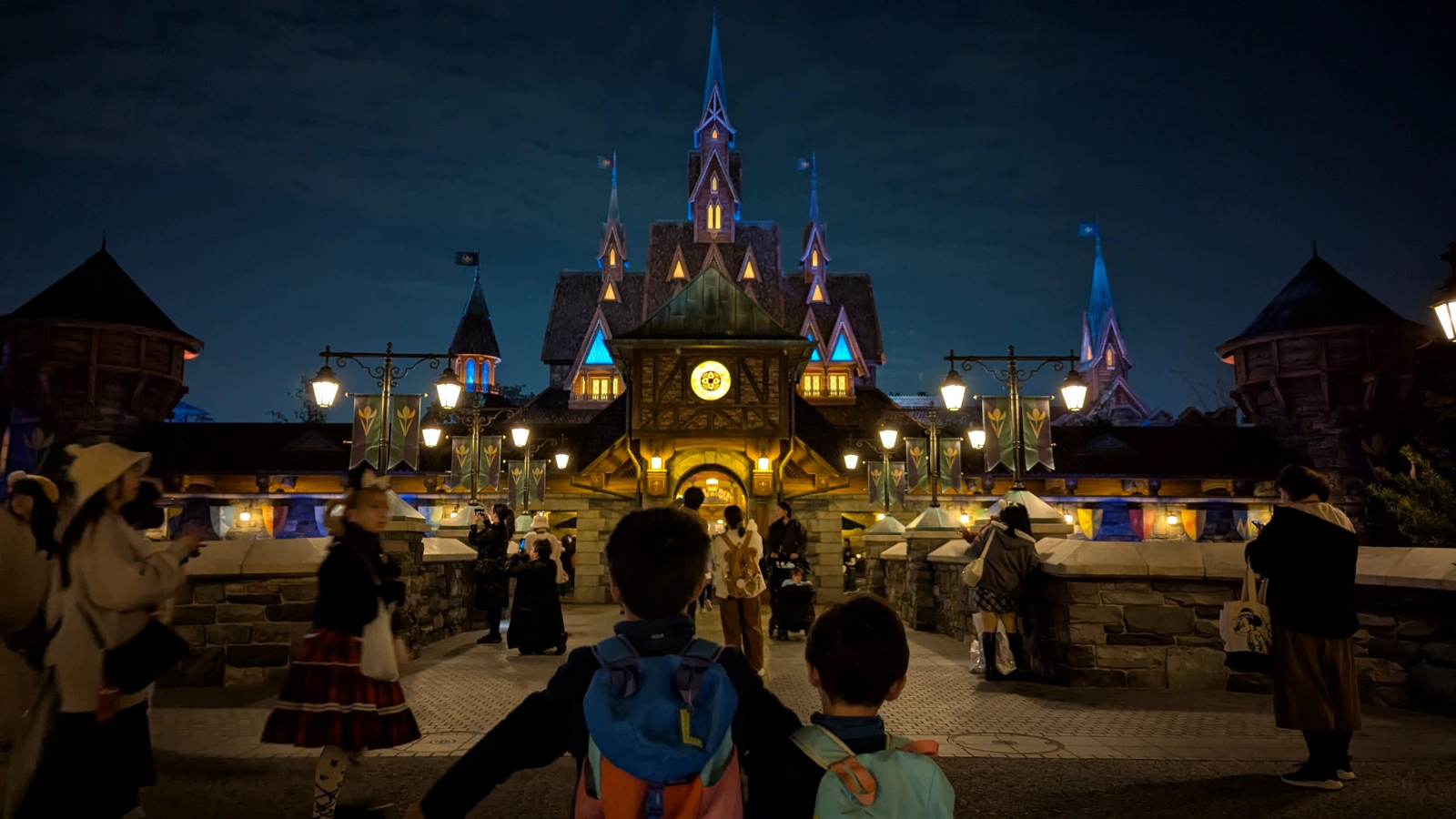
Tokyo Disneyland, Tokyo DisneySea, Universal Studios Japan, Ghibli Park and JUNGLIA OKINAWA are the names most families end up weighing, and not one of them is a half day. The gate is a number before it is a preference: eighty-one centimeters is the lowest height requirement anywhere in Tokyo Disneyland, and only thirteen rides across the two Tokyo parks carry a height rule at all, so a measurement taken at home decides how much of the ticket a child can actually use. Ghibli Park is the quiet exception, walked rather than queued and capped by a timed entry rather than by a ride gate. At JUNGLIA, some attractions are entered through a free lottery in the park’s app, drawn on the day, and the paid Premium Pass that replaces the draw must be bought by the day before. The theme parks guide sorts the full field on those gates rather than on the rides behind them.
Dark, Mirrored, and One Way Through.
Four venues carry the teamLab name and they are not versions of each other. teamLab Planets in Toyosu is a short barefoot route with knee-deep water in it; teamLab Borderless at Azabudai Hills is a shoes-on maze with no map and no fixed order; teamLab Forest in Fukuoka hangs a climbing terrain off the same idea; teamLab Biovortex in Kyoto is the largest, stacked over several floors. What all four share is the part worth planning around: near-total darkness, mirrored floors that remove the points a child balances against, and continuous sound. That combination is a genuine risk for a child who is sensitive to what they are hearing and seeing, and why a child who is not will remember these rooms above everything else. Which one suits a particular family is argued in the teamLab comparison.
Worked, Not Watched.
Japanese museums are unusually physical, which makes this the kind of day that suits a child who cannot look at objects behind glass for an hour. Miraikan runs its robots to a timetable, the Tokyo Toy Museum puts a wooden ball pit where the display case would be, the Cup Noodles Museum at Ikeda sends a child out of the building carrying something they made, and the Kyoto Railway Museum takes a working locomotive out of the shed and along the track. That shifts the risk off the child and onto the calendar. The Nintendo Museum at Uji sells nothing at the door and allocates entry by a monthly draw that opens three months before the month you want, so it is settled while you are still choosing dates. Closures, reopening years and booking rules for the whole field sit in the museums guide.
Settled by where you are going.
Both of these turn on something outside the family’s control, and both are readable the moment the route is fixed.
What State It Is In This Year.
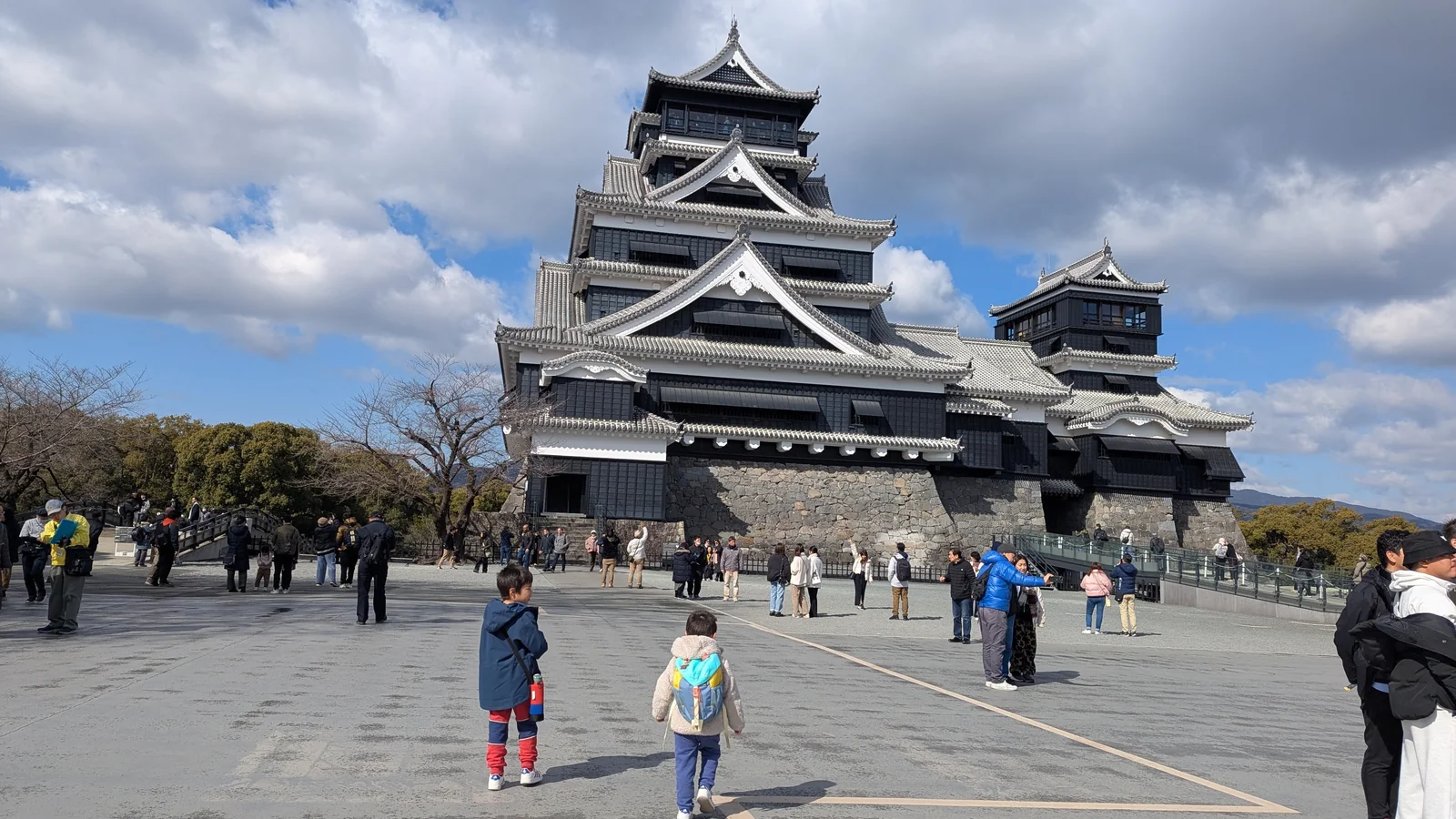
The useful question about a Japanese castle is not how old it is but what state it is actually in on the day you turn up, and that answer changes from year to year. Hirosaki has just been hauled back onto its rebuilt stone base and stays closed inside until around 2033, so it is a castle seen from the outside. Matsumoto is a wooden original climbed in socks on stairs never built for visitors; Himeji is open, and busy enough that the hour of arrival is most of the decision; Osaka Castle is a modern interior inside an old shell, which is why the park around it is the longer half of the day. Kumamoto is the exception that proves how much state matters, with lifts carrying a family up through the keep and a single flight of stairs left over to the top deck. The current condition of every keep is set out in the castles guide.
The Last Bus Writes the Day.
Obscurity separates none of these places, because every one of them is obscure. What separates them is how many services the last leg runs and whether the thing you came for is still happening. Ouchi-juku is six buses a day from the station and a last one back in mid-afternoon, which fixes the end of the visit before it starts. Iwami Ginzan lets no car near the mine, Okunoshima is decided entirely by the final boat, and at the Tottori Sand Dunes the camel is a photograph now rather than a ride. The hidden gems guide is built on the return leg rather than on the view.
Settled by the hour you arrive.
Nothing here needs booking. Both of these are won or lost on when in the day a family walks up, which is the cheapest variable on the whole trip to move.
The Walk In Is the Cost.
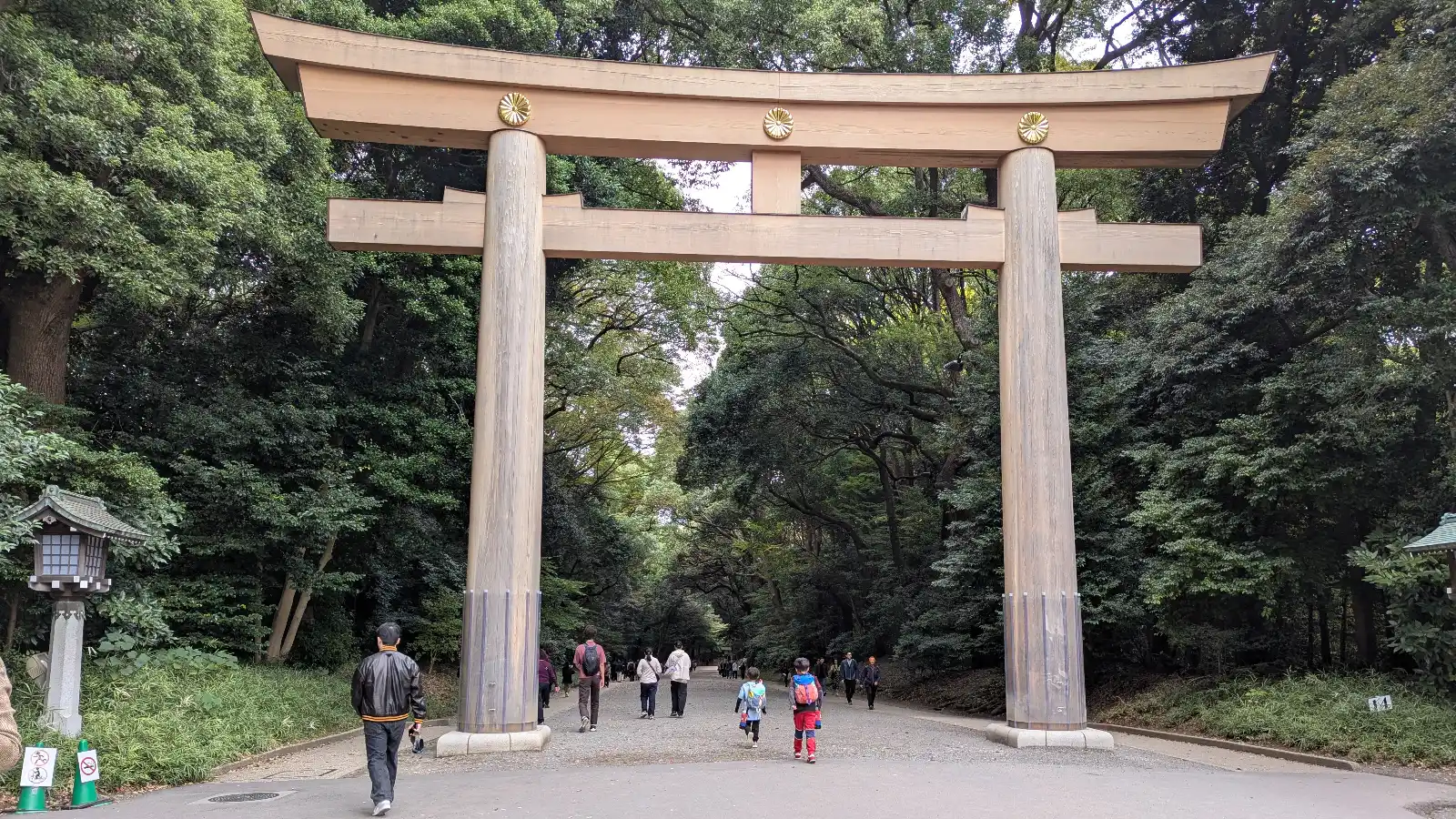
The building is rarely the demand here. Meiji Jingu is ten minutes of loose gravel each way before the shrine appears, Senso-ji sits at the far end of a crowded shop street, and Fushimi Inari is a mountain that starts at the station platform rather than a gate a family walks through. Kiyomizu-dera is a hill and then a fixed order of halls, and Todai-ji is the one place in the category built at a scale a small child can measure themselves against. Because the famous names are either early visits or difficult ones, the hour is the decision rather than the alternative, and a shrine at eight in the morning is a different place from the same shrine at two. Seventeen places across ten prefectures are laid out on exactly that in the temples and shrines guide.
The Way Up, Not the View.
The deck is rarely the problem; the queue and the way up are. The second elevator at Tokyo Skytree is see-through, Tokyo Tower has a glass floor with no way around it, the Umeda Sky Building’s way up includes an aerial escalator, and Shibuya Sky is an open rooftop where loose items including hats go into a locker downstairs before anyone steps out. Settle one question and most of the field sorts itself, which is whether your child can be inside a transparent thing at all, because a glass floor, a glass elevator and an open roof are three different exposures rather than three versions of one. Abeno Harukas is the one a family can walk out of without queueing for the way down. The whole field is sorted on the way up in the city views guide.
Settled on the morning itself.
This is the kind of day a family reaches for when the weather turns or the last one cost more than expected, which is why one heading covering two opposite things causes so much trouble.

Filed as One, Built as Two.
An aquarium is one indoor loop with a seat somewhere in it. A zoo is a hillside, and Kobe Oji Zoo is precisely that. Osaka Aquarium Kaiyukan puts everybody on a long escalator to the eighth floor and then spirals them down around a single tank, so the entire route runs downhill and a tired afternoon survives it, while Asahiyama Zoo in Hokkaido does the reverse and asks for the climb. Okinawa Churaumi is indoors even though the day around it is not, and at Nara Park the animals are loose among the visitors, where nearly three quarters of recorded injuries happen around buying or handing over a deer cracker. Both halves sit under a single heading in the aquariums and zoos guide, and that heading misleads more families than any other.
No gate, no queue, and no route to follow.
The day with nothing to line up for and nothing to finish is the one a family needs after a demanding one, and Japan is unusually good at it.
A park is the cheapest good day in Japan. Yoyogi Park in Tokyo, Ohori Park in Fukuoka, Odori Park in Sapporo and Suizenji Jojuen in Kumamoto all give a child open ground to cross at their own speed, with no ticket, no queue and no order to do anything in. That is the day that puts a family back together after a theme park or a shrine mountain, and it is chosen on the city rather than the country: what decides a park day is which park is twenty minutes from where you are sleeping.
Mt Fuji is the same kind of day at its largest. There is no gate and no route, and the mountain either appears or it does not, so the day is built around something else with the view as the part nobody can book. The Mt Fuji guide sets out where the viewing actually works and what the day becomes when the cloud does not lift.
What has to be settled first, and how early.
Four of these cannot be repaired on the day you travel. They sit here in the order the calendar asks for them.
Not the theme, not the ranking, and not the number of attractions.
A theme tells you what a place is. It does not tell you what the visit takes out of a child, or whether your family can still get into it, and those are the two things that run out. A lottery closes while you are at home. A keep stays shut for years. A village bus runs six times a day. An hour of the morning decides whether a famous shrine is worth the trip at all. Settle the kinds of day with a clock on them while they are still cheap to change, then the ones your route decides, and the rest will still be there on the morning you want them.
The questions parents actually ask.
What are the best attractions in Japan for kids?
Temples and shrines, castles, aquariums and zoos, museums, city viewpoints, theme parks, teamLab’s digital art venues, and the quiet finds off the main route. Those are the kinds of day worth planning around, and nearly everything else Japan sells as a category is a label sitting on one of them. Choose the kind of day first, then choose the venue inside it.
What is the best age to visit Japan with kids?
Five to twelve is the easiest window, because a child in it can walk a full day, stand in line and remember it afterwards. Below five the day shrinks to one fixed point and an afternoon back at the room. Above twelve stamina stops being the limit and consent starts: the question becomes which category a teenager picks, not which one they can manage.
Are Japan’s UNESCO World Heritage sites worth visiting with kids?
Some are, but world heritage is a designation rather than a category, and planning by it will mislead you. The label sits on temples, castles, mountains, islands and whole villages, which are five completely different days for a child. It tells you what the world values about a place and nothing at all about what the visit will cost your child.
What is there to do in Japan with kids besides temples and theme parks?
Plenty, and most families use three or four kinds of day, not all of them. Castles, where what matters is the state each one is in this year. Museums, which in Japan are unusually hands-on. Aquariums and zoos, which behave as opposites for a tired child. City viewpoints, decided by the way up. teamLab’s dark digital rooms. And the quiet finds off the main route.
What can families do in Japan with kids when it rains?
Museums, aquariums and the teamLab venues are indoors, the larger theme parks run indoor attractions alongside the outdoor ones, and a city viewpoint is an elevator into a glazed room where rain costs you the view rather than the visit. Rain is a routing problem rather than a lost day, and it is answered fastest at city level, because the indoor options are local ones.
How far in advance should you book attractions in Japan with kids?
It depends which kind of day you want. The Nintendo Museum draw closes months before arrival, and every teamLab venue runs on a timed slot that sells out on weekends. Castles and the quiet finds are settled once your route is, on a repair schedule or a bus timetable. Temples, viewpoints, aquariums and zoos are still open on the morning.